
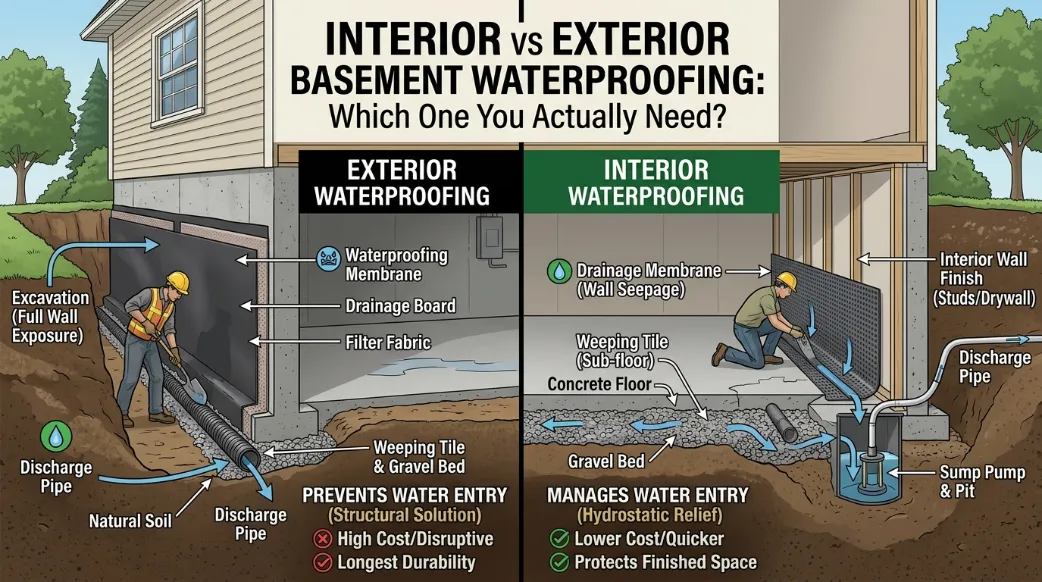
Interior vs exterior basement waterproofing is not really a debate about which one is better. It is about which one your specific basement actually needs, and the honest answer depends on where your water is coming from. Interior systems manage water that has already reached the foundation and pump it back out. Exterior systems stop water before it ever touches the wall. One is cheaper and less disruptive, the other is more thorough and more expensive, and a small number of homes genuinely need both.
This guide walks you through how each one works, what each costs, how long each lasts, and, most importantly, how to match the right method to the exact problem you are seeing in your basement right now.
In Long Island? Brooklyn? Call On Mold Removal Experts for a Free Mold Assessment Now!
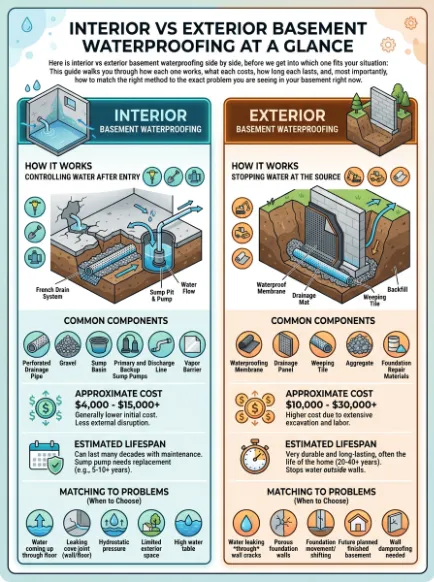
Interior vs Exterior Basement Waterproofing: The 30-Second Answer
If you want the short version of interior vs exterior basement waterproofing, here it is before the details. Interior waterproofing, usually an interior drainage channel feeding a sump pump, is the right call for most homes with water seeping in at the floor, and it is the more affordable, less invasive option. Exterior waterproofing, a membrane and drainage system installed against the foundation after excavation, is the more complete fix and the better choice when you have foundation cracks, bowing walls, or you are protecting a high-value finished basement for the long term. Most homeowners start with interior. Some need exterior. A few, with severe or multi-source water, need both.
Not Sure Which Type of Waterproofing System You Need?
Match Your Symptom to the Fix
The fastest way to choose is to start with what you are actually seeing, not with the method. Find your symptom below:
- Water pools at the floor and wall joint after heavy rain: you need interior drainage and a sump pump. This is the cove joint leaking, and interior systems handle it well. See what causes basement flooding from rain.
- Cracked, leaning, or bowing foundation wall with soil water pushing in: you need exterior waterproofing, often with structural repair. See foundation cracks that leak water and bowing basement walls.
- Damp air, musty smell, or white efflorescence, but no liquid water: this is a humidity and vapor problem. Interior sealing plus dehumidification usually solves it. See how to control basement humidity.
- Water rising up through the floor, not the walls: that points to a high water table and hydrostatic pressure; interior drainage with a sump is the standard fix. See water coming up through the basement floor.
- New build, or you are finishing the basement for the long haul: exterior membrane gives the most complete, longest-lasting protection while the ground is open.
- Recurring flooding from several directions at once: you likely need both, covered further down.
Interior vs Exterior Basement Waterproofing: The Full Comparison
Here is the honest, line-by-line scorecard:
| Factor | Interior Waterproofing | Exterior Waterproofing |
|---|---|---|
| Typical cost | $2,000 – $8,000 | $8,000 – $18,000+ |
| Install time | 1 – 3 days | 1 – 3 weeks |
| Excavation | None | Full dig-out around foundation |
| Disruption | Low (interior only) | High (landscaping, walkways) |
| Lifespan | Drainage decades; sump 7–10 yrs | Membrane 10–25+ years |
| Handles hydrostatic pressure | Yes, by relieving and pumping it | Yes, by blocking and diverting it |
| Source or symptom | Manages water after entry | Stops water at the source |
| Best for | Seepage, high water table, damp floors | Cracks, bowing walls, new builds |
| Maintenance | Test sump; replace every 7–10 yrs | Minimal once installed |
| Typical warranty | Often lifetime on drainage | 10–25 years on membrane |
The honest contractor’s scorecard: interior vs exterior basement waterproofing, line by line.
Interior Basement Waterproofing: How It Works, Cost, and Lifespan
Interior waterproofing works on a simple principle: assume some water will reach the foundation, then capture and remove it before it reaches your living space. A contractor cuts a channel around the inside perimeter of the basement floor, installs interior drain tile (an interior French drain), and routes the water to a sump pump that ejects it outside. Vapor barriers and sealants handle dampness on the walls.
Cost typically runs from about $2,000 to $8,000 depending on basement size and whether a new sump and battery backup are included. The drainage system itself can last for decades and is often warrantied for the life of the home; the sump pump is the wear item, usually replaced every 7 to 10 years. The trade-off: interior systems manage water rather than stopping it at the source, so the foundation still gets wet. For most homes with seepage, that trade-off is well worth the lower cost and zero excavation. See the full basement waterproofing cost breakdown.
Exterior Basement Waterproofing: How It Works, Cost, and Lifespan
Exterior waterproofing takes the opposite approach: dig down to the foundation footing and stop water before it ever touches the wall. Crews excavate around the home, clean the foundation, apply a waterproofing membrane or coating, often add a dimple board drainage layer, and install an exterior footing drain (weeping tile) to carry groundwater away. Pair it with good exterior drainage and you have the most complete defense available.
The catch is cost and disruption. Excavation-based exterior waterproofing typically runs $8,000 to $18,000 or more, and it means digging up landscaping, walkways, and anything against the foundation. In return, a quality membrane can last 10 to 25 years or longer, and because it keeps the wall dry, it is the right structural choice when you have cracks or bowing. See exterior waterproofing cost.
When You Actually Need Both
Sometimes the right answer is not either/or, and a good contractor will tell you when. Combining an exterior membrane with an interior drainage system and sump makes sense when water attacks from several directions at once, when a finished or high-value basement justifies belt-and-suspenders protection, or when a cracked, leaking foundation needs both a structural seal outside and a drainage safety net inside. It is the most expensive route, so it should be recommended only when your actual water problem calls for it, never as a default upsell. If your basement floods from multiple sources, compare every option in our guide to all basement flooding solutions.
The Myth That Costs Homeowners the Most
The most expensive mistake we see is paying to seal cracks from the inside and calling it waterproofing. Hydraulic cement and paint-on sealers can slow a trickle, but they do nothing about the force pushing water in. That force is hydrostatic pressure, the weight of saturated soil water pressing on your foundation, and it will find the next weak point, reopen the crack, or push water straight through the pores in the concrete. Real waterproofing either relieves that pressure (interior drainage and a sump) or blocks and diverts it (exterior membrane and footing drain). Anyone selling you a bucket of sealant as a permanent fix is treating a symptom. Understand what actually causes basement moisture problems before you spend a dollar.
How to Choose (and Who to Trust)
The right method is the one that matches your water problem, which is why it starts with a diagnosis, not a sales pitch. Before you sign anything, insist that the contractor identify where the water is actually entering and what is driving it. Be wary of any company that sells the same single method for every basement, because that is a sign they install what they prefer, not what you need. A contractor who installs both interior and exterior systems, and who is willing to tell you the cheaper option is enough when it is, is the one worth trusting. Waterproofing done right also protects you from the mold that follows chronic moisture; see how the right waterproofing prevents mold from coming back.
Interior vs Exterior Basement Waterproofing: Final Thoughts
Interior vs exterior basement waterproofing comes down to one question: where is the water coming from, and what will actually stop it for good? Water seeping in at the floor points to interior drainage and a sump; cracks, bowing, and soil-side water point to exterior; damp with no liquid water points to sealing and dehumidification; and a severe, multi-source problem may need both. Skip the crack-sealing shortcut, compare cost against lifespan, and match the method to the diagnosis.
The surest way to get interior vs exterior basement waterproofing right is to have the water source diagnosed before anyone quotes a fix. Book a free inspection and we will find where the water is coming from and tell you honestly which method your basement actually needs.
Frequently Asked Questions About Interior vs Exterior Basement Waterproofing
Is it better to waterproof a basement from the inside or outside?
It depends on the problem. Interior waterproofing is better and cheaper for water seeping in at the floor, while exterior waterproofing is better for foundation cracks, bowing walls, and long-term structural protection. Most homes do well with interior; some need exterior.
Is exterior basement waterproofing worth it?
Yes, when you have foundation cracks, a bowing wall, a high-value finished basement, or you are building or landscaping anyway. It costs more and requires excavation, but it stops water at the source and lasts the longest, so it is worth it for structural problems.
How much does interior vs exterior basement waterproofing cost?
Interior waterproofing typically runs about $2,000 to $8,000, and exterior waterproofing about $8,000 to $18,000 or more because of excavation. Your final number depends on basement size, water severity, and whether structural repair is involved.
How long does each one last?
An interior drainage system can last for decades and is often warrantied for the life of the home, though the sump pump is replaced every 7 to 10 years. A quality exterior membrane commonly lasts 10 to 25 years or more with little maintenance.
Can you do both interior and exterior waterproofing?
Yes, and sometimes you should. Combining an exterior membrane with interior drainage and a sump makes sense for severe or multi-source water and for high-value finished basements. It is the most expensive route, so it should match a real need, not a default upsell.
Does interior waterproofing stop hydrostatic pressure?
It manages it. Interior drainage relieves hydrostatic pressure by giving water a path to a sump pump that ejects it, rather than blocking it like an exterior system. For most seepage, relieving the pressure is an effective, affordable solution.
Do I need a sump pump for interior waterproofing?
Almost always. Interior drainage collects water and needs somewhere to send it, and a sump pump is what moves it out of the basement. A battery backup is strongly recommended so the system still works during the storms and power outages when you need it most.
Is sealing the cracks enough to waterproof my basement?
Usually not. Interior crack sealers slow a trickle but do nothing about the hydrostatic pressure pushing water in, so water tends to return through the same crack or a new weak point. Real waterproofing relieves or diverts that pressure.
Which is more disruptive to my home and yard?
Exterior waterproofing, by far. It requires excavating around the foundation, which disturbs landscaping, walkways, decks, and anything against the house. Interior waterproofing stays inside the basement and is typically finished in one to three days.
How do I decide between interior vs exterior basement waterproofing for my house?
Start with your symptom and get the water source diagnosed. Seepage at the floor points to interior; cracks and bowing point to exterior; damp with no liquid water points to sealing and dehumidification. A contractor who installs both interior vs exterior basement waterproofing can inspect first and recommend the method that actually fits your basement.