
Water through a foundation crack does not stop on its own, and a patch over it will not last. We find the pressure behind the leak and shut it down for good, starting with a free on-site inspection. Full homeowner guide included below
If you have a foundation crack leaking water into your basement, you are right to take it seriously, and you are right that it cannot wait. Water moving through a foundation crack means the saturated soil outside is pushing harder than your wall can hold, and that pressure builds every time it rains or the snow melts across the NY metro. A foundation crack leaking water is never just a cosmetic line in the concrete. It is an active entry point that feeds mold, ruins finishes, and can signal a wall starting to move. The contractors who only inject the crack and leave are setting you up to call again next spring. We work differently. We diagnose why the water is coming in, then stop it at the source so it stays stopped. This page covers our foundation crack repair and waterproofing service and includes a complete, no-shortcuts guide so you understand exactly what is happening behind your wall.
Get My Free Inspection See Financing Options
Free On-Site Inspection Financing Available Licensed & Insured We Fix the Cause, Not the Symptom
Whether We Need to Talk to Your Adjuster or Discuss Financing Options, We're Here for You!

The Benefits of Fixing a Foundation Crack Leaking Water the Right Way
Done properly, the repair is a one-time investment that protects everything above it. Here is what stopping a foundation crack leaking water actually buys you:
- A basement that stays dry through every storm, not just until the next heavy rain.
- Mold prevention at the source. No moisture means no food for mold, which the EPA confirms is the core of mold control.
- Protected property value. Active water intrusion is a red flag on inspections and disclosures. A documented fix removes it.
- No structural escalation. Stopping the pressure early helps prevent the wall from moving toward a far costlier repair.
- Usable square footage back. A dry, healthy basement is space you can finish, store in, and live in.
How We Stop a Foundation Crack Leaking Water
The reason most leaking-crack repairs fail is that they treat the crack and ignore the water pushing through it. We work in the opposite order. Here is what happens when you call us.
- On-site diagnosis
A specialist reads the crack, checks moisture levels, and traces where the water is actually coming from. The shape and direction of a crack tell us a great deal, which is why we never quote a fix sight unseen.
- Identify the real cause
Is it surface water from poor grading, or is it hydrostatic pressure from a high water table? The answer changes everything about the right repair.
- The matched repair
That may be polyurethane or epoxy crack injection for an isolated leak, an interior drainage system with a sump to relieve pressure, or exterior waterproofing and drainage correction. Often it is a combination, sized to your wall.
- Verify it is dry
We do not consider the job done until the wall stays dry under the same conditions that were leaking it. You get a clear explanation of what we did and why.
Why Choose Mold Removal Experts for a Foundation Crack Leaking Water
Plenty of companies will show up and fill a crack. The difference is what happens next spring. We are a NY metro team that treats a foundation crack leaking water as a moisture system, not a tube of sealant. We diagnose the cause, we tell you honestly whether your crack is cosmetic or serious instead of upselling every hairline, and we back our work. You also get a free on-site inspection, financing options so the right fix fits your budget, and a crew that knows how local soil and water tables behave from Massapequa to Bay Ridge.
Why NY Metro Foundations Develop Leaking Cracks
A foundation crack leaking water is especially common around here, and the reasons are local:
- High and seasonal water tables. Much of Long Island and the boroughs sits over groundwater that rises sharply with rain and spring thaw, spiking the pressure against basement walls.
- Clay-heavy and mixed soils. Soils that hold water swell when wet and press inward on the foundation, opening and feeding cracks.
- Aging housing stock. Many homes here predate modern drainage and waterproofing standards, so their foundations were never built to handle today’s water loads.
- Freeze and thaw cycles. Winter expansion and contraction work existing cracks wider year after year.
- Tight lots and poor grading. Dense neighborhoods often leave little room to slope soil away from the house, sending roof and surface water straight to the foundation.
What It Costs to Fix a Foundation Crack Leaking Water
Honest answer: it depends on the cause, and any company quoting you a flat price over the phone is guessing. As a general guide, an isolated crack injection sits at the lower end, while an interior drainage system with a sump pump or exterior waterproofing costs more because it solves the pressure that a patch cannot. The trade-off is that the larger fix is the one that actually lasts. Our basement waterproofing cost guide breaks down what drives the number, and financing keeps it manageable.
The hidden cost of waiting: The cheap fix is rarely the cheap option. A patch that fails lets water keep feeding mold and moving the wall, and remediation plus structural repair costs far more than stopping the water once. Do it right the first time.
Get a Real Person On the Phone Now!
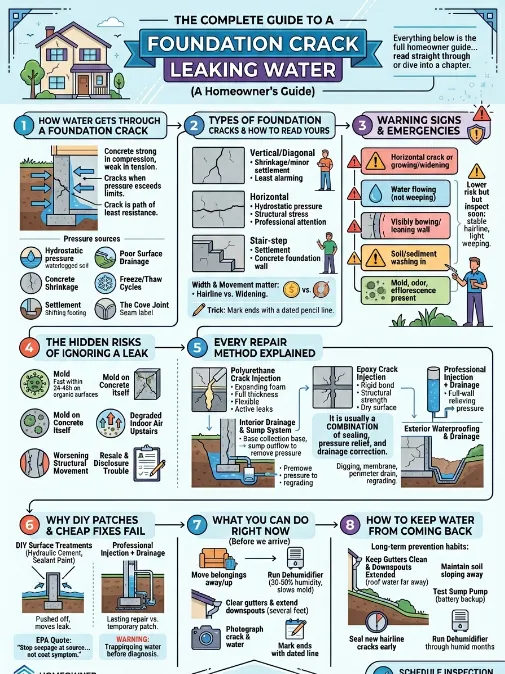
The Complete Guide to a Foundation Crack Leaking Water
Everything below is the full homeowner guide, written out in plain language. Each chapter is complete on its own, so you can open the one that matches your situation or read straight through to understand the entire problem before we arrive.
- How water actually gets through a foundation crack
Concrete is enormously strong when you press on it, and surprisingly weak when you pull it apart. Engineers describe this as strong in compression and weak in tension. Your foundation wall spends its life resisting the soil and water pressing in from outside, and when that pressure exceeds what the wall can hold in tension, it relieves itself the only way it can: it cracks. The crack then becomes the path of least resistance, and any water under pressure follows it straight into your basement.
The pressure itself usually comes from one of a few sources, and in the NY metro the first two below do most of the damage:
Hydrostatic pressure from a high water table. Water has weight. When the soil around your foundation saturates after heavy rain or spring thaw, that waterlogged soil pushes against the wall from every direction at once. The higher the groundwater rises and the longer it stays, the harder it pushes. This is the single most common driver of a leaking crack in our area, and it is why a crack can sit dry for weeks and then weep the moment the water table climbs. Our primer on hydrostatic pressure walks through the physics in detail.
Poor surface drainage and grading. If your yard slopes toward the house, if downspouts dump roof water at the base of the wall, or if gutters overflow, you are concentrating rainwater exactly where it can do the most harm. The EPA and university extension programs recommend the soil slope away from the foundation at roughly one inch per foot for the first several feet. Correcting exterior drainage is often the cheapest and highest-leverage piece of a lasting fix.
Concrete shrinkage and curing. Poured concrete shrinks as it cures, and most foundations develop fine shrinkage cracks within the first year or two. These are usually harmless on their own, right up until water finds them and turns a cosmetic line into a leak.
Settlement. When the soil beneath the footing moves, compresses, or washes out, part of the foundation drops and the wall cracks under the strain. Settlement cracks tend to widen over time and deserve closer attention than shrinkage cracks.
Freeze and thaw cycles. Our winters repeatedly freeze and thaw the ground and the concrete, and that expansion and contraction works existing cracks a little wider every year.
The cove joint. The cove joint is the seam where the foundation wall sits on the footing. It is not technically a crack, but it leaks for the same reason, because water under pressure finds the seam and pushes through. For the full picture on how basements take on water, see our complete guide to what causes moisture problems in basements.
- Types of foundation cracks and how to read yours
The direction, width, and shape of a crack tell a trained eye a great deal about what caused it and how worried you should be. Here is how to read what you are looking at.
Vertical and diagonal cracks are the most common and usually the least alarming. They often start as shrinkage during curing or from minor settlement. They are typically lower risk structurally, but understand that any crack becomes a leak once water reaches it, so a weeping vertical crack still needs sealing.
Horizontal cracks are the ones to respect. InterNACHI documents that horizontal cracks are frequently caused by hydrostatic pressure pushing inward on the wall, and they can indicate the wall is under real structural stress. A horizontal crack, especially one that runs a long distance or is paired with any inward bowing, is a reason to get a professional out quickly. You can browse a visual reference at the InterNACHI settlement and cracks gallery.
Stair-step cracks appear in concrete block and brick foundations and follow the mortar joints in a staircase pattern. They often point to differential settlement, meaning one part of the foundation has dropped more than another.
Hairline versus widening. A stable hairline crack that has not changed in years is very different from one that is visibly wider at one end, growing, or that you can fit a coin into. Width and movement matter more than length. A simple trick is to mark the ends of the crack with a dated pencil line and watch whether it travels.
Our side-by-side breakdown of every pattern, with what each one means for repair, lives in foundation crack types compared.
- Warning signs and how to tell if it is an emergency
Not every wet crack needs a truck in the driveway tonight, but some do. We tell homeowners to treat a foundation crack leaking water as urgent if any of the following are true:
- The crack is horizontal, or it is clearly wider at one end and growing.
- Water is flowing rather than weeping, especially during or right after rain.
- The wall is visibly bowing, leaning, or shifting inward.
- You see soil or fine sediment washing in with the water, which means the ground outside is eroding.
- Mold, a musty odor, or white efflorescence is already present around the crack.
A stable hairline crack that weeps lightly during a downpour is lower risk and can usually wait for a scheduled inspection, but it should still be looked at before it becomes the next emergency. When you are unsure, get eyes on it. A professional assessment costs far less than the structural and mold remediation that follows a wall left to fail.
- The hidden risks of ignoring a leaking crack
The puddle on the floor is the least of your concerns. Here is what the moisture sets in motion behind the scenes.
Mold, fast. Mold needs only moisture and an organic surface, and a leaking crack provides a steady supply of the first. The EPA notes that mold can begin growing on wet materials within 24 to 48 hours, which means damp drywall, framing, carpet, and stored belongings near the crack are at risk almost immediately. Our guide to the signs of mold in a basement shows what to watch for.
Mold on the concrete itself. People assume bare concrete is safe, but it holds dust and organic film that mold feeds on once the surface stays wet.
Worsening structural movement. A crack that keeps moving under pressure can progress toward bowing basement walls, which is a far larger and more expensive repair than sealing a leak early.
Degraded indoor air upstairs. Moisture and mold spores from the basement migrate upward through the natural air currents in a house, so a problem you think is contained below can affect bedrooms two floors up.
Resale and disclosure trouble. Water intrusion is exactly the kind of issue that surfaces on a home inspection and on disclosure forms. Our piece on whether you can sell a house with foundation problems covers what buyers and agents look for, and why a documented repair protects your sale price.
- Every repair method explained
A lasting repair addresses both the opening and the pressure behind it. Here are the methods a professional actually uses, and when each is the right call.
Polyurethane crack injection. A contractor injects expanding polyurethane that fills the void through the full thickness of the wall. Polyurethane stays flexible and reacts with water, so it is excellent for sealing an active, currently leaking crack. It is the common choice for a non-structural crack where the goal is to stop water.
Epoxy crack injection. Epoxy bonds rigidly and restores some of the wall’s structural strength, so it is used where the crack has a structural component rather than only a water problem. It needs a drier surface to bond well, which is part of why diagnosis matters.
Interior drainage with a sump system. When hydrostatic pressure is the real culprit, the most reliable answer is to give the water somewhere to go instead of fighting it at one crack. An interior basement drainage system collects water at the base of the wall and routes it to a sump pump that ejects it away from the house, relieving the pressure that opened the crack in the first place.
Exterior waterproofing and drainage correction. Stopping water before it ever reaches the wall is the gold standard. That can mean exterior membrane waterproofing, a perimeter drain, regrading the soil, and extending downspouts. The EPA’s mold course specifically recommends stopping seepage quickly and regrading the area around the building, which you can read in EPA Mold Course Chapter 9.
The honest reality: it is usually a combination. The best repair for a foundation crack leaking water is rarely a single product. It is most often sealing the crack, relieving the pressure with drainage, and correcting the surface water that feeds the soil. A specialist diagnoses which combination your specific wall needs, because the wrong fix on the wrong cause simply moves the leak a few feet down the wall.
- Why DIY patches and cheap fixes keep failing
Hydraulic cement and sealant paints are surface treatments. They sit on the inside face of the wall while the water pressure keeps building on the outside. So the water simply pushes the patch off, or finds the next weak point a few feet over, and you are back where you started after the next big storm. This is why so many homeowners feel like they are fighting the same leak every spring.
The EPA’s mold guidance is blunt about this: the key is stopping seepage at the source and regrading around the building, not coating over the symptom. A professional injection fills the full thickness of the wall rather than skinning over it, and pairing the injection with drainage relieves the pressure that caused the crack in the first place. That is the difference between a repair that holds and a patch that buys you a few months.
One more warning: applying hydraulic cement or waterproof paint before a proper diagnosis can actually make things harder, because it traps water inside the wall and hides the evidence a specialist needs to find the true source.
- What you can do right now, before we arrive
These steps limit the damage without masking the problem or making the diagnosis harder.
- Move stored belongings away from the wall and up off the floor.
- Run a dehumidifier to hold relative humidity between 30 and 50 percent and slow mold growth.
- Clear your gutters and extend downspouts so they discharge several feet from the foundation. This alone can noticeably reduce a leak during the next rain.
- Photograph the crack and the water, and mark the crack ends with a dated line so you can document whether it is worsening.
- Hold off on permanent surface patches, since they trap water in the wall and complicate a proper repair.
- How to keep a foundation crack leaking water from coming back
Once the wall is sealed and the pressure is relieved, a few habits keep water away from the foundation for good:
- Keep gutters clean and downspouts extended so roof water lands well away from the house.
- Maintain soil that slopes away from the foundation, and top up low spots that settle over time.
- If you have a sump pump, test it before each wet season and consider a battery backup.
- Seal new hairline cracks early, before they have a chance to leak under pressure.
- Run a dehumidifier through the humid months to keep the whole basement dry and inhospitable to mold.
For the bigger picture on controlling moisture below grade, our complete guide to basement moisture problems ties it all together. And if your water seems to rise through the floor rather than the wall, see our companion guide on water coming up through the basement floor.
Foundation Crack Leaking Water: Final Thoughts
A foundation crack leaking water is your home telling you the ground outside is winning, and in the NY metro that pressure only grows with every storm and thaw. The leak is the symptom, not the disease, which is why the lasting fix always addresses the moisture and pressure behind the wall rather than the line on its surface. You can wipe up the puddle, but the water returns on the next heavy rain unless the cause is corrected, and every wet cycle widens the opening and gives mold more time to take hold. The sooner a foundation crack leaking water is diagnosed, the smaller and cheaper the repair. If water is tracing down your wall right now, treat it as the warning it is, book a free inspection, and let a local specialist trace it to the source so your basement stays dry for good.
Stop the leak at its source.
Frequently Asked Questions About Foundation Cracks Leaking Water:
Is a foundation crack leaking water dangerous?
Yes. A foundation crack leaking water can be dangerous because it may indicate hydrostatic pressure, wall movement, or drainage failure around the home. The water can also create damp basement conditions that support mold growth, wood rot, insulation damage, and musty odors.
Why does my foundation crack only leak when it rains?
A foundation crack usually leaks when it rains because the soil around the home becomes saturated. As the water table rises, hydrostatic pressure pushes water against the foundation wall and forces it through cracks. When the soil drains, the leak may stop temporarily, but the crack remains open.
What is the best way to fix a foundation crack leaking water?
The best fix depends on the crack and the water source. A small poured concrete crack may be repaired with polyurethane or epoxy injection, while recurring leaks may require interior drainage, a sump pump, exterior waterproofing, or structural reinforcement. The repair should stop both the leak and the pressure causing it.
Can I seal a leaking foundation crack myself?
A DIY patch can cover the surface, but it usually does not seal the full depth of the wall. Paint, caulk, hydraulic cement, and surface sealers often fail because water pressure keeps pushing from behind the foundation. Professional crack injection or drainage repair is more reliable for active leaks.
How much does it cost to fix a leaking foundation crack?
The cost to fix a leaking foundation crack depends on the repair method. A single crack injection is usually the lower-cost option, while interior drainage, sump pump installation, excavation, exterior waterproofing, or structural stabilization costs more. The price depends on whether the problem is only the crack or the water pressure behind it.
Will a leaking foundation crack get worse?
Yes, a leaking foundation crack can get worse if the water source is not corrected. Repeated rain, freeze-thaw cycles, soil pressure, and foundation movement can widen the crack or create new water paths. A crack that leaks more often, spreads, or changes shape should be inspected.
Does a leaking foundation crack mean my foundation is failing?
Not always. Some leaking cracks are non-structural shrinkage cracks, especially in poured concrete walls. However, horizontal cracks, stair-step cracks, widening cracks, bowing walls, and cracks with repeated seepage may indicate structural stress or drainage failure.
Can water through a foundation crack cause mold?
Yes. Water coming through a foundation crack can create the damp conditions mold needs to grow. Mold is more likely when moisture reaches drywall, framing, insulation, flooring, stored boxes, or other organic materials. Fixing the leak is the first step toward preventing recurring mold.
Will insurance cover a foundation crack leaking water?
Homeowners insurance usually does not cover gradual seepage, poor drainage, or long-term foundation maintenance problems. Sudden accidental damage may be treated differently depending on the policy. Homeowners should document the leak, review their policy, and contact their insurer for a coverage decision.
Do you serve my area?
Yes. We serve the NY metro area, including Long Island, Queens, Brooklyn, and the Bronx. Contact us to schedule a foundation inspection and confirm availability in your neighborhood.