
Hardly anyone looks up basement waterproofing cost because the topic is interesting. People look it up because something has already gone wrong. Maybe there’s a damp patch in the corner that never fully dries, or a chalky white film spreading across the block wall. Maybe the basement smells musty no matter how long you leave a window cracked, or the mold you scrubbed off last month has quietly come back.
If that sounds like your house, there’s one thing worth knowing before you read a single number. The stain, the smell, and the mold are symptoms. The real problem is water getting into a space that was never built to hold it, and waterproofing is what fixes that. Basement waterproofing cost depends almost entirely on how the water is getting in, not on how big the room is, which is why two basements that look identical can cost very different amounts to repair.
So this guide does what most pricing pages skip. It walks through each basement waterproofing method, explains what each one actually solves, and gives honest 2026 ranges for homes in the Bronx, Brooklyn, Queens, and on Long Island. By the time you finish, you should be able to read a contractor’s quote and tell whether it fits the problem you actually have.
In This Guide
- Why basements leak in the first place
- What each waterproofing method costs
- Knowing the cost before you hire
- What pushes your quote up or down
- The cost of waiting
- Frequently asked questions
Why Basements Leak in the First Place
A price doesn’t mean much until you know what you’re paying to solve, so start with the cause. Water gets into NY-metro basements in a few predictable ways, and each one points toward a different repair.
The most common is hydrostatic pressure, and it’s the one homeowners understand least. When the soil around your foundation gets soaked, whether from heavy rain, melting snow, or just a naturally high water table, that water pushes against your walls and floor. It pushes hard. Then it finds the weakest spot and comes through. Long Island sees a lot of this because the soil is sandy and the water table sits close to the surface. Older masonry foundations around Brooklyn and the Bronx see it too, since decades of freezing and thawing have already opened up small paths for water to follow.
Then there’s the cove joint, which is the seam where the wall meets the floor slab. It isn’t a crack and it isn’t a defect. It’s just a seam, and under enough pressure it weeps. Plenty of homeowners panic when they see a cove joint leaking, thinking the foundation is failing, when it’s really a drainage problem with a fairly contained fix.
Cracks in the wall or floor, soil that slopes toward the house instead of away from it, and gutters that overflow at the foundation line round out the usual suspects. A clogged gutter dumping water against your foundation is about the cheapest problem to create and one of the most expensive to leave alone.
Now, why does any of this connect to mold? Because every one of those causes brings moisture into the basement, and moisture is the one thing mold has to have. That’s the reason so many people find a water problem only after they’ve already found a mold problem. The EPA’s guidance on mold and moisture makes the same point: control the moisture and you control the mold. Waterproofing and mold aren’t two separate jobs. Waterproofing is just the permanent version of the fix.
The Bottom Line
The price of waterproofing follows the cause of the water, not the size of the basement. Same-size basements, different problems, very different quotes.
What Each Basement Waterproofing Method Actually Costs
There’s no single price for waterproofing because there’s no single problem. The ranges below are realistic for the NY metro in 2026. Use them to plan and to sanity-check a quote, but understand that the only number that truly counts is the one a contractor gives you after looking at the water themselves.
| Service | Description | Average Cost |
|---|---|---|
| Interior Waterproofing | Drainage systems and moisture management solutions. | $3,000 – $8,000 |
| Exterior Waterproofing | Excavation and foundation sealing for long-term protection. | $8,000 – $20,000+ |
| Sump Pump Installation | Automatic water removal systems for flood prevention. | $1,500 – $4,500 |
| French Drain System | Subsurface drainage designed to redirect groundwater. | $4,000 – $12,000 |
Figures are 2026 NY-metro planning estimates. A real quote depends on an on-site inspection.
Crack and Cove-Joint Sealing
This is the entry-level repair, and when it actually fits the problem, it’s a real bargain. A contractor injects polyurethane or epoxy to seal a specific crack from the inside, or channels the cove joint into a drainage path. The catch is that sealing only works when water has one clear way in. If someone seals a crack and the water just shows up at the next weak spot a few months later, the sealing wasn’t done badly. The diagnosis was wrong. Sealing handles a single symptom, and it won’t stand in for drainage when pressure is the thing actually driving water inside.
Crack and Cove-Joint Sealing
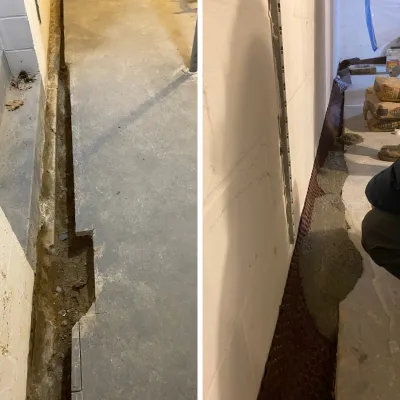
This is the entry-level repair, and when it actually fits the problem, it’s a real bargain. A contractor injects polyurethane or epoxy to seal a specific crack from the inside, or channels the cove joint into a drainage path. The catch is that sealing only works when water has one clear way in.
If someone seals a crack and the water just shows up at the next weak spot a few months later, the sealing wasn’t done badly. The diagnosis was wrong. Sealing handles a single symptom, and it won’t stand in for drainage when pressure is the thing actually driving water inside.
Sump Pump Systems and Backups
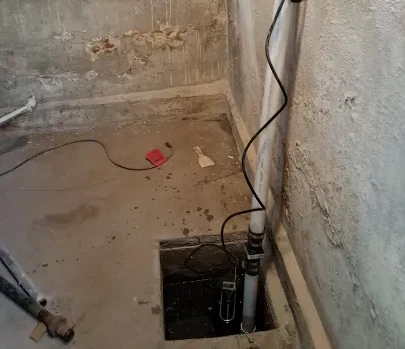
A sump pump is the discharge end of a drainage system. It’s the part that physically moves collected water out of the house. By itself it doesn’t change how water gets in, which is why it almost always works alongside drainage rather than instead of it.
And there’s something worth thinking about for this region specifically. The worst flooding tends to happen during the same storms that knock the power out. A battery backup isn’t a nice extra in that situation. It’s what stands between a dry basement and a flooded one at two in the morning.
Interior Drainage Systems
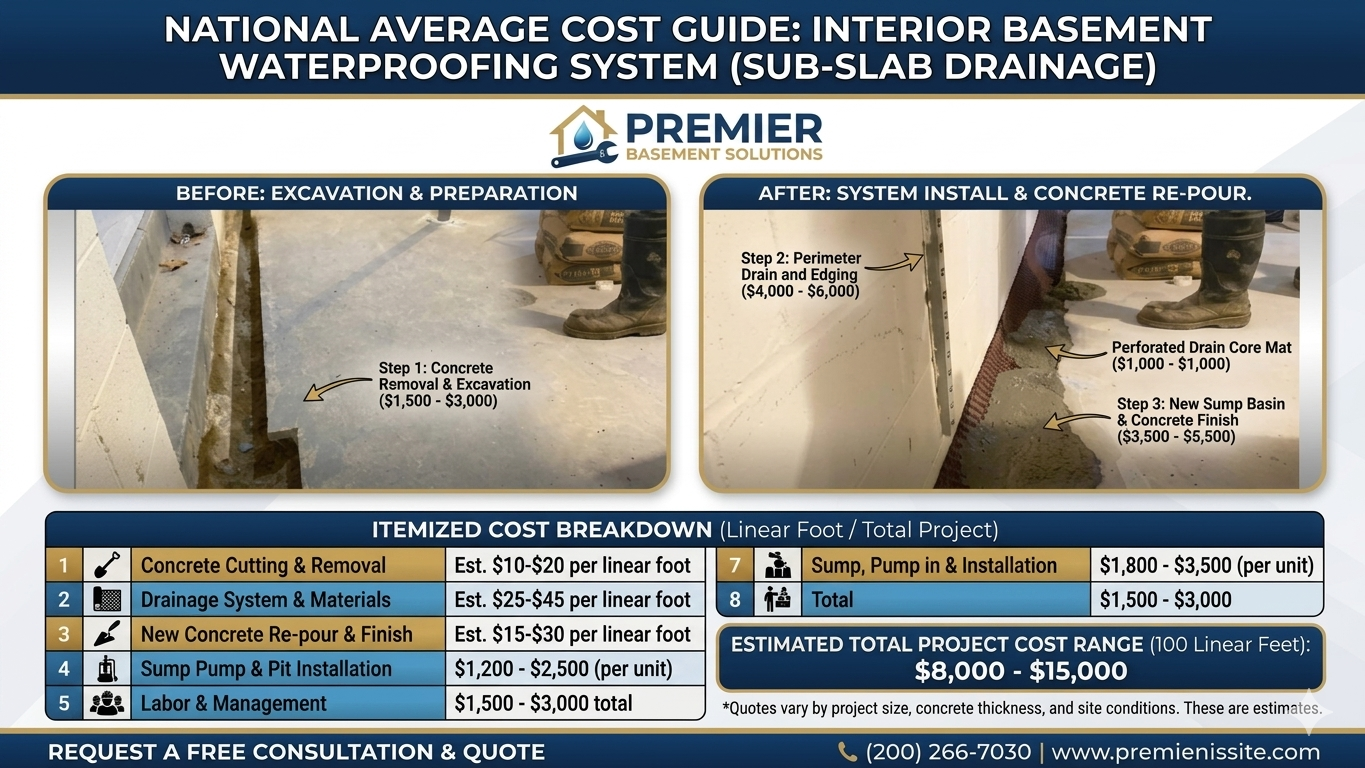
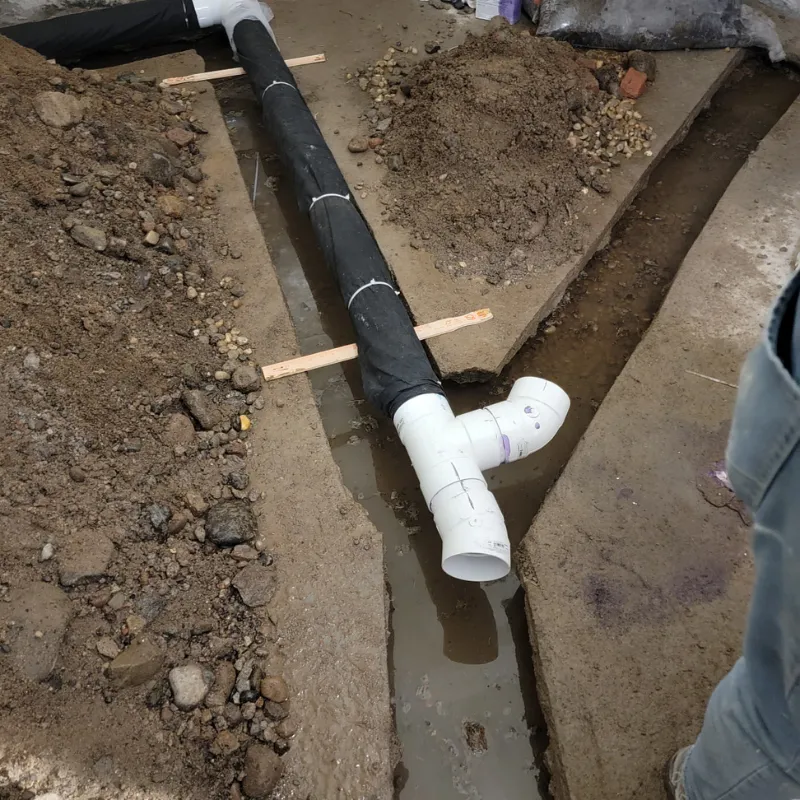
For most NY-metro homes dealing with steady leaking, an interior basement drainage system does the heavy lifting. A contractor cuts a channel around the inside edge of the slab, sets perforated pipe in gravel, and routes any water that gets in toward a sump pump instead of fighting it at the wall. It doesn’t try to stop water. It manages it, and that’s exactly why it lasts. Price tracks with how many linear feet your foundation runs and how much concrete has to come out and go back.
Exterior Excavation Waterproofing
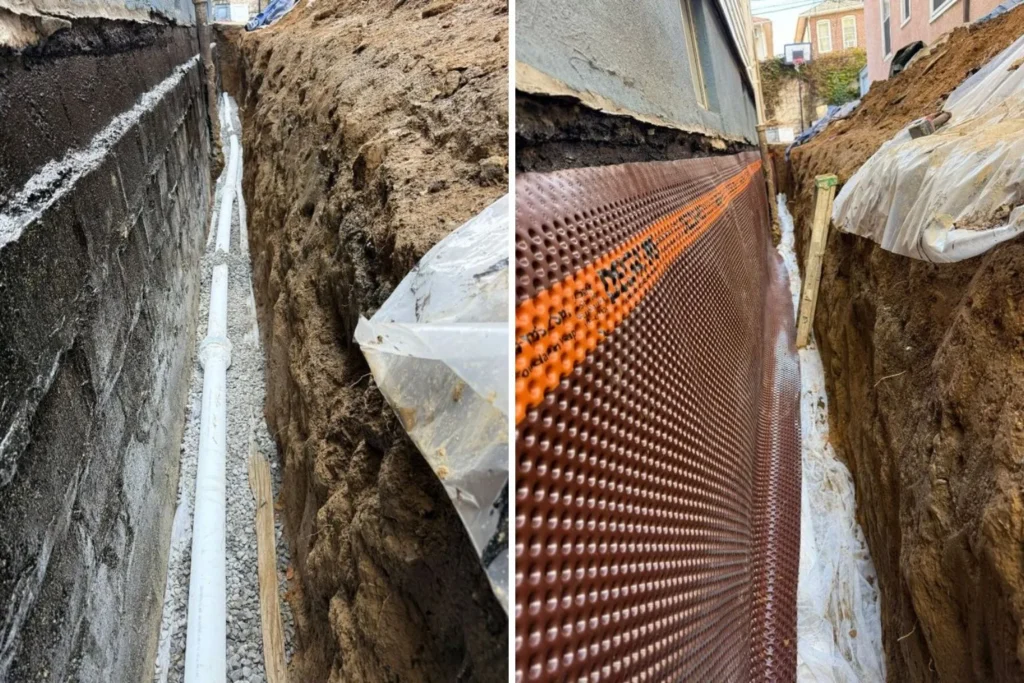
This is the most thorough approach, and also the priciest. A crew digs out the soil around the foundation, cleans the wall, seals it with a membrane, and adds exterior drainage before filling everything back in. It stops water at the source. The cost comes from the labor, the excavation, the landscaping that gets torn up, and the simple fact that a lot of NY-metro lots are too tight for machines to move around easily.
It’s the right answer for severe water intrusion, or when a wall is already being worked on structurally. For an everyday leak, though, it usually isn’t the first thing a good contractor reaches for.
Full Perimeter Systems
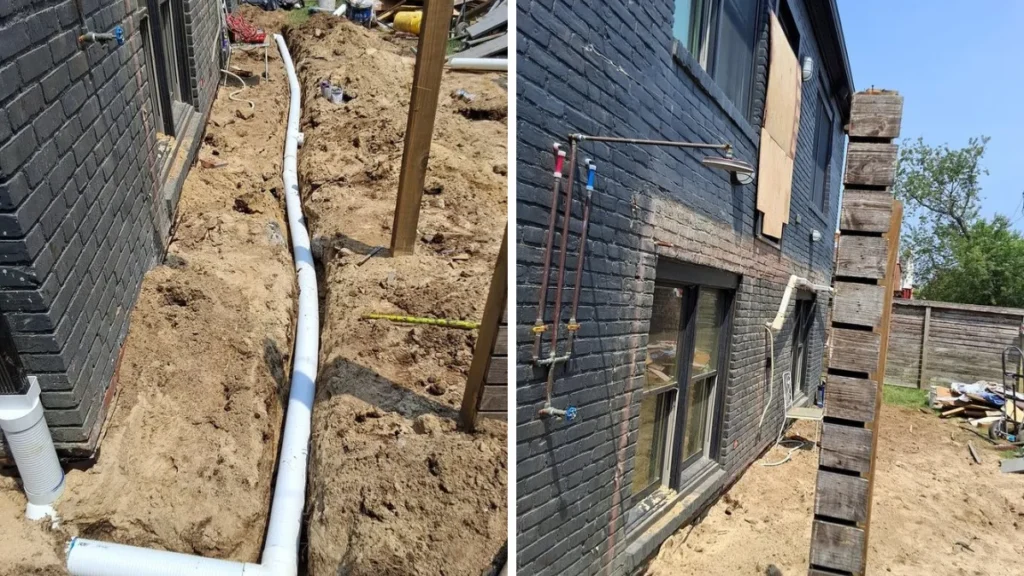
When water comes in at several points and you actually want the basement to be usable space, a combined approach makes sense. That means interior drainage, sump discharge, and some targeted sealing all working together. It costs more up front than any single repair. It costs less than paying to chase one leak after another, season after season.
Benefits of Understanding Basement Waterproofing Cost Before You Hire
Knowing what basement waterproofing cost should look like before a salesperson is standing in your basement changes the whole conversation. You stop hoping a quote is fair and start actually knowing.
A homeowner who understands the methods asks sharper questions. Which problem are you solving here? Why this method instead of a cheaper one? What happens if water finds the next weak spot after you’re done? Questions like that pull the diagnosis out into the open, and the diagnosis is the thing you’re really paying for. A contractor who can answer them plainly is worth more than one who just hands you the lowest figure.
It also keeps you out of the two traps people fall into most. The first is overpaying, like spending on exterior excavation when interior drainage would have solved everything for a third of the money. The second is underpaying, like sealing one crack when hydrostatic pressure guarantees the water will simply reroute itself. Both happen when a homeowner can’t connect the price to the cause.
Why Comparing Basement Waterproofing Cost Is the Smartest First Step
Before you commit to anyone, get two or three quotes and compare basement waterproofing cost across them. Not to find the cheapest bid. To find the one they agree on. When three contractors walk your basement and describe the same problem in roughly the same way, you can trust that diagnosis. When their proposals contradict each other all over the place, that disagreement is telling you something important.
It means nobody has actually nailed down what’s wrong yet, and you need a more careful inspection before any money moves. It also helps to know that industry trade groups like the Basement Health Association certify waterproofing specialists, which gives you one more way to vet who you’re trusting. Comparing quotes isn’t really about price. It’s a way to double-check the expertise.
What Pushes Your Quote Higher or Lower
Two basements the same size can come back with quotes thousands of dollars apart, and the reasons usually aren’t mysterious.
- Linear footage of foundation. Drainage is priced by the foot, so a long perimeter costs more than a short, compact one.
- The cause of the water. Surface water from bad grading is cheap to correct. A high water table pushing on the foundation needs a real system.
- Access. A finished basement that has to be partly torn out and rebuilt adds cost, and so does a cramped lot that blocks equipment.
- Foundation type and age. The older fieldstone and brick foundations under pre-war NY housing need more careful handling than poured concrete.
- Discharge logistics. Where the water finally goes, and how far it has to travel to get there, affects the plumbing and the price.
If a contractor quotes a flat per-square-foot price without asking about any of this, they haven’t diagnosed your basement. They’ve guessed at it.
Basement Waterproofing Cost: Final Thoughts
If there’s one idea to carry out of this guide, it’s that basement waterproofing cost was never really a question about a basement. It’s a question about the specific path water is taking into your home, and the right price is simply the one that matches that path. A $1,500 crack repair and a $30,000 excavation can both be correct, or both be wrong, depending entirely on the diagnosis sitting behind them. That’s why the smartest money you’ll spend isn’t the first quote you accept. It’s a thorough, honest inspection that figures out how and why water is getting in before anyone proposes a fix.
The mold, the musty smell, or the damp wall that sent you looking for answers is the symptom. Water is the cause, and waterproofing is the cure that actually holds. If you’re noticing any of those warning signs in the Bronx, Brooklyn, Queens, or on Long Island, book a professional basement inspection. A clear diagnosis is what turns basement waterproofing cost from an anxious guess into a decision you can feel good about, and it’s the step that protects your home and your money for years to come.
Get a Straight Answer Before You Spend a Dollar
Frequently Asked Questions About Basement Waterproofing Cost
Does basement waterproofing increase home value?
In many cases, yes, especially in markets where basements are common living or storage spaces. Buyers notice water stains, musty odors, and foundation cracks immediately because they signal ongoing risk. A professionally waterproofed basement tells buyers the house has been maintained properly, reduces inspection concerns, and can preserve usable square footage that would otherwise feel unsafe or unusable.
What are the signs that a basement needs waterproofing?
The warning signs usually start small before turning expensive. Common indicators include musty odors, peeling paint, damp walls, white chalky residue on masonry, rusting appliances, floor cracks, pooling water, or visible mold growth. Some homes never show standing water but still suffer from chronic humidity that slowly damages materials and indoor air quality over time.
What's the best basement waterproofing method?
That depends entirely on why the water is entering. Exterior waterproofing is usually the strongest option for stopping groundwater before it reaches the foundation wall, but it is also more invasive and expensive. Interior drainage systems are often the most practical solution for homes with hydrostatic pressure issues because they safely redirect incoming water to a sump pump before damage occurs.
Can waterproofing stop mold in a basement?
Waterproofing is one of the most effective long-term mold prevention strategies because mold needs moisture to survive. Removing visible mold without fixing the water intrusion simply resets the clock until growth returns. A dry basement dramatically reduces the conditions that allow mold colonies to spread behind walls, under flooring, and throughout stored materials.
Will waterproofing eliminate basement humidity?
It can reduce humidity dramatically if groundwater intrusion is the source, but many basements still benefit from dedicated humidity control afterward. Waterproofing addresses bulk water entry, while dehumidifiers help maintain stable indoor moisture levels year-round. In humid climates or older homes, both systems usually work together.
How much does basement waterproofing usually cost?
Costs vary widely based on the cause of the problem, the size of the basement, and the repair method involved. Minor crack injections may cost a few hundred dollars, while full interior drainage systems or exterior excavation projects can run several thousand dollars or more. The most important thing is diagnosing the actual source correctly before spending money on the wrong solution.
Is exterior waterproofing better than interior waterproofing?
Neither is universally “better.” Exterior systems stop water before it touches the foundation wall, which is ideal in severe groundwater conditions. Interior systems manage water after it enters and are often less disruptive and more cost-effective for existing homes. Many long-lasting waterproofing projects combine both approaches where appropriate.
Can a finished basement be waterproofed?
Yes, but it often requires temporarily removing portions of finished walls or flooring to access the foundation and install drainage components correctly. That’s why waterproofing should ideally happen before finishing a basement. Waiting until after leaks appear usually increases restoration costs because finished materials trap moisture and hide damage.
How long does basement waterproofing installation take?
Simple crack repairs may only take a few hours, while interior drainage systems often take two to five days depending on the basement layout and concrete removal involved. Exterior excavation projects can take longer because weather, soil conditions, and access around the home all affect installation speed.
Can basement leaks cause foundation damage?
bsolutely. Water pressure against foundation walls can slowly widen cracks, shift walls inward, weaken mortar joints, and erode supporting soil beneath the structure. What begins as a small seasonal leak can eventually contribute to bowing walls, settlement issues, or major structural repairs if moisture intrusion is ignored for too long.