
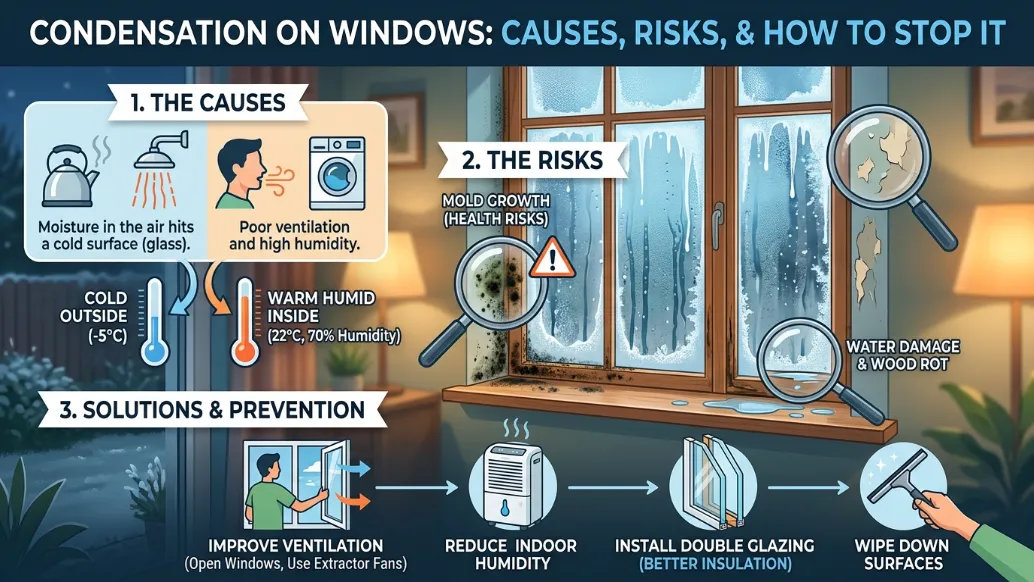
Condensation on windows is one of the most common moisture complaints homeowners have, and it is also one of the most misread. That film of water on the glass on a cold morning, the droplets running down to the sill, the foggy corners that will not clear, all of it is your home telling you something about the balance between indoor humidity and cold surfaces. Sometimes condensation on windows is completely harmless. Other times it is the first visible sign of a humidity problem that is quietly feeding mold and rot in places you cannot see. This guide explains exactly why it happens, how to tell the harmless version from the warning sign, and the steps that actually stop it.
When foggy glass is harmless, when it is a warning sign, and the proven ways to get rid of it before it turns into mold.
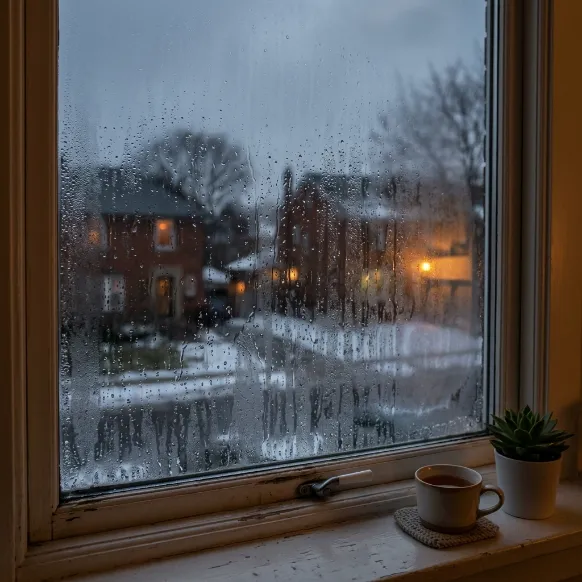
What Causes Condensation on Windows
The mechanism is simple physics. Air holds water vapor, and warmer air holds more of it. When warm, moisture laden indoor air touches a cold surface like a window pane, the air right at the glass cools, loses its ability to hold that vapor, and the water condenses into the droplets you see. The temperature at which this happens is called the dew point. Your window is usually the coldest surface in the room, which is why it is the first place moisture shows up.
Three things have to line up for it to occur: humid indoor air, a cold surface, and poor air movement across that surface. Reduce any one of them and the fogging eases. That is the whole basis of every fix later in this guide.
Where the Moisture Comes From
The indoor humidity that fogs your glass has to come from somewhere, and there is usually more of it than people expect. Everyday living generates a surprising volume of water vapor: cooking, boiling water, showering, drying laundry indoors, running a humidifier, even breathing and houseplants. Unvented gas heaters add moisture directly to the air. On top of that, a home can be loaded with vapor from below, moisture rising out of a damp basement or a wet crawl space through the stack effect, which pulls humid air upward through the house. When your windows fog in every room, a hidden bulk moisture source is often the reason.
Contractor note: If condensation on windows appears throughout the house rather than in one room, do not assume it is just a window problem. Whole home fogging usually points to a humidity source, and the most common hidden one is a crawl space or basement quietly evaporating water into the air you breathe.
| Where it forms | What it means | What to do |
|---|---|---|
| Inside surface of the glass | Indoor humidity is too high for the cold glass | Lower humidity, improve ventilation and air movement |
| Outside surface of the glass | Usually harmless, efficient windows staying cold on humid mornings | Nothing needed, it clears as the day warms |
| Between the panes | The seal on a double pane unit has failed | The insulated glass unit needs repair or replacement |
When Condensation on Windows Is a Warning Sign
A light haze on the coldest mornings that clears by mid morning is generally nothing to worry about. The version that should get your attention is persistent moisture: water that pools on the sill, frames that stay damp, condensation that shows up every day through the cold season, or fogging in many rooms at once. That level of moisture does real damage over time. It rots wood sills and frames, stains and peels paint, swells trim, and, most importantly, it feeds mold. The EPA guidance on mold and moisture is direct on this point: control the moisture and you control the mold. Chronic window condensation is simply the visible edge of a humidity level that is also promoting mold growth on walls and in other hidden spots.
You may already be seeing the next stage of the problem on the woodwork around the glass. If so, our guide on mold on the window sill covers removal and prevention for that specific spot.
How to Stop Condensation on Windows
Because the problem is a balance of humidity, cold surfaces, and airflow, the fixes fall into those same three buckets. Work through them in order, starting with humidity, because that is the root of most cases.
Bring Indoor Humidity Down
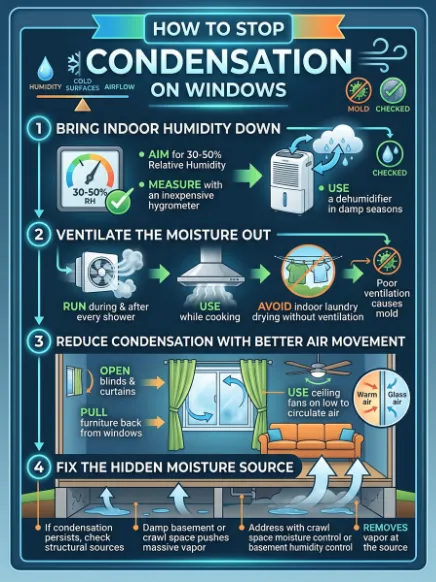
The single most effective move is to lower the amount of water vapor in your indoor air. Aim for a relative humidity between 30 and 50 percent, which is the range that keeps both condensation and mold in check. Our home humidity guide shows how to measure it with an inexpensive hygrometer and hit that target room by room, and the best humidity to prevent mold breakdown explains why that band matters. In damp seasons, a dehumidifier is the most reliable tool for holding the number down, and the benefits of a dehumidifier extend well past the windows to the whole home.
Ventilate the Moisture Out
Get the humid air out at the source. Run the bathroom exhaust fan during and after every shower, use the kitchen range hood while cooking, and avoid drying laundry indoors without ventilation. Poor ventilation is one of the most common reasons humidity climbs, and our explainer on how poor ventilation causes mold connects the dots between stale air and moisture damage. Better whole home air exchange is part of protecting indoor air quality overall.
Reduce Condensation on Windows With Better Air Movement
Still air next to a cold pane condenses fastest. Open blinds and curtains so warm room air can reach the glass, pull furniture back from windows, and use ceiling fans on low to keep air circulating. These are small changes, but they raise the surface temperature of the glass enough to reduce fogging in borderline cases.
Fix the Hidden Moisture Source
If you have lowered humidity, ventilated well, and the windows still fog throughout the house, the water is coming from somewhere structural. A wet basement or an unsealed crawl space can push enormous amounts of vapor into the living space. Addressing it with crawl space moisture control or by learning how to control basement humidity often solves window condensation that no amount of surface fixing would touch, because it removes the vapor at the source instead of chasing it at the glass.
Foggy Windows in Every Room?
When to Call a Professional
Reach for the phone when the condensation is persistent and widespread, when you already see mold or soft, spongy wood around the frames, when moisture is showing up between the panes, or when you have tried the humidity and ventilation steps and the fogging keeps returning. Those patterns point past the window itself to a moisture load the house cannot shed on its own. A professional moisture inspection measures humidity, traces the source, and tells you whether you are dealing with a simple ventilation gap or a wet crawl space feeding the entire structure. It is far cheaper to identify that source than to remediate the mold it eventually causes.
Condensation on Windows: Final Thoughts
Condensation on windows is worth paying attention to because it is honest. It shows you, in plain sight, that your indoor air is holding more moisture than the house can comfortably handle. When it is occasional and clears on its own, there is nothing to fix. When it is persistent, pools on the sill, or shows up in room after room, treat it as an early warning rather than a cosmetic annoyance, because the same humidity that fogs your glass is the humidity that grows mold. Start by measuring and lowering your indoor humidity, ventilate at the source, keep air moving across the glass, and if the fogging still will not quit, look for the hidden bulk moisture feeding it. Handle it at that level and condensation on windows stops being a recurring winter headache and becomes a solved problem.
Free moisture inspection across Long Island, Brooklyn, Queens, and the Bronx. We find the source and give you a plan that actually holds.
Frequently Asked Questions About Condensation on Windows:
Is condensation on windows a serious problem?
Occasional condensation on windows on cold mornings is usually harmless and clears as the day warms. It becomes a serious problem when it is persistent, pools on the sill, or shows up in room after room, because that level of moisture rots wood, ruins paint, and feeds mold. Treat chronic fogging as an early warning about indoor humidity, not a cosmetic issue.
What causes condensation on windows?
Condensation on windows happens when warm, humid indoor air touches the cold surface of the glass and the water vapor turns to liquid. The glass is usually the coldest surface in the room, so moisture shows up there first. Cooking, showering, drying laundry indoors, and moisture rising from a wet basement or crawl space all raise the humidity that feeds it.
How do I stop condensation on my windows?
The most effective way to stop condensation on windows is to lower indoor humidity to between 30 and 50 percent. Run exhaust fans while cooking and showering, use a dehumidifier in damp seasons, keep air moving across the glass by opening blinds and pulling furniture back, and fix any hidden moisture source such as a wet crawl space. Lower the humidity and the fogging stops.
Can condensation on windows cause mold?
Yes, condensation on windows can cause mold. Repeated moisture on sills, frames, and nearby walls gives mold the damp surface it needs to grow, and the same high humidity that fogs the glass promotes mold elsewhere in the home. Window fogging is often the earliest visible sign that conditions are right for mold.
Why do my windows have condensation in winter?
Windows fog in winter because the glass gets cold enough for warm indoor air to reach its dew point right at the surface. Heated homes hold more humidity from cooking, bathing, and breathing, while the outside cold drops the glass temperature, so the two extremes meet at the pane. The colder the glass and the more humid the air, the more condensation forms.
Is condensation on the inside of windows bad?
Condensation on the inside of the glass means indoor humidity is too high for the temperature of the window. A light film that clears is not damaging, but persistent inside condensation is worth acting on because it points to excess moisture that can lead to mold and wood rot. Lowering humidity and improving ventilation corrects it.
What indoor humidity level prevents condensation on windows?
Keeping indoor relative humidity between 30 and 50 percent prevents most condensation on windows and also discourages mold. In very cold weather you may need to stay closer to the lower end of that range, since colder glass fogs at lower humidity levels. An inexpensive hygrometer lets you check the number room by room.
Why do only some windows in my house have condensation?
Some windows fog while others stay clear because of differences in glass temperature and local humidity. Windows near bathrooms and kitchens sit closest to moisture sources, north-facing and single-pane windows run colder, and rooms with poor air circulation trap humid air against the glass. The foggiest windows point to where humidity or cold is highest.
Does condensation between window panes mean the window has failed?
Condensation between the panes of a double-pane window means the seal on the insulated glass unit has failed and moisture has leaked into the sealed space. This cannot be fixed by lowering indoor humidity, because the water is trapped inside the unit. The glass unit itself needs repair or replacement to clear it.
Will a dehumidifier stop condensation on windows?
A dehumidifier will stop condensation on windows in most cases because it directly lowers the indoor humidity that causes the fogging. It works best paired with good ventilation and, if the moisture is coming from below, with fixing a wet basement or crawl space. If windows still fog after humidity is controlled, a hidden bulk moisture source is usually the reason.