
Humidity plays a major role in whether mold can grow inside your home. When indoor air holds too much moisture for long periods, mold spores may begin growing on walls, ceilings, insulation, crawl spaces, basements, wood framing, and other damp surfaces. Understanding the best humidity to prevent mold can help homeowners protect indoor air quality, reduce moisture damage, and create a healthier living environment year-round.
In this blog, we’ll explain the ideal indoor humidity range for mold prevention, what humidity levels increase mold risk, how to monitor moisture inside your home, and the warning signs homeowners should never ignore. You’ll also learn practical mold prevention tips, room-by-room humidity recommendations, and when professional moisture inspections may be necessary to identify hidden problems before major structural damage develops.
Don’t Let Mold Problems in Long Island, Brooklyn, Queens, or The Bronx Worry You! We Are Everyone’s Favorite for Our Free Advanced Mold Testing and Family-Like Approach to Customers!
Schedule Your Free Advanced Testing Today!
Signs Humidity Levels May Be Too High In Your Home
Many homeowners don’t realize humidity problems are developing until visible warning signs appear. Excess indoor moisture can slowly build over time, especially in hidden areas behind walls, beneath flooring, inside crawl spaces, or around HVAC systems. Recognizing these early warning signs may help homeowners address moisture issues before mold growth and structural damage become more serious.
Common Signs Of Excess Indoor Humidity
- Condensation On Windows – Foggy glass and moisture buildup often indicate elevated indoor humidity levels.
- Musty Odors – Persistent earthy or damp smells may signal hidden moisture or mold growth.
- Damp Or Sticky Air – Rooms that constantly feel humid or uncomfortable may have poor airflow or excess moisture.
- Peeling Paint – Excess humidity can cause paint, wallpaper, and finishes to separate from surfaces.
- Warped Wood – Moisture exposure may cause hardwood floors, trim, or doors to swell or warp.
- Visible Mold Spots – Black, green, or white discoloration around walls, ceilings, vents, or bathrooms may indicate mold growth.
- Increased Allergy Irritation – Excess humidity may contribute to poor indoor air quality and worsen respiratory irritation.
- Persistent Basement Dampness – Damp basement air often signals larger moisture or waterproofing problems.
- HVAC Condensation Issues – Moisture buildup around vents, ductwork, or HVAC systems may indicate airflow or humidity control issues.
These warning signs matter because long-term humidity problems may create ideal conditions for mold growth, material deterioration, and indoor air quality concerns. In many homes, moisture damage develops gradually, making early detection extremely important for preventing larger structural or environmental issues later.
If your home constantly feels damp or musty, controlling humidity early may help prevent more serious mold and moisture damage.
What Is The Best Humidity To Prevent Mold?
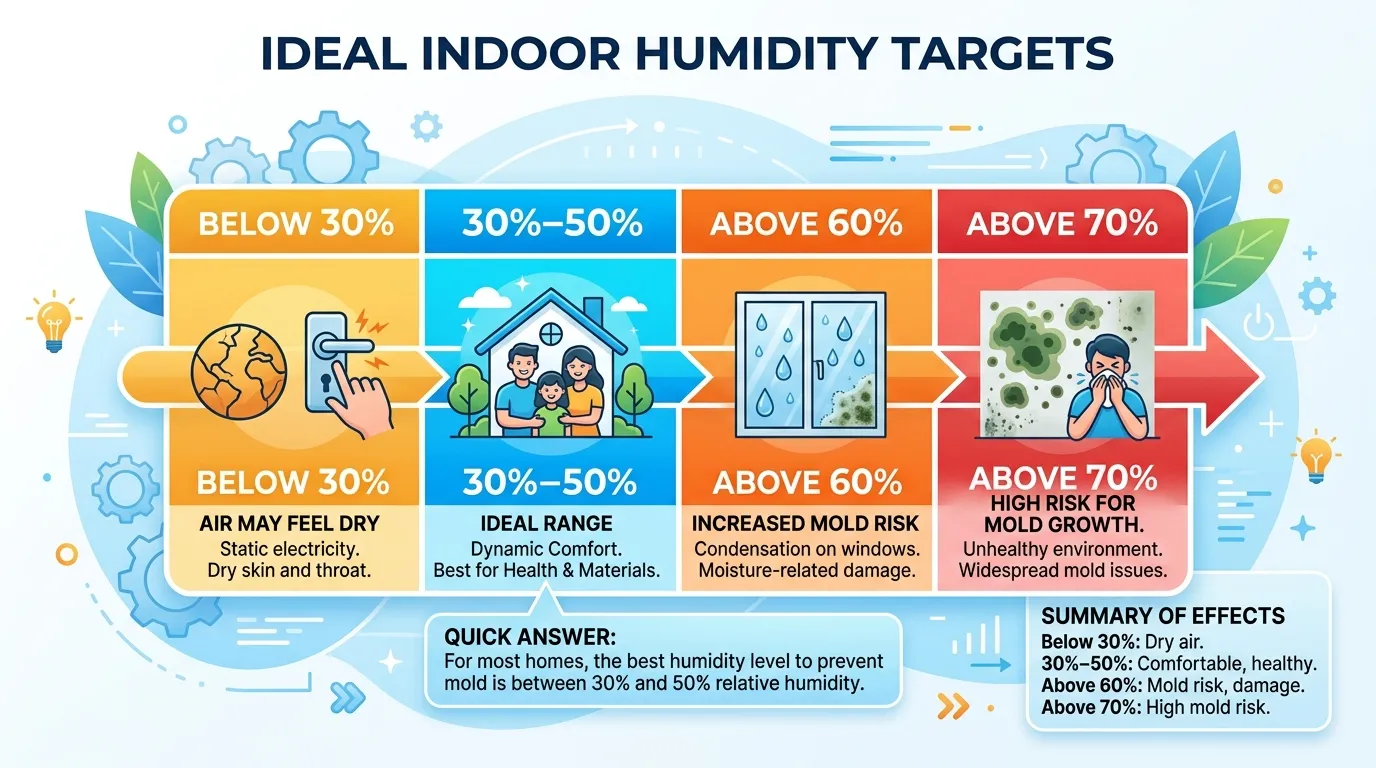
The best humidity to prevent mold inside most homes is generally between 30% and 50% indoor relative humidity. Keeping indoor moisture within this range helps reduce the likelihood of mold growth while still maintaining comfortable indoor air conditions. Many experts recommend keeping humidity below 60%, since mold spores thrive in damp, humid environments with consistent moisture exposure.
When indoor humidity becomes too high, moisture may begin collecting on surfaces such as drywall, wood, insulation, windows, ceilings, carpeting, and HVAC systems. Over time, this trapped moisture can create ideal conditions for mold growth, especially in poorly ventilated areas like basements, crawl spaces, bathrooms, and attics.
At the same time, extremely low humidity levels may create separate comfort issues inside the home, including dry skin, irritated sinuses, static electricity, and dry indoor air during winter months. The goal is maintaining balanced humidity throughout changing seasonal conditions.
Ideal Indoor Humidity Targets
- 30%–50%: Ideal Range
- Above 60%: Increased Mold Risk
- Above 70%: High Risk For Mold Growth
- Below 30%: Air May Feel Dry
For most homes, the best humidity level to prevent mold is between 30% and 50% relative humidity. Indoor humidity above 60% may increase the risk of mold growth, condensation, and moisture-related damage.
Concerned your humidity levels may already be causing hidden mold growth? Professional moisture inspections can identify problem areas before major damage develops.
Recommended Year-Round Indoor Humidity Levels to Help Prevent Mold
Humidity levels can fluctuate throughout the year based on outdoor temperatures, seasonal weather patterns, ventilation, and indoor moisture sources. Maintaining balanced indoor humidity may help reduce condensation, limit mold-friendly conditions, and improve overall indoor comfort. The table below provides general humidity recommendations homeowners can use throughout the year to help manage moisture more effectively.
| Outdoor Temperature Range (°F) | Recommended Indoor Relative Humidity | General Seasonal Conditions |
|---|---|---|
| 80°F And Above | 30%–50% | Hot, Humid Summer Conditions |
| 70°F To 79°F | 30%–50% | Warm Spring And Summer Weather |
| 60°F To 69°F | 30%–50% | Mild Transitional Weather |
| 50°F To 59°F | 30%–45% | Cooler Fall And Early Winter Conditions |
| 40°F To 49°F | 30%–40% | Cool Outdoor Temperatures |
| 30°F To 39°F | Below 40% | Cold Weather Conditions |
| 20°F To 29°F | Below 35% | Winter Conditions |
| 10°F To 19°F | Below 30% | Very Cold Outdoor Conditions |
| 0°F To 9°F | Below 25% | Extreme Winter Conditions |
| Below 0°F | 15%–20% | Severe Freezing Temperatures |
Concerned your humidity levels may already be causing hidden mold growth? Professional moisture inspections can identify problem areas before major damage develops.
Best Humidity Levels for Different Areas of the Home
Different areas of the home experience different moisture challenges depending on airflow, temperature changes, water exposure, and ventilation quality. Some areas naturally hold more humidity than others, making certain spaces more vulnerable to condensation and mold growth over time.
Basements are among the most common mold-prone areas inside a home because they are surrounded by soil and often experience limited airflow. To learn more about controlling humidity in damp basements, crawl spaces, and attics, check out our piece on How to Control High Humidity in Any Room.
How To Lower Humidity And Prevent Mold Growth
Reducing indoor humidity is one of the most effective ways to help prevent mold growth inside the home. Managing moisture early may help reduce condensation, improve indoor comfort, protect structural materials, and create healthier indoor air conditions year-round.
- Use A Dehumidifier
Dehumidifiers help remove excess moisture from indoor air and are especially useful in basements, crawl spaces, laundry rooms, and other damp areas. Most homeowners aim to maintain indoor humidity between 30% and 50% for healthier moisture control. :contentReference[oaicite:1]{index=1} - Improve Ventilation
Proper airflow helps humid air leave the home before moisture can collect on surfaces. Bathroom fans, attic ventilation, kitchen exhaust systems, and HVAC airflow all help reduce condensation and trapped moisture buildup. :contentReference[oaicite:2]{index=2} - Fix Water Leaks Quickly
Even small plumbing leaks, roof leaks, or foundation seepage may quietly increase humidity levels over time. Addressing moisture intrusion early may help prevent hidden mold growth and long-term structural damage. :contentReference[oaicite:3]{index=3} - Monitor Humidity Levels Regularly
Hygrometers, smart humidity monitors, and seasonal moisture tracking can help homeowners identify changing indoor humidity conditions before major problems develop. :contentReference[oaicite:4]{index=4} - Control Basement And Crawl Space Moisture
Encapsulation systems, vapor barriers, drainage systems, sump pumps, and waterproofing solutions may all help reduce excess moisture beneath the home and lower mold risks.

Best Tools To Monitor Indoor Humidity
Monitoring indoor humidity levels year-round can help homeowners identify moisture problems before they lead to mold growth or structural damage. Small changes in humidity may happen gradually, making moisture monitoring especially useful during seasonal weather shifts, storms, or periods of high outdoor humidity.
Several homeowner-friendly tools can help track indoor moisture conditions more accurately:
- Hygrometers – Simple indoor humidity gauges that display real-time relative humidity levels.
- Smart Thermostats – Many modern thermostats now include humidity monitoring features alongside temperature controls.
- Whole-Home Humidity Monitors – Advanced monitoring systems can track humidity throughout multiple rooms or HVAC zones.
- Dehumidifiers With Built-In Sensors – Many dehumidifiers automatically adjust operation based on indoor moisture levels.
Monitoring matters because humidity conditions may change rapidly during summer heat, winter condensation periods, storms, or heavy rainfall events. Tracking humidity consistently can help homeowners recognize abnormal moisture patterns earlier and respond before mold-friendly conditions develop.
Best Humidity To Prevent Mold: Final Thoughts
In most homes, maintaining indoor humidity levels between 30% and 50% is generally considered the best range for helping prevent mold growth. Once humidity rises above 60%, the risk of condensation, trapped moisture, and mold-friendly conditions increases significantly.
Monitoring indoor moisture throughout the year can help protect both indoor air quality and long-term structural conditions inside the home. Even when humidity levels appear normal, hidden moisture problems may still develop behind walls, beneath flooring, inside crawl spaces, or around HVAC systems without obvious warning signs.
The good news is that many humidity-related mold problems can often be reduced through proper ventilation, moisture control, leak prevention, and regular humidity monitoring. Early action may help homeowners avoid larger remediation costs and more serious indoor air quality concerns later.
If your home feels damp, smells musty, or struggles with high humidity year-round, identifying the source early may help prevent serious mold and structural damage later.
Contact Us for Free Advanced Mold Testing and Trusted, Proven Solutions That Stop Mold for Goo!d!
Frequently Asked Questions About Humidity and Mold Prevention
What Is The Best Humidity To Prevent Mold?
The best indoor humidity range to help prevent mold is generally between 30% and 50% relative humidity. Keeping humidity within this range may help reduce condensation, moisture buildup, and mold-friendly conditions while still maintaining comfortable indoor air levels.
Is 60% Humidity Too High Inside A House?
Yes, humidity levels above 60% are generally considered too high for most homes. Excess humidity may increase the risk of condensation, trapped moisture, mold growth, musty odors, and indoor air quality problems if moisture remains present for extended periods.
Can Mold Grow At 50% Humidity?
Mold growth is less likely at 50% humidity, but it can still occur if localized moisture problems exist. Hidden leaks, condensation, poor ventilation, or damp materials may still create mold-friendly conditions even when overall humidity levels appear moderate.
What Humidity Should A Basement Be?
Most basements should ideally remain between 30% and 50% relative humidity. Because basements are highly vulnerable to groundwater moisture and poor airflow, maintaining lower humidity levels may help reduce mold and moisture risks.
Does Running AC Reduce Mold Risk?
Yes, air conditioning systems may help reduce mold risk by removing excess moisture from indoor air. Properly functioning AC systems improve airflow and humidity control, especially during hot and humid summer conditions.
Should I Use A Dehumidifier Year-Round?
Some homes benefit from year-round dehumidifier use, especially in damp basements, crawl spaces, or humid climates. Seasonal weather conditions, ventilation quality, and indoor moisture levels all affect whether ongoing dehumidification may be necessary.
How Fast Can Mold Grow In Humid Conditions?
Mold may begin growing within 24 to 48 hours when moisture remains present on surfaces long enough. Warm, damp, and poorly ventilated environments often accelerate mold growth even faster.
What Causes High Humidity In A House?
High indoor humidity may result from poor ventilation, plumbing leaks, roof leaks, groundwater intrusion, daily household activities, humid outdoor air, or HVAC airflow problems. Seasonal weather changes can also significantly affect indoor moisture levels.
Can Humidity Cause Health Symptoms?
Excess humidity may contribute to allergy irritation, respiratory discomfort, musty odors, and poor indoor air quality. Damp environments may also increase exposure to mold spores and other airborne irritants over time.
How Do I Know If Humidity Is Causing Mold In My Home?
Common warning signs may include musty odors, condensation on windows, damp air, visible mold spots, peeling paint, warped materials, or persistent basement moisture. Professional moisture inspections may help identify hidden humidity-related mold problems more accurately.