
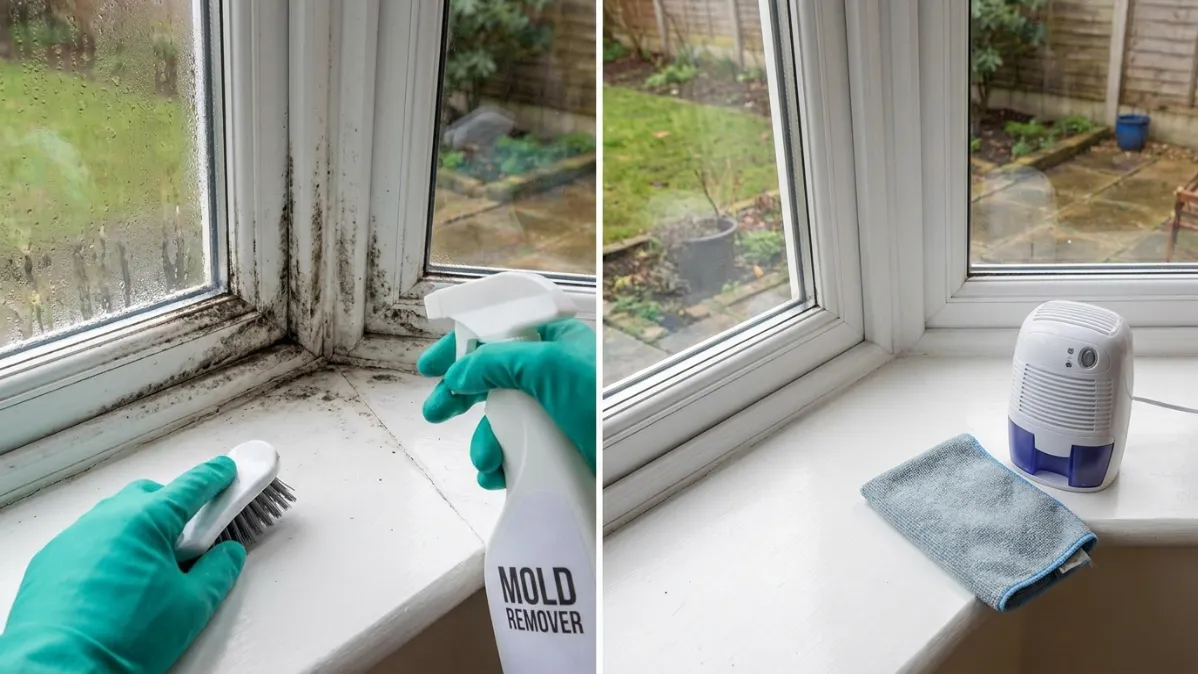
Mold on the window sill usually starts with moisture. When warm indoor air hits cold glass, condensation forms and runs down to the sill. Add dust, poor airflow, high humidity, or a small leak around the window, and mold has the moisture and food source it needs to grow.
For most homeowners, a small patch of mold on a hard, nonporous window sill can be cleaned with detergent and water, vinegar, or another surface-safe cleaner. The key is to dry the area completely afterward and fix the moisture problem that caused the mold in the first place.
Recurring mold is different. If mold keeps coming back, spreads into drywall, damages wood, or appears with a musty smell, the problem may be deeper than the surface. In that case, the window, wall, trim, or surrounding materials may need a closer inspection.
Mold on the Window Sill: The Short Answer
Mold on a window sill is usually caused by condensation. Warm indoor air hits cold glass, moisture collects on the sill, and mold grows on dust, paint, wood, or caulk. To remove it, clean the area with detergent and water or a surface-safe cleaner, scrub gently, rinse, and dry completely. To stop it coming back, reduce humidity, improve airflow, and fix leaks.
Safety Note
Never mix bleach with ammonia, vinegar, hydrogen peroxide, or other cleaners. Use one cleaner at a time, ventilate the room, and wear gloves, eye protection, and a mask when scrubbing mold. CDC specifically warns not to mix bleach with ammonia or other cleansers.
What Causes Mold on Window Sills?
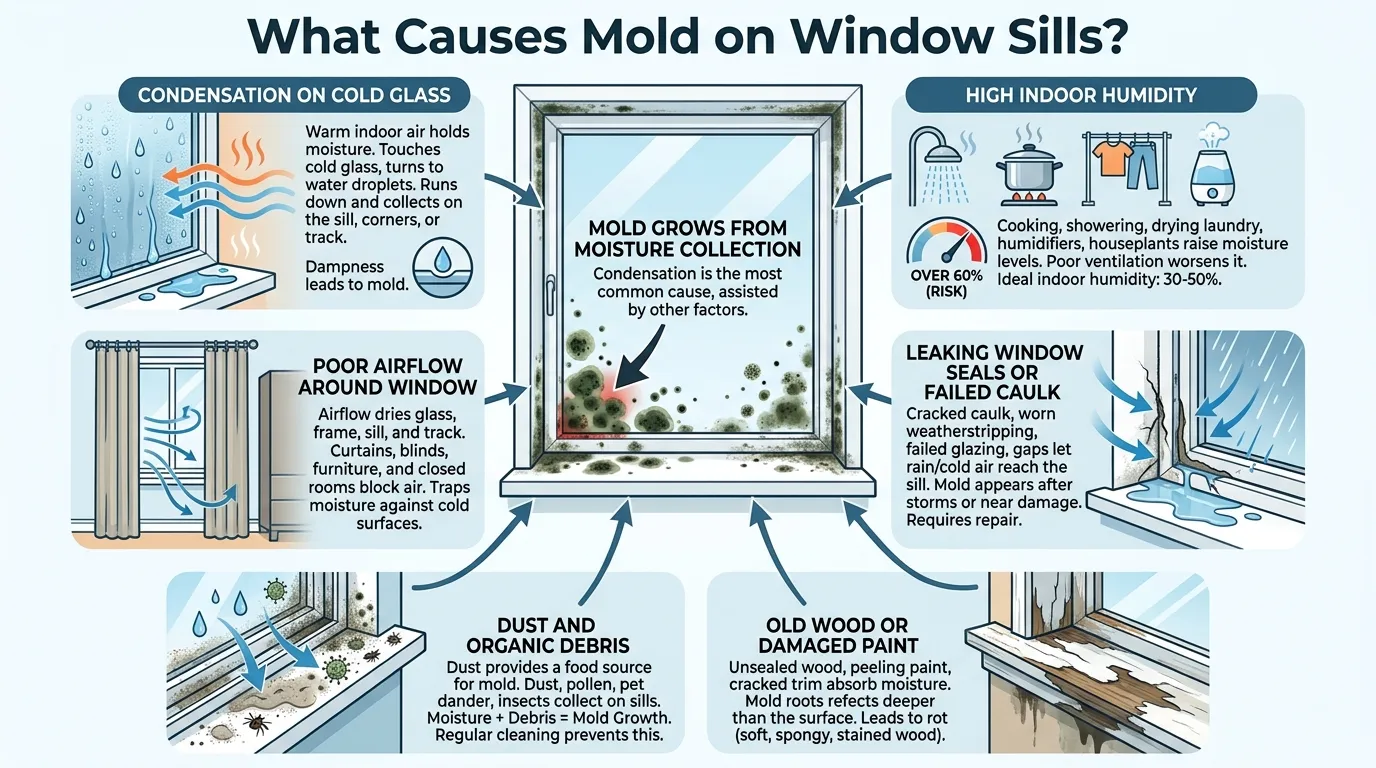
Mold grows on window sills when moisture keeps collecting on or around the window. The most common cause is condensation, but high humidity, poor airflow, leaks, dust, and damaged materials can all help mold take hold.
- Condensation on Cold Glass: Condensation is the leading cause of mold on window sills. Warm indoor air holds moisture. When that warm air touches cold window glass, the moisture turns into water droplets. Those droplets often run down the glass and collect on the sill, in the corners, or along the window track. If the area stays damp long enough, mold can begin to grow.
- High Indoor Humidity: High indoor humidity gives mold the moisture it needs. Cooking, showering, drying laundry indoors, using humidifiers, keeping many houseplants, and living with damp basements or crawl spaces can all raise the moisture level inside the home. Poor ventilation makes the problem worse because humid air has nowhere to go. To reduce mold risk, indoor humidity should generally stay below 60 percent, and ideally between 30 and 50 percent.
- Poor Airflow Around the Window: Airflow helps dry the glass, frame, sill, and window track. When air cannot move freely, moisture stays trapped against cold surfaces. Curtains, blinds, furniture, deep window wells, and closed-off rooms can all block airflow around a window. This is why mold often appears behind curtains, in window corners, or on sills that stay shaded and damp.
- Leaking Window Seals or Failed Caulk: Not all window mold comes from condensation. Cracked caulk, worn weatherstripping, failed glazing, poor installation, or gaps around the frame can let rainwater or cold air reach the sill. If mold appears after storms, around one specific window, or near damaged trim, the window may be leaking. In that case, cleaning the mold without repairing the seal will not stop it from coming back.
- Dust and Organic Debris: Mold needs a food source, and dust provides one. Dust, pollen, pet dander, dead insects, dirt, and other debris collect on window sills and tracks over time. When moisture lands on that buildup, spores have what they need to grow. Regular cleaning helps remove the food source before moisture turns it into a mold problem.
- Old Wood or Damaged Paint: Unsealed wood, peeling paint, cracked trim, and soft window sills absorb moisture faster than smooth nonporous surfaces. Once water gets into the material, mold can root deeper than the surface. Wooden sills need extra attention because mold and moisture can eventually lead to rot. If the sill feels soft, spongy, stained, or crumbly, the issue may be deeper than surface mold.
Is Mold on the Window Sill Dangerous?
A small patch of mold on a window sill is usually manageable when it is cleaned early and the moisture source is fixed. Still, it should not be ignored. Mold can aggravate allergies, asthma, respiratory irritation, and skin sensitivity, especially for children, older adults, people with asthma, and people with weakened immune systems.
The bigger concern is mold that keeps coming back or starts spreading. If the same patch returns after cleaning, moisture is still active. That moisture may come from condensation, high indoor humidity, failed caulk, worn weatherstripping, a leaking window, or hidden water damage around the frame.
Large mold patches should not be brushed, scraped, sanded, or disturbed without protection. Aggressive cleaning can release spores and particles into the air. If the mold covers a large area, keeps returning, or spreads beyond the sill, a professional inspection is the safer option.
Mold on wood or drywall can also point to deeper moisture damage. A dark patch on a vinyl sill may be a surface-cleaning issue, but mold on soft wood, bubbling paint, stained drywall, or crumbling trim may signal a larger problem inside the window frame or wall.
Black color alone does not prove the mold is toxic black mold. Many molds can look black, gray, green, or brown. The color matters less than the moisture source, the size of the affected area, the surface it is growing on, and whether the damp condition is still active.
Match the Cleaning Method to the Window Sill Material
The right cleaning method depends on what your window sill is made from. Vinyl, aluminum, painted trim, wood, stone, and caulk all react differently to moisture and cleaners. Matching the cleaner to the material helps remove mold without scratching, staining, etching, or trapping moisture inside the sill.
- Vinyl Window Sills: Vinyl window sills are nonporous, so mold usually sits on the surface instead of soaking in. Start with dish soap or mild detergent and warm water, then use vinegar or another compatible household cleaner if staining remains. Avoid abrasive pads, steel wool, or harsh scrubbing tools. Scratches can roughen the vinyl surface and give dirt, moisture, and mold more places to collect.
- Aluminum Window Sills: Aluminum window sills should be cleaned with mild detergent and warm water first. Use a soft cloth or brush to remove mold, dust, and residue without scratching the finish. Avoid harsh abrasives that can damage the coating or expose the metal underneath. After cleaning, dry the aluminum carefully to reduce water spots, condensation staining, and future mold growth along the track or frame.
- Painted Window Sills: Painted window sills need a gentle approach. Use a mild cleaner and a soft brush, especially around corners, seams, and window tracks. Avoid soaking chipped, cracked, or peeling paint. If the paint is failing, moisture may already be reaching the material underneath. In that case, mold may not be limited to the surface, and the sill may need drying, scraping, repainting, sealing, or repair after the mold problem is corrected.
- Wood Window Sills: Wood is porous, which means mold can root into the grain when moisture has been present for a long time. Clean wood gently with detergent and water, then use a surface-safe cleaner if needed. Do not over-soak the sill. Dry the wood thoroughly after cleaning and inspect it closely. Soft spots, rot, deep staining, bubbling paint, or a musty smell can mean moisture has moved deeper than the surface. Severely damaged wood may need sanding, sealing, repair, or replacement.
- Stone Window Sills: Stone window sills require extra caution. Avoid vinegar and acidic cleaners on marble, limestone, travertine, and some other natural stone surfaces because they can etch, dull, or discolor the finish. Use a stone-safe cleaner, a soft cloth or brush, and as little moisture as possible. Dry the sill thoroughly after cleaning so water does not sit in pores, seams, or cracks.
- Caulk Around Window Sills: Caulk can trap mold when it becomes cracked, loose, stained, or peeling. If the caulk is still smooth and sealed, surface cleaning may be enough. If the mold keeps returning or the caulk has failed, cleaning will not fix the problem. Remove failed caulk, clean and dry the joint completely, then re-caulk with a mold-resistant product. Do not caulk over mold, wet material, or loose sealant.
Vinegar vs. Bleach vs. Hydrogen Peroxide for Window Sill Mold
Different cleaners work better for different window sill materials. The safest choice depends on whether the sill is vinyl, aluminum, painted, wood, stone, or caulked.
| Cleaner | Best For | Avoid On | Safety Note |
|---|---|---|---|
| Detergent and Water | First-pass cleaning on hard surfaces | Heavily damaged porous materials | Dry completely afterward |
| Vinegar | Light mold on many hard surfaces and some wood | Natural stone and delicate finishes | Never mix with bleach |
| Hydrogen Peroxide | Stains and non-bleach cleaning | Some colored or delicate materials | Never mix with vinegar |
| Diluted Bleach | Compatible nonporous surfaces only | Wood, natural stone, porous materials, metal finishes that may corrode | Never mix with ammonia or other cleaners |
| Baking Soda Paste | Gentle scrubbing and deodorizing | Delicate finishes if scrubbed hard | Rinse residue fully |
Bleach should not be the default solution for window sill mold. It may help on some compatible nonporous surfaces, but it is not the best choice for every material, especially wood, stone, porous surfaces, or delicate finishes. The safer approach is to clean the material properly, dry it fully, and fix the moisture source that allowed mold to grow.
Sterilizing a surface is not usually the goal. Mold spores are already present in indoor and outdoor air. They only become a problem when moisture allows them to grow. That means long-term prevention depends less on using the strongest cleaner and more on keeping the window sill dry.
Why Mold Keeps Coming Back on the Window Sill
Mold keeps coming back on a window sill when the moisture source is still active. Cleaning removes the visible growth, but it does not solve condensation, leaks, trapped humidity, or damp materials.
Common causes include indoor humidity that is too high, condensation that forms every morning, curtains or blinds that trap moisture, failed window caulk, worn weatherstripping, blocked weep holes, and rainwater leaking around the window.
The sill material can also be part of the problem. Wood that has absorbed moisture, failed paint, damaged sealant, or hidden dampness inside the wall cavity can keep feeding mold after each cleaning.
Poor ventilation makes everything worse. If air does not move around the window, moisture sits longer on the glass, frame, sill, and track.
Recurring window mold is not a cleaning failure. It is a moisture-control failure.
How to Prevent Mold on Window Sills
Preventing mold on window sills comes down to controlling moisture. Once the sill is clean, the next goal is to reduce condensation, improve airflow, repair leaks, and keep the window area dry.
- Keep Indoor Humidity Between 30% and 50%: Use a hygrometer to monitor indoor humidity. If levels are high, use a dehumidifier, improve ventilation, or reduce moisture sources inside the home. Keeping humidity between 30% and 50% when possible helps lower the risk of condensation and mold growth.
- Wipe Condensation Daily: During cold weather, wipe condensation from the glass, frame, sill, and track before it soaks into wood, caulk, or paint. A quick daily wipe can prevent water from sitting long enough to feed mold.
- Improve Airflow Around Windows: Open curtains during the day, move furniture away from windows, and keep blinds slightly raised when condensation is heavy. Better airflow helps the glass and sill dry faster.
- Use Exhaust Fans: Run bathroom and kitchen exhaust fans during and after showers, cooking, and dishwashing. These activities add moisture to the air, and that moisture often ends up as condensation on cold windows.
- Check Caulk and Weatherstripping: Inspect the caulk and weatherstripping around the window. Replace cracked caulk, loose sealant, and worn weatherstripping that allow drafts, leaks, or water intrusion.
- Keep Window Tracks and Weep Holes Clear: Clean window tracks regularly and make sure weep holes stay open. This allows incidental water to drain instead of sitting inside the frame.
- Reduce Indoor Moisture Sources: Avoid drying laundry indoors, overusing humidifiers, or leaving damp materials near windows. If you have a damp basement, crawl space, or bathroom, address those moisture sources too, since humidity can move through the home.
- Upgrade Problem Windows: Single-pane, damaged, poorly installed, or inefficient windows may stay too cold and sweat constantly. If one window develops heavy condensation no matter what you do, the window itself may need repair or replacement.
When Window Mold Means a Bigger Problem
A small patch of mold on a nonporous window sill may be a cleaning job. Mold that reaches wood, drywall, wall cavities, insulation, or framing is a moisture investigation.
The biggest warning sign is spread. If mold moves from the sill into the surrounding drywall, trim, paint, or wall area, the moisture problem may extend beyond the visible surface. Paint that bubbles or peels near the window can also point to trapped moisture behind the finish.
Soft materials are another concern. If the sill or trim feels soft, spongy, swollen, or crumbly, the issue may involve rot or water-damaged wood. A musty smell near the window can also mean mold is hidden inside the frame, wall cavity, or surrounding materials.
Pay attention to timing. If the window leaks during rain, condensation forms heavily on multiple windows, or mold returns within weeks of cleaning, the problem is not solved. Cleaning removed the stain, but the moisture source is still active.
You should also take the issue seriously if you see staining below the window, mold covers more than about 10 square feet, or people in the home have symptoms that improve when they leave the house. These signs suggest the problem may be larger than surface mold on the sill.
How Mold Removal Experts Can Help
Mold Removal Experts can inspect the window sill, trim, surrounding drywall, wall cavity risk areas, window seals, moisture levels, and hidden water damage. The goal is to find out whether the mold is limited to the surface or whether moisture has moved into wood, drywall, insulation, or framing.
For minor cases, you may only need cleaning guidance and prevention steps. That may include reducing indoor humidity, improving airflow, wiping condensation, clearing window tracks, repairing caulk, or correcting a small leak.
For recurring or hidden mold, the team can recommend safe remediation and moisture correction. That may include containment, removal of damaged materials, cleaning, treatment, drying, and prevention recommendations to help stop the mold from returning.
If mold on your window sill keeps coming back, the problem is deeper than the surface stain. Contact Mold Removal Experts for a professional inspection and a clear plan to remove the mold, find the moisture source, and stop regrowth.
Mold on the Window Sill: Causes, Removal, and Prevention: Final Thoughts
Mold on a window sill is usually a moisture problem before it is a cleaning problem. A small surface patch may be easy to remove, but lasting prevention depends on drying the sill, lowering humidity, improving airflow, and fixing leaks, failed caulk, or blocked drainage points. If the mold keeps returning, spreads beyond the sill, causes soft wood or staining, or comes with a musty smell, it is time to look deeper. A professional inspection can identify the moisture source, confirm whether hidden materials are affected, and help stop the mold from coming back.
Frequently Asked Questions About Mold on the Window Sill
Why is there mold on my window sill?
Mold grows on window sills when condensation, leaks, or high indoor humidity keep the surface damp. Dust, pollen, and debris on the sill give mold spores a food source, especially during cold weather when warm indoor air meets cold glass.
How do I remove mold from a window sill?
Remove mold from a window sill by cleaning the area with detergent and water, applying a surface-safe cleaner such as vinegar when appropriate, scrubbing corners and seams with a soft brush, wiping away residue, and drying the sill completely. The moisture source must also be fixed or the mold will return.
Is black mold on a window sill dangerous?
Small patches of black mold on a window sill are usually manageable when cleaned promptly, but they should not be ignored. Mold can aggravate allergies, asthma, respiratory irritation, and skin sensitivity. Recurring, widespread, or hidden mold should be inspected.
Does vinegar kill mold on window sills?
Vinegar can help clean mold on many window sill surfaces and may be useful on some wood surfaces. Do not use vinegar on natural stone or delicate finishes, and never mix vinegar with bleach, hydrogen peroxide, ammonia, or other cleaners.
Can I use bleach on moldy window sills?
Bleach may be used on some compatible nonporous window sill surfaces, but it is not ideal for porous wood and can damage some finishes. Never mix bleach with ammonia, vinegar, or other cleaners. Ventilate the room, wear protection, and follow product label directions.
Why does mold keep coming back on my window sill?
Mold keeps coming back because the sill is still getting wet. Common causes include condensation, high indoor humidity, poor airflow, leaking window seals, blocked weep holes, cracked caulk, damp wood, or failed paint. Recurring window mold is usually a moisture-control problem.
How do I stop condensation on my windows?
Stop window condensation by lowering indoor humidity, using exhaust fans, opening curtains to improve airflow, wiping condensation daily, keeping window tracks and weep holes clear, repairing failed seals, and considering better-insulated windows if condensation remains severe.
Can mold on a window sill spread to the wall?
Yes. If moisture continues, mold can spread from the window sill into paint, drywall, trim, insulation, framing, or nearby wall cavities. Staining, bubbling paint, soft wood, musty odors, or repeated regrowth can mean the problem is larger than surface mold.
Should I replace a moldy wood window sill?
Replace or repair a moldy wood window sill if the wood is soft, rotting, deeply stained, crumbling, musty, or moldy again shortly after cleaning. Surface cleaning is not enough when moisture damage has compromised the wood.
When should I call a professional for window sill mold?
Call a professional if the mold covers more than about 10 square feet, keeps returning, spreads into the wall, appears with rot or water staining, or may be connected to a hidden leak or health symptoms. A professional inspection can identify the moisture source and the safest repair path.