
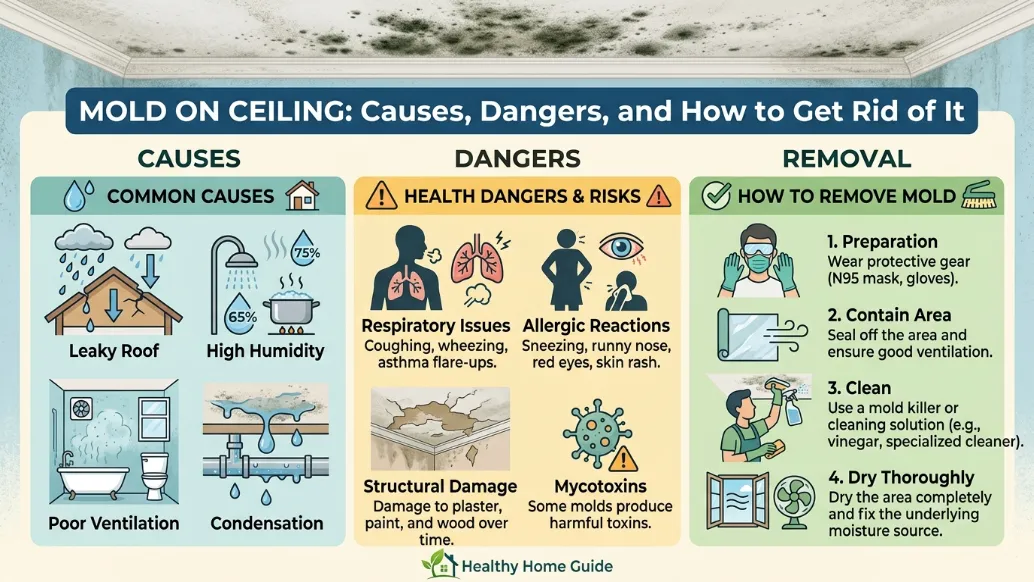
Finding mold on the ceiling is unsettling in a way that mold lower down is not, because a ceiling is hard to reach, hard to inspect, and often sits directly below something you cannot see, like an attic or a roof. Mold on a ceiling always means the same thing at its root: moisture is reaching that surface and staying long enough for spores to take hold. The real question is where the moisture is coming from, because the answer decides whether you are dealing with a simple humidity issue or a hidden leak quietly soaking the structure above. This guide walks through what causes mold on a ceiling, whether it is dangerous, how to tell a roof leak apart from everyday condensation, and how to clear it so it does not return.
What Causes Mold on a Ceiling
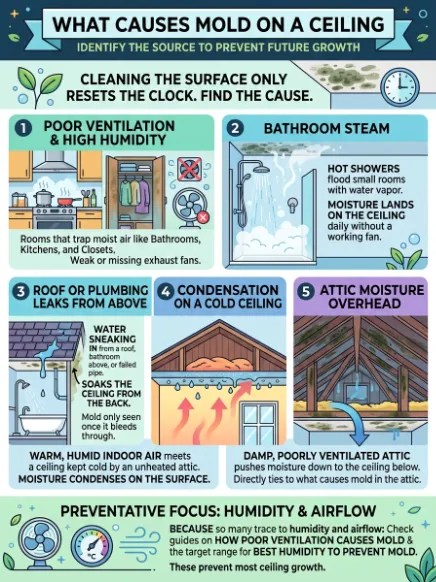
Ceilings collect mold for a handful of predictable reasons, and identifying which one you have is the whole game, because cleaning the surface without fixing the source just resets the clock.
- Poor Ventilation and High Humidity: rooms that trap moist air let humidity settle on the ceiling, which is why bathrooms, kitchens, and closets are common spots. Weak or missing exhaust fans make it worse.
- Bathroom Steam: hot showers flood a small room with water vapor, and without a working fan that moisture lands on the ceiling day after day.
- Roof or Plumbing Leaks From Above: water sneaking in from a roof, a bathroom on the floor above, or a failed pipe soaks the ceiling from the back and feeds mold you only see once it bleeds through.
- Condensation on a Cold Ceiling: where warm, humid indoor air meets a ceiling kept cold by an unheated attic, moisture condenses on the surface much like it does on a window.
- Attic Moisture Overhead: a damp, poorly ventilated attic pushes moisture down into the ceiling below, which ties directly to what causes mold in the attic.
Because so many of these trace back to humidity and airflow, our guide on how poor ventilation causes mold and the target range in the best humidity to prevent mold are the two ideas that prevent most ceiling growth in the first place.
Mold on Ceiling: Leak or Just Humidity?
Before you clean anything, figure out whether water is coming from above or the air is simply too humid, because the fixes are completely different. The pattern of the growth usually tells you.
| Column One | Column Two | Column Three |
|---|---|---|
| Row 1 cell | Row 1 cell | Row 1 cell |
| Row 2 cell | Row 2 cell | Row 2 cell |
| Row 3 cell | Row 3 cell | Row 3 cell |
| Row 4 cell | Row 4 cell | Row 4 cell |
| Row 5 cell | Row 5 cell | Row 5 cell |
| Row 6 cell | Row 6 cell | Row 6 cell |
Contractor note: A brown ringed stain that keeps growing is water, not just mold. Painting over it, even with mold-blocking primer, hides the leak while the structure behind it keeps rotting. Find the water first, always. The stain is a symptom, not the problem.
Dangers of Leaving Mold on a Ceiling Untreated
Mold on a ceiling can be dangerous, and its position overhead makes it worth taking seriously, because spores released from above drift down into the air you breathe all day. For most healthy people a small patch is a manageable nuisance, but for anyone with allergies, asthma, or a weakened immune system, ongoing exposure can trigger real symptoms.
- Overhead Exposure: Spores drift down from the ceiling into the air you breathe all day.
- Risk Varies by Person: A small patch is a minor nuisance for most healthy people.
- Sensitive Groups: Allergies, asthma, or a weakened immune system can trigger real symptoms.
- Color Is Only a Clue: Dark, spreading growth raises concern, but color alone tells you little.
- A Moisture Warning Sign: Ceiling mold often points to a leak in the attic or roof above.
- Indoor Air Quality: The problem degrades your air well beyond the visible stain.
Dark, spreading growth raises the concern further, and our guide on whether black mold is dangerous covers what the color does and does not tell you. The bigger risk with a ceiling is what it signals: mold overhead often means a moisture problem in the attic or roof that is also degrading your indoor air quality well beyond the visible stain.
How to Get Rid of Mold on a Ceiling
Clearing ceiling mold for good is a two part job: stop the moisture, then deal with the surface. Skipping the first part is why so many painted-over ceilings grow the same stain back within months.
Step One: Fix the Moisture Source
Everything starts here. If it is humidity, improve ventilation, run the bathroom exhaust fan during and after every shower, and bring indoor humidity into a safe range. If it is a leak, the roof, flashing, or plumbing has to be repaired before any cleaning is worthwhile. A ceiling cleaned while the water keeps coming is a ceiling you will clean again.
Step Two: Clean or Replace the Surface
Once the source is handled, the material decides the method. A small area of surface mold on painted, nonporous ceiling can often be cleaned carefully while wearing eye protection, gloves, and a mask, and our complete guide to killing mold on every surface covers the technique. Porous drywall or plaster that is stained through, soft, or sagging generally cannot be saved and needs to be cut out and replaced, the same principle explained in our guide to removing mold from walls. Bathrooms are the most common ceiling case of all, and black mold in the bathroom walks through that specific room.
Mold Coming Back on the Same Spot?
When to Call a Professional
Some ceiling mold is a reasonable do it yourself job, and some is not. Handle it yourself when the patch is small, clearly caused by humidity, on a nonporous surface, and the moisture source is easy to correct. Call a professional when the growth covers a large area, when the ceiling is soft, sagging, or stained through, when it keeps returning after cleaning, when a roof or attic leak is feeding it, or when anyone in the home has respiratory sensitivity. Those situations mean either hidden moisture or porous material that needs removal, and a professional can trace the source and confirm the work. Understanding the full mold removal process and how to choose the right remediation company makes that call easier when it comes.
Mold on Ceiling: Final Thoughts
The most important thing to understand about mold on a ceiling is that the stain is never the real problem, it is the marker for a moisture source hiding above or around it. That is why the order of operations matters so much: find and fix the water, whether it is humidity, a leaking roof, or a damp attic, and only then clean or replace the surface. Reverse that order and you will be repainting the same spot every few months while the material behind it keeps deteriorating. A small, humidity driven patch on a nonporous ceiling is often something you can handle yourself, but sagging, spreading, or recurring growth is a signal to bring in a professional who can trace the source. Treat mold on ceiling surfaces as the clue it is, not the problem itself, and you fix the cause once instead of chasing the same symptom season after season. If the growth is spreading, keeps coming back, or sits above a room where someone struggles to breathe, an inspection is the fastest way to find the water behind it and stop mold on ceiling drywall from turning into a structural repair.
Frequently Asked Questions About Mold on Ceiling:
Is mold on a ceiling dangerous?
Mold on a ceiling can be dangerous, and its overhead position makes it worth taking seriously because spores drift down into the air you breathe all day. For most healthy people a small patch is a manageable nuisance, but for anyone with allergies, asthma, or a weakened immune system, ongoing exposure can trigger real symptoms.
What causes mold on a ceiling?
Mold on a ceiling is always caused by moisture reaching the surface and staying long enough for spores to take hold. The most common sources are poor ventilation and high humidity, bathroom steam, roof or plumbing leaks from above, condensation on a cold ceiling, and moisture pushing down from a damp attic.
How can I tell if ceiling mold is from a leak or just humidity?
The shape and timing of the growth usually tell you. A leak from above shows a defined stain with a brown or yellow ring, worsens after rain, sits in one spot, and feels soft or damp. Humidity produces even speckling across corners and edges, worsens after showers, and leaves the surface firm.
Can I just paint over mold on my ceiling?
No. Painting over ceiling mold, even with mold-blocking primer, hides the problem while the moisture behind it keeps working. A brown ringed stain that keeps growing is water, not just mold, and covering it lets the structure behind it rot. Find and fix the water source first, then clean or replace the surface.
How do I get rid of mold on a ceiling?
Getting rid of ceiling mold is a two part job: stop the moisture, then deal with the surface. First fix the source, whether that means improving ventilation for a humidity problem or repairing a roof or plumbing leak. Then clean small areas on nonporous ceilings, or cut out and replace drywall that is stained through, soft, or sagging.
Is black mold on a ceiling dangerous?
Dark, spreading growth raises concern, but color alone tells you little about how dangerous a mold is. What matters more is the amount of growth, how long you have been exposed, and whether anyone in the home has respiratory sensitivity. Black growth on a ceiling is also a strong sign of a moisture problem in the roof or attic above.
Why does mold keep coming back on the same spot on my ceiling?
Recurring ceiling mold almost always means the moisture source was never found or fixed. Cleaning or painting the surface without stopping the water simply resets the clock, and the stain returns within months. The recurring spot is a signal to trace the source, whether it is the attic, the roof, or humidity in the room.
Can I clean ceiling mold myself, or do I need a professional?
You can handle it yourself when the patch is small, clearly caused by humidity, on a nonporous surface, and the moisture source is easy to correct. Call a professional when the growth covers a large area, the ceiling is soft or sagging, it keeps returning, a roof or attic leak is feeding it, or anyone in the home has respiratory sensitivity.
Does mold on my ceiling mean I have a roof leak?
Not always, but it is one of the most common causes. Ceiling mold that appears as a defined stain with a brown ring, worsens after rain or snowmelt, and sits in one spot near a fixture or roof valley usually points to a leak from above. Mold spread evenly across corners and edges points to humidity instead.
What does mold on a bathroom ceiling mean?
Mold on a bathroom ceiling usually means shower steam has nowhere to go. Hot showers flood a small room with water vapor, and without a working exhaust fan that moisture lands on the ceiling day after day. Running the fan during and after every shower and keeping humidity in a safe range prevents most bathroom ceiling mold.