
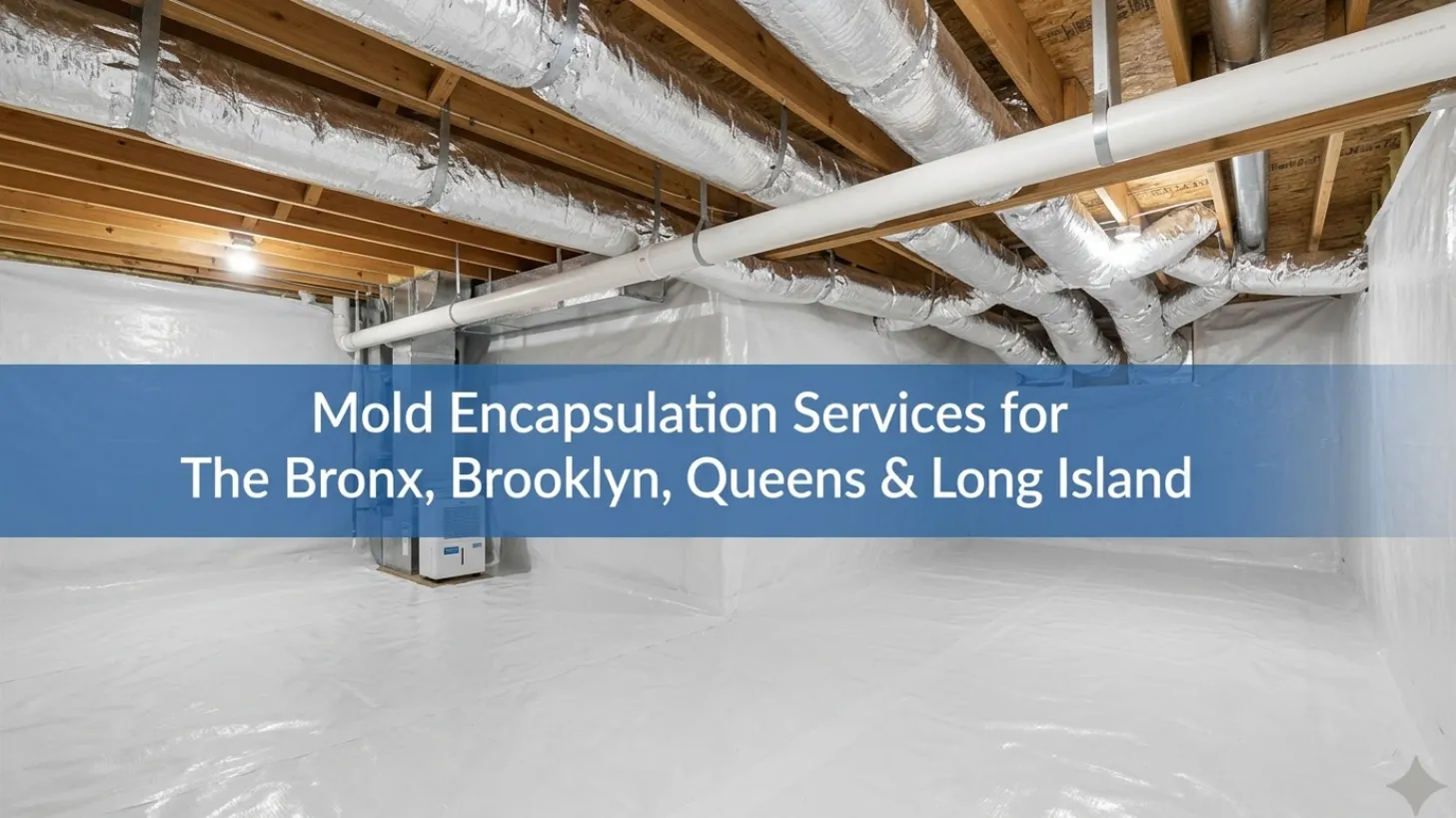
Licensed NYS mold encapsulation services for The Bronx, Brooklyn, Queens, and Long Island. We specialize in sealing porous surfaces, structural wood, and crawl space materials where removal alone won’t last.
Free inspections. 40-year warranty. Local Law 55 & Local Law 61 compliant.
Get a Free Mold Inspection in 60 Seconds
We serve every ZIP code in:
- The Bronx — including Throgs Neck, Country Club, City Island, Riverdale, Wakefield, Pelham Bay
- Brooklyn — including Canarsie, Red Hook, Mill Basin, Sheepshead Bay, Bergen Beach, Marine Park, Gerritsen Beach
- Queens — including Howard Beach, Rockaway, Broad Channel, Bayside, Whitestone, College Point, Jamaica Bay
- Long Island — Nassau and Suffolk Counties, from Great Neck to Montauk
If your home or building sits within 1 mile of the water, on filled-in marshland, or in a basement-prone neighborhood, you are in our wheelhouse. We’ve sealed thousands of square feet across these exact ZIP codes.

What Are Mold Encapsulation Services, Exactly?
Most people don’t realize that mold remediation and mold encapsulation are two different things.
Mold remediation is the removal process: containment, HEPA filtration, antimicrobial cleaning, and disposal of contaminated materials. It handles surface mold on non-porous and semi-porous materials.
Mold encapsulation is what happens after remediation or in place of it when removal isn’t possible. It’s the application of an EPA-registered, antimicrobial sealant over porous materials (framing lumber, joists, subfloors, masonry, insulation backing) that physically locks remaining mold spores in place and creates a barrier that prevents future colonization.
Think of remediation as the surgery. Encapsulation is the seal that keeps the wound from reopening.
When Encapsulation Is the Right Call
You need encapsulation, not just removal, when:
- Structural Framing Lumber Is Affected: Mold has penetrated porous framing lumber that can’t be replaced without major demolition.
- Future Moisture Exposure Is Likely: The affected area is in a crawl space, basement, or attic where future moisture exposure is likely.
- The Property Must Stay Operational: A commercial property needs to stay operational and full demolition isn’t feasible.
- Residual Staining Or Spores Remain: Stains or residual spores remain on structural wood after remediation.
- You’re Completing A Full Crawl Space Encapsulation: You’re sealing a crawl space and want belt-and-suspenders mold protection as part of full encapsulation.
- The Building Has Historical Or Structural Value: The building has historical or structural value that makes replacement undesirable.
- Insurance Approved Sealing Instead Of Replacement: An insurance adjuster has approved sealing instead of replacement.
Why The Bronx, Brooklyn, Queens & Long Island Have a Mold Problem
This isn’t marketing hype or a scare tactic. The combination of coastal geography, aging infrastructure, rising humidity levels, and older housing stock creates ideal conditions for chronic moisture intrusion and recurring mold growth across New York City and Long Island.
If you own a home, rental property, basement apartment, or commercial building in these regions, mold risk is part of the reality of ownership. The question usually isn’t whether moisture problems will happen. It’s how severe they become before they’re identified and corrected.
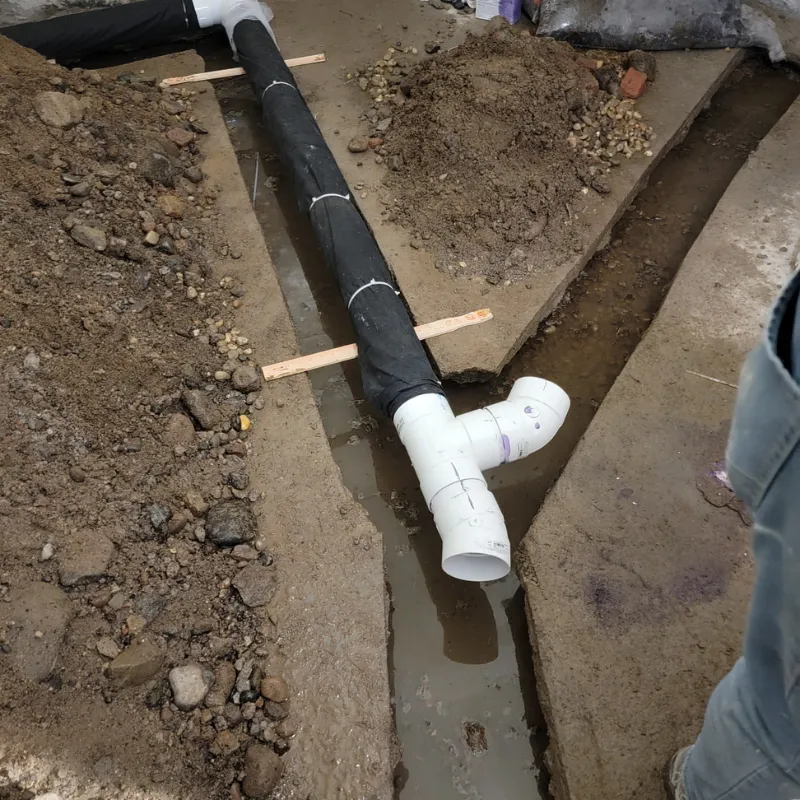
If you own property in these boroughs or on Long Island, mold isn’t a remote possibility. It’s an ongoing environmental pressure that requires proactive moisture management, ventilation control, and fast response when leaks or humidity issues appear.
NYC Mold Compliance: What Most Contractors Won't Tell You
This is the section that separates licensed pros from the guy with a van.
New York is one of the most heavily regulated states in the country for mold work. Under NYS Labor Law Article 32, anyone who performs mold assessment or remediation for compensation must hold an active NYSDOL license. There’s no grandfather clause and no exception for “small” jobs done as a side gig.
Here’s the rule that trips up landlords and property managers most often:
For buildings with 10 or more apartments, or commercial buildings over 25,000 square feet, when the affected mold area exceeds 10 square feet:
- You must hire a NYS-licensed Mold Assessor to inspect and write the remediation protocol
- You must hire a separate, independent NYS-licensed Mold Remediator to do the work
- The same company cannot do both. This is the separation-of-roles rule, and it’s enforced
- Both contractors must file paperwork through the NYC Department of Environmental Protection’s Mold Abatement portal (Local Law 61, effective Jan 1, 2019)
- A post-remediation assessment is required to close out the job
Penalties for non-compliance range from $10/day to $10,000 per violation. HPD and DOB are actively enforcing. Working with an unlicensed contractor doesn’t shift liability to them. It puts you, the property owner, on the hook.
What This Means for Mold Encapsulation Services
Encapsulation work falls under the remediation umbrella. If you own a multiple-dwelling building or large commercial property in NYC and you’re considering encapsulation as part of a mold response, the licensed contractor who does the encapsulation cannot be the same entity that assessed the problem.
We work with a network of independent licensed assessors specifically for this reason. We won’t put you in a compliance trap to win the job.
Every project follows the same six-step protocol. No shortcuts.
Step 1: Free Inspection & Moisture Source Diagnosis
A trained tech walks the property with a moisture meter, thermal imaging camera, and hygrometer. We document affected square footage, identify the moisture source (this is the part most contractors skip), and check for signs of structural damage.
Included With Every Inspection:
You get a written report regardless of whether you hire us.
Step 2: Containment Setup
Plastic sheeting, zip walls, and negative-air HEPA filtration units isolate the work area. For occupied homes and commercial spaces, this is what keeps the rest of the building usable while we work.
Step 3: Mold Removal (Where Possible)
We physically remove surface mold from non-porous materials using HEPA vacuum shrouded tools. Contaminated drywall, insulation, and unsalvageable wood get bagged, sealed, and disposed of according to NYS protocols.
Step 4: Antimicrobial Treatment
EPA-registered antimicrobials are applied to all affected surfaces and surrounding areas. This kills residual spores that vacuuming and cleaning can’t reach.
Step 5: Encapsulation Application
Here’s the actual encapsulation:
Framing Lumber, Joists & Subfloors
A fiber reinforced antimicrobial encapsulant is sprayed or brushed onto every affected surface in two coats.
We use products like Fiberlock IAQ 6000 and Foster 40-20, both EPA-registered for mold encapsulation.
Masonry & Concrete
A vapor permeable mold resistant coating allows the substrate to breathe while locking spores in place.
Crawl Spaces & Basements
A 12 to 20 mil ASTM E1745 Class A polyethylene vapor barrier is sealed to walls and piers.
Overhead joists receive sprayed encapsulant for complete protection.
Documentation Included:
Every coat is documented with photos.
Step 6: Post-Remediation Verification
A third-party licensed assessor (per Article 32) confirms the work meets NYS standards. You get a written clearance report and our 40-year workmanship warranty.
</section
Mold Encapsulation vs. The Alternatives
Homeowners and property managers usually ask the same three questions before moving forward with encapsulation. Here are the straight answers.
Can't I just bleach it?
No. Bleach disinfects surfaces but doesn’t penetrate porous materials, and the chlorine evaporates while the water in bleach soaks into the wood, feeding the next round of mold. The NYC Department of Health specifically advises against using bleach as a remediation method on porous materials.
Can I just rip it out and replace it?
For drywall and carpet, yes, and we’ll recommend it. For structural framing, subfloors, and load-bearing joists, replacement means tearing apart your home or business. Encapsulation lets you treat what’s there at a fraction of the cost and downtime.
Does encapsulation work forever?
Encapsulation is permanent if the moisture source is fixed. That’s why our process always starts with diagnosis. We’ve seen too many homes where another contractor sealed mold without addressing the leak above it, and the spores came back through the seal within 18 months. We won’t take that job.
How Much Do Mold Encapsulation Services Cost In NYC & Long Island?
Real 2026 pricing based on what we and other licensed local contractors are actively quoting throughout New York City and Long Island.
| Scope | Typical Cost |
|---|---|
| Small Area Encapsulation (Under 10 Sq Ft) | $500 To $1,500 |
| Crawl Space Joist Encapsulation (Average Home) | $1,500 To $4,500 |
| Full Basement Framing + Walls | $3,000 To $8,000 |
| Attic Sheathing Encapsulation | $2,500 To $6,000 |
| Commercial Encapsulation (Per 1,000 Sq Ft) | $4,000 To $12,000 |
| Multi-Unit Building (Over 10 Sq Ft, LL 55/61) | $8,000 To $40,000+ |
Cost Variables
Demand A Line-Item Proposal
We provide itemized quotes with clear scope breakdowns. If another contractor gives you a flat-rate “mold encapsulation: $4,500” estimate with no explanation of labor, materials, containment, moisture correction, or repairs, you cannot accurately compare bids. Every legitimate remediation contractor should be able to provide a detailed line-item proposal.
Breathe Easy Again with Our Expert Crawl Space Mold Removal Services for New York Properties
Most mold remediation companies stop at surface-level cleanup. Mold Removal Experts is a service extension of Zavza Seal, a waterproofing, insulation, mold remediation, and structural support contractor in Bohemia, NY, built around long-term moisture control, structural protection, and transparent remediation practices designed for New York properties. From flood-prone basements in Queens to humid crawl spaces on Long Island, our process focuses on solving the actual cause of the problem, not just covering up visible growth long enough to get through a warranty period.
40-Year Transferable Warranty
Industry average warranties typically range from 5 to 10 years. Ours transfers to the next property owner if you sell the home.
Licensed, Insured, & Compliant
Verify our license number through the NYS Department of Labor public lookup tool before signing anything. We encourage homeowners to do it.
Local, Not A Franchise
Our crews live throughout the boroughs and Long Island. They understand what coastal flooding, humid crawl spaces, and aging basements in this region.
5-Star Rated Service
Hundreds of verified reviews across Google, Yelp, and Angi come from homeowners located in the same ZIP codes and neighborhoods we service every day.
The Bronx
Riverdale, Fieldston, Kingsbridge, Throgs Neck…
Brooklyn
Bay Ridge, Bensonhurst, Dyker Heights…
Queens
Astoria, Long Island City, Sunnyside…
Long Island
Nassau and Suffolk County including Great Neck…
Final Thoughts on Choosing the Right Mold Encapsulation Services
Final Thoughts on Choosing the Right Mold Encapsulation Services
Mold work in New York is not a hire-the-cheapest-guy decision. Between the state’s Article 32 licensing law, NYC’s Local Law 55 and Local Law 61 filing requirements, and the genuine health stakes for your family or tenants, the contractor you choose has to know the work and the rules.
The right encapsulation job, done by a licensed remediator who diagnoses the underlying moisture source first, can permanently solve a mold problem that would otherwise eat your home from the inside out. The wrong job, sealing over an active leak, using paint instead of EPA-registered encapsulant, or skipping the assessor, wastes your money and exposes you to HPD violations.
If you’re in The Bronx, Brooklyn, Queens, or Long Island and you suspect mold, get a real inspection from a licensed contractor. We do them for free. No upsell, no high-pressure close, just a written report telling you what’s going on and what it’ll cost to fix it properly.
Your home and your health are worth more than a $200 paint-over. Let’s do this the right way.
You don’t need to live with mold, musty smells, or compliance anxiety. We’ve handled thousands of homes and buildings in your exact neighborhood, and the first conversation is always free.
Schedule Your Free Inspection →