
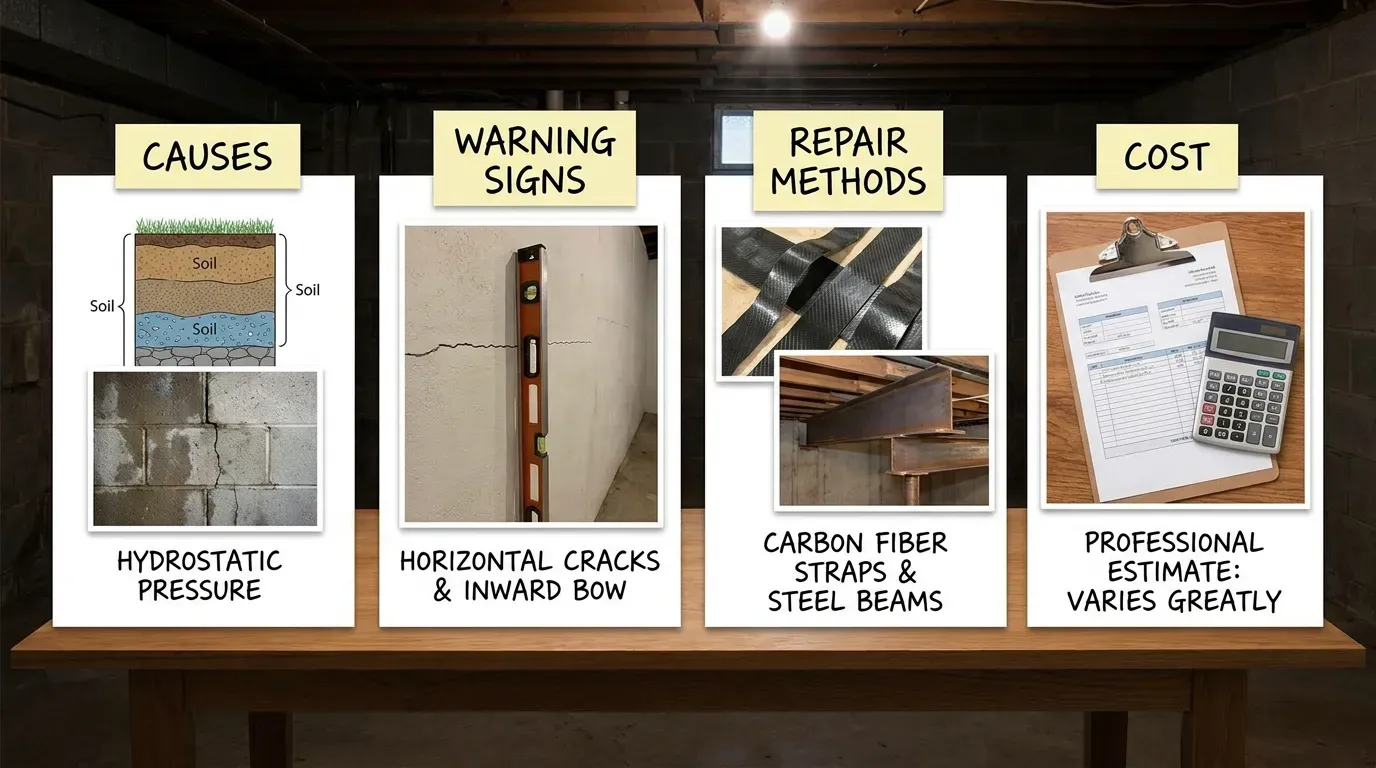
Foundation crack types fall into four common patterns, and the shape tells you a lot about the risk. Hairline foundation cracks are often cosmetic, especially when they are narrow, dry, and not changing. Vertical foundation cracks can be minor shrinkage cracks, but they should be inspected if they widen, leak, or show displacement. Horizontal foundation cracks are more serious because they can signal soil pressure pushing against the foundation wall.
Stair-step cracks in brick, block, or masonry walls can also be urgent when they widen, spread, or appear with sticking doors, sloping floors, or wall movement. The quick reference below shows how each crack type usually behaves and when it crosses from cosmetic to concerning.
Call on Mold Removal Experts for a Free Inspection and Expert Advice!
| Crack Type | Usually Cosmetic? | More Urgent When | Common Cause |
|---|---|---|---|
| Hairline Crack | Often | It widens, leaks, or spreads | Concrete shrinkage, minor settling |
| Vertical Crack | Sometimes | Wider than 1/8 inch, leaking, shifting | Shrinkage, settlement, pressure |
| Horizontal Crack | Rarely | Almost always needs inspection | Lateral soil pressure, bowing wall |
| Stair-Step Crack | Sometimes | Wide, growing, or diagonal movement | Settlement, footing movement, masonry stress |
Why Foundation Crack Type Matters
The shape of a foundation crack tells part of the story, but not the whole story. The same crack type can mean very different things depending on its width, its movement, water intrusion, the age of the home, the soil conditions, and whether the wall is bowing or shifting. Independent building inspection references catalog foundation crack types by shape and location, and the consistent theme is that direction and behavior matter more than appearance alone.
Here is what every homeowner should understand before reacting:
- Foundation cracks are not all equal.
- Some cracks are normal curing or shrinkage cracks.
- Some cracks are early warnings of settlement, hydrostatic pressure, drainage failure, or structural movement.
- The direction, width, location, moisture, and change over time all matter.
- A professional inspection is the safest way to confirm the cause.
If you want the broader context on what drives these problems, our complete homeowner’s guide to foundation repair walks through causes, signs, and solutions in depth.
Not sure what kind of crack you are looking at? Schedule a foundation crack inspection before sealing it.
Breathe Easy Again with Our Expert Crawl Space Mold Removal Services for New York Properties
A hairline foundation crack is usually the least alarming crack type, but it still deserves a quick look before you ignore it.
What a Hairline Foundation Crack Looks Like
- Very thin crack
- Often less than 1/16 inch wide
- May appear in poured concrete walls or slabs
- Usually straight or slightly irregular
- Often does not show displacement
What Usually Causes Hairline Foundation Cracks
- Concrete shrinkage during curing
- Minor settling
- Temperature changes
- Surface stress
- Normal aging of concrete
When a Vertical Crack May Be Cosmetic
A narrow, stable, dry vertical crack in poured concrete may be a shrinkage crack. These cracks are often repairable with crack injection if they are not moving and do not indicate deeper settlement.
When a Vertical Crack Is More Serious
- Wider than about 1/8 inch
- Wider at the top or bottom
- Actively leaking
- One side of the crack sticks out farther than the other
- Crack is diagonal rather than straight
- Crack keeps growing
- Doors or windows nearby are sticking
- Floors are sloping or separating from walls
One important point: crack injection seals the crack opening, but it does not solve settlement or wall movement if those are the real causes. Sealing a moving crack only hides the symptom.
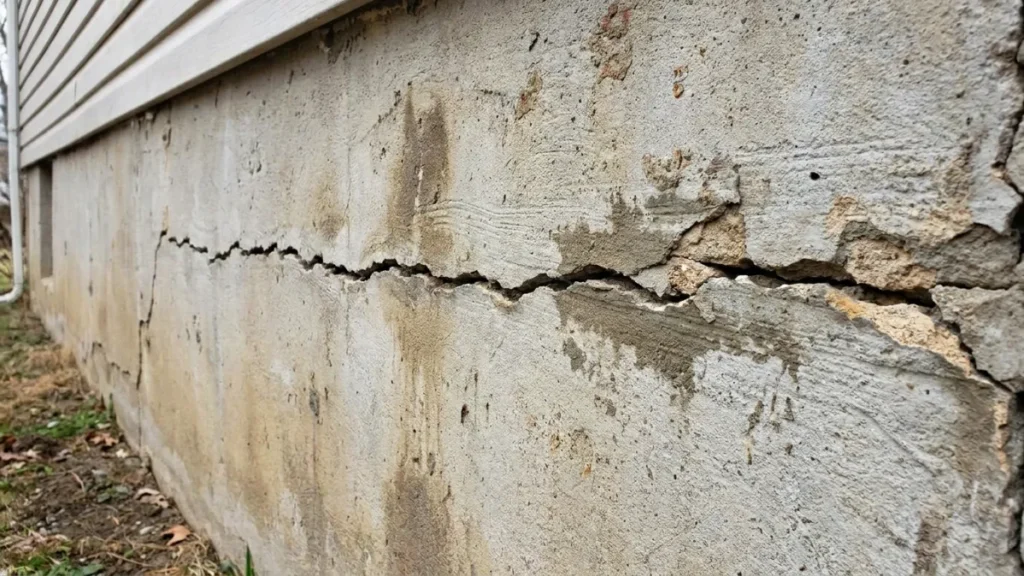
Horizontal Foundation Cracks: Usually the Most Urgent Crack Type
A horizontal foundation crack is the one pattern that should get your attention quickly, because it often means the wall is under pressure.
What a Horizontal Foundation Crack Looks Like
- Runs side to side across the wall
- Often appears in basement or crawl space foundation walls
- May form along mortar joints in block walls
- May appear mid-wall or near the frost line
- May be paired with bowing, bulging, or inward movement
Why Horizontal Cracks Are Usually Serious
Horizontal cracks can mean the wall is being pushed inward from outside pressure. Unlike a small shrinkage crack, this may involve structural movement. If ignored, the wall can continue bowing, cracking, leaking, and losing strength. This is not a minor detail of construction. Residential building codes specifically require foundation walls to be designed to resist the full hydrostatic pressure of saturated backfill unless proper drainage is installed, which is exactly why a wall that starts to crack horizontally needs to be taken seriously.
Warning Signs That Make a Horizontal Crack Urgent
- Wall bowing inward
- Crack wider than 1/8 inch
- Crack runs across a large section of wall
- Water entering through the crack
- Blocks shifting out of plane
- Basement wall feels uneven or bulged
- Crack is growing
- Exterior drainage problems are obvious
If the wall is visibly leaning or bulging, do not wait. Our bowing basement walls guide explains how this damage progresses and what stabilization actually involves.
What Usually Causes Horizontal Foundation Cracks
- Hydrostatic pressure from saturated soil (here is how hydrostatic pressure works against a wall)
- Expansive soil pressing against the wall
- Poor exterior drainage
- Clogged gutters or short downspouts
- Freeze-thaw pressure
- Heavy soil load against the foundation
- Tree roots or exterior grade problems
Horizontal cracks should be inspected promptly, especially if the wall is bowing, leaking, or moving inward.
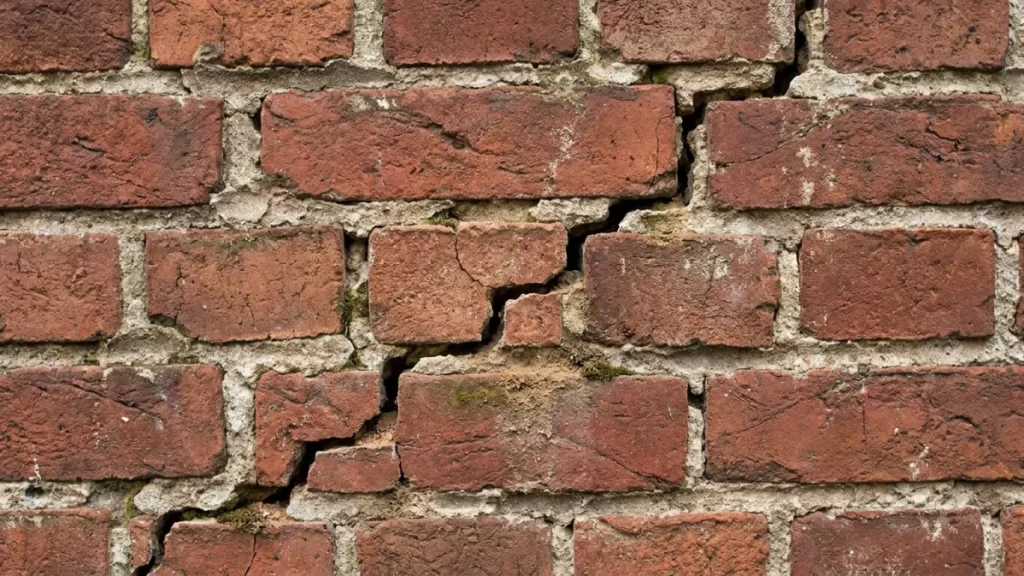
Stair-Step Foundation Cracks: A Major Warning Sign in Block, Brick, and Masonry
Stair-step cracks are common in masonry because cracks follow the path of least resistance through the mortar joints. The real question is whether the wall is simply cracking or actively moving.
What a Stair-Step Crack Looks Like
- Crack follows mortar joints in a stair-step pattern
- Common in concrete block, brick, stone, and masonry walls
- Often diagonal across the wall
- May appear near corners, windows, doors, or foundation transitions
What Usually Causes Stair-Step Cracks
- Differential settlement
- Footing movement
- Poor soil compaction
- Water-softened soil
- Frost heave
- Drainage failure
- Pressure against block walls
- Structural load transfer problems
When a Stair-Step Crack May Be Less Serious
Small, old, stable stair-step cracks can sometimes be mortar-joint cracks from minor movement or aging. Even so, they should still be evaluated if they are new, widening, leaking, or connected to other structural symptoms.
When a Stair-Step Crack Is Urgent
- Crack is wider than 1/8 inch
- Crack is diagonal and spreading
- Wall is bowing or leaning
- Blocks are displaced
- Crack appears near a corner
- Exterior brick veneer is separating
- Doors or windows are sticking
- Floors slope nearby
- Gaps appear around trim, ceilings, or walls
Stair-step cracks are one of the clearest signs that masonry movement may be happening. Get the wall inspected before filling the crack.
| Severity Level | Crack Signs | What It May Mean | Recommended Action |
|---|---|---|---|
| Cosmetic | Thin, dry, stable hairline crack | Shrinkage or minor surface stress | Monitor and document |
| Needs Monitoring | Thin vertical crack, no movement, no leakage | Minor settling or shrinkage | Watch width and moisture |
| Needs Repair | Leaking crack, widening crack, recurring water stains | Water entry or active movement | Schedule inspection and repair |
| Urgent | Horizontal crack, bowing wall, displaced block | Soil pressure or structural stress | Get structural evaluation |
| Urgent | Stair-step crack with widening or movement | Settlement or masonry movement | Get foundation inspection promptly |
Crack Width Matters: How Wide Is Too Wide?
Crack width is a useful clue, but width alone does not determine risk. Use these ranges as a starting point, not a diagnosis.
- Less Than 1/16 Inch: Often hairline. Usually monitor unless it is leaking or spreading.
- Around 1/8 Inch: More concerning. Should be inspected if it is growing, leaking, diagonal, or near other damage.
- 1/4 Inch or Wider: Usually needs professional evaluation. Wider cracks can signal movement, settlement, or structural stress.
- Any Crack With Displacement: Urgent. If one side of the crack sticks out farther than the other, the wall may be shifting.
Keep this in mind: a narrow horizontal crack can be more serious than a wider, harmless shrinkage crack. Direction and movement matter as much as width.
Water Around a Foundation Crack Changes the Situation
Moisture turns a question about structure into a question about your indoor air and finishes as well.
- A cosmetic crack can become a water-entry point.
- Water stains, efflorescence, musty odor, damp drywall, or peeling paint indicate moisture movement.
- Water intrusion can lead to mold, indoor air issues, damaged finishes, and worsening foundation pressure.
- Sealing the inside may stop visible seepage temporarily, but drainage or pressure may still need correction.
If the crack is wet, stained, or musty, do not just patch it. Have the wall checked for water pressure, drainage problems, and hidden moisture.
Other Warning Signs That Make Any Foundation Crack More Serious
- Crack is getting longer or wider
- Crack is leaking
- Crack has white chalky staining
- Wall is bowing, leaning, or bulging
- Doors or windows stick
- Floors slope or feel uneven
- Gaps appear around trim, walls, or ceilings
- Chimney is pulling away
- Exterior brick is cracking
- Basement smells musty
- Sump pump runs constantly
- Soil outside is sinking near the foundation
- Gutters overflow near the cracked wall
- Downspouts discharge too close to the house
Foundation Crack Type by Wall Material
The same crack pattern behaves differently depending on what the wall is made of.
Poured Concrete Foundation Cracks
- Hairline and vertical cracks are common.
- Crack injection may work for non-moving cracks.
- Horizontal or diagonal cracks need closer inspection.
- Displacement means the wall may be moving.
Concrete Block Foundation Cracks
- Horizontal cracks can follow mortar joints.
- Stair-step cracks are common signs of masonry movement.
- Bowing block walls are serious.
- Repairs may involve carbon fiber, wall anchors, steel beams, drainage correction, or structural reinforcement.
Brick or Stone Foundation Cracks
- Cracks often follow the mortar.
- Older foundations may need masonry repair, repointing, drainage correction, or structural stabilization.
- Movement near corners, windows, and load-bearing areas should be inspected.
Should You Seal a Foundation Crack Yourself?
You may be able to seal a small, dry, stable hairline crack as a temporary cosmetic repair. But if the crack is leaking, widening, horizontal, stair-step, displaced, or connected to wall movement, DIY sealant can hide the symptom without fixing the cause. Foundation cracks should be diagnosed before they are sealed, because the right repair depends on whether the problem is water intrusion, shrinkage, settlement, or structural movement.
DIY may be reasonable when:
- Crack is hairline
- Crack is dry
- Crack has not changed
- No structural symptoms are present
DIY is not recommended when:
- Crack is horizontal
- Crack is stair-step and growing
- Crack is leaking
- Wall is bowing
- Crack has displacement
- Doors, windows, or floors show movement
Foundation Crack Repair Options by Crack Type
The likely repair depends on the cause, not just the appearance. The table below shows common options and when they tend to apply.
| Crack Type | Possible Repair | When It Works |
|---|---|---|
| Hairline Crack | Monitoring, surface repair, sealing | Dry, stable, cosmetic cracks |
| Vertical Crack | Epoxy or polyurethane injection | Non-moving cracks with or without minor leakage |
| Leaking Crack | Polyurethane injection, drainage correction | Water entry without major movement |
| Horizontal Crack | Carbon fiber, wall anchors, steel beams, drainage correction | Bowing or pressure-damaged walls |
| Stair-Step Crack | Masonry repair, underpinning, wall stabilization, drainage correction | Settlement or masonry movement |
When to Call a Foundation Repair Contractor Immediately
Call a foundation repair contractor right away if any of the following are true:
- You see a horizontal crack
- You see a stair-step crack that is widening
- The wall is bowing inward
- Water is entering through the crack
- The crack is wider than 1/8 inch and growing
- One side of the crack is higher or farther out than the other
- Doors and windows suddenly stick
- Floors slope near the cracked area
- You see multiple new cracks after heavy rain
- The crack is near a basement corner, beam pocket, or structural support
Foundation cracks are easiest and least expensive to address when the cause is found early. Schedule an inspection before the crack becomes a structural repair.
What Happens During a Foundation Crack Inspection?
A thorough inspection is about finding the cause, not just measuring the crack. A good inspector will:
- Measure crack width and length
- Check whether the crack is active or stable
- Look for moisture, staining, mold, or efflorescence
- Inspect interior and exterior drainage
- Check grading, gutters, and downspouts
- Look for wall bowing or displacement
- Inspect floors, doors, windows, and nearby structural areas
- Recommend repair based on cause, not appearance alone
A quality inspection should explain why the crack formed, not just how to cover it.
Foundation Crack Types in Long Island, Brooklyn, Queens, and The Bronx
Local conditions shape how foundation cracks behave across the New York metro area.
- Long Island homes may deal with saturated soil, high groundwater, and poor grading.
- Brooklyn and Queens homes often have older masonry, shared drainage issues, and basement moisture problems.
- Bronx homes may have aging foundations, settlement symptoms, and water intrusion around older walls.
- Coastal moisture, freeze-thaw cycles, and heavy rain can worsen cracks over time.
- Foundation cracks in New York homes should be evaluated for both structural movement and water intrusion.
Seeing a foundation crack in Long Island, Brooklyn, Queens, or The Bronx? Get a professional inspection before deciding whether it is cosmetic, leaking, or structural.
Foundation Crack Types: Final Thoughts
When you understand foundation crack types, the panic usually fades and a clear plan takes its place. Hairline and narrow vertical foundation cracks are often minor, especially when they are dry, stable, and not changing.
Horizontal cracks, widening stair-step cracks, leaking cracks, and cracks paired with wall movement are different. Those can point to pressure, settlement, or structural stress that needs professional attention. The safest move is to identify the crack type, check whether it is active, and inspect the conditions around it before sealing the surface.
A proper foundation inspection gives you the difference between a cosmetic crack, a waterproofing repair, and a structural problem that should not wait, so you can fix the cause instead of covering the symptom.
Frequently Asked Questions About Foundation Crack Types
Are Hairline Foundation Cracks Serious?
Hairline foundation cracks are often not serious when they are thin, dry, stable, and not growing. They are commonly caused by concrete shrinkage or minor settling. However, they should be inspected if they leak, widen, spread, or appear with other warning signs.
Are Vertical Foundation Cracks Bad?
Vertical foundation cracks can be minor or serious depending on width, leakage, movement, and location. A narrow, stable vertical crack may be a shrinkage crack. A widening, leaking, diagonal, or displaced vertical crack should be inspected.
Are Horizontal Foundation Cracks Dangerous?
Horizontal foundation cracks are usually more serious than hairline or vertical cracks. They can indicate soil pressure pushing against the wall, especially if the wall is bowing inward. A horizontal crack should be inspected promptly.
What Does a Stair-Step Crack in a Foundation Mean?
A stair-step crack usually means the crack is following mortar joints in brick, block, or masonry. It may be caused by settlement, footing movement, soil pressure, or masonry stress. If the crack is widening, diagonal, leaking, or paired with wall movement, it may be urgent.
Which Foundation Cracks Are Cosmetic?
Thin, dry, stable hairline cracks are the most likely to be cosmetic. Some narrow vertical cracks may also be minor. A crack is less likely to be cosmetic if it leaks, widens, shifts, or appears with bowing walls, sticking doors, sloping floors, or stair-step masonry movement.
Which Foundation Cracks Need Immediate Attention?
Horizontal cracks, widening stair-step cracks, leaking cracks, cracks with displacement, and cracks near bowing walls need prompt inspection. These signs can point to pressure, settlement, or structural movement.
Can I Seal a Foundation Crack Myself?
You may be able to seal a small, dry, stable hairline crack for cosmetic reasons. You should not rely on DIY sealant for horizontal cracks, stair-step cracks, leaking cracks, widening cracks, or cracks with wall movement. Those need diagnosis before repair.
How Do I Know If a Foundation Crack Is Getting Worse?
Measure the crack width, photograph it, mark both ends with a pencil, and check it after heavy rain, freeze-thaw cycles, and seasonal changes. If the crack gets longer, wider, wetter, or starts showing displacement, schedule an inspection.
Is a Leaking Foundation Crack Structural?
Not always. A leaking crack may be a waterproofing problem, a drainage problem, or a structural problem depending on the crack type and wall condition. The leak should be inspected before the crack is injected or sealed.
Should I Repair or Monitor a Foundation Crack?
Monitor thin, dry, stable hairline cracks with no movement. Repair or inspect cracks that leak, widen, spread, shift, run horizontally, form a stair-step pattern, or appear with other structural warning signs.