
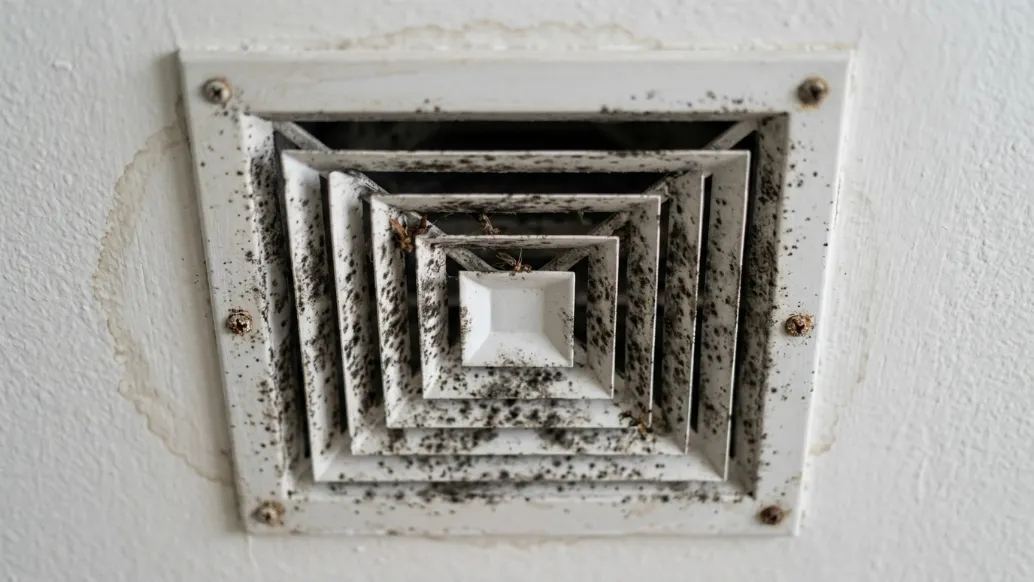
If your air conditioner blows a musty smell and your family feels better the moment they leave the house, you may be dealing with black mold in AC unit symptoms. And yes, before you even ask, mold absolutely can grow inside a window AC unit. In fact the design almost invites it. These units run cool, dark, and damp all summer, which is exactly the environment mold looks for. The tricky part is that an air conditioner does not keep its mold to itself. Every time it kicks on, it can push mold spores straight into the air your household breathes for hours at a time. This guide walks through whether mold can grow in a window AC unit, the full list of warning signs on the machine and in your body, why it is genuinely dangerous, and how to get rid of it safely.
Don’t Let Black Mold Endanger Your Family and Your Home! Schedule Your Free Mold Inspection Today!
Black Mold in AC Unit Symptoms: The Full List
The symptoms of mold in an AC unit show up in two places at once: on the machine and in your body. Learning to read both is how you catch it early. On the unit, watch for a musty or earthy smell when it runs, visible black, green, or gray specks on the vents, filter, or coils, black dust blown into the room, and a slimy or discolored drip pan. In your body, the classic pattern is allergy and respiratory symptoms that get worse indoors when the AC is on and ease when you leave.
| Symptom | Why the AC causes it | Most at risk |
|---|---|---|
| Musty smell when the AC runs | Mold releases gases (MVOCs) that the fan blows into the room | Everyone notices; earliest sign |
| Congestion, sneezing, runny nose | Airborne spores irritate nasal passages | Allergy sufferers |
| Coughing and wheezing | Spores inflame the airways | Asthma sufferers, children |
| Itchy, watery eyes and throat | Spores and mold compounds irritate mucous membranes | Sensitive individuals |
| Headaches and fatigue | Ongoing exposure and, with toxic mold, mycotoxins | Anyone with prolonged exposure |
| Symptoms that improve away from home | You leave the spore source behind | The clearest tell of all |
Why Black Mold in AC Unit Symptoms Are So Dangerous
What makes black mold in AC unit symptoms worse than mold sitting quietly on a wall is delivery. The AC turns your unit into a spore distribution system. Mold on a basement wall stays mostly put, but mold on a set of coils gets a fan blowing across it for hours a day, aerosolizing spores and, with toxic species, mycotoxins, then spreading them evenly through the room you sleep, work, or feed your kids in. That constant, low-level dosing is why symptoms build over a season. In the short term, exposure drives allergy and respiratory irritation. Over the long term, repeated exposure is linked to chronic asthma, recurring sinus infections, and prolonged respiratory problems, and it hits hardest for children, older adults, and anyone with asthma or a weakened immune system. For the wider picture, see black mold symptoms and health effects and is black mold dangerous.
The gut-check test: if your symptoms reliably ease when you leave the house or turn the AC off, and return when you come back or switch it on, treat that as a strong signal to inspect the unit. That pattern points at the air handler more than at pollen outside.
Can Mold Grow in a Window AC Unit? (Yes, Here's Why)
Yes, mold can grow in a window AC unit, and honestly the design almost invites it. A window unit hands mold all three things it needs at once. First, moisture: pulling humidity out of your air is literally the unit’s job, so the coils and drip pan stay wet. Second, food: dust, pollen, and organic debris collect on the filter and coils and become a nutrient buffet. Third, dark, still surfaces: the foam insulation, the pan, and the interior housing rarely see light or get fully dry. Put those together and you have a greenhouse for fungi. So can black mold grow in window AC units specifically? It can. When conditions stay wet and dirty long enough, the ordinary green and gray molds can be joined by Stachybotrys chartarum, the slimy, dark, so-called toxic black mold, and that is when the health stakes rise.
How to Get Rid of Mold in a Window AC Unit
You can clean a window AC unit yourself, as long as the mold has not moved into the porous foam and insulation inside it. Here is the safe sequence:
Unplug it and take it outside.
Never clean a moldy unit while it is powered, and work in the open air or a garage so you are not scattering spores through the house. Wear gloves, an N95 mask, and eye protection.
Remove and wash the filter.
Wash it in warm water with a little dish or antibacterial soap. If it is heavily colonized or falling apart, replace it.
Vacuum debris, then clean the coils, pan, and housing.
Vacuum loose dust first, then clean surfaces with a mold-appropriate cleaner. Note that the EPA does not recommend relying on bleach for mold, and on porous foam it does not truly remove it, so a dedicated mold cleaner or a detergent solution is usually the better call.
Dry it completely, then reassemble.
Let every part dry fully before you put the unit back together and back in the window. Trapped moisture just restarts the cycle.
If you clean the unit and the smell or symptoms return within a few weeks, the mold has almost certainly gotten into the porous internal foam and insulation where surface cleaning cannot reach. At that point, replacing the unit is usually cheaper and healthier than fighting it round after round. Use this quick decision guide:
| ✓ Clean it | ✗ Replace it |
|---|---|
| Mold is on hard surfaces (coils, pan, housing) | Mold is in the foam or insulation |
| First occurrence, caught early | Mold keeps returning after cleaning |
| Light, localized growth | Heavy or widespread visible growth |
| Unit is newer and worth saving | Unit is old, cheap, or near end of life |
How to Prevent Mold From Coming Back
Preventing mold in an AC unit comes down to one rule: never let it sit wet and dirty. Run the fan-only mode for ten to fifteen minutes after you finish cooling so the interior dries out instead of staying damp. Clean or replace the filter monthly during the season. Keep indoor humidity under 50 percent, since humidity is the master switch for mold, and our guide to the best humidity to prevent mold covers the target range. Do not oversize the unit for the room, store it clean and dry in the off-season, and give it a look at the start of each summer. Because stale, under-ventilated air feeds the whole problem, poor ventilation and mold and our indoor air quality and mold prevention guide are worth a read.
Black Mold in AC Unit Symptoms: Final Thoughts
Black mold in AC unit symptoms are your home’s way of telling you the air you are paying to cool is not clean. The reassuring part is that this is both a health warning and a very fixable maintenance issue. Catch it early on a window unit and you can often clean it yourself in an afternoon. Catch it late, or find it in your ductwork, and it is worth bringing in a pro before it spreads. Either way, do not run a moldy air conditioner and hope the symptoms pass, because as long as that fan is blowing across active mold, it is delivering spores into every breath. Read the signs on the machine and in your body, act on them, and get the air handler that runs your home back to running clean.
Breathing questionable air all summer is not worth the risk.
Frequently Asked Questions About Black Mold in AC Unit Symptoms
What are the symptoms of mold in an AC unit?
On the unit: a musty smell, visible black or green specks on vents, filter, or coils, black dust in the air, and a slimy drip pan. In your body: congestion, sneezing, coughing, wheezing, itchy eyes and throat, headaches, and fatigue that worsen when the AC runs and ease when you leave.
Can mold in an AC unit make you sick?
Yes. A running AC aerosolizes mold spores and blows them into the room, which can trigger allergy and respiratory symptoms and, with toxic black mold, more serious effects over time, especially for children, older adults, and people with asthma.
Can mold grow in a window AC unit?
Yes. Window units stay cool, dark, and damp and collect dust, giving mold moisture, food, and shelter all in one place. It is one of the most common spots for household mold to grow unnoticed.
What does mold in an AC smell like?
Musty, earthy, or stale, like a damp basement or old gym bag. The smell is strongest when the unit first turns on and the fan pushes mold gases into the room.
Is it safe to run an AC with mold in it?
No. Running it circulates spores through your living space continuously. Turn it off until it is cleaned or replaced, especially if anyone in the home has allergies, asthma, or a weakened immune system.
How fast does mold grow in an AC unit?
Mold can begin growing on a wet, dirty surface within 24 to 48 hours. A window unit left damp and uncleaned through a humid summer can develop a visible problem in weeks.
Can I clean the mold out of my window AC myself?
Often yes, if the mold is on hard surfaces. Unplug the unit, take it outside, wear a mask and gloves, wash the filter, clean the coils and pan with a mold-appropriate cleaner, and dry it fully before reassembling. If mold is in the foam insulation, replace the unit.
Does bleach kill mold in an AC unit?
Bleach can kill surface mold on hard, non-porous parts, but the EPA does not recommend relying on it, and it does not truly remove mold from porous foam. A dedicated mold cleaner or detergent solution, followed by thorough drying, works better.
How do I know if it is black mold specifically?
Toxic black mold tends to look dark black or greenish-black and slimy rather than powdery. You cannot confirm the species by sight alone, so if growth is heavy or symptoms are serious, professional testing is the only way to be sure.
When should I replace my AC unit instead of cleaning it?
Replace it if mold has reached the porous foam and insulation, if it keeps returning after cleaning, if growth is heavy, or if the unit is old and inexpensive. In those cases a new unit is usually cheaper and healthier than repeated cleanings.