
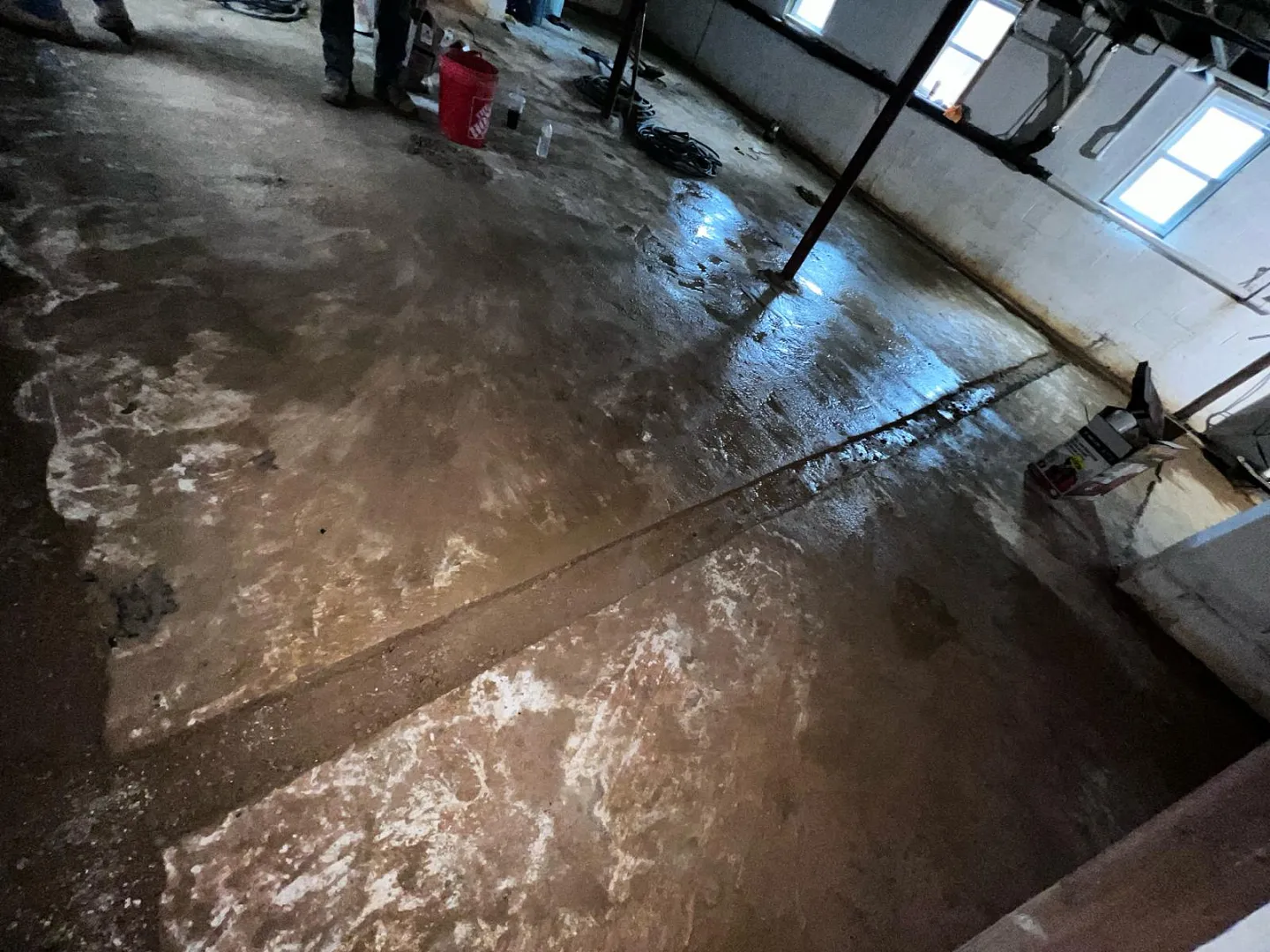
Basement flooding from rain is rarely random. When a basement flood after heavy rain occurs, it is usually the result of predictable water movement around and beneath the home. During intense storms, soil becomes saturated, surface runoff accelerates, and drainage systems are pushed beyond their capacity. When water has nowhere else to go, it finds the path of least resistance, often through foundation walls, floor joints, or weak structural points.
Most flooded basement from storm scenarios can be traced back to three core forces working together:
- Surface Water Overload
- Hydrostatic Pressure
- Drainage System Failure
These are not isolated problems. They interact. Heavy rainfall increases soil saturation. Saturated soil increases pressure against the foundation. Aging or undersized drainage systems fail under stress. Understanding how these forces connect is the key to solving the issue permanently rather than reacting to each storm.
In the next section, we’ll break down the root causes in detail so you can identify what is actually happening in your home, and why.
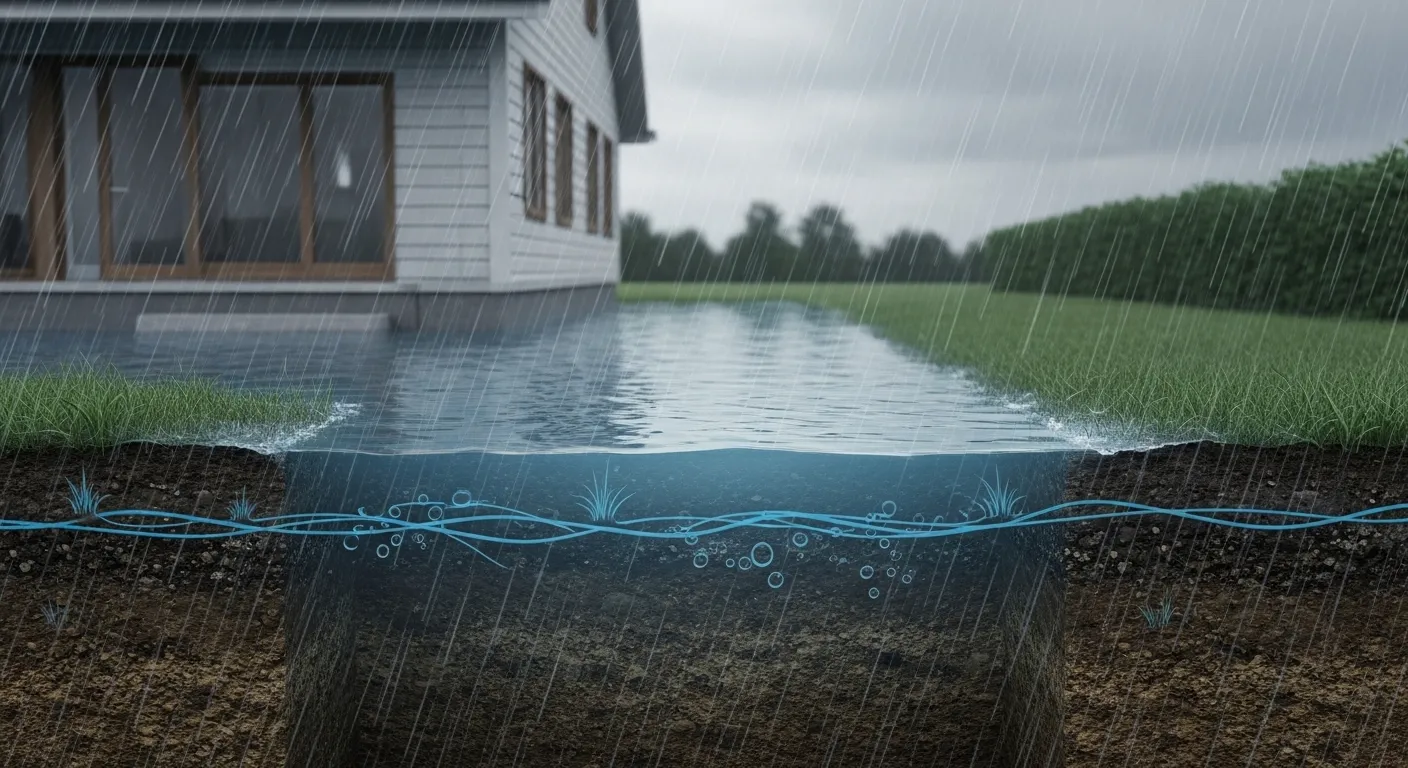
What Causes Basement Flooding From Rain?
When basement flooding from rain occurs, it is typically the result of water overwhelming the natural and mechanical systems designed to manage it. Below are the primary causes working behind the scenes.
- Surface Runoff Overload: Heavy rain produces large volumes of surface water that must be directed away from the home. When grading slopes toward the foundation instead of away from it, runoff collects along the perimeter, causing basement flooding.
- Hydrostatic Pressure: As discussed earlier, hydrostatic pressure develops when soil surrounding the foundation becomes fully saturated. When pressure builds, water pushes through joints, porous areas, and microscopic openings. This is one of the most common reasons a basement flood after heavy rain appears along the wall-floor seam.
- Foundation Weak Points: Even well-built foundations contain natural vulnerability points. Hairline cracks, aging mortar joints, window wells without proper drainage, and utility pipe penetrations can all serve as entry paths. During dry periods, these openings may not leak. Under storm conditions, they become pressure release points for saturated soil.
- Failed Drainage Systems: Older drain tile systems can clog with sediment. Footing drains may collapse or disconnect. Sump pumps can become overwhelmed when water volume exceeds their capacity. When any part of the drainage chain fails, water accumulates around the structure instead of being redirected away.
Now that the root causes are clear, the next step is identifying where the water is actually entering your basement.
How to Diagnose a Basement Flooding Issue After Heavy Rain
Before choosing a solution, you need to identify the source. The location and timing of water intrusion often reveal the underlying cause described in the previous section.
- Water Appears Near the Wall-Floor Joint → Likely Hydrostatic Pressure
- Water Around a Window Well → Surface Runoff Issue $9
- Water Dripping Through Wall Cracks → Foundation Weak Point $32
- Water From a Floor Drain → Possible Sewer Backup Risk $32
- Water Appears Only During Intense Storms → System Capacity Issue $32
Once you identify where the water is entering, you can match the problem to the appropriate solution category, whether exterior water control, interior drainage, or sump system upgrades.
What to Do When Your Basement Floods From Rain
When your home floods, it’s not always easy to deal with. Knowing what to do when your basement floods from rain will make the whole thing smoother and easier to deal with. Once immediate safety concerns are addressed and standing water is under control, the next step is making smart decisions that protect your home, your finances, and your long-term drainage strategy. Acting methodically now can prevent bigger problems later.
Here’s some easy steps to follow when your basement floods from rain:
- Document the Damage
- Shut Off Gas and Electricity Immediately
- Move Valuables to a Safe, Dry Location
- Document All Damage With Photos and Video
- Contact Your Insurance Provider
- Remove Standing Water Safely
- Thoroughly Dry the Basement
- Clean and Disinfect All Affected Surfaces
- Inspect and Clear Drains
- Restore and Reorganize Salvageable Belongings
- Identify and Correct the Underlying Cause
Taking the right steps early reduces long-term damage and lowers the risk of repeat flooding. Once the situation is stabilized, focus on identifying and correcting the root cause so the next heavy rain doesn’t put you back in the same position.
How to Stop Basement Flooding
Stopping basement flooding requires more than reacting after a storm. It means interrupting the water’s path before it reaches your foundation. Whether your issue stems from surface runoff, soil saturation, or overwhelmed drainage systems, the solution starts with identifying where the breakdown occurs and reinforcing that layer.
In most homes, stopping basement flooding involves three coordinated actions:
Reduce the Amount of Water Reaching the Foundation
Improve grading so soil slopes away from the house. Extend downspouts at least 6-10 feet from the foundation. Keep gutters clear so roof runoff does not spill directly into perimeter soil.
Relieve Pressure Before It Builds
If hydrostatic pressure is contributing to intrusion, install or upgrade perimeter drain systems that capture groundwater before it pushes inward. Exterior French drains and interior drain tile systems intercept water at footing level and redirect it safely.
Ensure Reliable Pumping and Discharge
A properly sized sump pump, backed by battery power and a correctly designed discharge line, removes collected water during peak rainfall and prevents recirculation.
Stopping basement flooding is rarely about a single upgrade. It’s about strengthening the weakest link in the water management chain and making sure each layer works together under heavy rain conditions.
How to Prevent Basement Flooding From Rain
Prevention focuses on maintenance and early correction rather than emergency response. Even well-designed waterproofing systems can fail if neglected.
Maintain Proper Exterior Drainage
Inspect grading annually to ensure soil still slopes away from the home. Settlement can reverse slope over time. Keep gutters and downspouts clear and confirm extensions remain securely positioned.
Test Sump Pump Systems Before Storm Season
Pour water into the sump basin to verify activation. Check the float switch, backup battery, and discharge line for obstructions. A system that works in dry weather may fail under stress if not maintained.
Monitor for Early Warning Signs
Watch for minor seepage at wall joints, increased sump cycling, or damp spots after storms. Small symptoms often precede larger failures.
Address Minor Issues Immediately
Repair cracks, clear drains, and correct grading problems before the next major rainfall. Preventative adjustments are significantly less disruptive than post-flood remediation.
Preventing basement flooding from rain is a long-term strategy. Consistent maintenance, paired with a properly designed drainage system, keeps stormwater controlled rather than destructive.
Breathe Easy Again with Our Expert Crawl Space Mold Removal Services for New York Properties
Preventing basement flooding from rain requires more than patchwork repairs. It requires a coordinated system designed around your soil conditions, foundation type, and water exposure risk. Mold Removal Experts provides comprehensive basement flooding prevention solutions that address water at every stage: before it builds pressure, before it enters, and before it causes structural damage.
Exterior Waterproofing & Drainage Control
Stopping water at the source is often the most effective strategy.
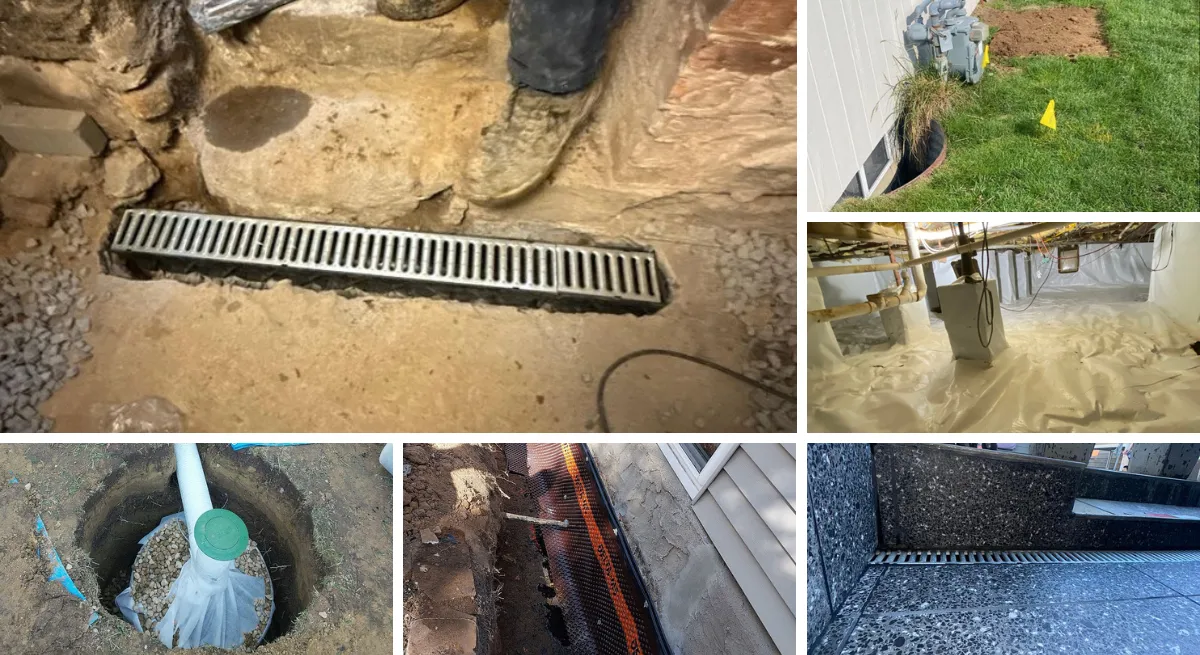
- Exterior Waterproofing Membranes: Durable barrier systems applied to foundation walls to block lateral moisture intrusion.
- Exterior French Drains & Footing Drains: Subsurface drainage systems that intercept groundwater before it builds hydrostatic pressure.
- Regrading & Downspout Extensions: Correcting slope and runoff discharge to prevent perimeter soil saturation.
- Sheet Pile & Structural Water Barriers (Where Required): In high water table or flood-prone zones, reinforced perimeter solutions may be installed to redirect or contain groundwater.
Interior Waterproofing & Drainage Systems
When water has already reached the structure, interior systems manage and redirect it safely.
- Interior Perimeter Drain Systems: Installed along the basement footing to capture incoming groundwater and route it to a sump basin.
- Drain Channels & Trench Systems: Surface-level collection systems for visible intrusion points.
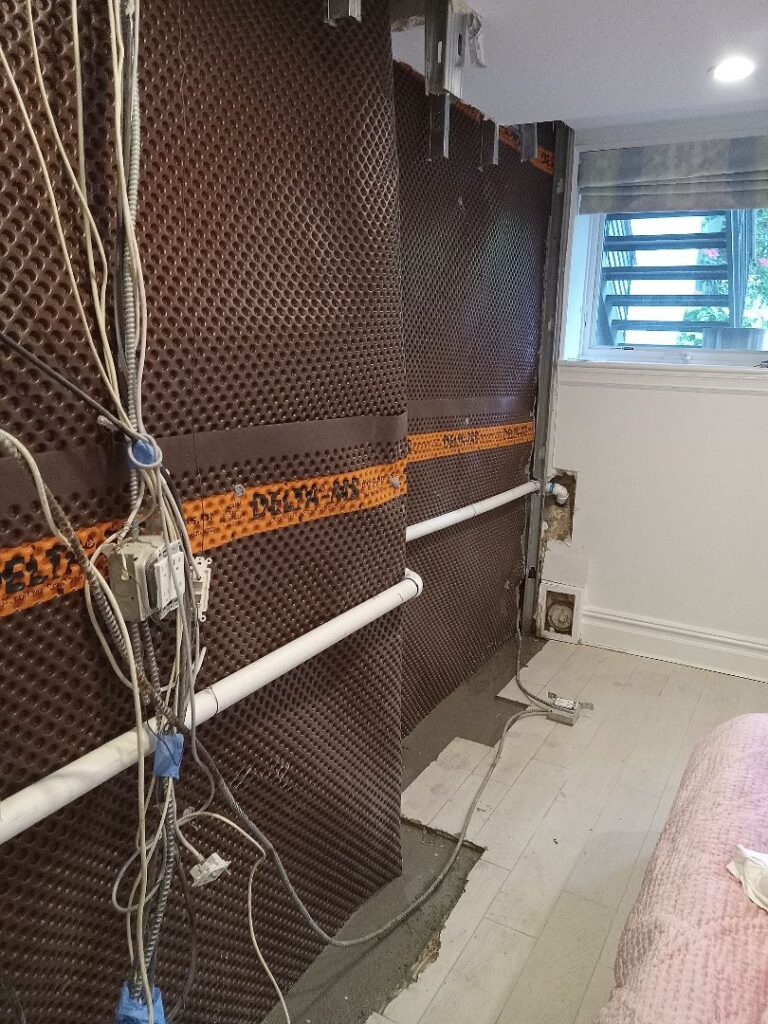
- Wall Vapor Barriers & Moisture Liners: Moisture liners and vapor barriers guide wall seepage downward into drainage systems rather than allowing it to evaporate into living space.
- Basement Window Well & Egress Window Protection: Properly drained and sealed window systems prevent direct surface entry during heavy storms.
Sump Pump & Discharge Solutions
A drainage system is only as reliable as its discharge.
- Primary Sump Pump Installation: Sized correctly for your water volume and storm exposure.
- Battery Backup Systems: Maintain pumping capacity during power outages.
- Engineered Discharge Line Design: Ensures water is transported far enough away to prevent re-saturation of foundation soil.
Crawlspace Encapsulation & Moisture Control
In homes with crawlspaces, encapsulation and vapor barriers reduce soil moisture transfer and stabilize humidity levels, lowering overall groundwater pressure impact.
Basement flooding from rain is rarely solved by a single upgrade. It requires a layered system tailored to your home’s conditions. Mold Removal Experts designs and installs integrated waterproofing solutions that work together: exterior control, interior drainage, and controlled discharge, so your basement stays dry through the next storm and the ones after that.
How Waterproofing Systems Work Together
Effective waterproofing follows a layered process. Each component manages water at a different stage:
Rainfall → Soil Saturation → Drainage System → Sump Pump → Controlled Discharge
- Rainfall: Water enters the system through precipitation. Roof runoff, yard drainage, and soil absorption all begin here.
- Soil Saturation: As rainfall accumulates, soil reaches capacity. The faster it saturates, the more stress is placed on foundation-level systems.
- Drainage System: Exterior grading, French drains, and interior perimeter systems intercept and redirect water before it accumulates at structural weak points. (See earlier system descriptions for specific applications.)
- Sump Pump: Captured water is directed into a basin where the pump removes it during peak conditions.
- Controlled Discharge: Properly designed discharge lines carry water far enough away from the home to prevent re-saturation of perimeter soil.
When each layer performs correctly, the system functions as a coordinated chain rather than isolated parts. If one layer fails or is undersized, the entire process becomes strained. That is why long-term protection depends on alignment between exterior control, interior management, and pump capacity, not a single upgrade in isolation.
Cost to Fix Basement Flooding From Rain
The cost to correct basement flooding from rain depends entirely on severity, frequency, and which layer of the water management system is failing. A minor grading correction is very different from a full perimeter waterproofing system.
Below are typical pricing ranges. These figures vary by region, foundation size, soil conditions, and storm exposure.
| Solution Type | Cost Per Sq Ft | Average Residential Basement Cost |
|---|---|---|
| Exterior Grading Correction | $3 – $8 per sq ft (affected perimeter area) | $1,000 – $4,000 |
| Interior Perimeter Drain System | $30 – $75 per linear ft (footing level) | $3,000 – $12,000 |
| Sump Pump Installation | $5 – $15 per sq ft equivalent (localized install) | $1,000 – $3,500 |
| Exterior French Drain | $25 – $60 per linear ft | $4,000 – $15,000 |
| Full System Waterproofing (Exterior + Interior + Pump) | $50 – $150+ per sq ft (basement footprint) | $8,000 – $25,000+ |
Recurring basement flooding after heavy rain events often indicate multiple layers need correction, not just one. The key is matching the repair to the diagnostic findings rather than installing systems blindly. Costs increase when problems are ignored and water damage compounds over time.
Protecting Your Basement From Future Storm Damage: Final Thoughts
Basement flooding from rain is rarely unpredictable. As the diagnostic section demonstrated, intrusion patterns usually point to identifiable causes. Once those causes are understood, targeted solutions can be applied effectively.
The layered model: exterior control, interior drainage, and controlled discharge works because it mirrors how water actually moves through soil and around foundations. When each layer performs correctly, stormwater is managed rather than resisted.
If your basement flood after heavy rain was a one-time event, maintenance may be sufficient. If the problem is recurring, revisit the earlier sections and match the symptoms to the appropriate system layer.
In the next section, we’ll answer common homeowner questions to help you make informed decisions about protecting your home long term.
Frequently Asked Questions About Basement Flooding from Rain
Why does my basement flood only during heavy rain?
If your basement floods only during intense storms, the issue is usually related to surface runoff overload or hydrostatic pressure, both explained earlier in the causes section. Moderate rainfall may not fully saturate the soil, but heavy rain can push drainage systems beyond capacity.
In many cases, the system works under normal conditions but becomes overwhelmed during peak rainfall. That pattern typically signals a capacity limitation rather than a constant structural defect.
Is a flooded basement from a storm covered by insurance?
Coverage depends on the source of the water and your specific policy. Sudden and accidental events, such as a burst pipe caused by storm damage, may be covered. However, groundwater seepage or long-term drainage issues are often excluded unless you carry a separate water backup or flood endorsement. Because policies vary widely, review your declarations page or speak directly with your insurer. Avoid assuming coverage until it is confirmed in writing.
Can a sump pump alone prevent basement flooding?
A sump pump removes water that has already reached the collection basin. As discussed in the layered systems section, it is one component of a broader water management chain. If exterior grading or drainage systems are inadequate, a sump pump may run constantly or become overwhelmed. Long-term prevention usually requires alignment between exterior control, interior drainage, and discharge design.
What is hydrostatic pressure in simple terms?
Hydrostatic pressure occurs when soil around your foundation becomes saturated and water pushes inward or upward against basement walls and floors. Concrete is strong but not waterproof. When pressure builds, water finds seams, joints, and microscopic openings. For a more detailed explanation, refer to the causes section earlier in this guide.
How much does it cost to waterproof a basement after flooding?
Costs vary depending on severity and which system layers need correction. Minor exterior grading adjustments may cost a few thousand dollars, while full perimeter waterproofing systems can exceed $20,000. Refer to the cost section above for detailed pricing ranges. The key factor is whether the issue is isolated or systemic.
How long does it take for mold to grow after flooding?
Mold can begin developing within 24 to 48 hours after water exposure. That’s why the immediate steps section emphasizes quick water removal and drying. Reducing moisture quickly lowers the risk of secondary contamination and additional remediation costs.
Should I install an exterior or interior drain system?
The correct choice depends on where water is entering. Exterior systems reduce soil saturation before it reaches the foundation. Interior systems manage water after it enters at the footing level. In recurring basement flood after heavy rain scenarios, a combination of both may be required. Review the permanent solutions section to match your symptoms with the appropriate system layer.
Why does water come up through my basement floor?
When water appears through floor cracks or along the wall-floor seam, upward pressure from saturated soil is often involved. This relates directly to the hydrostatic pressure discussed earlier. If this occurs repeatedly, it may indicate high groundwater conditions rather than a surface runoff issue.
Can poor grading alone cause basement flooding?
Yes. If soil slopes toward the foundation, rainwater collects and saturates perimeter soil. Over time, this increases intrusion risk. In some homes, correcting grading and extending downspouts resolves the issue without additional drainage systems. Refer to the exterior water control section for more context.
When should I call a professional for basement flooding from rain?
If flooding recurs, water appears in multiple locations, cracks widen, or your sump pump runs continuously during storms, professional evaluation is recommended. Use the diagnostic checklist earlier in this guide to assess severity. Isolated events may require maintenance. Recurring patterns usually signal the need for a structured drainage plan.