
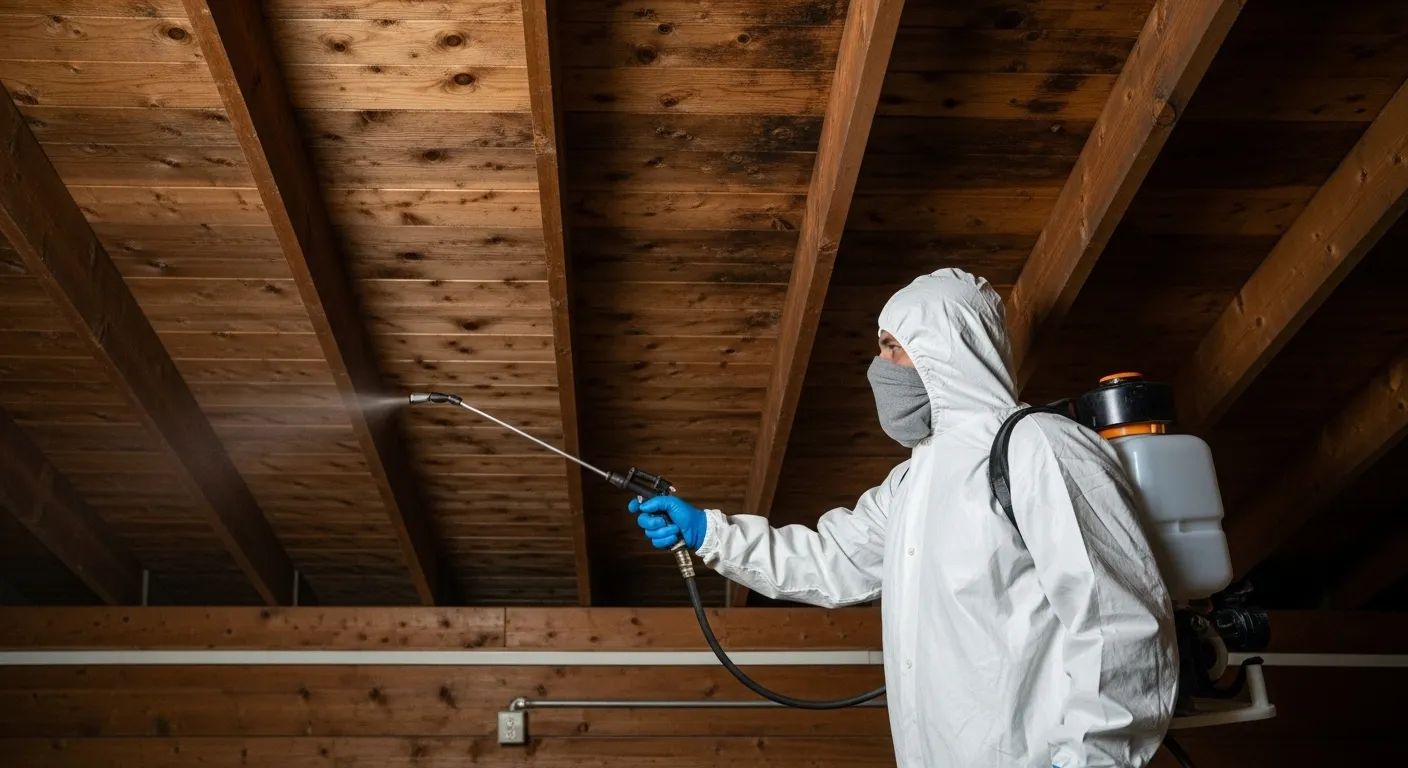
Attic mold is rarely the result of dirt or neglect. In almost every case, it’s caused by failures in airflow, insulation, and moisture control. Attics are transitional spaces between conditioned living areas and the outdoors, which makes them especially sensitive to small building-envelope mistakes. When warm, moist air is allowed to enter and linger, mold doesn’t need much time to take hold.
Effective prevention means controlling the conditions that allow mold to grow in the first place. That includes managing how air moves from the house into the attic, maintaining consistent insulation coverage, and ensuring moisture has a clear path out. This approach focuses on stopping mold before it starts, not reacting after visible damage appears.
Long Island Homeowners Trust Mold Removal Experts for Proven Mold Prevention Solutions Backed by the Longest Warranties Possible! Schedule Your Free Mold Testing Today!
What Causes Mold in Attics?
Attics are repeat offenders because they sit at the intersection of heat, moisture, and poor airflow. While roof leaks can contribute, most attic mold problems originate from inside the home rather than outside weather intrusion.
- Warm Air Rise: Heated indoor air naturally rises and carries moisture with it. Without proper air sealing, this moisture-laden air escapes into the attic through ceiling penetrations, recessed lights, attic hatches, and wall top plates. When that warm air meets colder attic surfaces, condensation forms.
- Poor Ventilation: Attics rely on passive ventilation to remove heat and humidity. When intake or exhaust vents are insufficient, blocked, or improperly balanced, moist air becomes trapped. Stagnant air allows humidity levels to remain elevated long enough for mold to colonize wood surfaces.
- Insulation Gaps: Inconsistent or compressed insulation allows heat to escape unevenly. This creates cold spots on roof decking and framing where moisture condenses more readily. Over time, repeated condensation cycles provide the sustained dampness mold needs to grow.
Control Moisture at the Source
Every attic mold problem starts somewhere else in the house. Daily activities create moisture, and warm air naturally carries it upward. If that moisture isn’t captured and expelled immediately, it accumulates in the attic where conditions are ideal for mold.
The biggest offenders are mechanical exhausts that don’t actually exhaust outdoors:
- Bathroom Exhaust Fans: Bathroom exhaust fans must terminate outside the building envelope. Venting into the attic or soffit cavity simply redistributes moisture.
- Kitchen Ventilation: Kitchen ventilation matters more than most homeowners realize. Cooking moisture adds up quickly when range hoods recirculate instead of venting outdoors.
- Dryer Vents: Dryer vents are non-negotiable. Warm, saturated exhaust air dumped into an attic will create mold conditions fast.
These are three bad areas for condensation and mold growth. Watch them, and do you best to keep them dry.
Improve Attic Ventilation the Right Way
Ventilation isn’t about adding more vents. It’s about creating continuous airflow. Many attics fail because the system looks complete on paper but doesn’t function in practice. Air must enter low and exit high. That means soffit vents stay clear and unobstructed, insulation is properly baffled, and intake air can actually reach the attic space. If intake is blocked, exhaust vents have nothing to pull.
Exhaust matters just as much. Ridge vents or roof vents must be correctly sized and positioned to draw warm, moist air out rather than letting it stagnate. What ultimately determines success is balance. Proper net free vent area and correct intake-to-exhaust ratios matter far more than the number of visible vents on the roof.
Seal Air Leaks Between Living Space and Attic
Air sealing is one of the highest-impact fixes and one of the most commonly skipped. Moist air doesn’t need big holes, small, distributed leaks do the damage.
Common leakage points include:
- Seal Gaps: Gaps along wall top plates where wiring and plumbing penetrate
- Leaks Around Light Fixtures: Recessed light fixtures, especially older non-airtight can
- Leaks Around Hatches or Stairs: Poorly sealed attic hatches or pull-down stairs
Sealing these areas reduces heat loss and sharply limits the amount of humid indoor air entering the attic. Less air movement means less condensation potential.
Insulation Mistakes That Lead to Attic Mold
Insulation only works when it’s continuous, properly installed, and paired with air sealing. When it isn’t, it can actually worsen moisture problems.
Problems usually show up as:
- Compressed Insulation: Compressed insulation, which loses thermal performance and creates cold spots
- Uneven Coverage: Missing or uneven coverage, which allows heat to escape in concentrated areas
- Moisture-Retentive Materials: (blankets and cardboard and stuff) Moisture-retentive materials, which slow drying and extend damp conditions
These issues don’t always reduce comfort inside the home, which is why attic mold often develops unnoticed until damage is visible.
Manage Humidity Before It Reaches the Attic
Attic mold prevention is inseparable from whole-house humidity control. Moisture that stays indoors will eventually rise. As a general rule, indoor relative humidity should remain below about 50% during colder months, and often lower in cold climates. Higher levels increase the likelihood of attic condensation even in well-built homes.
In humid climates or shoulder seasons, dehumidifiers can help when HVAC systems don’t run long enough to remove moisture consistently. Don’t ignore what’s below the house either. Damp crawl spaces raise overall humidity and push moisture upward through the structure, undermining attic-level fixes.
Roof Leaks vs. Condensation: Know the Difference
One of the most common attic mold mistakes is treating condensation like a roof failure. Misdiagnosis leads to wasted money, unnecessary repairs, and problems that quietly return.
Roof leaks tend to leave a specific fingerprint. Staining is usually localized, follows gravity paths, and worsens after rain or snowmelt. The damage pattern often points back to flashing, penetrations, or a single roof plane.
Condensation behaves very differently. It shows up broadly and inconsistently, often coating multiple rafters or large areas of roof sheathing. In colder months, frost may be visible in the morning and disappear later in the day, leaving behind damp wood and stains.
Timing is often the clearest clue:
- Staining after rain events points toward a leak
- Frost or widespread staining on cold mornings points toward condensation
- Mold with no active leaks almost always indicates a humidity and airflow problem
Understanding the difference prevents chasing the wrong fix.
Seasonal Attic Checks That Prevent Mold
Attics don’t need constant attention, but brief seasonal checks catch problems early—before mold has time to establish itself. In winter, cold surfaces expose moisture issues quickly. Frost, dark staining, or damp wood are early warning signs that warm, humid air is reaching the attic.
Summer brings a different set of clues. Excessive heat buildup, musty odors, or stale air can indicate ventilation problems that trap moisture even when condensation isn’t visible.
After major storms, it’s worth confirming that vents, flashing, and roof penetrations are intact and unobstructed. Damage here doesn’t always cause immediate leaks, but it can disrupt airflow and moisture control. These checks take minutes and prevent months of damage.
How to Prevent Attic Mold Long-Term: Final Thoughts
Attic mold prevention isn’t about cleaning or coatings. It’s about controlling moisture before it becomes a problem. Ventilation, air sealing, and insulation are not independent systems. They either work together or fail together. Fixing one while ignoring the others produces partial results at best.
When moisture is controlled at the source, through the ceiling plane, and out of the attic, mold never gets the conditions it needs to grow. Stop the moisture, and attic mold doesn’t start.
Ready to Put an End to Mold? Contact Us for a Free Mold Inspection!
Frequently Asked Questions About Attic Mold Prevention:
What causes mold to grow in an attic?
Attic mold is caused by moisture buildup, not dirt or neglect. The most common sources are warm, humid indoor air leaking into the attic, poor ventilation, insulation gaps, and improperly vented bathrooms, kitchens, or dryers. When moisture condenses on cold attic surfaces, mold can grow even without roof leaks.
Is attic mold usually caused by a roof leak?
No. Most attic mold is caused by condensation rather than roof leaks. Roof leaks typically create localized staining that worsens after rain. Condensation causes widespread staining or frost on cold surfaces, especially in winter. Mold without an active leak almost always points to humidity and airflow problems.
How can you tell the difference between attic condensation and a roof leak?
Roof leaks usually appear as concentrated stains near flashing or penetrations and worsen after rain. Condensation appears broadly across rafters or roof sheathing and often shows up as frost on cold mornings. If moisture appears without rainfall, condensation—not a leak—is the likely cause.
Does attic ventilation prevent mold?
Yes, but only when ventilation is properly balanced. Effective attic ventilation requires clear soffit intake and correctly sized exhaust vents. Adding vents without proper airflow design does not remove moisture. Ventilation works best when combined with air sealing and consistent insulation coverage.
Can bathroom fans cause attic mold?
Yes. Bathroom fans that vent into the attic instead of outdoors are a major cause of attic mold. Showers produce high humidity, and dumping that moisture into attic space raises condensation risk. Bathroom exhaust fans should always vent directly outside the building envelope.
Does insulation prevent attic mold?
Insulation helps prevent attic mold by reducing heat loss and condensation, but only when installed correctly. Missing, compressed, or uneven insulation creates cold surfaces where moisture condenses. Insulation must be continuous and paired with air sealing to effectively reduce mold risk.
What indoor humidity level prevents attic mold?
In colder months, indoor relative humidity should generally stay below 50 percent, and often lower in cold climates. High indoor humidity increases the amount of moisture that can migrate into the attic and condense on cold surfaces, even in well-ventilated attics.
Can attic mold form in summer?
Yes. While winter condensation is common, attic mold can also develop in summer due to poor ventilation, trapped humid air, or moisture-retaining materials. Musty odors and excessive heat buildup are common summer warning signs that moisture is not being removed effectively.
How often should an attic be checked for mold?
A visual attic inspection once or twice a year is usually sufficient. Winter checks help identify condensation or frost issues, while summer checks can reveal ventilation problems. Additional inspections after major storms help ensure vents and flashing remain intact and functional.
Will cleaning attic mold fix the problem?
No. Cleaning attic mold without addressing moisture sources only provides temporary results. Mold will return if humidity, air leakage, and ventilation issues remain. Long-term prevention requires controlling moisture at the source, sealing air leaks, and maintaining proper attic ventilation and insulation.