
You run your dishwasher to get things clean, so finding fuzzy black or pink spots along the door seal feels like a betrayal. The truth is, a dishwasher is one of the most mold-friendly spots in the whole kitchen: it stays dark, it stays damp, and it collects little bits of food after every load. If you’ve noticed a musty smell, slimy buildup on the rubber gasket, or spots creeping around the filter, you’re already dealing with it, and getting rid of mold in a dishwasher is a job you can knock out in an afternoon with a few things you probably already own.
Below, I’ll walk you through where the mold is hiding, how to clean every part of it, and how to keep it from coming back. The same idea applies to the black mold that shows up around a kitchen sink, warm, wet, and fed by food scraps.
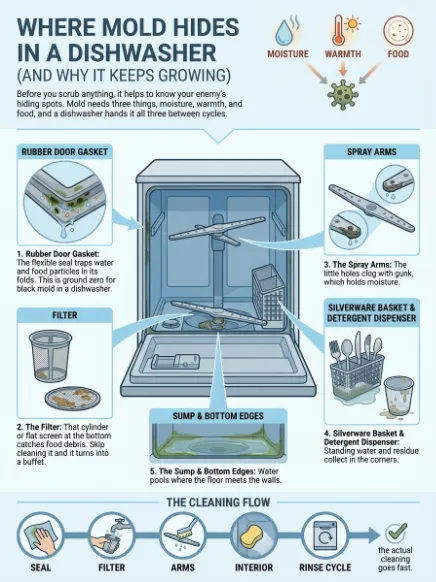
Where Mold Hides in a Dishwasher (and Why It Keeps Growing)
Before you scrub anything, it helps to know your enemy’s hiding spots. Mold needs three things, moisture, warmth, and food, and a dishwasher hands it all three between cycles. These are the usual offenders, roughly in order of how gross they get:
- The rubber door gasket. The flexible seal traps water and food particles in its folds. This is ground zero for black mold in a dishwasher.
- The filter. That cylinder or flat screen at the bottom catches food debris. Skip cleaning it and it turns into a buffet.
- The spray arms. The little holes clog with gunk, which holds moisture.
- The silverware basket and detergent dispenser. Standing water and residue collect in the corners.
- The sump and bottom edges. Water pools where the floor meets the walls.
Once you know the flow; the seal, filter, arms, interior, then a rinse cycle, the actual cleaning goes fast.
What You'll Need to Remove Mold from Your Dishwasher Safely
Before you scrub anything, it helps to know your enemy’s hiding spots. Mold needs three things, moisture, warmth, and food, and a dishwasher hands it all three between cycles. These are the usual offenders, roughly in order of how gross they get:
- The rubber door gasket. The flexible seal traps water and food particles in its folds. This is ground zero for black mold in a dishwasher.
- The filter. That cylinder or flat screen at the bottom catches food debris. Skip cleaning it and it turns into a buffet.
- The spray arms. The little holes clog with gunk, which holds moisture.
- The silverware basket and detergent dispenser. Standing water and residue collect in the corners.
- The sump and bottom edges. Water pools where the floor meets the walls.
Once you know the flow; the seal, filter, arms, interior, then a rinse cycle, the actual cleaning goes fast.
How to Get Rid of Mold in a Dishwasher, Step by Step
Work top to bottom so you’re not re-dirtying parts you already cleaned.
- Empty it out. Pull the racks, the silverware basket, and anything else that lifts out. Soak removable parts in warm, soapy water while you work on the rest.
- Clean the filter. Twist or lift out the filter at the bottom, rinse it under hot water, and scrub it with your brush. If it’s crusted, let it soak in warm water with a splash of vinegar for ten minutes first.
- Attack the door gasket. Dip your toothbrush in vinegar (or diluted peroxide) and scrub every fold of the rubber seal. Get into the corners at the bottom of the door where black mold loves to settle, then wipe it clean.
- Clear the spray arms. Wipe them down and use a toothpick to poke out any holes that are clogged. Better spray means a cleaner rinse.
- Wipe the interior. Hit the walls, the corners, the detergent dispenser, and the bottom edges with a vinegar-dampened cloth. Don’t forget the inside lip of the door.
- Run a hot vinegar cycle. Put the racks back, set a bowl with 1–2 cups of white vinegar on the top rack, and run the hottest, longest cycle with nothing else inside. The heat and acid break down remaining mold and residue.
- Finish with baking soda. Sprinkle a cup of baking soda across the bottom and run a second short hot cycle. This deodorizes and knocks out that lingering musty smell mold leaves behind.
When the cycles finish, prop the door open and let everything air-dry completely.
How to Keep Mold From Coming Back
Cleaning it once is the easy part. Keeping the dishwasher mold-free comes down to denying it moisture and food:
- Leave the door cracked after a cycle so the inside can dry instead of steeping.
- Scrape plates before loading so less food ends up in the filter.
- Clean the filter monthly and run a vinegar cycle every few weeks.
- Wipe the gasket dry now and then, especially if your kitchen runs humid. Keeping indoor humidity in the sweet spot below 60% makes the whole kitchen less inviting to mold.
- Use the sanitize or hot cycle regularly if your machine has one.
Is Dishwasher Mold Dangerous — and When to Call a Pro
For most people, the small amount of mold in a dishwasher is more gross than hazardous, and a solid cleaning handles it. But if you notice symptoms like coughing, congestion, or skin irritation that ease up when you’re out of the house, pay attention — the CDC connects indoor mold exposure to respiratory problems, especially for people with allergies or asthma.
And if the mold keeps roaring back within days of every cleaning, the dishwasher probably isn’t the real problem. A hidden leak under the sink, poor kitchen ventilation, or high humidity can feed mold faster than you can scrub it. That’s when it’s worth having someone look at the bigger moisture picture.
How to Get Rid of Mold in a Dishwasher: Final Thoughts
Getting rid of mold in a dishwasher isn’t complicated, it’s about hitting the spots most people ignore (that door gasket and filter especially), running a hot vinegar-and-baking-soda reset, and then giving the inside a chance to dry between loads. Do the deep clean once, build the small habits, and you’ll keep the whole machine fresh instead of fighting the same fuzzy spots every month. And if it keeps coming back no matter how thoroughly you clean, treat that as your signal that moisture is sneaking in from somewhere else, because knowing how to get rid of mold in a dishwasher is only half the fix if the real leak is still running.
Frequently Asked Questions About How to Get Rid of Mold in a Dishwasher
How Do I Get Rid of Mold in My Dishwasher?
Remove and wash the filter, racks, utensil basket, and other detachable parts. Scrub the door gasket, spray arms, dispenser, and interior with warm, soapy water. Follow the manufacturer’s cleaning instructions before running a hot cleaning or sanitizing cycle.
What Causes Mold to Grow Inside a Dishwasher?
Mold grows when moisture, warmth, food particles, and detergent residue remain inside the dishwasher. Dirty filters, clogged spray arms, standing water, damaged seals, and leaving the door closed between cycles can make the problem worse.
Where Does Mold Usually Hide in a Dishwasher?
Common hiding places include the rubber door gasket, filter, drain area, spray arms, detergent dispenser, utensil basket, and bottom edges. Check underneath removable components and inside gasket folds where water and food debris collect.
Can I Use Vinegar to Kill Mold in a Dishwasher?
White vinegar may help loosen mineral deposits, odors, and some surface buildup, but it should not be used on every dishwasher component. Frequent exposure to concentrated vinegar may damage certain rubber seals and metal parts, so check the appliance manual first.
Can I Use Bleach to Remove Dishwasher Mold?
Only use bleach if your dishwasher manufacturer permits it. Bleach can damage stainless steel interiors and components. Never mix bleach with vinegar, ammonia, hydrogen peroxide, or other cleaning products because dangerous fumes or chemical reactions can result.
Is Black Mold in a Dishwasher Dangerous?
Dark-colored growth is not necessarily toxic black mold, since several molds and biofilms can appear black. However, any visible growth should be removed because mold exposure may aggravate allergies, asthma, coughing, congestion, or skin irritation in sensitive individuals.
What Is the Pink Slime Inside My Dishwasher?
Pink or reddish slime is often a bacterial biofilm rather than mold. It thrives in damp areas containing food or soap residue. Clean the affected surfaces thoroughly, wash the filter, and improve drying between cycles to discourage it from returning.
Why Does My Dishwasher Still Smell Musty After Cleaning?
A persistent musty smell may come from debris inside the filter, drain hose, sump, gasket, or garbage disposal connection. Standing water, a drainage problem, hidden leakage, or mold beneath or behind the appliance may also be responsible.
How Often Should I Clean My Dishwasher to Prevent Mold?
Clean the filter approximately once a month, wipe the door gasket regularly, and remove visible food debris after each load. Leave the door slightly open after the cycle when safe to do so, and follow the manufacturer’s recommended deep-cleaning schedule.
When Should I Call a Professional About Dishwasher Mold?
Call an appliance technician or mold professional if growth returns quickly, water remains at the bottom, the machine leaks, or mold appears in nearby cabinets or flooring. Recurring mold can indicate a drainage failure, plumbing leak, damaged seal, or larger indoor moisture problem.