
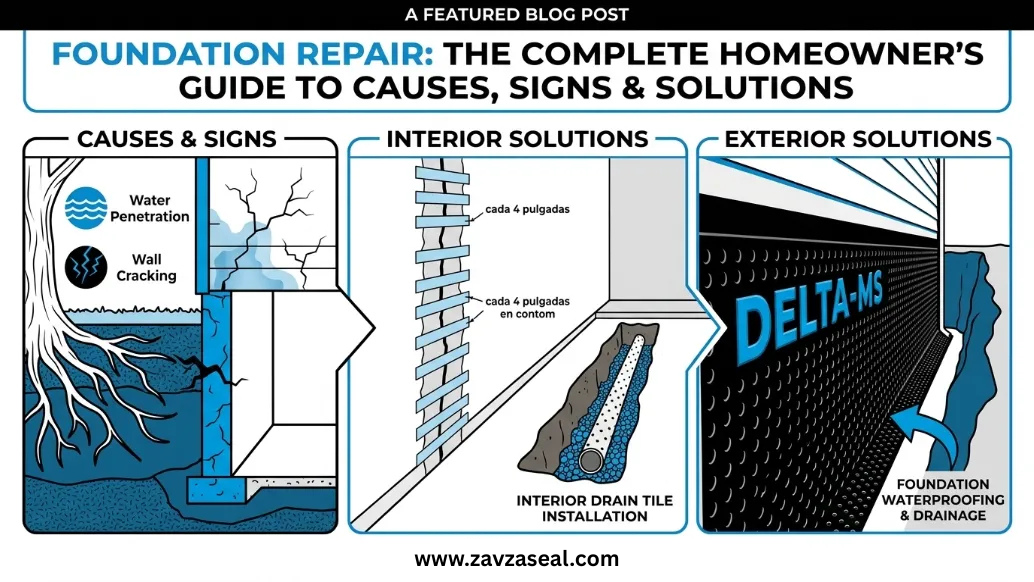
Cracks, sticking doors, damp basement air. Learn what your home is telling you, what it costs to fix, and how to stop foundation problems before they become mold problems.
Foundation repair is the home project nobody thinks about until a door stops latching or a crack climbs a wall. By then the damage has usually been building quietly for months or years. This complete homeowner’s guide breaks down what causes foundations to fail, how to spot the warning signs early, which repair methods actually work, and why a failing foundation is one of the most overlooked causes of chronic indoor moisture and mold.
Knowing how foundation repair works before you call anyone puts you in a far stronger position to make smart decisions and avoid being oversold on work you may not need.
Get a Free Foundation & Moisture Inspection!
What Causes Foundation Problems
Almost every foundation problem traces back to one source: the soil. The structure itself is stable. The ground underneath it is not. Soil swells, shrinks, erodes, and compresses, and the foundation is forced to move with it. Understanding which soil behavior is at work in your home is the first step toward the right fix.
“Your foundation is not failing on its own. It is responding to ground that moved. Fix the structure without addressing the soil and water behind it, and the problem comes back.” – Jake, Manager at Zavza Seal (Owner of Mold Removal Experts)
- Expansive Clay Soil:
Clay absorbs water and expands with real force, then shrinks as it dries. Homes on clay ride that swell-and-shrink cycle every season until cracks open.
- Poor Drainage:
Overflowing gutters, downspouts dumping at the wall, and yards graded toward the house drive water into the soil against the foundation.
- Plumbing Leaks:
A slow leak under the slab saturates one patch of soil for months, and the foundation above settles unevenly.
- Poor Original Construction:
Inadequate soil compaction, undersized footings, and rushed pours create weakness from day one.
- Drought And Dry Spells:
Extended dryness shrinks soil away from the foundation, removing the support the structure was resting on.
The Benefits of Catching Foundation Repair Early
Foundation problems rarely stay small. What begins as a hairline crack or minor settlement issue can quickly spread into structural damage, water intrusion, and costly interior repairs. The earlier you identify and correct the problem, the more control you keep over both the repair scope and the long-term condition of your home.
Here is what early action protects.
- Foundation Cracks
- Sticking Doors And Windows
- Sloping Or Uneven Floors
- Gaps At Walls And Trim
- Musty Basement Or Crawl Space Air
- Efflorescence
- Water Stains
- Visible Mold
How Foundation Repair Methods Actually Work
This work is not one procedure. The right foundation repair method depends on whether your foundation is settling, being pushed inward, or simply leaking. A proper repair plan identifies the source of the movement first, then matches the repair system to the specific failure taking place.
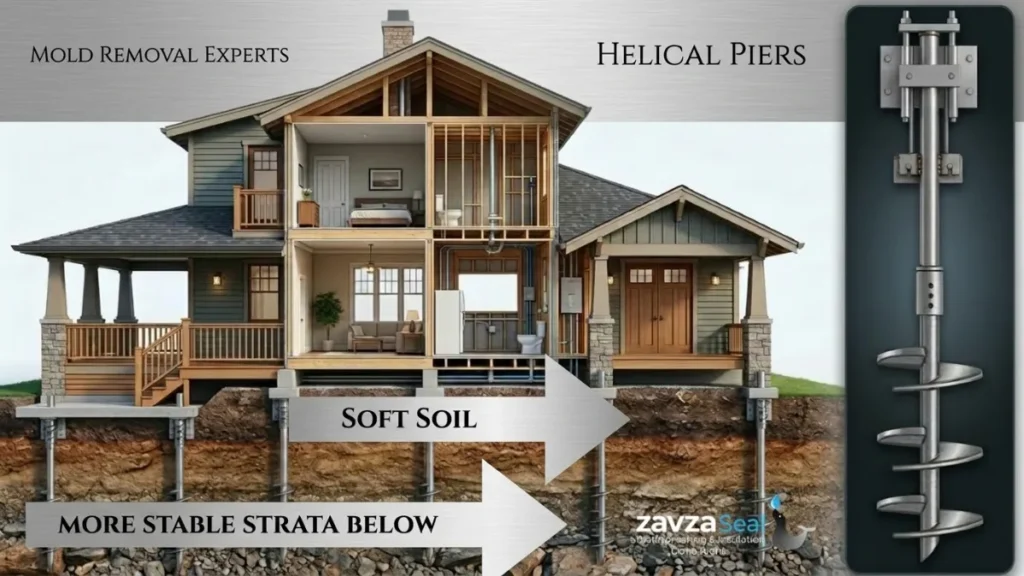
For Settlement: Underpinning With Piers
Steel push piers or helical piers are driven down past unstable soil to load-bearing strata or bedrock. The foundation’s weight transfers onto them, stabilizing the structure and often lifting it closer to its original position.
- Stair-step brick cracks
- Sloping or uneven floors
- Doors and windows sticking or going out of square
- Expansive clay soil shrink-and-swell cycles
- Poor soil compaction during original construction
- Water saturation beneath one portion of the home
- Homes with sinking corners or uneven settlement
- Large structural cracks caused by soil movement
- Long-term stabilization on expansive clay soil
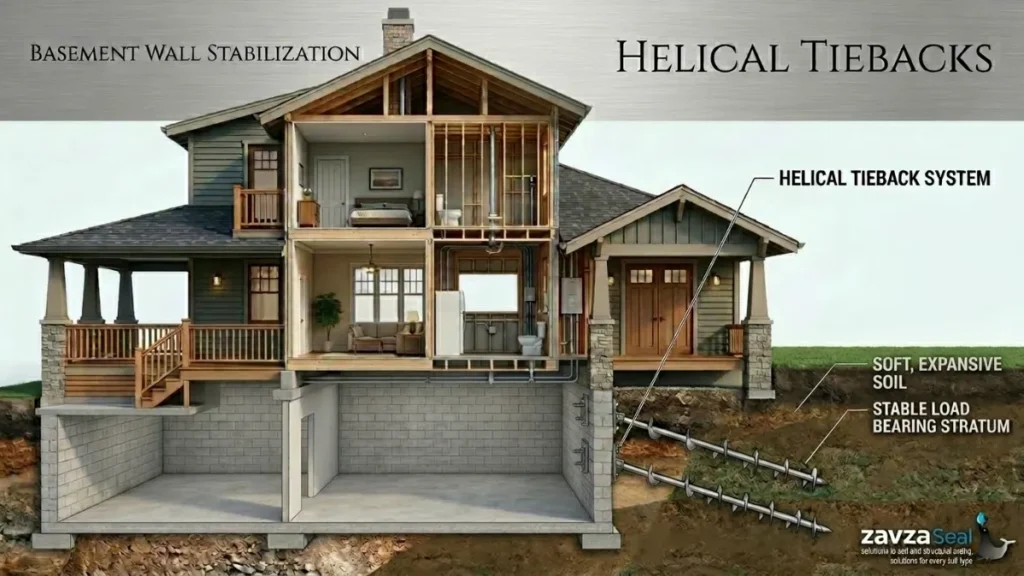
For Bowing Walls: Lateral Reinforcement
Carbon fiber straps, steel I-beams, or wall anchor systems reinforce basement walls that are bending inward from soil pressure. The correct system depends on how advanced the wall movement already is.
- Horizontal wall cracks
- Walls curving inward at the center
- Water intrusion through basement wall cracks
- Hydrostatic pressure from saturated soil
- Expanding soil pressing against basement walls
- Poor exterior drainage around the foundation
- Bowing or leaning basement walls
- Horizontal cracking in foundation walls
- Preventing further inward wall movement
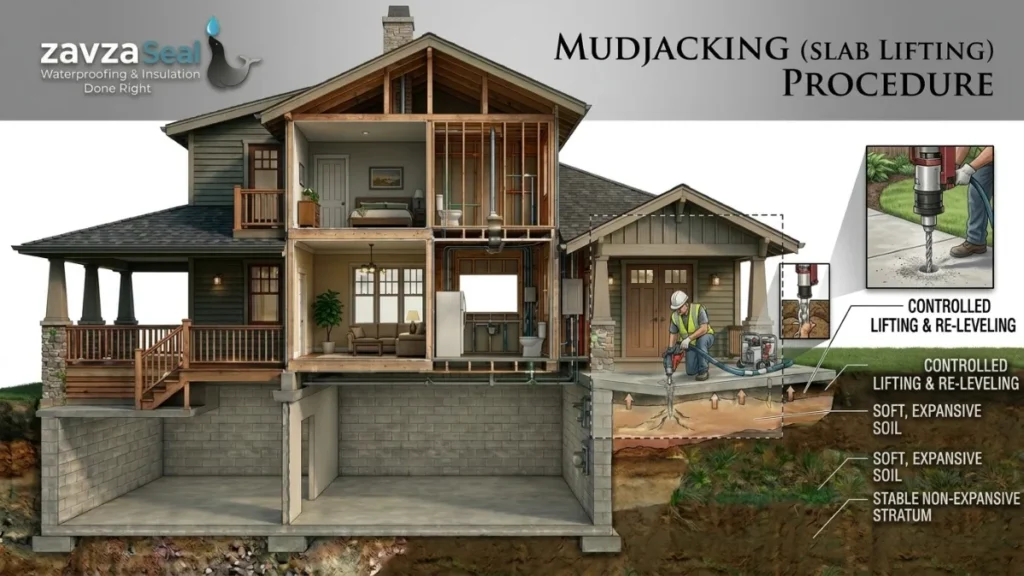
For Sunken Slabs: Slabjacking Or Foam Injection
Slabjacking and polyurethane foam injection lift sunken concrete by filling empty space beneath the slab. This restores support without removing and replacing the concrete entirely.
- Uneven concrete surfaces
- Trip hazards or separated slab sections
- Cracks forming where the slab has dropped
- Soil erosion beneath the slab
- Poorly compacted fill material
- Water washing out support beneath concrete
- Sunken driveways and sidewalks
- Uneven garage or basement slabs
- Concrete settling without major structural cracking
For Water Problems: Waterproofing And Drainage
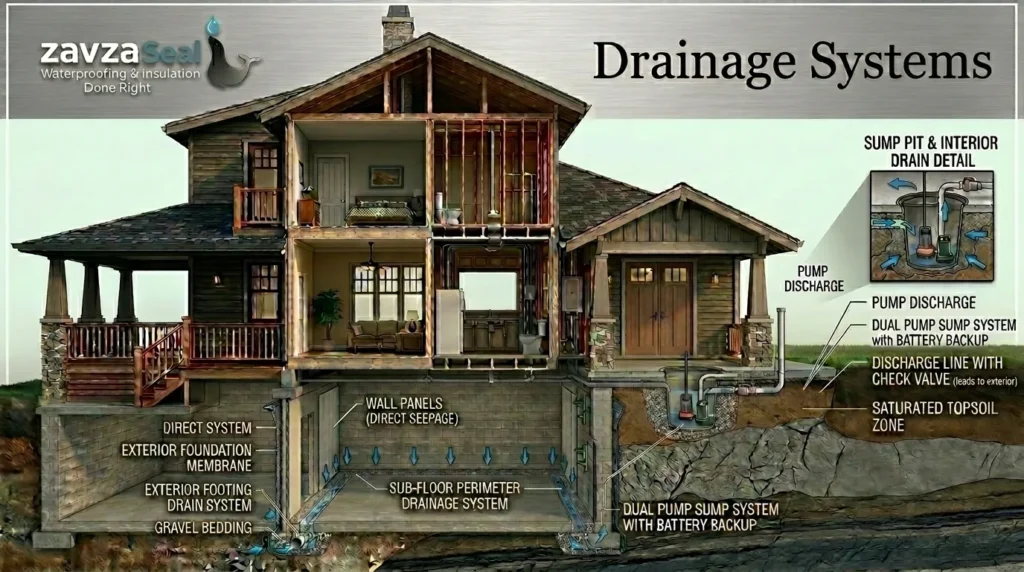
Drainage systems, sump pumps, crack injections, exterior membranes, and grading corrections control the water causing the foundation damage. Structural repairs that ignore water problems usually fail over time.
- Musty basement odors
- Efflorescence on concrete walls
- Visible water stains or mold growth near the foundation
- Poor yard grading toward the home
- Overflowing gutters and short downspouts
- Hydrostatic pressure building around the foundation
- Wet basements and crawl spaces
- Active water intrusion through foundation walls
- Homes with chronic moisture or mold problems

The Foundation and Mold Connection Most Homeowners Miss
A compromised foundation is one of the most common hidden engines of indoor mold. The same cracks, gaps, and soil pressure that threaten your home structurally also let water and water vapor into the building. That moisture soaks into framing, insulation, and drywall in the basement or crawl space. Mold needs only moisture, organic material, and time, and a leaking foundation supplies the first two without pause.
The damage compounds because it stays hidden. Mold inside a wall cavity or under a finished floor can spread for a long time before anyone sees a patch or notices a smell. By then the colony is well established and its spores are already circulating into the air the household breathes.
This is why foundation work and mold remediation should be planned together. Repair the foundation but skip the existing mold, and you have sealed an active health problem inside a now-dry wall. Remediate the mold but skip the foundation, and you have cleaned a surface while the water source keeps running. Treating them as one connected project is the only approach that truly resolves the situation.
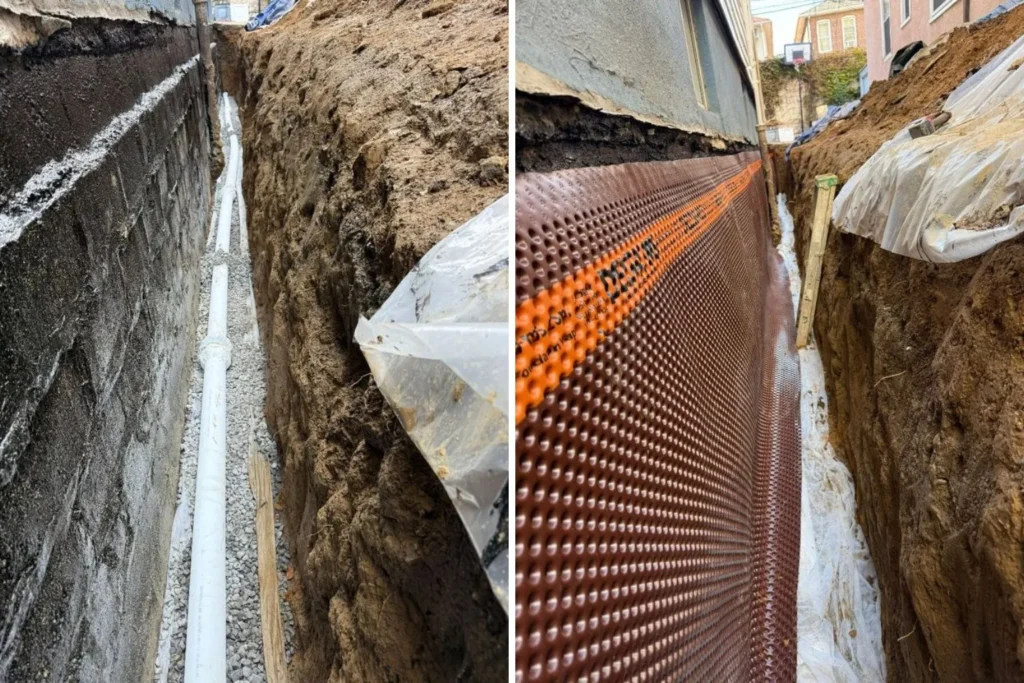
Case Study: Exterior And Interior Foundation Waterproofing In Islip, NY
A homeowner in Islip, NY contacted Zavza Seal via our main website after dealing with repeated basement water intrusion, musty odors, and visible moisture along the foundation walls after heavy rainstorms. After a full inspection, the team determined the home was experiencing hydrostatic pressure buildup around the exterior foundation combined with failing drainage conditions. Water was forcing its way through vulnerable sections of the foundation wall and creating long-term moisture exposure inside the basement.
Problems Found
- Water intrusion along basement foundation walls
- Hydrostatic pressure building around the home
- Failed exterior waterproofing protection
- Persistent musty odors and elevated humidity
- Increased risk of mold growth and structural moisture damage
Solution Installed
- Full exterior excavation down to the footing
- Waterproof foundation coating application
- Dimple drainage membrane installation
- New perimeter footing drain system with gravel bedding
- Interior drainage improvements and sump pump integration
- Grading corrections to redirect water away from the foundation
The completed system now redirects groundwater safely away from the home before pressure can build against the foundation walls.
For Expert Care for Your Home’s Foundation, Proven Solutions, and Industry-Leading Warranties, Contact Us Now for a Free Inspection!
Foundation Repair: Final Thoughts
Foundation repair rewards homeowners who act early and punishes those who wait. The cracks, sticking doors, and musty basement air your home is showing you are not cosmetic complaints. They are an early bill, and that bill grows with every season you ignore it. Treating the structure and the moisture as one connected problem is what separates a real fix from an expensive patch.
If your home is showing any of the signs in this guide, the smartest next step is a professional inspection that looks at both the foundation and the mold risk it creates. Get the assessment, get the facts, and make your decision from knowledge instead of guesswork. A sound foundation protects everything built on top of it, including the air your family breathes.
Schedule Your Foundation & Mold Inspection Today!
Frequently Asked Questions About Foundation Repair
How Much Does Foundation Repair Cost?
Foundation repair can cost anywhere from a few hundred dollars for minor crack repairs to tens of thousands for major structural stabilization. The price depends on the severity of the damage, soil conditions, and the repair method needed.
What Are The First Signs Of Foundation Problems?
Common early signs include stair-step cracks, sticking doors or windows, sloping floors, drywall cracks, and gaps around walls or ceilings. In basements, musty odors and horizontal wall cracks are major warning signs.
Is A Foundation Crack Always Serious?
No. Small hairline cracks are often normal settling. Horizontal cracks, widening cracks, stair-step masonry cracks, and cracks with water intrusion are the ones most likely to indicate structural problems.
What Causes Foundation Problems?
Foundation problems are most commonly caused by expansive clay soil, poor drainage, hydrostatic pressure, plumbing leaks, drought conditions, and improper soil compaction beneath the home.
Can Foundation Problems Cause Mold?
Yes. Foundation cracks and water intrusion create moisture buildup inside basements, crawl spaces, and walls, which can eventually lead to mold growth and poor indoor air quality.
How Long Does Foundation Repair Take?
Most foundation repairs take between one day and one week depending on the severity of the damage and the repair method being used.
Does Homeowners Insurance Cover Foundation Repair?
Usually not. Most policies exclude foundation damage caused by settling, soil movement, hydrostatic pressure, or long-term moisture problems. Sudden accidental events may sometimes be covered.
Can You Live In A House During Foundation Repair?
Yes, in most cases. Many foundation repairs are completed from the exterior or basement and do not require homeowners to leave the property.
What Happens If Foundation Problems Are Ignored?
Foundation problems usually worsen over time. Small cracks can eventually lead to bowing walls, uneven floors, water intrusion, mold growth, and expensive structural repairs.