
If you’ve spotted a dark, fuzzy patch creeping across your drywall, the mold on walls you’re looking at is a symptom, not the disease. The real culprit is water, and it is almost always coming from somewhere you can’t see yet.
Most guides stop at “scrub it and fix the leak.” The problem is that finding the leak is the hard part, and the mold you can see is usually the smallest piece of what’s actually going on behind that surface. This guide covers the whole job in order: what caused it, how to trace the moisture back to its true source, what else may be hiding in the wall cavity, how to remove the mold surface by surface, what it costs for professional mold remediation, and how to make sure it never comes back.
Start with the cause, because every decision after this depends on it.
Is Mold on Walls Dangerous? The Real Health Risks
For most healthy people, mold on walls is an irritant rather than an emergency, but it should still be addressed promptly. Common reactions include congestion, sneezing, itchy or red eyes, skin irritation, coughing, and wheezing. People with asthma, mold allergies, weakened immune systems, infants, and older adults may react more strongly, and symptoms that worsen at home but ease elsewhere are worth taking seriously. Despite the online panic around “toxic black mold,” mold color alone does not determine the health risk, and severe illness claims in typical homes are often overstated. The practical response is simple: remove significant indoor mold safely and correct the moisture problem that allowed it to grow.
- Respiratory Irritation
- Asthma Flare-Ups
- Allergic Reactions
- Higher-Risk Individuals
- Symptoms That Improve Away From Home
- Persistent Dampness and Poor Air Quality
What Else May Be Hiding Behind the Wall
Mold inside a wall often signals more than a surface problem. Opening the cavity may reveal larger hidden growth, wet insulation, wood rot, corroded hardware, pests, or damaged electrical components. Basement walls may also show efflorescence, pointing to a drainage or waterproofing problem. Older homes can contain asbestos or lead materials, so test before demolition. Check nearby ducts, subfloors, and ceilings below, since moisture and spores can travel beyond the visible patch.
What Causes Mold on Walls (and Why It Keeps Coming Back)
Mold on walls is never really about the wall. It’s about water.
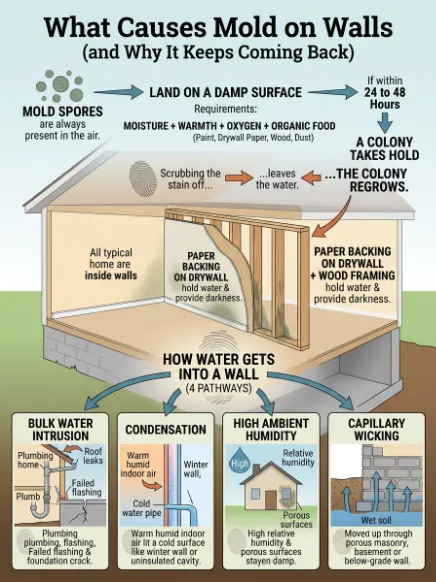
Mold spores are floating in the air of every home on earth, all the time. They only become a visible, spreading problem when they land on a surface that stays damp. Give them moisture, a little warmth, oxygen, and something organic to feed on (paint, the paper facing on drywall, wood framing, even settled dust), and within 24 to 48 hours they take hold.
That’s why scrubbing the stain off and walking away almost always fails. If you kill the patch but leave the water, the colony simply regrows in the same spot within weeks. It’s also why mold inside walls is so common: the paper backing on drywall and the wood framing behind it hold water beautifully, and the cavity is dark, still, and undisturbed.
There are only four ways water gets into a wall, and knowing which one you have determines the entire fix:
- Bulk water intrusion. A plumbing leak, a roof leak, a failed window flashing, a foundation crack. Water arrives in volume and fast.
- Condensation. Warm humid indoor air hits a cold surface (an exterior wall in winter, an uninsulated cavity, a cold water pipe) and turns to liquid on contact.
- High ambient humidity. No leak at all. The house simply sits above 50 percent relative humidity long enough that porous surfaces stay damp.
- Capillary wicking. Water moves up through porous masonry from wet soil, common on basement and below-grade walls. Often mistaken for a leak because it appears without rain.
Each of these leaves a different fingerprint on the wall, which is exactly how you trace it. More on that shortly.
Mold vs. Mildew: A Quick Distinction
People use these words interchangeably, and it matters a little. Mildew is surface level, usually powdery or flat, and it typically wipes away. Mold is deeper, often fuzzy or slimy, and it can root into porous material. If you want the full comparison, see our guide on mold vs. mildew and how to tell them apart.
Both mean the same underlying thing: you have a moisture problem. Fix the water and you fix the growth. Skip the water and you’ll be cleaning the same wall every few months forever.
The 7 Warning Signs of Mold on Walls
Surface mold is obvious. The trickier version is mold you can smell or feel but can’t see, growing inside the cavity where you have no visual access.
Use your nose first. A persistent musty, earthy odor is often the earliest signal that mold inside walls is active while the painted surface still looks perfectly clean. Then look for the physical tells.
- A musty, damp smell. The most reliable early warning, and frequently the only sign of hidden mold behind drywall.
- Dark spots or blooming stains. Black, green, brown, or orange patches, sometimes fuzzy, sometimes slimy.
- Discoloration bleeding through paint. A stain that keeps returning after you paint over it means moisture is still active underneath.
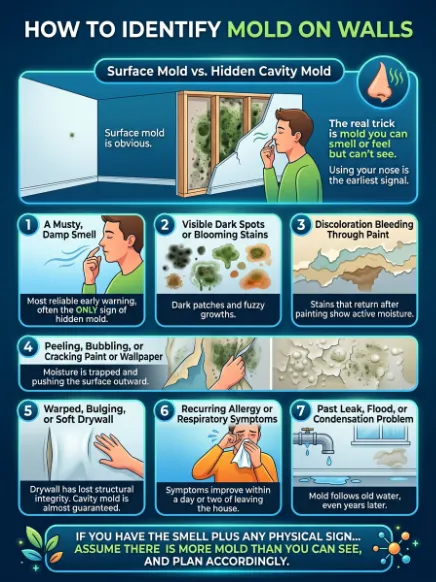
- Peeling, bubbling, or cracking paint or wallpaper. Moisture is trapped in or behind the surface and pushing outward.
- Warped, bulging, or soft drywall. The wall has been wet long enough to lose structural integrity. Cavity mold is close to guaranteed at this point.
- Recurring allergy or respiratory symptoms indoors that ease within a day or two of leaving the house.
- A past leak, flood, or condensation problem in that wall. Mold follows old water every single time, even years later.
If you have the smell plus any physical sign, assume there is more mold than you can see, and plan accordingly.
Black Mold vs. Other Common Types
Not every dark patch is the infamous black mold, and identifying the type helps you gauge urgency.
- Stachybotrys chartarum (black mold) tends to be dark greenish black, slimy or wet looking rather than powdery, and shows up only where surfaces have stayed genuinely soaked: chronic leaks, saturated drywall, long damp corners. If it keeps returning, our guide on what causes black mold on walls covers the moisture patterns behind it.
- Cladosporium is olive green to brown, sometimes almost suede-like, and favors bathroom walls, window surrounds, and painted surfaces.
- Aspergillus ranges from gray green to yellowish and is one of the most common indoor molds, thriving on walls and in household dust.
- Alternaria is dark and wooly, and gathers around showers, tubs, and under leaky sinks.
The practical verdict: color does not reliably identify the species, and the species rarely changes the plan. Any mold covering roughly a square foot or more, or any mold that is slimy, spreading, and tied to a soaked wall, needs prompt removal and a moisture fix. If you truly need the species named, for a health situation or an insurance claim, a lab test (roughly $250 to $350) is the only definitive answer.
How to Trace Mold on Walls Back to Its Root Cause
Most guides skip the step that actually prevents mold from coming back: finding the water source first. Before cleaning, use the mold’s location, timing, and a few simple tests to identify what is feeding it.
- Read the Location. High wall or ceiling mold often points to roof, attic, or plumbing leaks. A vertical stripe can mean a leaking pipe. Mold near baseboards may come from slab moisture, appliances, toilets, or foundation water. Exterior corners often indicate condensation. Mold near kitchens, baths, or laundry rooms usually means plumbing. Around windows and doors, suspect caulk, flashing, or condensation. Growth across multiple walls usually points to high indoor humidity.
- Read the Timing. Worse after rain or snow points to exterior water intrusion. Worse after showers or laundry suggests poor ventilation. Winter-only mold often means cold-surface condensation. Constant mold regardless of weather may indicate a plumbing leak.
- Use Simple Tools. A moisture meter helps you follow the highest readings toward the source. A hygrometer can confirm whether indoor humidity is staying above 50–55%. An infrared thermometer can reveal cold, poorly insulated areas where condensation forms.
- Run Two Quick Tests. Turn off all water for two hours and check whether the water meter moves; if it does, there may be a supply-line leak. For condensation versus a leak, tape foil or plastic tightly over the suspect wall for 24–48 hours. Moisture on the room side suggests condensation; moisture behind it suggests water entering through or inside the wall.
- Check Outside. Look for failed caulk, damaged siding, overflowing gutters, poor grading, downspouts near the foundation, or sprinklers hitting the wall. Test suspect areas one at a time with a garden hose while monitoring indoors.
You have the answer when you can clearly state where the water comes from, when it appears, and what will stop it. If you cannot, get a professional inspection before opening walls or paying for remediation.
Quick Answer: How to Get Rid of Mold on Walls in 5 Steps
In a hurry? The short version:
- Fix or stop the water first. Cleaning before the source is handled is wasted work.
- Protect yourself. Gloves, N95 respirator, eye protection, and ventilate the room.
- Contain the area. Close doors and lay plastic sheeting so spores don’t travel.
- Treat the surface. On sealed, non-porous surfaces, scrub with detergent and water or a dedicated mold cleaner. Skip bleach on porous drywall.
- Dry completely within 24 to 48 hours and keep it dry.
The full method by surface is below.
How Much Does Mold Removal Cost in 2026?
If your situation crosses into professional territory, here’s the budget picture. Costs vary widely with the size of the affected area and how much material has to be removed or rebuilt. For a full breakdown by job type and region, see our complete homeowner pricing guide to mold removal.
| Job | Typical 2026 Cost |
|---|---|
| DIY Supplies (PPE, Cleaner, Primer) | $30 to $100 |
| Professional Mold Testing / Inspection | $250 to $350 |
| Small Drywall Mold Repair | $300 to $825 |
| Professional Remediation (National Average) | ~$2,368 |
| Typical Remediation Range | $1,223 to $3,756 |
| Per Square Foot | $10 to $25 |
| Wood-Wall Remediation | $700 to $5,000 |
| Concrete-Wall Remediation | $1,000 to $10,000+ |
| Large / Structural Jobs | Up to $20,000 |
The numbers climb fastest when hidden damage turns up: a small visible patch that opens into a saturated cavity, or framing that has to be replaced. That’s exactly why tracing early and fixing moisture fast is the cheapest strategy available to you.
How to Prevent Mold on Walls From Coming Back
Removal is half the job. Prevention is what stops the repeat. Treat it as an ongoing moisture control system, not a one time cleanup.
- Keep indoor humidity between 30 and 50 percent. A cheap hygrometer plus a dehumidifier in damp rooms and basements handles most of this. Our guide to the best humidity level to prevent mold covers the exact targets by season.
- Follow the 24-to-48-hour rule. Any time a surface gets wet, from a spill, a leak, or a flood, dry it completely within a day or two, before mold can establish.
- Ventilate at the source. Run bathroom and kitchen exhaust fans during and for 20 minutes after showers and cooking. Confirm the fan actually vents outside and not into the attic, which is a surprisingly common installation error and a reliable mold generator.
- Patrol for leaks quarterly. Under sinks, around tubs and toilets, at the water heater, along the roofline, and at exterior wall corners. Fix drips immediately.
- Improve airflow on cold walls. Pull furniture a few inches off exterior walls so condensation doesn’t get trapped behind it, and address missing insulation in walls that run cold.
- Manage exterior water. Clean gutters, extend downspouts at least four feet from the foundation, and grade soil away from the house. Most basement wall mold starts outside.
- Use mold-resistant materials. When you repaint or remodel a damp-prone room, choose mold-resistant paint and moisture-resistant drywall.
- Do a seasonal check. Twice a year, walk the usual trouble spots so a small problem never becomes a $5,000 one.
Mold on Walls: Final Thoughts
Dealing with mold on walls comes down to four moves in order: identify what you’re facing, trace the water back to its actual source, remove the growth with the right method for the surface, and then control moisture for the long haul.
The stain is only ever the messenger. The real fix is drying out the source, whether that’s a leaking pipe, a humid room, a cold wall that keeps sweating, or wet soil pressing against your foundation. And whatever you find on the surface, assume the cavity has more to tell you, because it usually does.
If the affected area is small, on a sound surface, and tied to a moisture problem you have positively identified, this is a confident DIY afternoon. If it’s larger than about 10 square feet, keeps returning, lives inside the wall, involves rot or pests, or anyone in your home is health-vulnerable, bring in a certified remediation professional. That’s the safer path and frequently the cheaper one.
Either way, act sooner rather than later. Mold on walls only gets bigger, more expensive, and harder to beat the longer it sits. Fix the water and you win.
Frequently Asked Questions About Mold on Walls:
How do I find the source of mold on my wall?
Read the location, the timing, and the moisture pattern. High mold suggests roof or upstairs plumbing, a vertical stripe suggests a pipe in the cavity, baseboard mold suggests floor-level water or wicking, and cold exterior corners suggest condensation. Then confirm it: a moisture meter mapped in a grid points toward the wettest area, a water meter test catches supply leaks, and a taped foil square distinguishes condensation from water coming through the wall.
How do I know if mold is growing inside my walls?
The strongest clues are a persistent musty smell, stains bleeding through paint, bubbling or peeling paint, warped or soft drywall, and allergy symptoms that ease when you leave home. A past leak or flood in that spot makes hidden mold very likely. For a suspected large cavity problem, get a professional inspection rather than opening it yourself.
What else could be hiding behind a moldy wall?
Commonly: significantly more mold than was visible, wet and failed insulation, wood rot in studs and sheathing, corroded fasteners, carpenter ants or termites drawn to softened wood, corroded electrical boxes, efflorescence signaling water passing through masonry, and in pre-1980 homes, asbestos or lead in the wall materials themselves.
Is mold on walls dangerous?
For most healthy people it causes allergy-like symptoms: sneezing, congestion, itchy eyes, coughing, and skin irritation. Reactions are stronger for people with asthma, mold allergies, or weakened immune systems, and for infants and older adults. It’s not usually an emergency, but any sizable indoor mold should be removed promptly and the moisture behind it fixed.
Can I remove mold on walls myself?
Yes, if the area is smaller than about 10 square feet, sits on a sound non-porous or sealed surface, and you’ve identified the moisture source. Larger areas, recurring mold, cavity or HVAC mold, structural rot, or a health-vulnerable household are jobs for a certified professional.
Does bleach kill mold on walls?
Not effectively on porous surfaces like drywall. Bleach lightens surface mold so the wall looks clean, but it doesn’t reach roots embedded in the material, and the EPA doesn’t recommend it for routine mold cleanup. Detergent and water or a dedicated mold cleaner works better on most walls.
What kills mold on walls permanently?
Nothing kills it permanently unless you remove the moisture feeding it. The lasting fix is to clean or cut out the mold, dry the area within 24 to 48 hours, and eliminate the water source. Without that, it regrows no matter what you spray on it.
Why does mold keep coming back on the same wall?
Because the source is still active. Recurring mold in one spot almost always means an unfixed leak, chronic condensation, humidity above 50 percent, or a colony inside the cavity that surface cleaning never reached. If you’ve cleaned the same wall more than twice, stop cleaning and start tracing.
Can I just paint over mold on walls?
No. Painting traps it. It keeps growing under the paint, and the stain and moisture bleed back through. Remove the mold, fix the moisture, let the surface dry completely, then use a stain-blocking mold-resistant primer before repainting.
How much does professional mold removal cost?
In 2026, professional remediation averages around $2,368, with most jobs falling between $1,223 and $3,756, or roughly $10 to $25 per square foot. Small drywall repairs run $300 to $825, testing is $250 to $350, and large structural jobs can reach $20,000. Catching it early keeps you at the low end.