
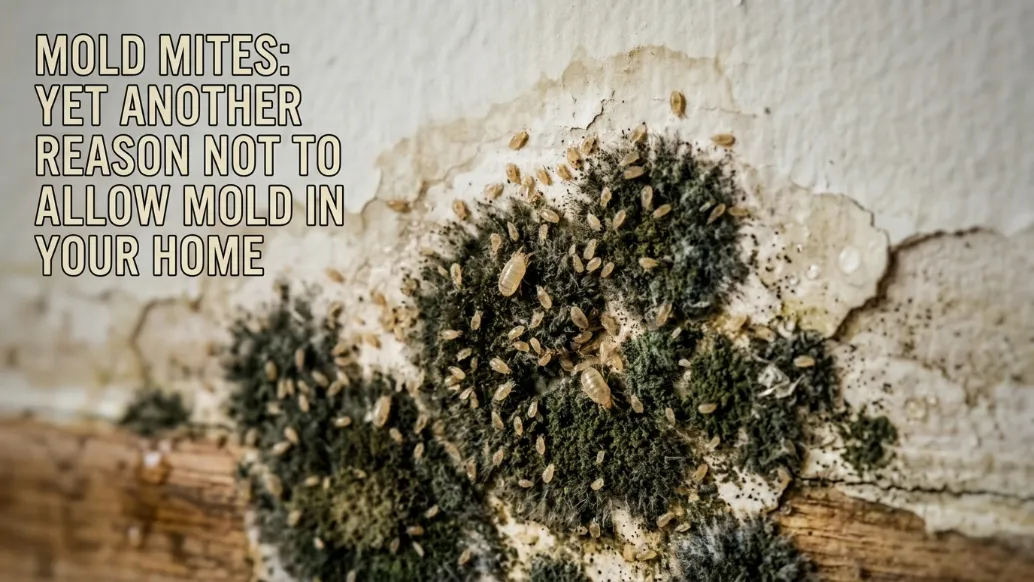
If you have spotted a patch of fine white or brown dust that almost seems to shift or move on a windowsill, a pantry shelf, or the trim around a damp bathroom, you may be looking at mold mites. They are nearly invisible, they do not bite, and it would be easy to wipe them away and forget them. That would be a mistake. Mold mites are one of the most honest warning signs your home can give you, because they only show up in one situation: where mold is already growing and actively feeding them. In other words, the bugs are not really the problem. They are the messenger.
This guide covers what mold mites are, what they look like, whether they bite, the real health risks, and how to get rid of them in with professional mold remediation that actually lasts. Along the way you will see why a pest-control mindset (spray the bug) fails here, and why the only permanent fix is dealing with the mold underneath.
What Are Mold Mites?
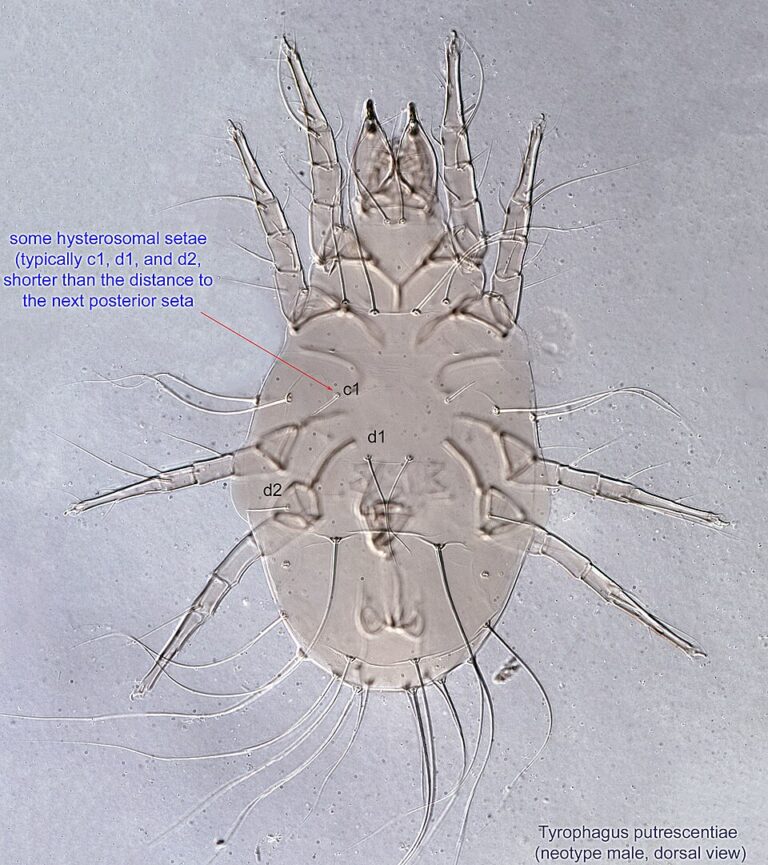
Mold mites are tiny arthropods, closely related to dust mites, that feed almost exclusively on mold, mildew, yeast, and other fungi. The species most people find indoors is Tyrophagus putrescentiae, sometimes called the mold mite or cheese mite. They are roughly 0.3 millimeters long, have no wings, and cannot fly, so they spread by crawling and by hitching a ride on air currents, clothing, and groceries. Where there is a steady food source, a small group becomes a large colony fast. For context on the fungi that feed them, our overview of what mold is and what it needs to grow is a useful companion.
What Do Mold Mites Look Like?
Individually, mold mites are almost impossible to see with the naked eye. They have soft, translucent white to tan bodies covered in fine hairs called setae.
What you usually notice is not a single mite but the colony as a whole: a patch of fine, powdery dust, sometimes described as looking like brown or tan lint, that appears to spread or shimmer slightly because thousands of mites are moving. People often call this “mite dust.” If you wipe it away and it returns in the same spot within days, that is a strong clue you have an active colony and an active mold source feeding it.
Are Mold Mites Dangerous? The Health Risks
Mold mites themselves are not considered dangerous, but that is not the same as saying they are nothing to worry about. There are two layers of risk. The direct layer comes from the mites: their airborne setae can trigger allergy symptoms, skin irritation, and respiratory flare-ups, and they can contaminate stored food. People with asthma or existing allergies tend to react most. If you are noticing symptoms, our guide to mold allergy symptoms breaks down what to watch for.
The indirect layer is the bigger one. A mold mite colony is proof of active mold, and the mold is the more serious health threat, especially if it turns out to be a toxic variety. If there is any chance you are dealing with the black, slimy kind, read is black mold dangerous and black mold symptoms and warning signs. In short, the mites are a nuisance, but they are pointing at something that deserves real attention.
Do Mold Mites Bite?
Here is the good news up front: mold mites do not bite people or pets, and they do not carry or transmit disease. If you have itchy skin or what look like tiny bites near an infestation, the cause is almost never the mites biting you. It is their shed hairs. Those fine setae break off, become airborne, and act as irritants and allergens when they land on skin or get inhaled, right alongside the mold spores that are floating in the same air. So the discomfort is real, but the “bite” is a misunderstanding. Treating it like a bug bite problem sends people down the wrong path.
Mold Mites vs Dust Mites: How to Tell the Difference
People often confuse the two, but the difference matters, because mold mites point to a moisture and mold problem that dust mites do not.
| Mold Mites | Dust Mites | |
|---|---|---|
| What They Eat | Mold, mildew, yeast, and other fungi | Shed human and pet skin cells |
| Where They Live | On or near active mold in damp walls, pantries, bathrooms, basements, and crawl spaces | In mattresses, bedding, upholstered furniture, carpets, and curtains |
| What You May See | Tiny moving specks that resemble white or tan dust near mold growth | Usually nothing; dust mites are microscopic and remain hidden in fabric |
| Primary Health Concern | Allergens from shed hairs, along with exposure to the mold they indicate | Allergens from droppings and decomposing body fragments |
| What Their Presence Means | Your property likely has a moisture source and mold problem that needs correction | Household dust and indoor allergens need to be better controlled |
The Real Message: Mold Mites Mean You Have Active Mold
This is the part the other guides skip. A mold mite colony cannot exist without a steady supply of mold to eat. These mites have a short lifespan, often just a couple of weeks, but a single female can lay hundreds of eggs, so a population explodes only when food is plentiful. A visible, thriving colony therefore is not a random event. It means there is a well-fed, active mold source close by, and often that source is hidden: behind baseboards, under a sink, inside a wall cavity, or down in a crawl space or basement where humidity never really drops.
Mold mites are a symptom, not the disease.
That single idea changes how you should respond. If you only clean up the dust you can see, you are treating the smoke and ignoring the fire. The mites will be back within days because their food never left. The productive question is not “how do I kill these mites,” it is “where is the mold that is feeding them, and how do I remove it and keep it from returning.”
How to Get Rid of Mold Mites
You cannot vacuum your way out of a mold mite problem. As long as the mold remains, the mites will come back. Address the underlying cause in this order:
Find and Remove the Mold Source
Track the colony back to the damp area feeding it and remove the mold itself. Our step-by-step guide to killing mold on different surfaces explains the proper method for each material. Heavily contaminated porous materials, such as drywall and insulation, usually need to be removed rather than simply wiped clean.
Fix the Moisture Problem
Mold needs moisture to grow. Find the leak, condensation, or high humidity keeping the area damp and correct it. Without this step, both the mold and the mites are likely to return.
HEPA Vacuum and Wipe Away the Residue
Once the mold source is gone, use a HEPA-filter vacuum to collect the mites, shed hairs, mold particles, and settled debris. Then wipe down the affected surfaces to remove the remaining residue.
Dry the Area and Monitor It
Run a fan or dehumidifier until the area is completely dry. Check the affected surfaces regularly over the next several weeks to confirm that the moisture, mold, and mites do not return.
When to Call a Mold Remediation Professional
Call a professional if the mold covers more than approximately 10 square feet, is growing inside the HVAC system, keeps returning after cleaning, or affects a home where someone has asthma or a weakened immune system. Our guide to choosing the right mold remediation company explains what qualifications, inspection practices, and remediation standards to look for.
How to Prevent Mold Mites for Good
Preventing mold mites is really just preventing mold, because if you starve the mold, the mites have nothing to live on. Keep indoor humidity below about 50 percent, and see our guide to the best humidity level to prevent mold for the target range and how to hit it. Fix plumbing and roof leaks quickly, ventilate bathrooms and kitchens, store pantry foods in sealed containers so any stray mites cannot settle in, and deal with chronic damp in basements and crawl spaces before it becomes a colony. For a full system, our definitive mold prevention guide pulls it all together.
Mold Mites: Final Thoughts
Mold mites are easy to dismiss because they are tiny and they do not bite, but they are one of the most useful warning signs your home can give you. They do not appear in dry, healthy houses. They appear where moisture and mold have quietly taken hold, often somewhere you cannot see. So treat the discovery of mold mites as a favor: the messenger is telling you, before the damage gets expensive, that you have active mold to find and remove. Clear the mold, control the moisture, and the mites disappear on their own. If you would rather know for certain what is feeding them, a professional inspection will find the source and confirm whether it is the harmless kind or something worth acting on quickly.
Let a contractor find the source before it spreads.
Frequently Asked Questions: Mold Mites
What is the difference between mold mites and dust mites?
Mold mites eat mold and live wherever fungi grow, so they signal a moisture problem. Dust mites eat shed skin and live in bedding and upholstery. Seeing mold mites means you likely have mold to remove.
Do mold mites go away on their own?
Only if their food disappears. As long as the mold feeding them is present, the colony will persist or return. Remove the mold and control the moisture, and the mites die off on their own.
Does bleach or Lysol kill mold mites?
Disinfectants can kill mites and surface mold on hard, non-porous surfaces, but they do not fix the moisture source or reach mold inside porous materials, so the problem usually comes back unless you address the cause.
Where do mold mites come from?
They are naturally present in the environment in small numbers and multiply wherever they find mold and humidity, such as damp bathrooms, leaky walls, pantries with spoiled food, and humid basements or crawl spaces.
Can mold mites live in a bed or mattress?
Mold mites prefer mold, so they would only settle in bedding if there were mold present, for example from a damp mattress or a humid bedroom. The itchy creatures usually associated with beds are dust mites, which eat skin flakes instead.
When should I call a professional about mold mites?
Call a pro if the mold source is larger than about ten square feet, is inside your HVAC, keeps returning after cleaning, or if anyone in the home has respiratory issues. A remediation specialist can find hidden mold and remove it safely.
What are mold mites?
Mold mites are microscopic arthropods that feed on mold, mildew, fungi, yeast, and other organic material. A common species, Tyrophagus putrescentiae, measures approximately 0.28 to 0.41 millimeters long and thrives in areas with high humidity or fungal growth. Large colonies may look like patches of moving white dust. University of Florida IFAS.
Do mold mites bite people or pets?
Mold mites are not known to bite people or pets. However, contact with or exposure to mite allergens may cause itching, skin irritation, or allergy symptoms in sensitive individuals. Irritation near an infestation may also come from the mold growing in the same area.
Are mold mites dangerous?
Mold mites are not considered poisonous or known disease carriers, but they can contribute to indoor allergen exposure. Storage mites such as Tyrophagus putrescentiae contain proteins capable of triggering allergic reactions in sensitive individuals. Their presence may also indicate dampness or mold growth, which can aggravate allergies, respiratory symptoms, and asthma. CDC mold health guidance
What do mold mites look like?
Mold mites have tiny, translucent bodies that may appear white, cream, or pale tan under magnification. Because an individual mite is difficult to see without magnification, homeowners usually notice a colony as fine dust that appears to move across moldy surfaces, damp food, walls, or shelving.