
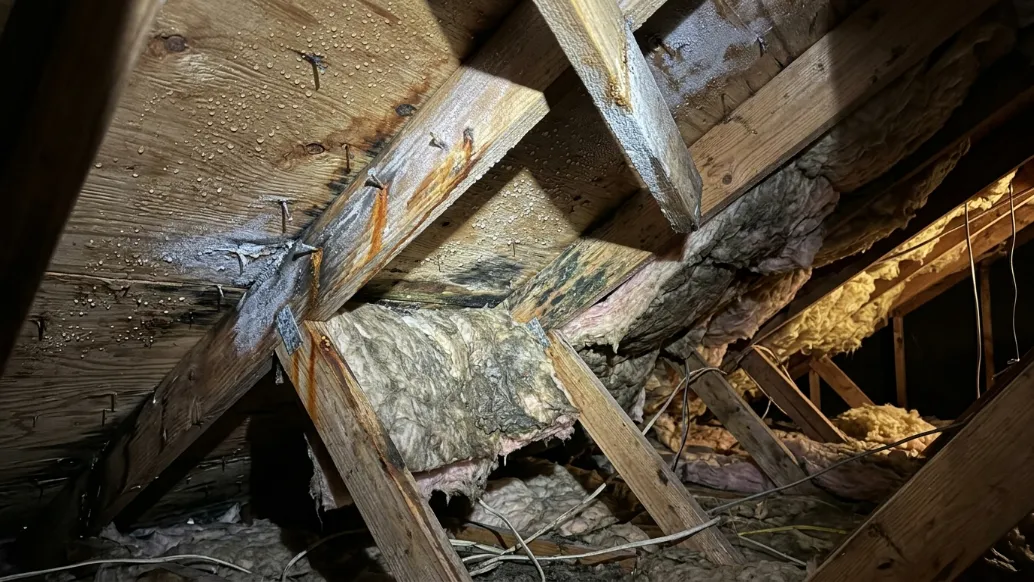
Attic condensation is one of those hidden moisture problems that does its worst damage in a space you almost never visit. If you have climbed up on a cold morning and found frost on the roofing nails, dark water stains creeping across the underside of the roof deck, or insulation that feels damp and matted, you are almost certainly looking at attic condensation. It forms when warm, moisture-heavy air from the living space below drifts up into a cold attic and touches surfaces that sit below its dew point, and the vapor turns to liquid, or to frost, right where nobody is watching.
Left alone, that moisture rots roof sheathing, ruins the insulation you paid for, and feeds mold across the framing until the smell finally works its way down into the house. This guide breaks down exactly why attic condensation happens, the warning signs worth checking for today, and the fix that actually keeps the top of your home dry.
The Warning Signs of Attic Condensation
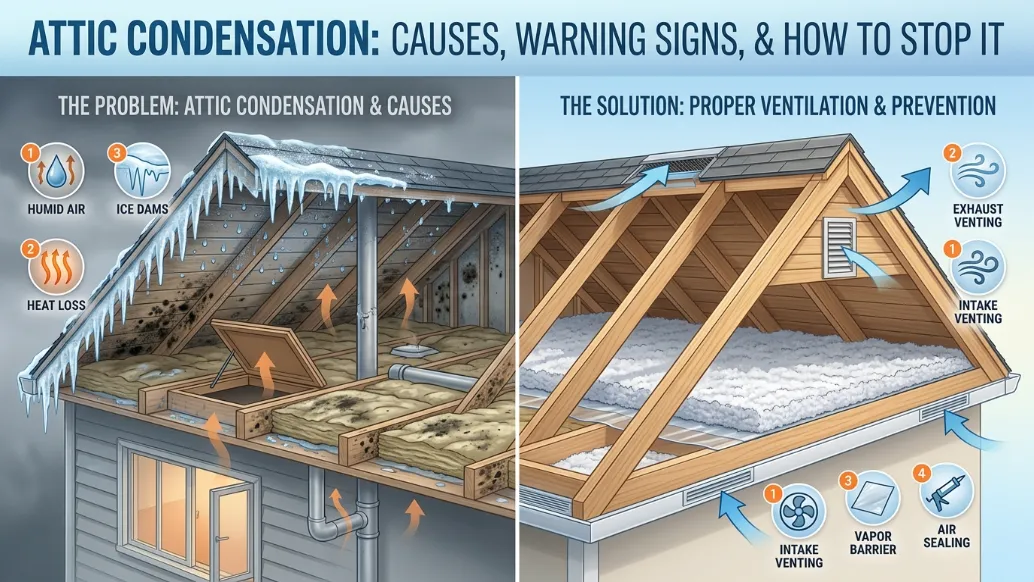
You do not need a moisture meter to catch this problem early. On a quick pass with a flashlight, these are the signs that warm indoor air is condensing up in your attic:
- Frost or a wet sheen on the roofing nails poking through the sheathing (the classic winter tell)
- Dark water stains or streaking on the underside of the roof deck
- Insulation that looks dark, flattened, damp, or is pulling away from the eaves
- Black or gray mold spotting on the rafters, sheathing, or trusses
- A musty, earthy smell that seeps into the top-floor rooms or closets
- Rusted nail tips, truss plates, or metal strapping
- Ice dams forming along the roof edge in winter
Any single sign means moist air is reaching cold surfaces overhead, and the more you spot together, the longer it has been running. If you are already seeing growth on the wood, our guide to what causes mold in the attic walks through that next stage and why it needs professional sealing and insulation.
What Causes Attic Condensation
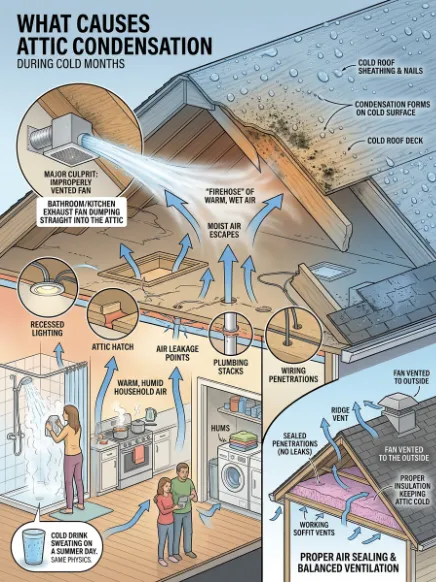
Attic condensation follows the same physics as a cold drink sweating on a summer afternoon. Warm air holds a lot of moisture; when that warm, humid air touches a surface colder than its dew point, the air can no longer hold the water vapor and it condenses into liquid. In your attic during the cold months, the cold surface is the roof sheathing and the nails, and the warm, humid air is rising up out of your heated home.
The real culprit is almost always air leakage from below combined with weak ventilation above. Every gap in your ceiling plane; around recessed lights, the attic hatch, plumbing stacks, bathroom fans, and wiring penetrations, lets warm, moist household air escape straight up into the attic.
Add the everyday moisture your family produces through showers, cooking, laundry, and breathing, and you have a steady supply of humid air hitting a cold roof deck. According to ENERGY STAR, proper air sealing and insulation keep the attic cold in winter by blocking heat and moist air from below, while balanced ventilation moves that moisture back out.
Contractor note: The single most overlooked cause we find is a bathroom or kitchen exhaust fan that dumps straight into the attic instead of venting to the outside. That fan is pumping a firehose of warm, wet air right at the coldest wood in your house. If your attic condensation is worst above a bathroom, check where that duct actually ends before you touch anything else.
Is Attic Condensation Dangerous to Leave?
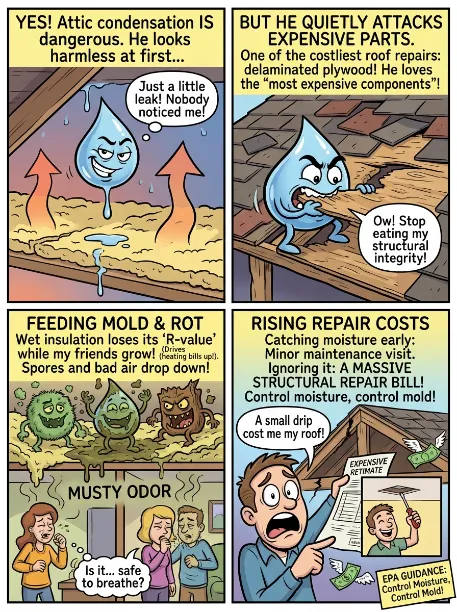
Yes — leaving attic condensation is dangerous, because it quietly attacks the most expensive components of your roof system and lowers the air quality in the rooms below. The EPA’s guidance on mold and moisture puts the principle plainly: control the moisture and you control the mold.
Here is what unchecked attic condensation does over time:
- Rots the roof deck: Chronic dampness softens and delaminates the plywood or OSB sheathing your shingles are nailed to one of the priciest repairs on a house.
- Destroys insulation: Wet insulation loses its R-value and becomes a soggy mold reservoir, so your heating and cooling bills climb while the attic stays damp.
- Feeds mold and wood rot: Damp framing is exactly what mold and rot need, and the problem spreads across trusses and rafters. See is attic mold dangerous for the health side.
- Worsens indoor air: Spores and musty odors ride back down through the same ceiling gaps that started the problem, affecting the living space.
- Drives up repair costs: Damp insulation is cheap to swap out; a rotted roof deck and mold remediation are not.
Catching the moisture early is almost always the difference between a maintenance visit and a structural repair bill.
How to Stop Attic Condensation for Good
Because the problem is warm, humid air reaching a cold roof deck, the durable fix is to keep that air out of the attic and let any moisture that gets in escape. That means working in a specific order.
Air-Seal the Ceiling Plane First
Before adding anything, seal the leaks that let household air rise into the attic, around can lights, the hatch, top plates, and every pipe and wire penetration. This is the step most homeowners skip, and it is the one that actually stops the moisture at its source.
Balance the Attic Ventilation
Ventilation should let outside air enter low at the soffits and exit high at the ridge, carrying moisture out with it. A common building standard is roughly one square foot of net free vent area per 300 square feet of attic floor, split between intake and exhaust. Blocked soffits or exhaust-only setups trap moist air instead of flushing it.
Vent Bathroom and Kitchen Fans Outside
Every exhaust fan must terminate outside through the roof or wall — never inside the attic. This one correction resolves a surprising share of the cases we inspect.
Add and Protect the Insulation
Once the ceiling is sealed and the venting is balanced, proper insulation keeps the attic floor performing and the roof deck cold and dry. Our attic insulation cost guide covers types and pricing, and how to prevent attic mold ties the moisture-control pieces together.
Frost or Drips in Your Attic This Winter?
Why "Just Add a Fan" Rarely Works
The most common do-it-yourself reaction is to throw a powered vent or extra fan at the attic. On its own that usually disappoints, because it does nothing about the warm, wet air still leaking up from the house. A power vent can even pull conditioned air out of your living space through those same ceiling gaps, making the moisture load worse. Sealing the ceiling plane and balancing intake-to-exhaust airflow is what lasts, moving more air without fixing the source just chases the symptom. The same logic drives crawl space condensation at the other end of the house.
Attic Condensation: Final Thoughts
The thing to remember about attic condensation is that it is a systems problem, not a spot you can wipe away. It is warm, humid household air meeting a cold roof deck, day after day, and it will keep returning until you stop the air from getting up there and give any leftover moisture a way out. Air-seal the ceiling, balance the ventilation, send every exhaust fan outside, and protect the insulation, and the top of your house finally stays dry.
If you are seeing frost, stains, damp insulation, or a musty smell overhead, an inspection is the fastest way to learn whether a targeted fix or full remediation is right — and the surest way to stop attic condensation before it reaches the sheathing. Free inspections across Long Island, Brooklyn, Queens, and the Bronx: we find the moisture, explain your options, and give you a dry attic that stays dry.
Frequently Asked Questions About Attic Condensation:
What causes attic condensation?
Attic condensation is caused by warm, humid air from your living space leaking up through gaps in the ceiling and hitting the cold roof sheathing and nails, where the moisture turns to water or frost. It is fed by air leaks around lights, hatches, and pipes, by everyday household moisture, and by weak or blocked ventilation. Exhaust fans that dump into the attic are a frequent hidden cause.
Is attic condensation normal?
A little seasonal moisture can appear in any attic, but persistent attic condensation — visible frost, dripping, or damp insulation — is not normal and signals a sealing or ventilation problem. Healthy attics stay cold and dry in winter because air sealing keeps warm household air out and balanced venting flushes moisture away. Ongoing wetness means one of those systems is failing.
How do I stop condensation in my attic?
You stop attic condensation by air-sealing the ceiling plane first, then balancing intake and exhaust ventilation, venting all exhaust fans to the outside, and protecting the insulation. Sealing stops the warm, moist air at its source, and balanced venting carries out whatever remains. Simply adding a fan without sealing usually does not fix it.
Can attic condensation cause mold?
Yes, attic condensation can cause mold, because it keeps the sheathing, rafters, and insulation damp — exactly the conditions mold needs to grow. Once it takes hold on the wood, spores and musty odors can drift down into the rooms below through the same ceiling gaps. A damp attic is one of the most common sources of hidden mold in a home.
Why is there frost on my attic nails in winter?
Frost on the nails means warm, moist indoor air is reaching the cold underside of the roof and freezing on the coldest metal points before it can escape. When the attic warms during the day, that frost melts and drips onto the insulation and framing below. It is a clear early sign of an air-leakage and ventilation problem.
Is attic condensation covered by homeowners insurance?
Attic condensation is usually treated as a maintenance issue rather than a sudden covered loss, so it is often not covered by homeowners insurance. Policies tend to exclude gradual moisture damage, mold, and rot that build up over time. Coverage varies, so review your policy and document the source before filing anything.
Does adding attic ventilation stop condensation?
Balanced ventilation is an important part of the fix, but ventilation alone rarely stops attic condensation if warm, moist air is still leaking up from the house. The reliable approach is to air-seal the ceiling first, then make sure intake at the soffits and exhaust at the ridge are balanced. Venting without sealing leaves the moisture source untouched.
Can attic condensation damage my roof?
Yes, attic condensation can seriously damage your roof by rotting and delaminating the sheathing your shingles are nailed to, and by rusting nails and metal connectors. Over time this weakens the roof deck and can shorten the life of the shingles above it. That kind of structural repair is far more costly than fixing the moisture early.
Why does my attic smell musty?
A musty attic smell almost always means excess moisture and likely mold growth on the wood or insulation, driven by attic condensation. The odor travels down into top-floor closets and rooms through gaps in the ceiling. If you smell it, it is worth inspecting the sheathing and insulation before the problem spreads.
How much does it cost to fix attic condensation?
The cost to fix attic condensation depends on the size of the attic and how much sealing, ventilation, insulation, and remediation it needs, from basic air sealing to a full moisture-control package. Minor sealing sits at the lower end, while insulation replacement and mold remediation cost more. A free inspection is the only way to get an accurate number for your home.