
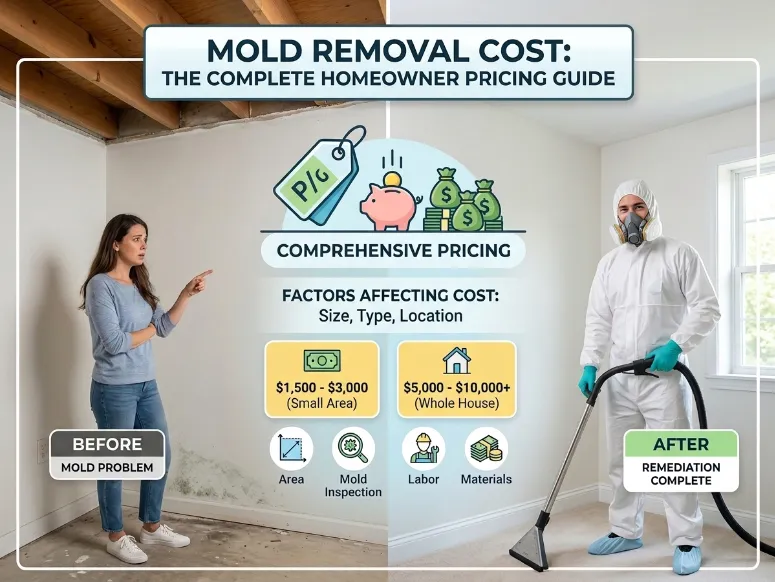
Understanding mold removal cost is the first thing most homeowners want once they spot growth on a wall, smell a musty basement, or get a note back from a home inspector. The honest answer is that mold removal cost is a range, not a single sticker price, because it depends on how much mold is present, where it is hiding, what materials it has reached, and what caused the moisture in the first place.
Across the New York metro area, most residential projects land somewhere between 500 and 6,000 dollars, with small contained jobs at the low end and whole home or structural situations at the high end. This guide breaks the number down so you can plan, compare quotes, and avoid the two most common outcomes: overpaying for a simple job, or underpaying for a job that comes back.
What Determines Your Mold Removal Cost
No two mold jobs are identical, and any contractor who quotes a firm price over the phone without seeing the moisture behind it is guessing. Six factors do most of the work in setting your mold removal cost.
- Size Of The Affected Area: Remediation is priced heavily by square footage. A single patch under a bathroom sink is a different job than 300 square feet of a finished basement. As the footprint grows, so does the labor, the containment, and the volume of material that has to be removed and disposed of.
- Where The Mold Is Hiding: Surface mold on a painted wall is straightforward. Mold inside a wall cavity, under flooring, on floor joists, or in ductwork requires opening up assemblies, which adds demolition and rebuild time. Hidden growth is why a quote can jump once a crew actually gets behind the drywall.
- The Underlying Moisture Source: Mold is a symptom. If a leaking pipe, a wet crawl space, or hydrostatic pressure keeps feeding it, removal alone will fail. A good quote includes correcting the water problem, and that correction, whether it is a repair, a drainage fix, or waterproofing, is frequently the largest single item on the bill.
- The Type Of Material Involved: Nonporous surfaces like tile and metal can usually be cleaned. Porous materials like drywall, carpet, and insulation that have been colonized generally have to be removed and replaced rather than saved, which shifts the cost from cleaning to demolition and rebuild.
- Containment And Air Filtration: To keep spores from spreading to clean parts of the house, crews build containment barriers and run negative air machines with HEPA filtration. This is standard on larger jobs and is one of the clearest differences between a professional remediation and a quick wipe down.
- Testing And Clearance: Pre and post testing is not always required, but it is common when there is a health concern, a real estate transaction, or an insurance claim. Testing adds cost but also gives you proof the work was done. Our mold inspection cost guide covers that side of the equation in detail.
Contractor note: The cheapest quote is rarely the cleanest job. If a price seems far below the others, it usually means the moisture source is not being fixed, containment is being skipped, or porous materials are being painted over instead of removed. Any of those means you pay twice.
Average Mold Removal Cost by Project Size
These ranges reflect typical residential work in the region. They assume the moisture source is being addressed as part of the job, which is the only way remediation actually holds.
| Project Scope | Typical Range | What It Usually Includes |
|---|---|---|
| Small, one surface, contained | $500 to $1,500 | Cleaning, minor material removal, light containment |
| Medium, single room | $1,500 to $3,500 | Containment, HEPA filtration, drywall and insulation removal |
| Large, multiple rooms or hidden growth | $3,500 to $6,000 | Full containment, demolition, rebuild, moisture correction |
| Whole home or structural involvement | $6,000 and up | Extensive remediation plus drainage or waterproofing work |
Mold Removal Cost by Location in the Home
Where the mold lives changes both the difficulty and the price, because each area of a house has its own moisture behavior and its own access challenges.
- Bathrooms: Small surface jobs are common here and often sit at the low end. A DIY-level surface patch under 10 square feet runs roughly $50 to $300 in supplies, while a professional treating a small visible area typically starts around $1,500. The value is in finding whether the growth is only on the surface or is being fed by a hidden leak behind tile.
- Basements: Basements combine larger square footage with chronic moisture from groundwater and humidity, so they trend higher. Most basement projects land between $2,000 and $12,000, with small jobs (50 to 100 sq ft) at $2,000 to $4,000, moderate jobs involving drywall removal at $5,000 to $12,000, and severe infestations over 300 sq ft or involving HVAC starting at $15,000. Our basement mold removal cost guide walks through what pushes a basement job up or down.
- Crawl Spaces: Tight access, wet insulation, and mold on floor joists make crawl spaces labor intensive, and encapsulation is often the long term fix. Typical crawl space remediation runs $1,500 to $4,000, with severe or structural cases reaching $6,000 to $10,000 and up, and most contractors charge $15 to $30 per square foot. Adding encapsulation as the long-term fix can range anywhere from $1,200 to $15,000 depending on size and moisture conditions. See the crawl space mold removal cost guide for how those projects are scoped.
- Attics: Attic mold usually traces back to ventilation and roof moisture. Pricing reflects the access and the ventilation correction, not just the cleaning. Basic surface remediation runs $1,500 to $3,500, mold with a moisture fix runs $3,500 to $6,500, and extensive jobs involving insulation replacement and structural drying run $6,500 to $12,000. The attic mold removal cost guide covers the specifics.
- HVAC: Mold in the air handling system needs specialized cleaning because it can distribute spores throughout the home, which is why it is priced separately from wall or floor work. When HVAC involvement pushes a job into full containment and negative air pressure, total costs commonly climb past $15,000.
If the mold followed a flood or a burst pipe, the cleanup and drying often come before remediation. Water damage restoration itself typically runs $1,300 to $5,600, with the mold remediation line item adding another $500 to $6,000 when growth has already started. Our water damage restoration cost breakdown explains how those two phases stack.
What a Professional Mold Removal Quote Should Include
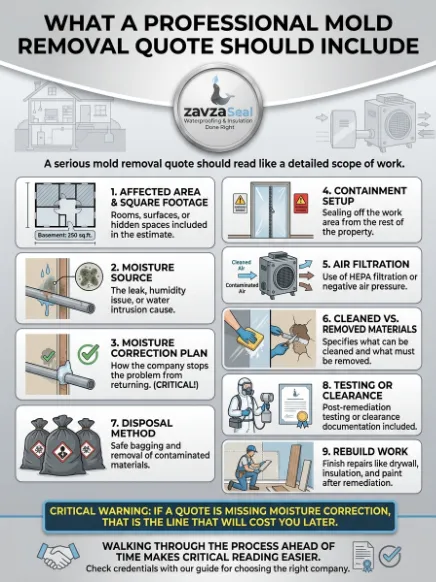
A professional mold removal quote should read like a real scope of work, not a single number scribbled under a project title. Before you sign, the estimate should clearly explain what is being treated, why the mold happened, how the moisture problem will be corrected, and what steps are included from containment to cleanup.
A serious mold removal quote should include:
- Affected Area and Square Footage: The rooms, surfaces, or hidden spaces included in the estimate.
- Moisture Source: The leak, humidity issue, drainage problem, or water intrusion that caused the mold.
- Moisture Correction Plan: How the company will stop the problem from coming back.
- Containment Setup: How the work area will be sealed off from the rest of the property.
- Air Filtration: Whether HEPA filtration or negative air pressure will be used.
- Cleaned vs. Removed Materials: Which materials can be cleaned and which need to be removed.
- Disposal Method: How contaminated drywall, insulation, flooring, or debris will be bagged and removed.
- Testing or Clearance: Whether post-remediation testing or clearance documentation is included.
- Rebuild Work: Any drywall, insulation, trim, flooring, or finish repairs included after remediation.
If a quote is missing the moisture correction, that is the line that will cost you later. Walking through the full mold removal process ahead of time makes it much easier to read a quote critically, and our guide on how to choose the right remediation company covers the credentials worth checking.
Not Sure What Your Mold Removal Cost Should Be?
The Cost of Waiting
The most expensive version of any mold job is the one you delay. Left alone, mold spreads to new materials, damages structural wood, and keeps degrading indoor air quality. According to the EPA guidance on mold and health, damp indoor environments are linked to respiratory issues, which is why moisture control matters beyond the cosmetic. A patch that would have been a low end job becomes a multi room project once it reaches insulation, framing, or the HVAC system. Understanding whether remediation actually works tends to reassure homeowners that the spend is worth it when the moisture source is corrected too.
Testing, Insurance, and Financing
Three items sit around the core remediation number and often decide whether a project feels affordable.
- Testing: Inspection and testing confirm the presence and extent of mold and give you documentation. Some homeowners qualify for a no cost initial look, which our guide on how to get a free mold inspection explains.
- Insurance: Whether your mold removal cost is covered depends entirely on the cause. Sudden, accidental water events are more likely to be covered than slow leaks or humidity. The details in mold testing and insurance claims show how documentation supports a claim.
- Financing: Larger structural and moisture jobs do not have to be paid in one lump. Financing spreads the cost, and homeowners across Long Island, Brooklyn, Queens, and the Bronx can review options through our mold removal financing page.
Mold Removal Cost: Final Thoughts
The right way to think about mold removal cost is total cost, not lowest quote. A price that skips the moisture source or the containment is not cheaper, it is deferred, because the mold comes back and the second job is bigger. Use the ranges here to sanity check the numbers you receive, expect a real quote to describe a scope of work rather than a single figure, and make sure the water problem that caused the growth is being solved alongside the mold itself. When those pieces are in place, your mold removal cost buys a result that holds instead of a temporary cover up. If you want an accurate figure for your specific home, a proper inspection is the fastest path to it, and it is the only way to compare mold removal cost quotes on equal footing.
Free inspection across Long Island, Brooklyn, Queens, and the Bronx. We find the moisture, scope the work, and give you an honest price.
Frequently Asked Questions About Mold Removal Cost:
How Much Does Mold Removal Cost?
Mold removal usually costs $500 to $6,000 or more, depending on the size of the affected area, how far the mold has spread, and whether damaged materials need to be removed. Small contained jobs may stay under $1,500, while large projects with hidden growth, demolition, or moisture correction can cost much more.
What Is The Average Cost Of Mold Removal Per Square Foot?
Mold removal often ranges from $10 to $30 per square foot, but that number can change based on containment, filtration, demolition, disposal, and repairs. A simple surface cleaning costs less than mold behind drywall, under flooring, or inside insulation.
Why Is Mold Removal So Expensive?
Mold removal costs more when the job requires containment, HEPA filtration, protective equipment, material removal, disposal, and moisture correction. The price is not just for cleaning mold. It is for stopping spores from spreading and correcting the condition that allowed the mold to grow.
What Affects The Cost Of Mold Removal The Most?
The biggest cost factors are the size of the affected area, the location of the mold, the moisture source, the materials involved, and whether demolition or rebuild work is needed. Mold on an open wall surface is usually cheaper to fix than mold behind cabinets, inside walls, or across multiple rooms.
Does Homeowners Insurance Cover Mold Removal?
Homeowners insurance may cover mold removal if the mold came from a sudden covered event, such as a burst pipe or appliance leak. It usually does not cover mold caused by long-term leaks, poor maintenance, groundwater, humidity, or drainage problems unless your policy includes special mold coverage.
Is Mold Testing Included In Mold Removal Cost?
Mold testing is not always included in the mold removal cost. Some companies include visual inspection and moisture readings, while lab testing or post-remediation clearance may be priced separately. Always ask whether testing, clearance, and written documentation are included in the quote.
Can I Remove Mold Myself To Save Money?
You may be able to clean very small surface mold spots yourself if the area is limited and the material is non-porous. Professional mold removal is safer when the mold covers a larger area, keeps coming back, smells musty, affects drywall or insulation, or is connected to water damage.
How Much Does Black Mold Removal Cost?
Black mold removal can cost the same as other mold removal if the area is small and contained, but prices increase when the mold is widespread or hidden behind materials. The species matters less than the size of the problem, the moisture source, and the level of containment needed.
What Should Be Included In A Mold Removal Estimate?
A mold removal estimate should include the affected area, square footage, moisture source, containment plan, filtration method, materials being cleaned or removed, disposal process, testing or clearance, and any rebuild work. If the quote does not explain how the moisture problem will be corrected, the mold may return.
How Do I Know If A Mold Removal Quote Is Fair?
A fair mold removal quote should clearly explain the scope of work, not just give a single price. Compare what each company includes, especially containment, HEPA filtration, material removal, disposal, moisture correction, and clearance testing. The cheapest quote may cost more later if it skips the source of the moisture.