
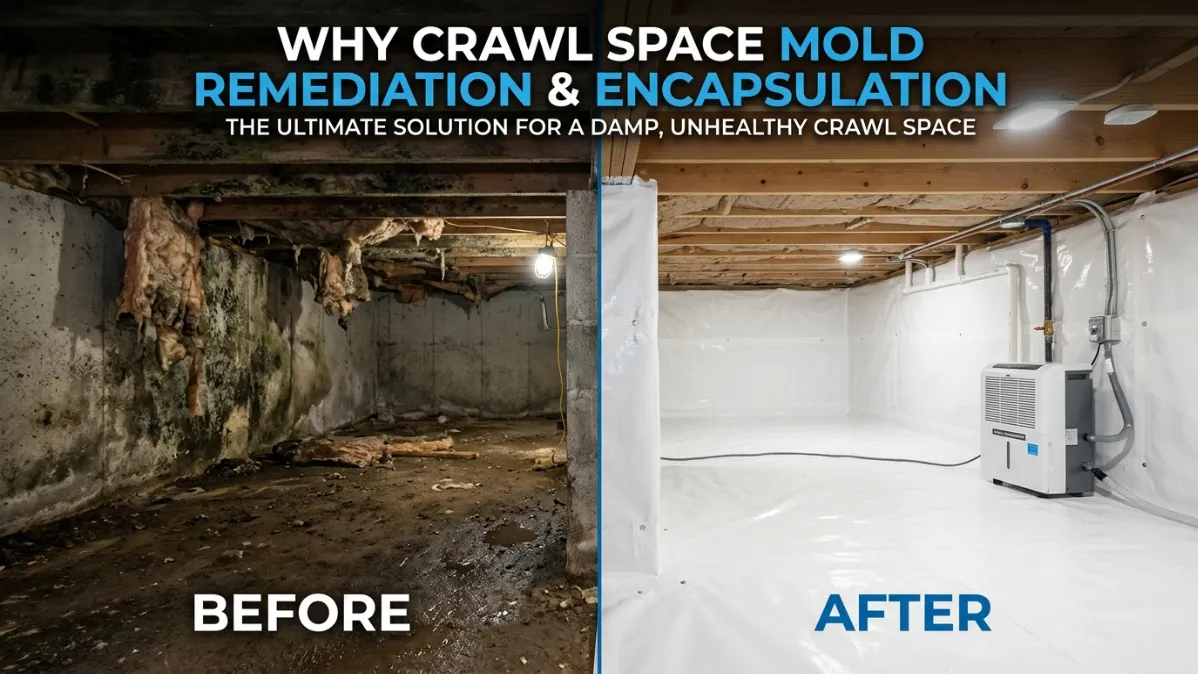
A damp crawl space is one of those problems that rarely stays small. When moisture builds up under your floors, mold follows fast, and in flood-prone, coastal, or low-lying areas, the water keeps coming back no matter how many times you dry it out. That is why crawl space mold remediation and encapsulation has become the go-to solution for homeowners who want to stop the problem at its source instead of fighting the same symptoms season after season. Remediation removes the active mold and the conditions feeding it. Encapsulation seals the space so groundwater, vapor, and humid air stay out. Together, and paired with drainage when standing water is involved, they protect the entire home from the ground up. This guide covers the benefits, what causes the damage, a real example from the field, and why this crawl space mold remediation and encapsulation beats every short-term fix.
From Long Island, Brooklyn, Queens, or The Bronx? Call On Us for a Free Advanced Mold Testing Now!
The Benefits of Crawl Space Mold Remediation and Encapsulation
Here is what you gain when you combine professional crawl space mold remediation and encapsulation:
- A Dry Crawl Space That Stays Dry: Remediation clears the mold and the conditions feeding it, while encapsulation seals the space so groundwater, vapor, and humid air stay out for good.
- Protected Structure: Mold and standing water rot the joists, beams, and subfloor that hold your home up. Sealing the space protects the wood, the concrete, and every other material down there.
- Healthier Indoor Air: Up to half of the air you breathe upstairs is pulled from the crawl space through the stack effect. A clean, sealed space means cleaner air in your living areas.
- Lower Energy Bills: A sealed, dry crawl space is far easier to heat and cool, which usually shows up as a drop in your monthly utility costs.
- No More Musty Smell: That damp, earthy odor disappears once the moisture source is sealed off.
- Higher Home Value: A clean, encapsulated crawl space is a strong selling point and a green flag during home inspections.
These benefits compound over time, which is why the upfront investment pays for itself in comfort, savings, and avoided repairs.
Stop Crawl Space Mold Before It Costs You More
What Causes a Damp or Wet Crawl Space?
Crawl spaces sit close to the ground, which makes them naturally prone to moisture. Several factors usually work together to create the perfect conditions for mold:
- High groundwater. In flood zones, coastal neighborhoods, and low-lying areas, a high water table pushes moisture up through the soil and into any open crawl space above it.
- Frequent flooding. Heavy storms send water toward the foundation, where it seeps through vents and foundation walls and pools on the floor.
- Humid outside air. Traditional vented crawl spaces let warm, humid air in during summer. That air hits cooler surfaces and condenses, which feeds mold.
- Bare dirt floors. Without a vapor barrier, soil constantly releases water vapor that settles on wood, insulation, and ductwork.
- Plumbing leaks. A slow drip from a supply line or drain can keep wood damp for months before anyone notices.
Mold only needs three things to thrive: moisture, organic material, and time. A crawl space offers all three, with wooden joists and stagnant air sitting just inches above damp earth.
A Real Example: Encapsulating a Crawl Space With Standing Water
To show why this matters, here is a quick look at one of our projects. We were called to a low-lying home near the coast where the crawl space had more than a moisture problem. It had standing water. Several inches of it sat across the dirt floor, the joists overhead were streaked with mold, and the air carried a heavy, musty smell.
The homeowner had tried fans and a shop vacuum after past floods, but the water kept returning. That is the trap with high-groundwater properties: as long as the crawl space is open to the ground and the outside air, the water comes back no matter how many times you dry it out.
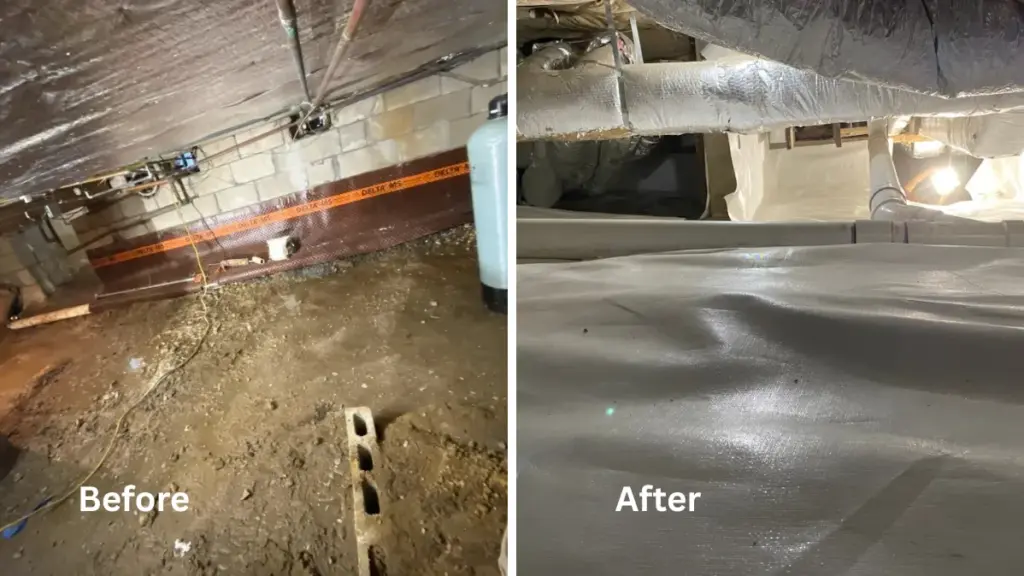
We pumped out the water, remediated the mold on the joists and subfloor, installed an interior drainage system with a sump pump, and then encapsulated the space with a heavy-duty vapor barrier and a dehumidifier. The flooded, mold-covered crawl space became a clean, dry, sealed foundation the homeowner no longer worries about after a storm.
How the Crawl Space Mold Remediation and Encapsulation Process Works, Step by Step
A quality job follows a clear process. Skipping steps is where cheaper fixes fail.
Step 1: Inspection and Moisture Assessment
Everything starts with a thorough inspection. A technician measures humidity, checks for standing water, identifies the extent of mold growth, and traces the moisture sources feeding it.
Step 2: Mold Remediation
Active mold is removed from joists, subflooring, and affected materials with professional-grade treatments. Damaged insulation and debris are hauled out, and the wood is treated to discourage regrowth. This has to come first, because sealing a space with active mold inside only traps the problem.
Step 3: Drainage, When Water Is Present
For a crawl space taking on standing water, encapsulation alone is not always enough. You first have to give the water somewhere to go. In flood zones and high-groundwater areas, we often install crawl space drainage with a sump pump alongside the encapsulation. The drainage channels rising groundwater to the pump, which moves it out and away from the foundation before it can pool again.
Step 4: Encapsulation
Finally, the space is sealed. A heavy-duty vapor barrier is installed across the floor and up the walls, vents are closed off, and a dehumidifier is often added to hold humidity at a safe level. Even on its own, encapsulation protects all of the wood, concrete, and other materials in the crawl space by locking out ground moisture and humid air.
Why Crawl Space Mold Remediation and Encapsulation Is the Best Option in Flood Zones and Low-Lying Areas
You have probably seen cheaper offers: a quick fog of the area, a bag of fresh insulation, or a couple of vent fans. The problem is that none of those address the water and moisture that caused the mold in the first place, so the spores return within a season or two.
Crawl space mold remediation and encapsulation is the best option because it protects the entire home instead of treating one flood at a time. It removes the mold, and when paired with drainage, it keeps water out of the crawl space while shielding your joists, subfloor, concrete, and stored materials from rot and decay. For properties in flood-prone, coastal, or high-groundwater areas, that combination of water control and a permanent seal is the only approach that keeps pace with the conditions. Every short-term alternative leaves the door open for the water to return.
Crawl Space Mold Remediation and Encapsulation: Final Thoughts
A wet crawl space will not fix itself, and in a flood-prone or coastal home, the water always finds its way back. That is why crawl space mold remediation and encapsulation stands out as the best solution for damp crawl spaces. It removes the mold that is already there, and when paired with drainage, it keeps groundwater out for good while sealing and protecting the wood, concrete, and every other material below your floors. The result is cleaner air upstairs, lower energy bills, a stronger foundation, and real peace of mind during the next storm. If you have noticed musty odors, sagging floors, or standing water beneath your home, the smart move is to act before the damage spreads. Reach out for a crawl space inspection, and let professional crawl space mold remediation and encapsulation protect your whole home from the ground up.
Frequently Asked Questions About Crawl Space Mold Remediation and Encapsulation:
Do I Always Need Drainage With Crawl Space Encapsulation?
You do not always need drainage with crawl space encapsulation. Drainage is most important when the crawl space has standing water, foundation seepage, poor grading, high groundwater, or flood risk. If the crawl space is only dealing with ground vapor and humidity, a sealed vapor barrier and dehumidifier may be enough.
Can You Encapsulate a Crawl Space Without a Drainage System?
Yes, you can encapsulate a crawl space without a drainage system if there is no active water intrusion. In drier crawl spaces, encapsulation may only require a vapor barrier, sealed vents, air sealing, insulation improvements, and humidity control. A professional inspection should confirm whether water management is needed before the space is sealed.
When Does a Crawl Space Need Drainage Before Encapsulation?
A crawl space needs drainage before encapsulation when water enters during heavy rain, pools on the ground, seeps through foundation walls, or collects near footings. Encapsulating over an active water problem traps moisture inside the system. Interior drainage, sump pumps, grading corrections, or downspout extensions may be needed before the vapor barrier goes in.
Will Crawl Space Encapsulation Protect More Than the Wood?
Yes, crawl space encapsulation protects more than the wood framing. A sealed vapor barrier helps keep moisture away from floor joists, beams, subflooring, concrete walls, ductwork, insulation, pipes, and stored items. By lowering humidity, encapsulation also helps reduce musty odors, mold growth, rust, pest activity, and moisture damage throughout the crawl space.
How Long Does Crawl Space Encapsulation Last?
A professionally installed crawl space encapsulation system can last 15 to 20 years or more with proper materials and maintenance. Heavy-duty vapor barriers, sealed seams, drainage systems, sump pumps, and dehumidifiers are built for long-term moisture control. The system lasts longest when gutters, grading, pumps, and humidity levels are checked regularly.
Does Crawl Space Encapsulation Stop Mold From Coming Back?
Crawl space encapsulation helps stop mold from coming back by controlling the moisture that mold needs to grow. Mold removal cleans the existing growth, while encapsulation blocks ground vapor, humid air, and recurring dampness. For the best results, any active leaks, drainage problems, or wet insulation should be corrected before or during encapsulation.
Do I Need a Dehumidifier With Crawl Space Encapsulation?
Many encapsulated crawl spaces need a dehumidifier, especially in humid climates or homes with past mold problems. The vapor barrier blocks ground moisture, but a dehumidifier controls airborne humidity that can still collect in the space. Keeping crawl space humidity low helps protect floor joists, insulation, ductwork, and indoor air quality.
Is Crawl Space Encapsulation Worth It?
Crawl space encapsulation is often worth it because it protects the structure of the home, improves moisture control, reduces musty odors, and helps prevent mold growth. It can also make the home more energy efficient by keeping the crawl space drier and easier to condition. For homes with damp crawl spaces, mold, or recurring humidity, encapsulation is usually a long-term protective upgrade.
What Is the Difference Between a Vapor Barrier and Full Encapsulation?
A vapor barrier usually covers the crawl space floor to block ground moisture. Full encapsulation is more complete because it seals the floor, walls, seams, vents, and sometimes piers, then adds drainage or dehumidification when needed. A vapor barrier helps, but full encapsulation offers stronger long-term moisture control.
How Much Does Crawl Space Encapsulation Cost?
Crawl space encapsulation cost depends on the size of the space, the thickness of the vapor barrier, access conditions, insulation needs, drainage requirements, sump pump installation, mold remediation, and whether a dehumidifier is included. A simple vapor barrier costs less than a full system with drainage, insulation, sealing, and humidity control. The best way to price it accurately is to inspect the crawl space and identify how much moisture control is needed.