
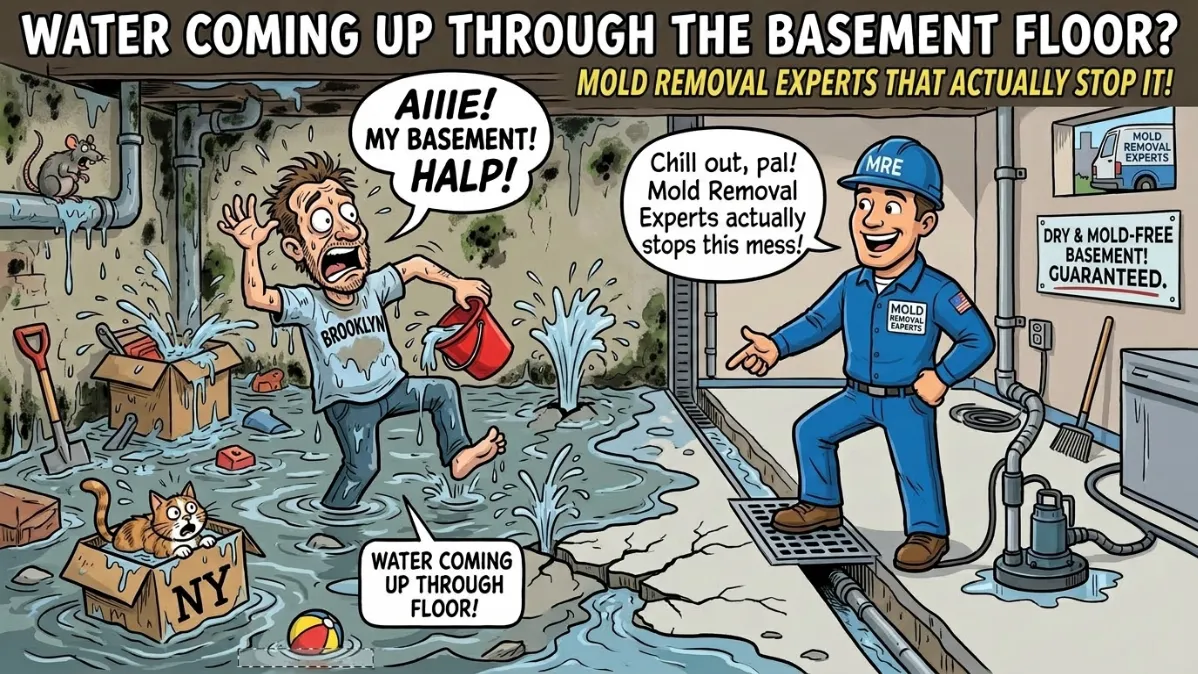
Water coming up through the basement floor? You’re in the right place!
Finding water coming up through the basement floor is unsettling because it seems to come from nowhere. Unlike a wall leak with an obvious entry point, water coming up through the basement floor rises through hairline slab cracks, bubbles up where the floor meets the wall, or spreads as a damp sheen after every NY metro storm. The cause is simple and it will not fix itself: the water table beneath your home has risen, and saturated soil is pushing water upward against your slab with real force. That force is hydrostatic pressure, and a few inches of concrete were never built to hold it back. This is why floor paints and sealers always fail here. The dependable answer is to relieve the pressure with professional waterproofing and drainage services, not block it, and that is exactly what we build. This page covers our service and includes the complete homeowner guide.
Water on the floor right now? From Nassau or Suffolk County?

The Benefits Of Properly Stopping Water Coming Up Through The Basement Floor
A drainage system that relieves hydrostatic pressure does more than dry the floor. It protects the basement from recurring moisture, mold risk, humidity problems, and long-term property concerns. When water comes up through the basement floor, the goal is not just to clean it up after each storm. The goal is to stop the pressure pattern that keeps forcing water into the living space.
Here is what stopping water coming up through the basement floor the right way delivers:
A Dry Floor In Every Storm:
The system is sized for the exact conditions that flood the basement, so water is collected before it spreads across the slab.
Mold Cut Off At The Source:
No standing moisture means less risk of mold feeding under carpet, subfloor, stored items, or finished materials.
A Basement You Can Actually Use:
Once the floor stays dry, the space becomes safer for storage, finishing, laundry, utilities, or everyday use.
Lower Humidity Upstairs Too:
A wet basement can raise moisture throughout the whole house, making the air feel damp and harder to control.
How We Stop Water Coming Up Through The Basement Floor
Because the problem is pressure from below, the fix is about giving water a controlled path out. Sealing the slab shut rarely solves the real issue because groundwater pressure will keep looking for the next weak point. A proper system collects the water, directs it to a sump, and ejects it away from the foundation before it reaches the floor surface. Here is how we diagnose and correct the problem.
1. On-Site Diagnosis
We start by identifying where the water surfaces and when it appears. This helps confirm whether the source is a rising water table, cove-joint seepage, slab cracks, a failed sump system, or a combination of issues. The timing, pattern, and location of the water tell us a lot about the pressure behind the floor.
We map the wet areas, check moisture across the slab, inspect the perimeter, and evaluate the existing sump setup if one is present. This step keeps the repair focused on the real cause instead of treating every wet floor the same way.
2. Design The Drainage
Once the source is confirmed, we design a drainage path that relieves the pressure before water reaches the floor surface. For most homes, the core solution is an interior French drain that intercepts rising groundwater at the perimeter. This gives the water somewhere to go instead of forcing it through cracks, joints, or porous areas in the slab.
The system is planned around the basement layout, the flood pattern, and the volume of water the home needs to handle. Proper sizing matters because undersized drainage can still leave the basement vulnerable during heavy rain or high groundwater conditions.
3. Install The Sump System
Collected water flows into a sump pit, where a correctly sized sump pump ejects it away from the foundation. The pump must be strong enough for the amount of water entering the system and positioned so discharge does not recycle back toward the house. In many basements, a battery backup is also recommended because the worst water events often happen during storms that can knock out power.
A good sump system is not just about moving water. It is about moving water reliably, repeatedly, and far enough away that it does not come right back into the foundation zone.
4. Seal Cracks And Verify Dry
After the drainage and sump system are in place, we address isolated slab cracks, cove-joint entry points, and other weak areas where water has been entering. These repairs help tighten the system and reduce the chance of moisture finding secondary paths into the basement. Crack sealing works best when the pressure has already been relieved by drainage.
The final step is verification. We confirm that the floor stays dry under the same types of conditions that were causing water to come up through the basement floor in the first place.
Why Choose Mold Removal Experts to Stop Water Coming Up Through the Basement Floor
The companies that sell you a floor coating for water coming up through the basement floor are selling you a repeat visit. We treat the slab as part of a pressure system and solve it accordingly. You get an honest diagnosis of whether you need full perimeter drainage or something smaller, a free on-site inspection, financing so the right system fits your budget, and a NY metro crew that knows how local water tables surge from Nassau County to the Bronx. We size the system for your worst storm, not an average day.
Why NY Metro Basements Flood From Below
Water coming up through the basement floor is common across the region for reasons that are distinctly local:
- Shallow, surging water tables. Large parts of Long Island and the boroughs sit close to groundwater that climbs fast after rain and spring thaw, lifting above slab level.
- Older homes without sub-slab drainage. Many basements here were poured before perimeter drains were standard, so rising water has nowhere to go but up.
- Coastal and storm-driven saturation. Heavy regional storms can saturate the ground for days, holding pressure against the slab long after the rain stops.
- Aging or undersized sump systems. A pump that was fine twenty years ago, or one without a backup, fails during the exact storm you need it most.
Basement Floor Drainage System Installation Case Study
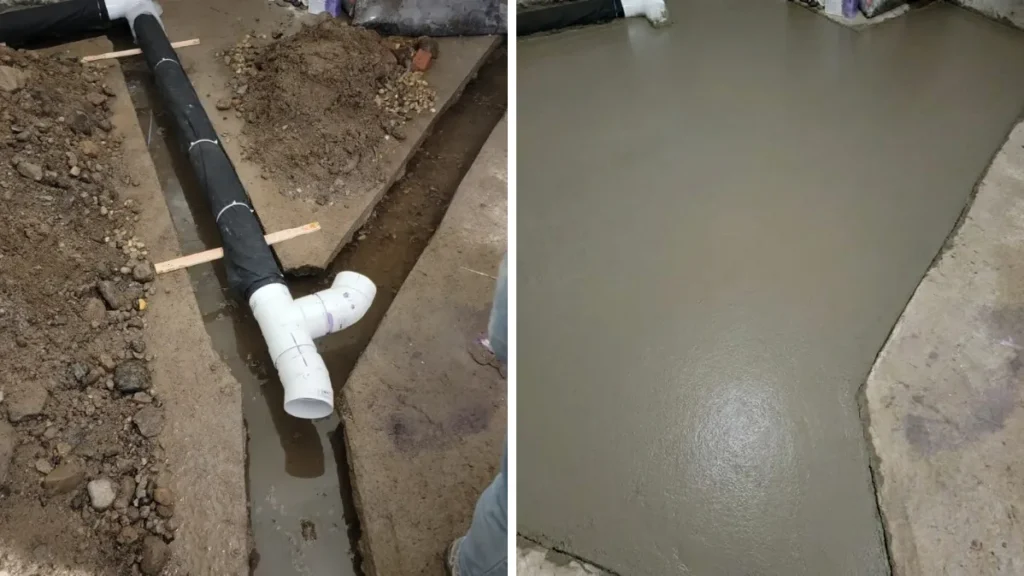
This basement had recurring water coming up through the concrete floor because groundwater pressure had nowhere to drain. The slab had to be opened so the water could be collected below the floor instead of spreading across the basement surface during storms. Our crew installed an interior drainage channel with PVC piping wrapped in filter fabric to move water toward the sump system. By creating a controlled path under the slab, the repair relieved hydrostatic pressure, reduced standing water risk, and gave the homeowner a long-term waterproofing solution instead of another temporary cleanup after every heavy rain.
Problem:
Water Coming Up Through The Basement Floor: Groundwater pressure was pushing moisture through the slab and open floor areas.
No Controlled Drainage Path: Water had nowhere reliable to go, which allowed it to collect and spread across the basement.
Risk Of Ongoing Moisture Damage: Repeated wet conditions increased the risk of mold, odors, stored-item damage, and future slab deterioration.
Solution:
Opened The Basement Slab: Sections of concrete were removed to create a drainage trench below the floor surface.
Installed Interior Drainage Pipe: A PVC drainage system wrapped in filter fabric was placed inside the trench to collect and move water.
Directed Water To The Sump System: The drainage line was pitched to carry water toward the sump pit for removal.
Prepared The Floor For Restoration: Once the system was installed, the trench could be backfilled and patched so the basement floor could be restored.
What It Costs to Stop Water Coming Up Through the Basement Floor
The honest answer is that it scales with the size of the basement and the drainage approach. A localized crack repair sits at the low end, while a full interior French drain with a sump and battery backup costs more because it solves the pressure across the whole floor. That larger system is what actually keeps water out for good, which is why it is the common recommendation for this exact problem. Our basement waterproofing cost guide and our sump pump installation cost breakdown show what drives the number, and financing spreads it out.
Why coatings are the expensive choice: A floor sealer feels cheap until it bubbles off in the next storm and the water keeps feeding mold under your finishes. Paying twice, plus remediation, costs far more than relieving the pressure once.
Water Coming Up Through the Basement Floor: Final Thoughts
Water coming up through the basement floor is not random and it is not hopeless. It is a clear sign that groundwater has risen and hydrostatic pressure is pushing through the weakest points in your slab, and across the NY metro that pressure surges with every heavy rain and thaw. Because the force comes from below, no coating or sealer holds it back for long, and every wet cycle gives mold more time to take root in whatever the water touches. The dependable answer is to relieve the pressure with an interior French drain and a properly sized sump pump, supported where needed by exterior drainage and crack repair. The faster water coming up through the basement floor is diagnosed, the less damage it does and the simpler the solution tends to be. If your floor goes damp after every storm, book a free inspection and let a local specialist trace the pressure to its source.
Get a system sized for your home.
Frequently Asked Questions About Water Coming Up Through the Basement Floor
Why Is Water Coming Up Through My Basement Floor And Not The Walls?
Water comes up through the basement floor when groundwater pressure builds beneath the slab. This is usually caused by a high water table, saturated soil, poor drainage, or a sump system that cannot keep up. Wall leaks often come from surface water, grading, or foundation cracks, while floor water usually points to hydrostatic pressure below the basement.
What Does Water Coming Up Through The Basement Floor Mean?
Water coming up through the basement floor usually means the soil beneath your home is saturated and pushing moisture upward through cracks, joints, or porous concrete. The slab is not designed to hold back rising groundwater pressure by itself. A drainage system is typically needed to collect the water and move it away from the foundation.
Will Sealing Or Painting The Floor Stop Water From Coming Up?
No. Floor paint, waterproof coatings, and concrete sealers cannot stop active hydrostatic pressure from below the slab. They often bubble, peel, or force water to find another weak point. The reliable fix is a drainage system that relieves the pressure instead of trying to block it at the surface.
Does A Little Water On The Basement Floor Really Cause Mold?
Yes. Even a small amount of water can create mold risk if the basement stays damp. The EPA notes that mold can begin growing on wet materials within 24 to 48 hours. Intermittent floor water is especially concerning under carpet, stored boxes, finished flooring, subflooring, and wall materials.
Is Water Coming Up Through The Basement Floor An Emergency?
It can be. If water is spreading across the floor, reaching electrical equipment, soaking finished materials, or returning after every storm, it should be addressed quickly. Recurring basement floor water can lead to mold, odors, damaged belongings, slab deterioration, and larger foundation moisture problems.
Can A Sump Pump Stop Water Coming Up Through The Basement Floor?
A sump pump can help, but only if water has a proper path to reach it. In many basements, the best solution is an interior French drain that collects water under the slab and directs it to the sump pit. The sump pump then removes the water before it spreads across the basement floor.
What Is The Best Way To Fix Water Coming Up Through The Basement Floor?
The best fix is usually an interior drainage system with a sump pump and, when needed, a battery backup. The drainage system relieves pressure beneath the slab by collecting groundwater and moving it to the sump pit. Crack sealing may also be used, but it works best after the pressure problem is controlled.
Can Water Come Up Through Concrete Even If There Are No Cracks?
Yes. Concrete is porous, and moisture can move through it when groundwater pressure is high enough. Water may also enter through tiny hairline cracks, control joints, pipe penetrations, or the cove joint where the floor meets the wall. That is why the visible entry point is not always the full source of the problem.
How Much Does It Cost To Fix Water Coming Up Through The Basement Floor?
The cost depends on the basement size, water volume, drainage design, sump pump needs, and whether a battery backup is included. An interior French drain with a sump system is the most common long-term solution. A free inspection gives you an accurate price based on the actual conditions in your basement.
Do You Serve My Area?
Yes. We work throughout the NY metro area, including Long Island, Queens, Brooklyn, and the Bronx. If your basement has water coming up through the floor, we can inspect the source, explain the repair options, and confirm scheduling for your neighborhood.