
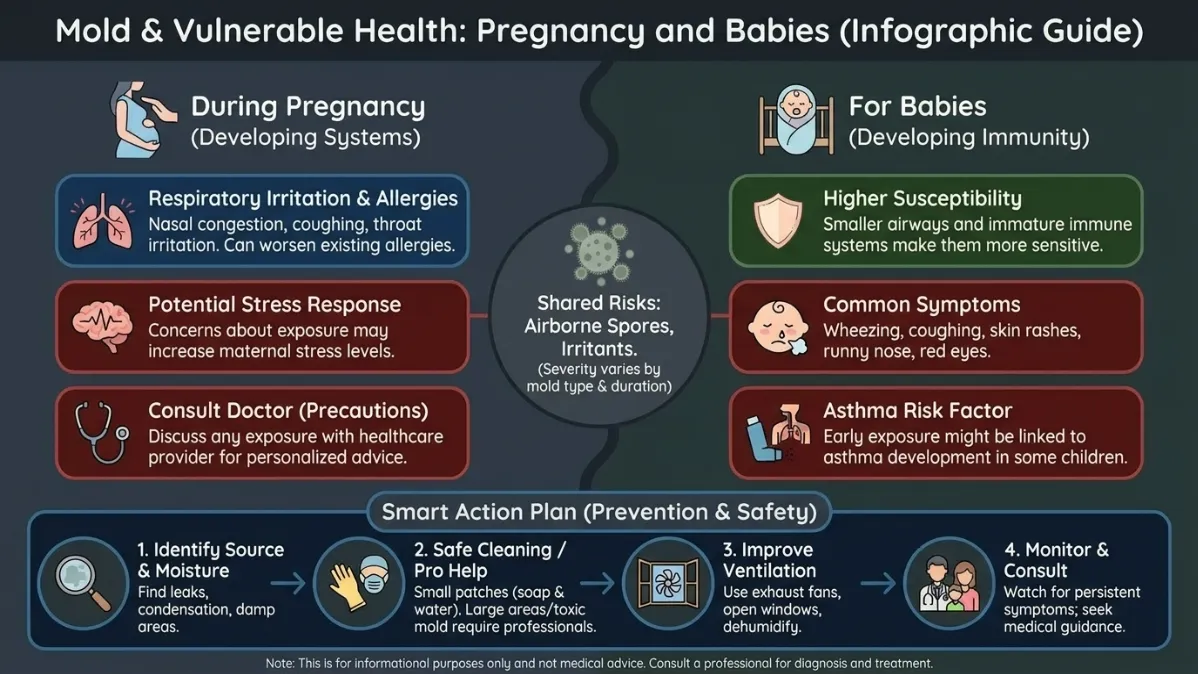
If you are pregnant or have a baby at home and just found mold, you want a straight answer, not panic. Here it is: is mold dangerous during pregnancy is a fair question, and the honest answer is that mold is worth taking seriously, but not for the reasons the scariest articles online suggest. The well documented risks of mold during pregnancy are respiratory and allergic, the same effects mold has on anyone, only they can hit harder when you are pregnant or when your child’s lungs are still developing. The dramatic claims you may have read, that household mold causes miscarriage or birth defects, are not established by science.
Below we separate what the research actually supports from what it does not, explain why mold deserves attention in a home with an expecting parent or an infant, and walk through the safest way to handle it. This is general information, not medical advice, so bring any health concern to your doctor.
Long Island Residents from Manhattan to The Hamptons Can Rest Easy! We Offer Free Advanced Mold Testing Across Nassau and Suffolk Counties! Schedule Yours Today by Contacting Us Now!
What the Science Actually Says About Mold During Pregnancy
Start with what is solid. Federal health agencies agree that mold produces allergens and irritants, and that exposure can cause allergic reactions, nasal and sinus symptoms, coughing, wheezing, eye and skin irritation, and asthma attacks in people who have asthma. The U.S. Environmental Protection Agency and the Centers for Disease Control and Prevention both describe these effects clearly. Those are the real, repeatable health concerns with indoor mold.
Now the part that gets distorted online. Direct studies on mold and human pregnancy outcomes are limited, and the major health bodies have not established that ordinary household mold exposure causes miscarriage, stillbirth, or birth defects. The popular claim that mycotoxins routinely cross the placenta and harm a developing baby is not backed by strong human evidence. Both the EPA and CDC note that research on mold and health effects is ongoing, which is the accurate framing: real allergic and respiratory effects, plus open questions, not proven catastrophic outcomes. Treating mold during pregnancy as a sensible thing to remove is wise. Treating it as a guaranteed disaster is not supported.
Why Mold Hits Harder During Pregnancy
Even though the catastrophic claims do not hold up, there are real reasons mold during pregnancy deserves more attention than it would at another time. Pregnancy changes your body in ways that can amplify mold’s ordinary effects.
First, the immune system shifts during pregnancy to keep your body from rejecting the baby. That natural modulation can leave you somewhat more susceptible to respiratory irritation and infection. Second, your breathing changes: as pregnancy progresses you breathe a greater volume of air, which can mean more contact with airborne spores. Third, many pregnant women experience pregnancy rhinitis, a swelling of the nasal passages driven by hormones, and adding an airborne allergen on top of already inflamed airways can make congestion and allergic symptoms noticeably worse.
The concern that matters most is asthma. Mold is a recognized asthma trigger, and poorly controlled asthma during pregnancy is itself associated with pregnancy risks, which is exactly why keeping triggers out of the home matters. If you have asthma and you are pregnant, an environment full of mold spores is working against you. Our guide on how mold affects asthma covers that link in depth, and our overview of respiratory illness from mold explains the broader breathing effects.
How Mold Affects Babies and Young Children
Babies and young children are the more clearly supported part of this story. Their respiratory and immune systems are still developing, and the evidence connecting damp, moldy housing to childhood respiratory problems is much stronger than the evidence on pregnancy outcomes. The CDC points to research finding that people who spend time in damp buildings report more respiratory symptoms and infections, and developing or worsening asthma. For a young child, that is the heart of the concern.
In practical terms, growing up in a chronically damp or moldy home is associated with a higher likelihood of wheezing, respiratory infections, allergic symptoms, and asthma development in children. That does not mean every baby in a home with a little mold will get sick, but it does mean a moldy environment is a poor place for developing lungs and is worth correcting. The March of Dimes urges parents to reduce children’s exposure to indoor pollutants and environmental hazards as a general principle of a healthy home, and you can read their guidance on protecting your baby from environmental hazards.

Warning Signs and Symptoms Worth Taking Seriously
Two kinds of signs matter: signs of mold in the home, and symptoms in the people living there. On the home side, watch for a musty smell, visible growth on walls, ceilings, window sills, or around windows, peeling paint, water stains, and any history of leaks, flooding, or a damp basement or crawl space. Our piece on the signs of mold in a house goes through the full checklist.
On the health side, pay attention if you or your child develop persistent nasal congestion, coughing, wheezing, sneezing, itchy or watery eyes, skin irritation, or worsening asthma that eases when you leave the house and returns when you come home. That come-and-go pattern is one of the clearest signals that the trigger is indoors. Any concerning symptom during pregnancy or in an infant should go to your doctor or pediatrician promptly. To understand which growths cause the most worry, our guide on whether black mold is dangerous and our breakdown of black mold symptoms are worth reading.
A note on testing versus removing:
The Safest Way to Handle Mold When You Are Pregnant or Have a Baby
The general advice is simple: a pregnant woman should avoid doing mold cleanup herself, and infants should be kept away from the work entirely. Disturbing mold sends spores into the air, and the people you most want to protect are the ones who should not be breathing that. Small surface spots on a hard, non porous surface can sometimes be wiped by another household member using proper protection, but anything larger, anything tied to a damp basement or crawl space, or anything growing behind walls or inside the HVAC system calls for professionals. Remember the EPA’s key point: dead mold still causes allergic reactions, so killing it with bleach is not enough. It has to be physically removed and the water source corrected, or it comes back.
The Best Move If You Are Pregnant and Suspect Mold
The single best step is to get the home assessed by a professional rather than guessing or scrubbing it yourself. An inspection locates the moisture source feeding the mold, identifies how far it has spread, and lets the actual cleanup be done while you and your child stay out of the area. That protects the people at risk and solves the underlying water problem so the mold does not return after the baby arrives. If you want to know what an inspection involves first, see our guide to mold inspections, and our overview of how mold remediation works.
Protect the people who matter most.
How to Protect Your Home and Keep Mold From Coming Back
Once existing mold is removed, prevention comes down to moisture, because mold cannot grow without it. The most important number is indoor humidity. Keeping it below roughly 50 percent removes the conditions mold needs, and that matters most through the humid Northeast summer when basements and crawl spaces sweat. Our guide to the best humidity level to prevent mold covers the targets and tools.
From there, the fundamentals are: fix leaks quickly, dry any water damaged area within 24 to 48 hours, run exhaust fans in bathrooms and kitchens, make sure water drains away from the foundation, and address damp basements and crawl spaces before they turn into spore sources. In older NY metro homes with block foundations and chronic basement dampness, lasting protection often means proper waterproofing or crawl space moisture control rather than a surface cleanup. Our complete mold prevention guide and our piece on indoor air quality and mold prevention tie the steps together so the home stays healthy long after the baby comes home.
Is Mold Dangerous During Pregnancy: Final Thoughts
We hope we’ve answered your question, “Is Mold Dangerous During Pregnancy?” Remember, mold during pregnancy is not something to panic over, but it is not something to ignore. The main concern is not that household mold has been proven to cause birth defects or miscarriage. The real concern is that dampness and mold can affect breathing, trigger allergies, worsen asthma, and make your home less healthy.
If you are pregnant, avoid heavy mold cleanup, stay away from moldy materials, and do not disturb contaminated drywall, insulation, carpet, cabinets, or HVAC areas. Fix the moisture source first, then remove the mold safely.
The smartest next step is simple: protect your breathing, call your healthcare provider if symptoms appear, and schedule a mold inspection if the problem is visible, recurring, musty, or larger than a small surface spot.
Schedule Your Free Advanced Mold Inspection Today and Rest Easy!
Frequently Asked Questions About Mold and Pregnancy
Can Mold Affect Pregnancy?
Mold can affect comfort and breathing during pregnancy, especially if it triggers allergies, asthma, coughing, wheezing, sinus irritation, or throat irritation. There is not enough evidence to say typical indoor mold exposure causes miscarriage, birth defects, preterm birth, or low birth weight. The safest move is to reduce exposure, fix the moisture source, and remove mold promptly. MotherToBaby notes that it is not known whether mold exposure causes pregnancy-related problems such as preterm delivery or low birth weight.
Is Black Mold Dangerous During Pregnancy?
Black mold should be taken seriously during pregnancy because it can irritate the airways and trigger allergic or asthma symptoms. However, black mold has not been proven to cause pregnancy loss, birth defects, or cancer from normal indoor exposure. If you are pregnant and find black mold on drywall, ceilings, cabinets, flooring, or HVAC materials, avoid disturbing it and have the moisture source inspected.
Can Mold Cause Birth Defects?
There is no clear evidence that breathing household mold causes birth defects. The bigger concern is that mold exposure can worsen respiratory symptoms, allergies, and asthma, which can make pregnancy more uncomfortable and may require medical guidance. If you are pregnant and have ongoing coughing, wheezing, shortness of breath, or severe allergy symptoms around mold, contact your healthcare provider.
Can Mold Cause Miscarriage?
There is no established evidence that typical indoor mold exposure causes miscarriage. Research on mold and pregnancy outcomes is limited, so it is still smart to avoid heavy exposure, especially during cleanup. Pregnant people should not tear out moldy drywall, scrub large mold patches, or work around contaminated materials without proper protection and professional guidance.
What Are Mold Exposure Symptoms During Pregnancy?
Mold exposure symptoms during pregnancy can include sneezing, stuffy nose, coughing, throat irritation, itchy eyes, skin irritation, wheezing, or asthma flare-ups. The EPA says mold can cause allergic reactions, asthma attacks in people with asthma, and irritation of the eyes, skin, nose, throat, and lungs. These symptoms can affect mold-allergic and non-allergic people.
Should Pregnant Women Clean Mold?
Pregnant women should avoid cleaning large mold problems or disturbing moldy drywall, insulation, carpet, cabinets, or HVAC materials. Small surface mold on nonporous areas may be manageable with ventilation, gloves, and safe cleaners, but heavy cleanup should be handled by someone else or by a mold remediation professional. The CDC recommends using at least a NIOSH-approved N95 respirator, gloves, and skin protection when cleaning mold.
When Should I Leave the House Because of Mold During Pregnancy?
You may need to leave the affected area, or temporarily stay elsewhere, if mold exposure is causing breathing trouble, asthma symptoms, strong odors, or repeated symptoms that improve when you leave the home. This is especially important if the mold followed flooding, sewage backup, roof leaks, or major water damage. If symptoms are severe or you feel short of breath, contact your healthcare provider promptly.
Can Mold Make Pregnancy Nausea Worse?
Mold odors and damp indoor air may make nausea feel worse for some pregnant people, especially if musty smells trigger gagging, headaches, or sinus irritation. Mold is not considered a proven cause of morning sickness, but poor indoor air quality can make an already sensitive pregnancy feel harder. If a room smells musty, avoid spending time there until the moisture and mold source are corrected.
Is Mold More Dangerous If I Have Asthma While Pregnant?
Yes. Mold exposure can be more concerning if you have asthma during pregnancy because mold can trigger asthma episodes in sensitive people. The EPA says people with asthma should avoid contact with mold exposure because molds can trigger asthma episodes. If mold is present and your asthma symptoms increase, call your healthcare provider and arrange safe mold removal.
When Should I Call a Mold Removal Professional During Pregnancy?
Call a mold removal professional during pregnancy if mold covers more than a small surface area, keeps returning, appears on drywall or ceilings, follows a leak or flood, smells musty, or may be hidden behind cabinets, floors, walls, or HVAC components. The EPA recommends professional help when mold or water damage involves sewage or contaminated water. Professional mold remediation can reduce exposure while finding and fixing the moisture source.