
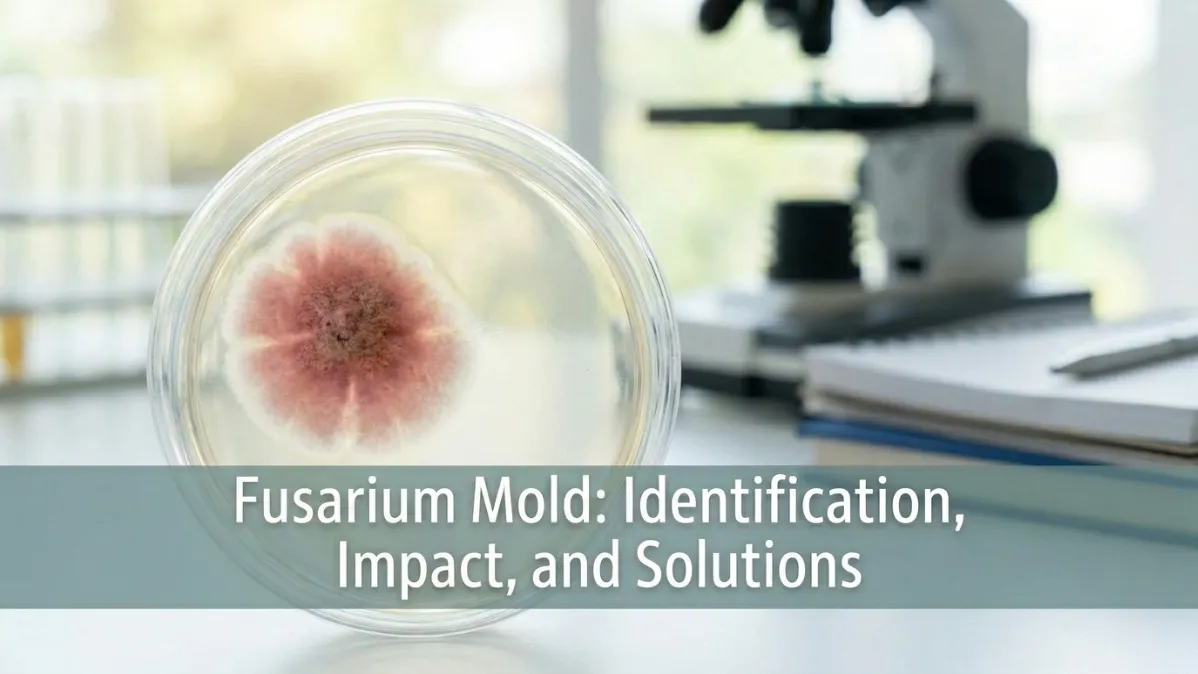
If you’ve found pink, white, or reddish growth after a leak or a damp spell and landed here, here’s the plain-English version. Fusarium mold is a large group of molds commonly found in soil, plants, and water-damaged materials. Indoors, it tends to show up after leaks, flooding, high humidity, or chronic moisture, especially on carpet, drywall, fabric, wood, and insulation.
It can look pink, reddish, white, tan, or violet, but color alone is not enough to identify the species. Because mold exposure can trigger allergy-like symptoms and poses greater risks for people with asthma, chronic lung disease, or weakened immune systems, suspected Fusarium growth is worth inspecting and removing carefully. The CDC notes that mold can cause a stuffy nose, sore throat, coughing, wheezing, burning eyes, and skin rash, with more serious risks for sensitive or immunocompromised people.
Mold Removal Experts is Long Island’s Go-to for Free Advanced Mold Inspections and Proven Solutions! Schedule Your Free Inspection Now!
| Topic | Quick Answer |
|---|---|
| What it is | A mold genus often tied to soil, plants, and damp building materials |
| Common colors | Pink, white, reddish, tan, purple, violet, or salmon |
| Common indoor spots | Water-damaged carpet, drywall, wood, insulation, bathrooms, basements, crawl spaces |
| Main concern | Moisture damage, allergic reactions, respiratory irritation, higher risk for vulnerable people |
| Can color confirm it? | No. Lab testing is needed to identify mold type accurately |
| Best next step | Fix the moisture source, avoid disturbing growth, get it inspected when contamination is significant |
What Is Fusarium Mold?
The first thing to understand is that Fusarium isn’t one mold. It’s a big genus of fungi that lives all around us outdoors in soil, plants, and decaying organic material. It gets into homes constantly through air, dust, shoes, houseplants, contaminated materials, water intrusion, and HVAC airflow, and most of the time it does nothing at all. What changes that is moisture. Fusarium only becomes an indoor problem when building materials stay wet long enough for it to colonize.
So the useful way to think about it isn’t “is this Fusarium?” It’s “why is this material staying wet?” The mold is the symptom. The water is the cause. And throughout this page you’ll see the word “suspected” attached to Fusarium, because without a lab test, nobody can tell you for certain which mold is growing on your wall just by looking at it.
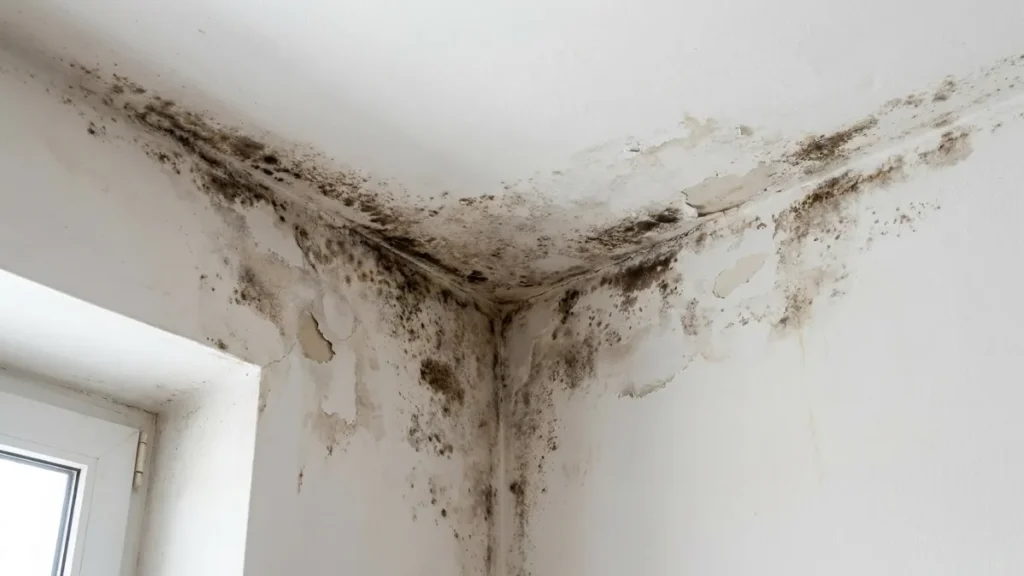
What Does Fusarium Mold Look Like?
Visual clues can point you in a direction, but they can’t close the case. Suspected Fusarium often appears in pink, salmon, white, cream, reddish, tan, purple, or violet, and it may look fuzzy or cottony, sometimes slimy or damp in very wet areas. On porous materials you’ll often see discoloration or staining that lingers after water damage.
Why Color Alone Can’t Identify Fusarium Mold
Here’s the catch with all of those descriptions: lots of different molds, and even some bacteria, can show up pink, white, red, or purple depending on the surface, the age of the growth, the moisture level, the lighting, and whatever else is growing nearby. A visual inspection can flag possible mold. Only lab analysis can confirm the type. The safest assumption isn’t about the color you’re seeing. It’s that any mold on damp material means moisture is somewhere it shouldn’t be.
When Lab Testing Is Actually Worth It
You don’t need to know the exact species to know that visible mold and moisture need to be dealt with. Testing earns its cost in specific situations: when someone in the home is medically vulnerable, when contamination is widespread or hidden, when the mold type matters for insurance or a sale, or when you need to verify that a remediation job actually worked. Outside those cases, the money is usually better spent fixing the water source and removing the growth safely.
Where Fusarium Mold Grows, and What Causes It
Suspected Fusarium follows water. It shows up wherever materials stay damp, which is why the most common spots are also the dampest: water-damaged carpet and padding (padding can stay soaked long after the surface feels dry), drywall and the wall cavities behind it, wood trim, subfloors and framing, bathrooms and laundry rooms with poor ventilation, and basements and crawl spaces dealing with seepage, humidity, or exposed soil. HVAC systems can spread spores through the home, though growth there still needs moisture to take hold.
The causes behind all of that are a fairly predictable list: plumbing leaks, roof leaks, basement seepage, flooding, high indoor humidity, condensation, damp carpet, wet insulation, poor bathroom ventilation, crawl space moisture, window and wall leaks, poor exterior drainage, and HVAC condensation problems. The throughline is simple. Fusarium doesn’t appear because a home is dirty. It appears because water got trapped in building materials and stayed there. That’s why EPA home cleanup guidance puts fixing the water problem and drying everything completely at the very top of the list, and it’s why any removal plan that skips the moisture source is only half a plan.
Is Fusarium Mold Dangerous? Symptoms and Health Risks
This deserves a careful answer rather than a scary one. For many people, mold exposure causes irritation or allergy-like symptoms and nothing more serious. For certain groups, it warrants real caution. Risk depends on the person, how much mold is present, how long they’re exposed, and their overall health.
The symptoms commonly associated with mold exposure include a stuffy nose, sneezing, sore throat, coughing, wheezing, burning or itchy eyes, skin irritation or rash, headaches in some cases, and worsened asthma. These are possible reactions, not a diagnosis, and how strongly someone reacts varies a lot from person to person.
Some people are at higher risk and should be more cautious: people with asthma or mold allergies, people with chronic lung disease, infants and older adults, and anyone with a weakened immune system, including people receiving chemotherapy, transplant medication, or high-dose steroids. This is where Fusarium specifically matters more than many household molds, because Fusarium species are medically important and can cause infections in severely immunocompromised people. That is not the same as saying every patch of indoor Fusarium causes infection, but it’s the reason vulnerable people shouldn’t disturb suspected growth. CDC guidance notes that immunocompromised people and those with chronic lung disease can develop lung infections from mold, and that risk rises in areas with high amounts of it. Research on serious Fusarium infection points to severe immune suppression, like prolonged neutropenia, as a major risk factor.
A practical line to keep in mind: a remediation company can inspect and remove the mold, but a healthcare provider is the right person to evaluate symptoms. Talk to a doctor if symptoms are severe, get worse indoors, flare your asthma, or if you have lung disease or a compromised immune system, and especially if there’s fever, chest pain, or shortness of breath.
Fusarium Mold vs. Pink Mold: Are They the Same?
Not necessarily, and this trips people up constantly. “Pink mold” is a catch-all phrase people use for any pink or reddish growth, but it can refer to different organisms. Some pink growth genuinely is Fusarium. A lot of the pink film in showers and around drains, though, is actually a bacterium called Serratia marcescens, not mold at all. Fusarium can appear pink or reddish, but so can plenty of other things, so the location and material matter, and only lab testing confirms what you’re really dealing with. Pink residue in a shower is not automatically Fusarium. (Full Mold Identification Guide)
How to Remove Fusarium Mold Safely
Before you touch anything, two ground rules. First, find and fix the moisture source, or whatever you remove will grow back. Second, if you have asthma, chronic lung disease, a mold allergy, or a weakened immune system, don’t disturb suspected mold yourself at all. For small areas where cleanup is reasonable, wear real protection: an N95 respirator or better, gloves, eye protection, long sleeves, and disposable coveralls for anything beyond a tiny spot. Larger contamination needs proper containment.
With that in place, safe removal follows a logical order:
- Stop the moisture source. Repair the leak, lower the humidity, stop the seepage, dry the materials, and improve ventilation. This step is the whole game.
- Contain the area. Close it off so spores don’t travel, and don’t run fans across contaminated surfaces, which just blows spores around the house.
- Remove contaminated porous materials. Carpet, padding, insulation, and moldy drywall usually need to come out rather than be wiped down. Porous materials hold mold in places you can’t clean.
- Clean nonporous and semi-porous surfaces. Hard surfaces can often be cleaned with appropriate methods, though some staining may remain even after the mold is gone.
- Dry everything completely. Moisture control is the real prevention step, not the cleaning itself.
- Verify the problem is solved. Recheck moisture levels, odor, staining, and humidity, and confirm the water source is actually corrected.
The CDC is clear that mold cleanup carries its own health and injury risks, which is worth respecting before you decide how much to take on yourself.
Can You Clean Fusarium Yourself, or Do You Need a Pro?
A balanced answer: small growth on hard, nonporous surfaces can be manageable for a healthy person, as long as the moisture source is fixed, the area is limited, and proper PPE is used. Beyond that, the math shifts toward calling a professional.
DIY may be reasonable when the area is very small, the surface is hard and nonporous, there’s no flooding history, no vulnerable person lives in the home, the moisture source is already corrected, and you’re using proper PPE.
Professional remediation is the safer call when mold covers more than a small area; it’s on drywall, carpet, insulation, wood framing, or HVAC components; the home had flooding or a sewage backup; the mold keeps coming back; someone in the home has asthma, lung disease, allergies, or a weakened immune system; the growth may be hidden inside walls, ceilings, or crawl spaces; or you need documentation for a sale, insurance, or tenants. A musty smell with no visible source counts too, since that often means the mold is somewhere you can’t see.
Suspect Fusarium after a leak, flood, or basement moisture problem? Schedule a professional mold inspection before disturbing the area.
Why Bleach Isn’t a Complete Fusarium Mold Removal Plan
Bleach has a reputation it doesn’t fully earn here. It may lighten stains or kill some surface growth on hard, nonporous materials, but it does not solve the actual problem. It doesn’t fix the water source. It isn’t reliable on porous materials like drywall and wood, where the mold lives below the surface. Its fumes can irritate your lungs and eyes. And scrubbing away at mold without containment can fling spores around the room. The right method always depends on the material and the amount of contamination. The clearest tell of all: if mold keeps returning after you clean it, the problem was never the cleaning product. It’s the moisture.
What Happens During a Fusarium Mold Inspection?
A good inspection is about cause, not just labels. Expect a visual inspection paired with moisture mapping and humidity readings, plus a hunt for the actual leak or source. The inspector should check the usual hiding spots, basements, crawl spaces, bathrooms, wall and ceiling cavities, and areas near the HVAC, and may take air or surface samples when identification matters. From there you should get a containment recommendation, a removal plan, and a prevention plan. The standard to hold them to is simple: a good inspection doesn’t just name the mold, it explains why it grew and what has to change so it doesn’t come back.
- Visual inspection
- Moisture mapping and humidity readings
- Leak and source hunt
- Check the hiding spots
- Air or surface sampling
- Containment recommendation
- Removal plan
- Prevention plan
Fusarium Mold After Flooding or Basement Water Damage
This is where mold and your foundation become the same conversation. After flooding or basement water damage, carpet and padding are high-risk because they hold water, and damp drywall can hide growth behind the wall where you’ll never see it until it spreads. The frustrating cases are the recurring ones, where mold returns again and again because the underlying issue, a failing sump pump, foundation cracks, cove joint seepage, or poor drainage, was never addressed. In those homes, removal alone is a temporary fix. If Fusarium or any mold shows up after basement water damage, removal is only half the job. The water source has to be corrected, usually through waterproofing or moisture control, or the mold will be back.
How to Prevent Fusarium Mold From Coming Back
Prevention is almost entirely about controlling moisture, and most of it overlaps with keeping a dry, sound foundation:
- Fix plumbing and roof leaks quickly, and dry wet materials fast
- Keep indoor humidity in check, and add dehumidification in basements and crawl spaces
- Remove flood-damaged porous materials when they can’t be fully dried
- Improve bathroom and laundry ventilation
- Correct exterior grading and extend downspouts away from the house
- Repair foundation cracks and seepage, and install or maintain a sump pump
- Encapsulate damp crawl spaces when appropriate
- Inspect after storms, floods, and leaks, before mold has time to establish
Fusarium Mold in Long Island, Brooklyn, Queens, and The Bronx
Local conditions drive a lot of mold around here. Long Island homes see it after coastal storms, basement seepage, crawl space humidity, and high groundwater. Brooklyn and Queens have plenty of older basements, shared walls, poor drainage, and moisture hidden behind finished walls. Bronx homes often combine older masonry, basement apartments, and recurring water intrusion. The common thread is that mold remediation in New York has to account for both the visible growth and the moisture feeding it, and on larger jobs, proper containment and regulatory compliance matter.
Seeing pink, white, reddish, or fuzzy growth after a leak or basement water problem? Schedule a mold inspection in Long Island, Brooklyn, Queens, or The Bronx before trying to clean it yourself.
Fusarium Mold: Final Thoughts
Fusarium mold can show up in several colors, including pink, white, reddish, tan, or violet, but color alone can’t confirm what’s actually growing in your home. What matters far more is the message the mold is sending: there’s moisture trapped in your building materials where it doesn’t belong.
Small, surface-level growth on hard materials can sometimes be cleaned safely with the right precautions, but suspected Fusarium on drywall, carpet, insulation, or wood, or anything that appears after flooding, deserves a careful inspection rather than a quick wipe-down.
And if anyone in the home has asthma, chronic lung disease, mold allergies, or a weakened immune system, don’t disturb suspected mold without professional guidance. The reliable path is always the same three steps: find the moisture source, remove the contaminated materials properly, and fix the conditions that let the mold grow in the first place.
In Long Island, Brooklyn, Queens, and The Bronx, Call On Mold Removal Experts to Put an End to Mold for Good! Schedule Your Free Inspection Today!
Frequently Asked Questions About Fusarium Mold
What is Fusarium mold?
A group of molds commonly found in soil, plants, and damp organic material. Indoors, it can grow on water-damaged carpet, drywall, wood, insulation, and fabrics.
What does Fusarium mold look like?
It may appear pink, reddish, white, tan, salmon, purple, or violet, and can look fuzzy, cottony, slimy, or stained depending on the surface and moisture. Appearance alone can’t confirm the type.
Is Fusarium mold dangerous?
It can be a health concern, especially for people with asthma, allergies, chronic lung disease, or weakened immune systems. Many people experience allergy-like irritation, while immunocompromised people may face more serious risks.
Can Fusarium mold make you sick?
It can contribute to symptoms like a stuffy nose, coughing, wheezing, sore throat, eye irritation, or skin rash in sensitive people. A doctor should evaluate symptoms, particularly for anyone with asthma, lung disease, or immune compromise.
Where does Fusarium mold grow in homes?
On damp carpet, padding, drywall, wood, insulation, and fabrics, and in bathrooms, basements, crawl spaces, and anywhere affected by leaks or flooding.
Can I identify Fusarium mold by color?
No. Many molds and even some bacteria appear pink, red, white, or purple. Lab testing is needed when species identification matters.
Is pink mold always Fusarium?
No. Pink growth may be Fusarium, but it’s often bacteria or another mold. Pink bathroom residue is frequently bacterial rather than Fusarium.
Can I remove Fusarium mold myself?
Small surface growth on hard, nonporous materials can be manageable with proper PPE and a corrected moisture source. Professional removal is safer for porous materials, HVAC systems, large or recurring growth, post-flood situations, or homes with vulnerable occupants.
Does bleach kill Fusarium mold?
It may affect surface growth on some hard surfaces, but it isn’t a complete remediation plan. It doesn’t fix the moisture source, doesn’t reliably handle porous materials, and can produce irritating fumes.
When should I call a mold remediation company?
When mold is widespread, recurring, hidden, caused by flooding, growing on porous materials, affecting indoor air, or present in a home with asthma, lung disease, allergies, or immune-compromised occupants.