
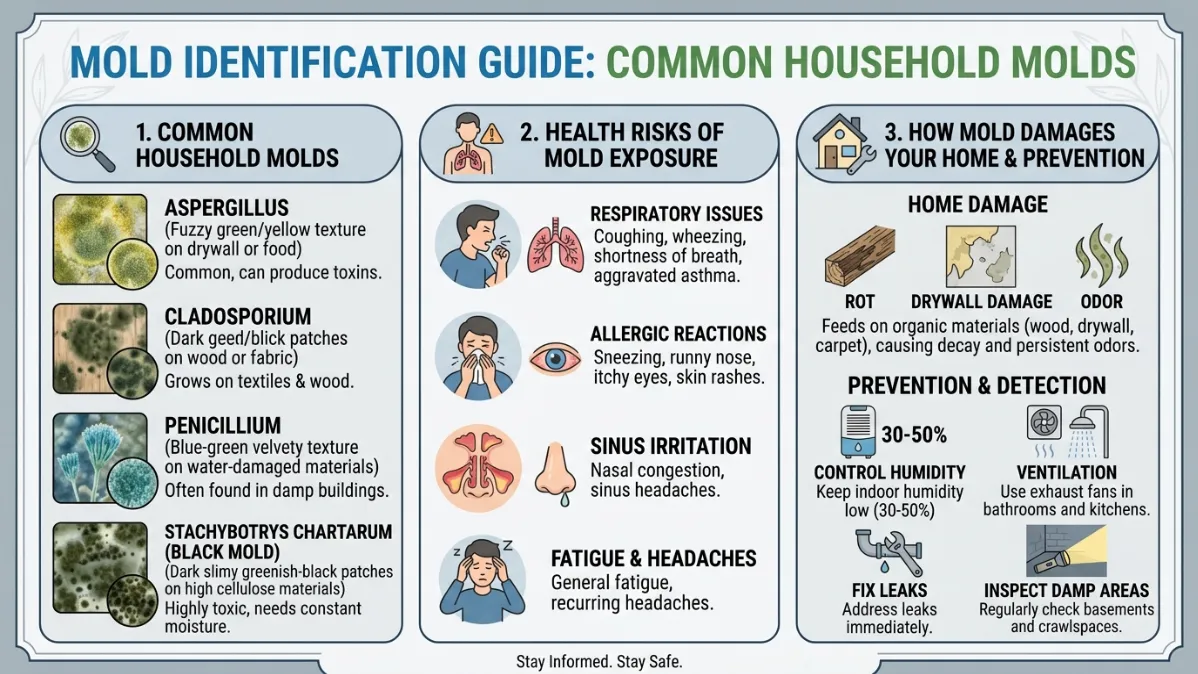
Mold identification is one of the most important first steps in protecting your home from long-term moisture damage, indoor air quality problems, and hidden structural deterioration. This mold identification application guide helps homeowners understand the warning signs of common household molds, where mold tends to grow, how different mold types behave, and when contamination may require professional remediation. While many homeowners assume all mold is the same, different species spread differently, impact materials differently, and may create very different health and air quality concerns inside your home.
In moisture-prone regions like Long Island, Brooklyn, Queens, and The Bronx, mold remediation contractors frequently uncover hidden contamination behind walls, beneath flooring systems, inside crawl spaces, and throughout damp basements caused by leaks, humidity buildup, and poor ventilation. Understanding what mold may look like, and what it could mean for your home can help you act before the damage becomes more severe and expensive to repair.
Whether you are dealing with visible discoloration, persistent musty odors, recurring humidity issues, or suspected hidden mold growth, this guide breaks down the most common household molds, their risks, and what homeowners should know before attempting cleanup themselves.
Schedule A Professional Mold Inspection Before The Damage Spreads
Mold Identification 101: Let's Get You Up to Speed.
Not all mold behaves the same, and that distinction matters more than most homeowners realize. Some types spread rapidly across porous materials, while others remain localized but release higher concentrations of airborne spores. Certain molds are more likely to trigger allergic reactions, respiratory irritation, or long-term exposure concerns, especially in sensitive individuals.
The bigger issue is where mold grows. It rarely stays confined to visible surfaces. Mold often develops:
Not all mold behaves the same, and that distinction matters more than most homeowners realize. Some types spread rapidly across porous materials, while others remain localized but release higher concentrations of airborne spores. Certain molds are more likely to trigger allergic reactions, respiratory irritation, or long-term exposure concerns, especially in sensitive individuals.
The bigger issue is where mold grows. It rarely stays confined to visible surfaces. Mold often develops:
How to Identify Mold in Your Home (Before It Gets Worse)
Early detection is the difference between a controlled cleanup and a full-scale remediation. While you can’t reliably identify mold species without lab testing, you can recognize the warning signs that indicate a problem is developing.
Visual Signs of Mold
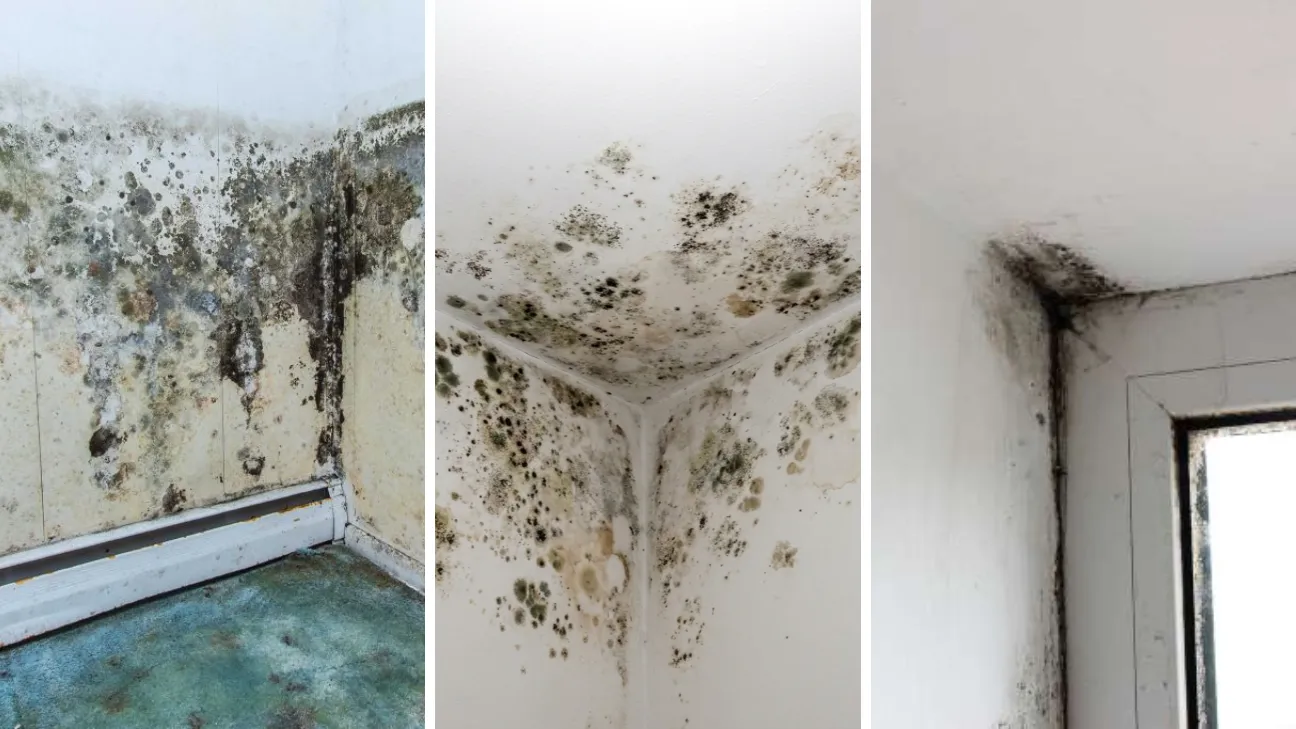
Mold doesn’t always appear as obvious black patches. It can take on a range of colors and textures depending on the surface and moisture conditions:
- Dark spots (black, green, or brown) on walls, ceilings, or wood
- White, fuzzy, or powdery growth on insulation or stored items
- Yellow or orange staining in damp areas
- Peeling paint, bubbling drywall, or warped surfaces
Musty or Earthy Odor
One of the most consistent indicators of mold is smell. Even when growth isn’t visible, mold produces a distinct:
- Musty
- Damp
- Earthy
odor that lingers in enclosed or poorly ventilated areas.
Moisture and Humidity Sources
Mold requires moisture to grow, so identifying water sources is critical:
- Plumbing leaks or pipe condensation
- Roof leaks or attic moisture buildup
- Flooding or standing water
- High indoor humidity (above ~60%)
- Poor ventilation in bathrooms, kitchens, or crawl spaces
If moisture is present long enough, mold will follow—it’s not a matter of if, but when.
The Limitation of Visual Identification
Here’s where most homeowners get it wrong: appearance alone is not enough to determine the type or risk level of mold. Two molds can look identical but have completely different implications for health and structural damage. That’s why surface-level identification often leads to underestimating the problem—or attempting ineffective cleanup methods.
Professional testing and inspection provide:
- Accurate identification of mold type
- Assessment of contamination spread
- Moisture source detection
- A clear remediation plan
Next, let’s break down the most common types of household mold, how to recognize them, and what they typically mean for your home.
Common Types of Household Mold (With Identification, Health Effects, and Damage Potential)
Many indoor mold problems trace back to a handful of common species that thrive in damp, poorly ventilated environments. These molds frequently appear in homes after leaks, humidity buildup, or water damage, and while they may look similar on the surface, their behavior, spread rate, and potential impact can vary significantly.
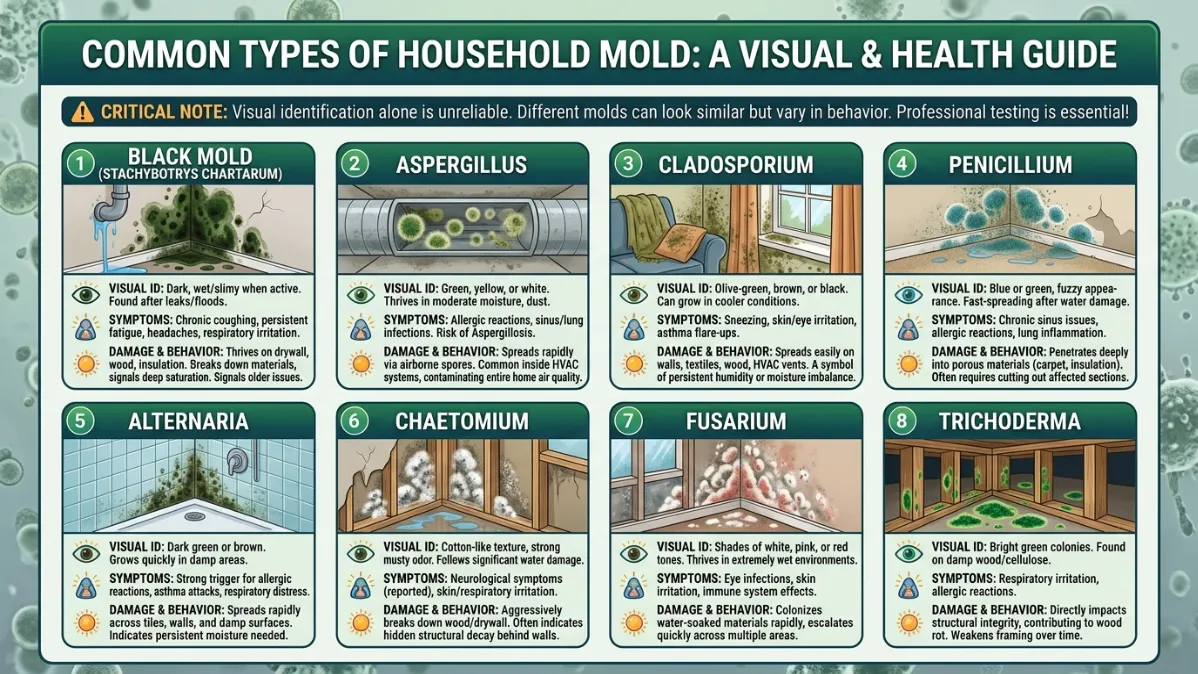
A critical point: visual identification alone is unreliable. Two molds can share nearly identical color and texture but differ in how aggressively they spread or how they affect indoor air quality. That’s why professional testing is essential when contamination is suspected.
Below is one of the most commonly discussed, and often misunderstood, types of household mold.
Black Mold (Stachybotrys chartarum)
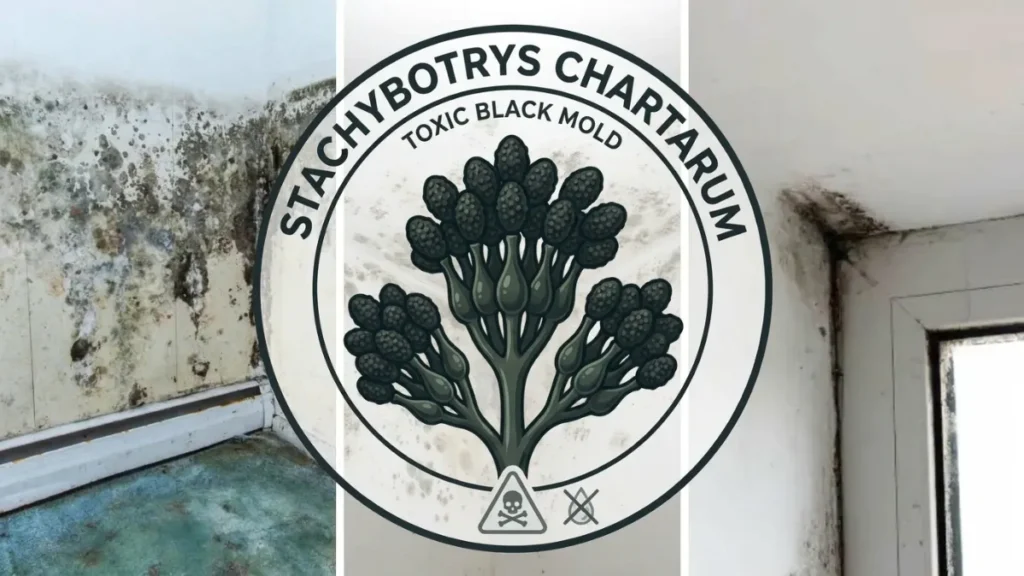
Black mold (Stachybotrys Chartarum) is typically dark green to deep black in color and often appears slimy or wet when actively growing. It tends to develop on materials that have been exposed to prolonged moisture, especially after leaks, flooding, or sustained humidity. Because of its association with water-damaged environments, it’s widely regarded as one of the most concerning molds homeowners encounter.
Symptoms Associated
Exposure, especially over extended periods, has been linked to:
- Chronic coughing
- Persistent fatigue
- Headaches
- Respiratory irritation
- Possible neurological symptoms with prolonged exposure
These effects are often more noticeable in individuals with sensitivities, allergies, or pre-existing respiratory conditions.
How It Damages Your Home
Black mold thrives on cellulose-rich materials, which are common throughout residential construction:
- Drywall
- Wood framing
- Insulation
- Subflooring
Once established, it gradually breaks down these materials, compromising their structural integrity. Its presence typically signals that moisture has been present long enough to allow deep material saturation, not just surface-level dampness.
If you’re seeing this type of growth, the issue is rarely new.
In most cases, the underlying moisture problem has been active long enough for damage to progress beyond the surface.
If you suspect black mold, schedule a professional inspection immediately to assess the extent and prevent further spread.
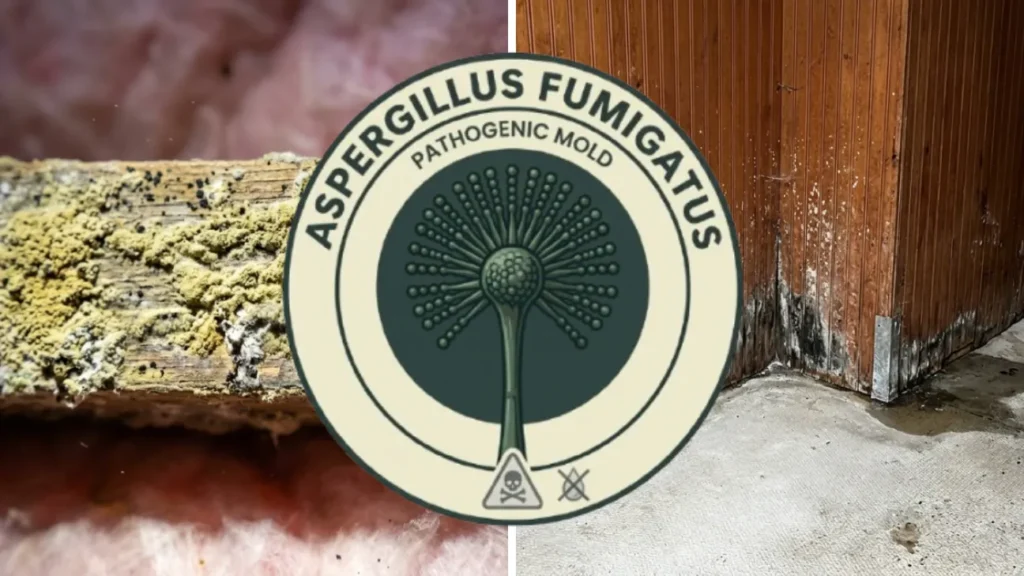
Aspergillus
Aspergillus is one of the most common indoor molds, with hundreds of species that can appear in a range of colors, typically green, yellow, or white. It thrives in environments with moderate moisture and is frequently found in dust, air systems, and building materials. Because of how easily its spores become airborne, it often spreads without being immediately visible.
Symptoms Associated
Exposure to Aspergillus can lead to:
- Allergic reactions
- Sinus infections
- Lung infections (especially in immunocompromised individuals)
- Aspergillosis in severe or prolonged exposure cases
How It Damages Your Home
This mold is particularly problematic because of how it moves:
- Spreads rapidly through airborne spores
- Commonly develops inside HVAC systems and ductwork
- Can colonize insulation, drywall, carpeting, and fabrics
Once inside an HVAC system, it can distribute spores throughout the entire home, turning a localized issue into a whole-house air quality concern.
Aspergillus is dangerous because it spreads silently through your air system, often long before you see it.
If you suspect it, an inspection is critical to prevent full-home contamination.
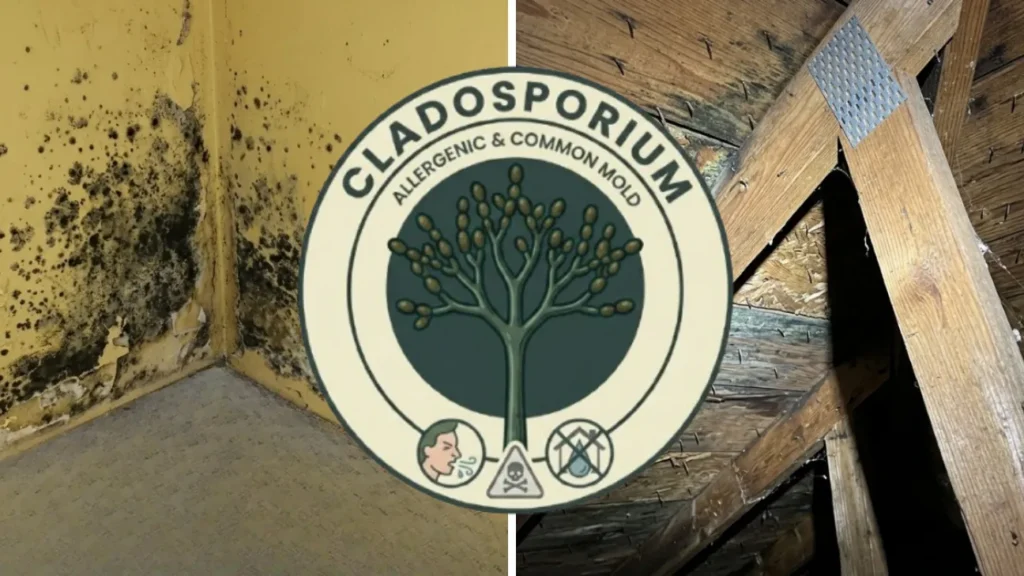
Cladosporium
Cladosporium typically appears olive-green, brown, or sometimes black, and is commonly found on fabrics, wood surfaces, and HVAC vents. Unlike some molds that require heavy saturation, it can grow in cooler, less damp conditions—making it more versatile and widespread in homes.
Symptoms Associated
Cladosporium exposure is commonly linked to:
- Sneezing
- Skin irritation
- Eye irritation
- Asthma flare-ups
How It Damages Your Home
While it’s not the most structurally aggressive mold, it still presents a serious issue:
- Spreads easily across surfaces like walls, textiles, and wood
- Can contaminate HVAC vents and circulate through indoor air
- Often signals ongoing humidity or moisture imbalance
It’s less about destroying materials—and more about persistent contamination.
It’s less about destroying materials—and more about persistent contamination.
Cladosporium may not destroy your home, but it will take over your air quality if left untreated.
If you’re noticing recurring growth or allergy symptoms indoors, it’s time to investigate.
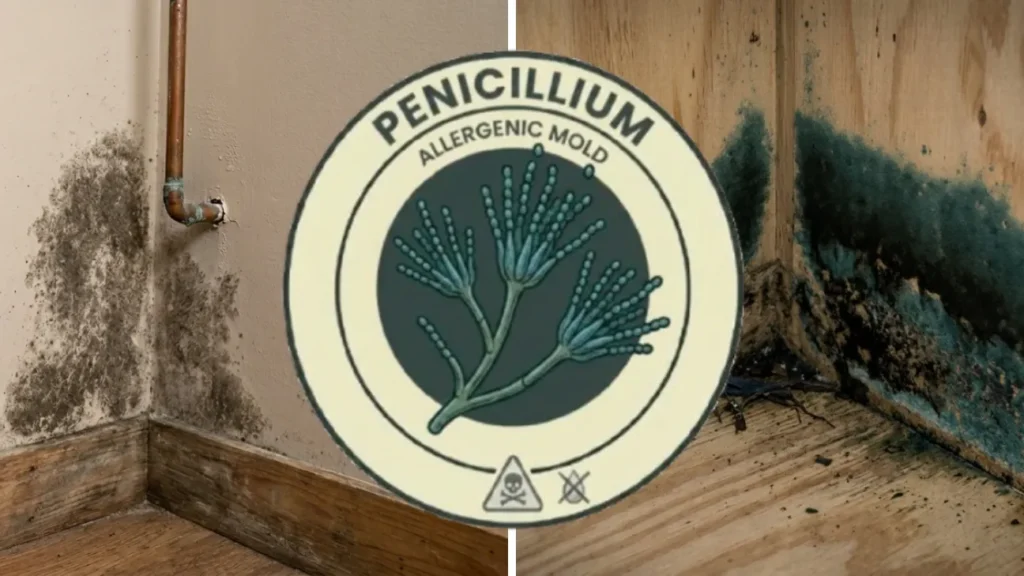
Penicillium
Penicillium is a fast-spreading indoor mold known for its blue or green fuzzy appearance. It typically develops after water damage and thrives on porous materials, making it one of the most aggressive molds in terms of spread rate.
Symptoms Associated
Exposure can contribute to:
- Chronic sinus issues
- Allergic reactions
- Lung inflammation
How It Damages Your Home
Penicillium spreads rapidly and penetrates deeply into materials:
- Quickly colonizes water-damaged drywall, insulation, and carpeting
- Embeds itself into porous surfaces, making surface cleaning ineffective
- Can spread to large areas in a short time if moisture persists
Because of its ability to infiltrate materials, removal often requires cutting out and replacing affected sections.
This is one of the fastest-spreading molds you’ll encounter, and delays give it more surface area to take over.
Professional remediation is often necessary to fully eliminate it.
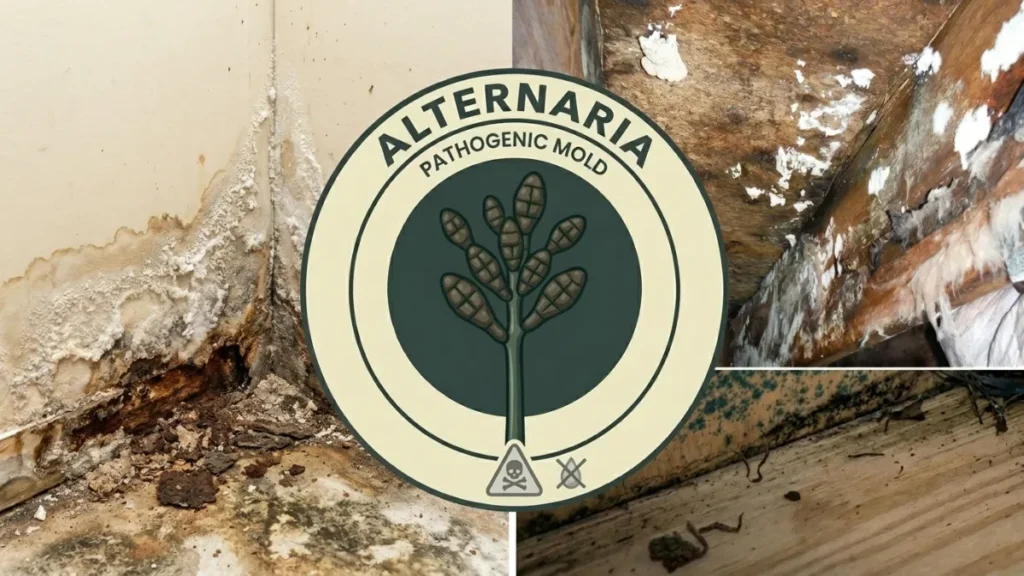
Alternaria
Alternaria is a dark green or brown mold commonly found in damp areas such as showers, sinks, and around windows. It tends to grow quickly in environments with consistent moisture and is one of the most frequent indoor allergens.
Symptoms Associated
This mold is a strong trigger for:
- Allergic reactions
- Asthma attacks
- Respiratory distress
How It Damages Your Home
Alternaria typically remains on the surface but spreads easily:
- Grows rapidly in moist environments
- Spreads across tiles, walls, and damp surfaces
- Indicates persistent moisture issues that need correction
While it may not penetrate materials as deeply as other molds, its rapid spread still creates widespread contamination.
Alternaria is common—but that doesn’t make it harmless.
If it keeps returning, the underlying moisture issue needs to be addressed immediately.
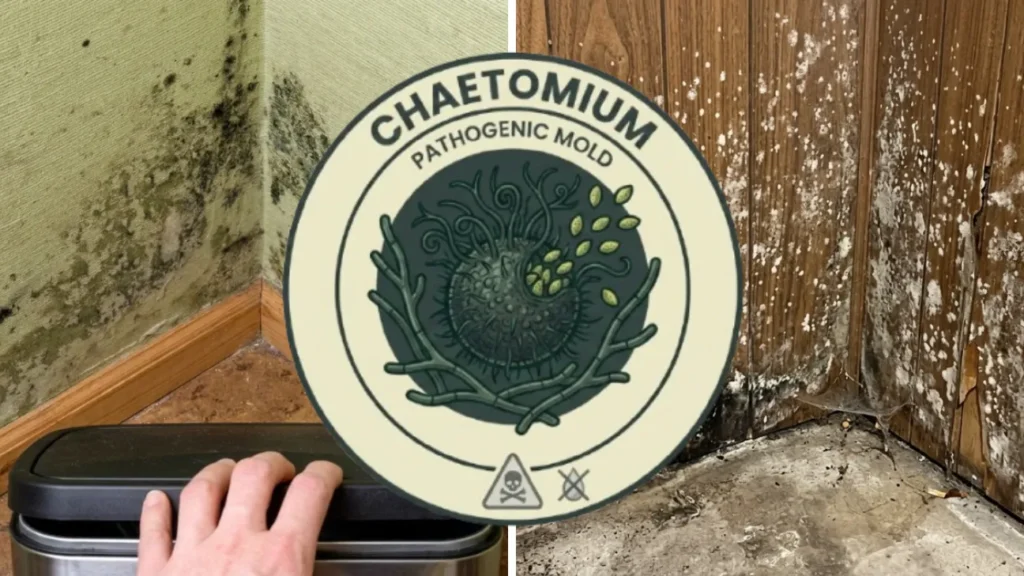
Chaetomium
Chaetomium is often recognized by its cotton-like texture and strong musty odor. It typically appears after significant or prolonged water damage, such as flooding, pipe bursts, or long-term leaks, and is commonly found in heavily saturated building materials.
Symptoms Associated
Exposure has been associated with:
- Neurological symptoms (reported in prolonged exposure cases)
- Skin irritation
- Respiratory issues
How It Damages Your Home
Chaetomium is a serious structural concern:
- Aggressively breaks down drywall, wood, and other cellulose materials
- Often develops in areas with sustained moisture intrusion
- Can indicate hidden damage behind walls or under flooring
Chaetomium often signals deeper, hidden structural decay, not just surface mold.
If this is present, a thorough inspection is critical to uncover the full extent of damage.
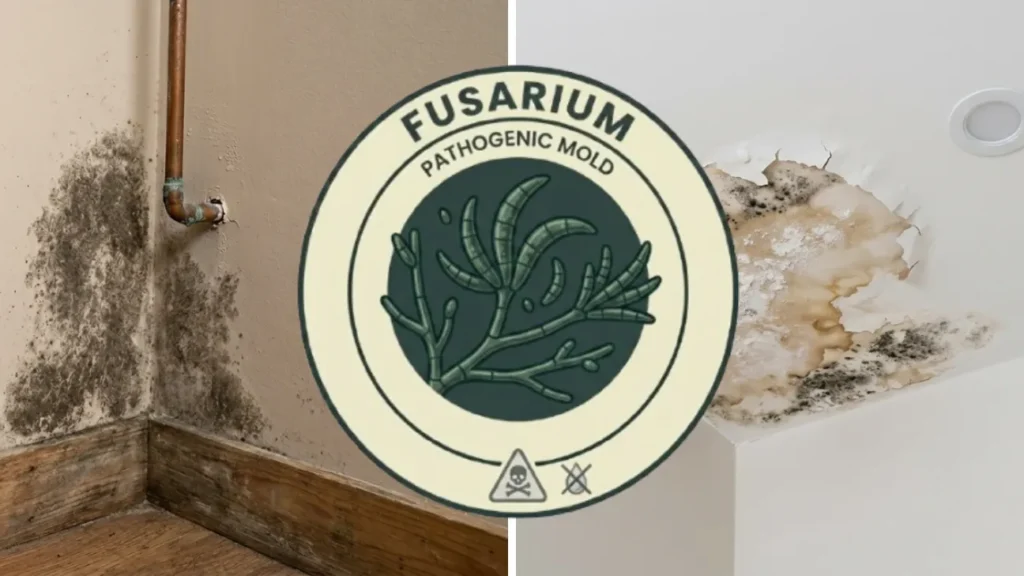
Fusarium
Fusarium mold appears in shades of white, pink, or reddish tones and thrives in extremely wet environments. Unlike many molds, it can grow in cooler conditions, making it more adaptable and persistent in damp homes.
Symptoms Associated
Exposure may lead to:
- Eye infections
- Skin irritation
- Effects on the immune system
How It Damages Your Home
Fusarium spreads aggressively in saturated conditions:
- Rapidly colonizes water-soaked materials
- Can grow at lower temperatures than many other molds
- Expands quickly when moisture is not controlled
This one spreads fast—and doesn’t need warm conditions to do it.
If moisture remains, Fusarium can escalate quickly across multiple areas.
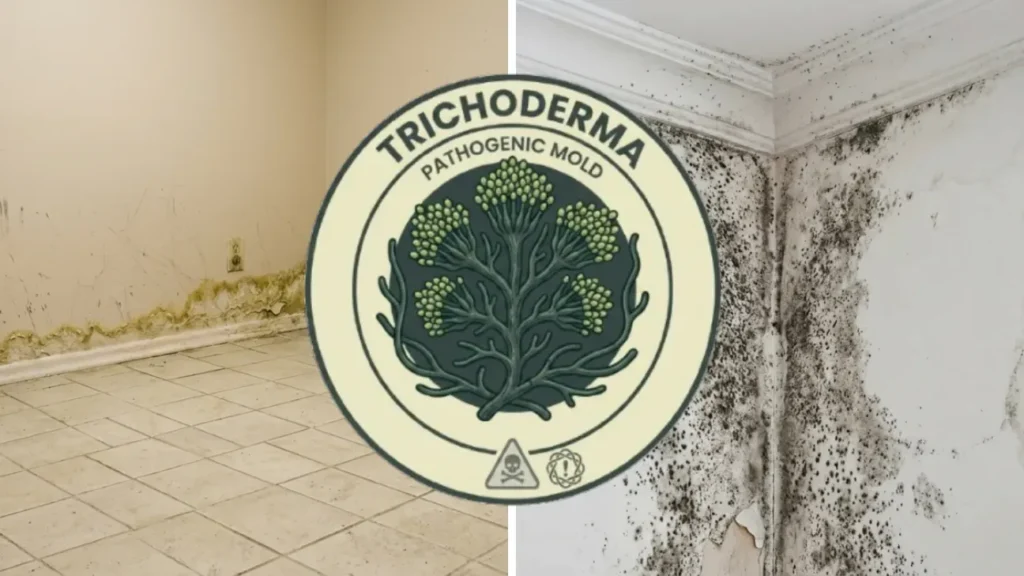
Trichoderma
Trichoderma is typically identified by its bright green colonies and is commonly found on damp wood and other cellulose-rich materials. It often appears in areas with chronic moisture exposure, such as crawl spaces or water-damaged framing.
Symptoms Associated
Exposure can cause:
- Respiratory irritation
- Allergic reactions
How It Damages Your Home
This mold directly impacts structural integrity:
- Contributes to wood rot
- Weakens framing and structural components over time
- Spreads across damp wood surfaces if conditions persist
This is where mold transitions from an air quality issue to a structural threat.
If Trichoderma is present, the integrity of affected materials should be evaluated immediately.
When Mold Becomes Dangerous: Signs You Should NOT Handle It Yourself
Not all mold situations are safe for DIY cleanup. In many cases, attempting to handle it without proper containment or protection can make the problem worse—or expose you to unnecessary health risks.
Situations That Require Professional Help
- Mold growth covering large areas (generally more than a small, contained patch)
- Visible contamination inside HVAC systems or ductwork
- Recurring mold despite previous cleaning attempts
- Strong, persistent musty odors with no visible source
- Health symptoms that worsen indoors (respiratory issues, headaches, fatigue)
Why DIY Can Backfire
Disturbing mold without proper containment can:
- Release large amounts of spores into the air
- Spread contamination to previously unaffected areas
- Increase exposure risk for occupants
PPE Warning (If You’re Investigating at All)
If you’re inspecting a suspected area:
- Use a properly fitted respirator (not a basic dust mask)
- Wear gloves and protective clothing
- Avoid direct contact with contaminated materials
- Do not disturb large or active growth
Recommended Approach
Before attempting any cleanup, the safest move is to:
- Identify the moisture source
- Confirm the extent of contamination
- Develop a controlled remediation plan
Professional inspection and remediation should always come first for anything beyond minor, surface-level issues.
What to Do if You Think You Have Mold?
Recognizing the signs is step one. What you do next determines whether the issue stays contained or spreads further into your home.
Don’t Disturb It
Avoid scrubbing, spraying, or touching the affected area.
Disturbing mold releases spores into the air, increasing contamination and exposure.
- Limit Airflow in the Area
- Turn off fans or HVAC systems near the affected zone
- Avoid opening windows that could circulate spores
- Keep the area isolated as much as possible
- Air movement is one of the fastest ways mold spreads.
Avoid DIY “Quick Fixes”
Bleach and store-bought cleaners rarely solve the problem, especially on porous materials like drywall or wood. In many cases, they only remove surface staining while leaving the root intact.
Schedule a Professional Inspection
This is the step most homeowners delay, and the one that prevents escalation:
- Confirms what type of mold you’re dealing with
- Identifies how far it has spread
- Pinpoints the moisture source
- Provides a clear remediation plan
Mold Identification: Final Thoughts
If you’re seeing discoloration, smelling something musty, or noticing mold symptoms in your home, don’t wait for it to get worse. Mold doesn’t stay contained, and the longer it’s active, the more it affects both your air quality and your structure.
If you’re seeing any of these signs, schedule a professional inspection now and stop the problem at the source. Long Island, Brooklyn, Queens, and The Bronx can call on Mold Removal Experts for free inspections, proven waterproofing solutions, and best-in-class work backed by industry-leading guarantees.
Frequently Asked Questions About Mold Identification:
How can I tell what type of mold is in my home?
You can’t reliably identify mold type based on appearance alone. Many types of household mold look nearly identical in color and texture. Accurate identification requires professional testing, including lab analysis and air sampling, to determine the species and risk level.
What are the most common mold symptoms in a home?
Common mold symptoms in the home include:
- Musty or earthy odors
- Visible discoloration on walls or ceilings
- Increased allergy symptoms indoors
- Respiratory irritation, coughing, or headaches
- Worsening asthma or sinus issues
If symptoms improve when you leave the house, mold may be a contributing factor.
Is black mold more dangerous than other molds?
Black mold (Stachybotrys chartarum) is often associated with serious black mold health effects, but it’s not the only mold that can impact your health. Other molds like Aspergillus and Penicillium can also cause respiratory and allergic reactions. The real risk depends on exposure level, location, and individual sensitivity.
Can I remove mold myself once I identify it?
Only very small, surface-level mold (on non-porous materials) may be safe to handle. If mold is on drywall, wood, insulation, or covers more than a small area, DIY removal often spreads spores and worsens the problem. Professional remediation is strongly recommended for anything beyond minor growth.
What causes mold to grow in a home?
Mold growth is always tied to moisture. Common causes include:
- Leaks (roof, plumbing, foundation)
- High indoor humidity
- Poor ventilation
- Flooding or water damage
If moisture isn’t resolved, mold will continue to return—regardless of cleaning.
How fast does mold spread?
Mold can begin growing within 24–48 hours in the right conditions. Fast-spreading molds like Penicillium and Fusarium can quickly contaminate large areas, especially on porous materials like drywall and insulation.
Can mold grow where I can’t see it?
Yes, and it often does. Mold commonly develops:
- Behind walls and baseboards
- Under flooring
- Inside HVAC systems
- In crawl spaces and attics
Hidden mold is one of the biggest risks because it spreads undetected while affecting indoor air quality.
Does bleach kill mold permanently?
Bleach may remove surface staining, but it does not penetrate porous materials like wood or drywall. In many cases, mold returns because the root system remains intact. Effective treatment requires addressing both the mold and the moisture source.
When should I call a professional mold inspector?
You should schedule an inspection if:
- Mold covers more than a small patch
- You notice strong, persistent odors
- Mold keeps coming back
- There are health symptoms indoors
- You suspect hidden moisture or water damage
Early inspection prevents larger, more expensive remediation later.
A professional inspection typically includes:
- Visual assessment of affected areas
- Moisture detection and mapping
- Air and surface sampling
- Lab testing for mold type
- A detailed remediation plan
This process removes guesswork and gives you a clear path forward.
What happens during a professional mold inspection?
A professional inspection typically includes:
- Visual assessment of affected areas
- Moisture detection and mapping
- Air and surface sampling
- Lab testing for mold type
- A detailed remediation plan
This process removes guesswork and gives you a clear path forward.