
Mold in Commercial Buildings: Causes, Detection, and Risk Factors
From a biological standpoint, mold in a commercial building is no different than mold anywhere else. The same organisms are involved. The same spores circulate in the air. They feed on the same materials like drywall, wood, paper, and insulation, and they all require moisture to grow.
In practice and in law, however, mold in a commercial property becomes a far more complex problem. Large buildings introduce shared air systems, vertical pathways, hidden cavities, regulatory thresholds, and legal exposure that simply do not exist at the same scale in residential settings.
For tenants, this can mean health complaints, disrupted operations, and uncertainty about responsibility. For property owners, it can mean regulatory scrutiny, liability exposure, business interruption, and significantly higher remediation costs.
The sections below break down the key factors that make commercial mold a fundamentally different challenge, and why early detection and proper assessment matter far more in these environments.
Commercial Property Owners in Long Island Can Call on Mold Removal Experts for Free Mold Inspections and Proven Mold Removal Solutions with Minimal Downtime!
Why Mold Behaves Differently in Commercial Buildings
Mold behaves differently in commercial buildings because moisture behaves differently. In smaller environments, moisture problems tend to be localized. In commercial properties, moisture is often systemic. It moves through shared systems, concealed spaces, and vertical pathways that connect multiple floors and tenants. This allows mold-related conditions to develop in areas far removed from where the moisture originally entered the building.
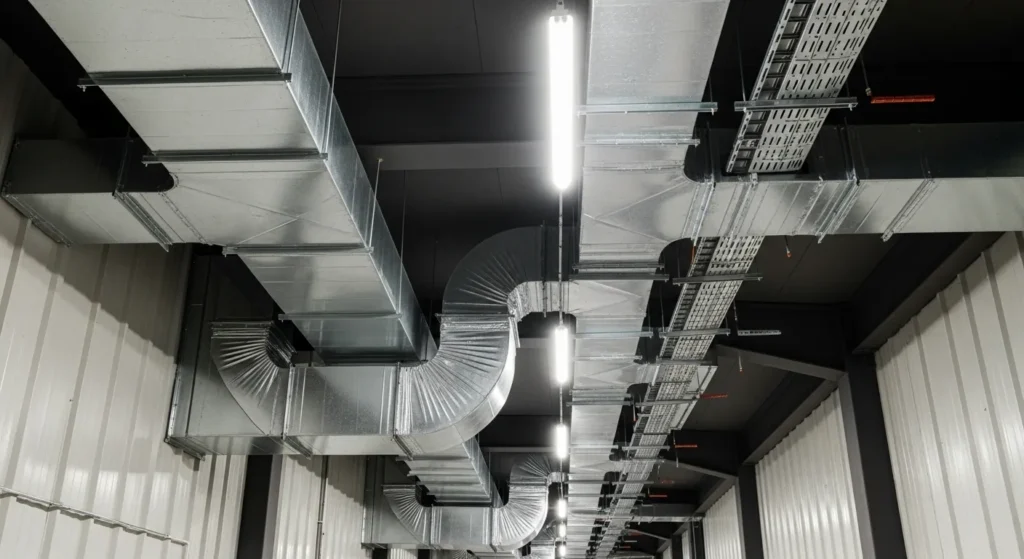
Commercial buildings are designed around interconnected infrastructure. HVAC systems serve multiple zones. Plumbing runs vertically through pipe chases. Roof assemblies span large surface areas. Elevator shafts, stairwells, and utility risers create direct pathways for air and moisture movement. These connections allow humidity, condensation, and water intrusion to spread quietly and continuously.
Because of this, mold is often discovered late. The visible growth may appear in one location, while the true source exists elsewhere in the building. By the time signs are noticed, the underlying moisture problem may have been active for months or even years.

The Primary Causes of Mold in Commercial Buildings
Mold in commercial buildings is rarely caused by a single incident. It typically develops from ongoing moisture tied to building systems, design choices, and daily operations that allow water or humidity to persist unnoticed.
- HVAC Systems and Airflow Design
Large HVAC systems can trap condensation inside ductwork and air handlers. Poor air balancing or drainage allows moisture to linger, enabling mold to grow and spread across multiple floors through shared air systems.
- Roof Systems and Building Envelope Failures
Flat or low-slope roofs are prone to pooling water. Small failures can saturate insulation layers, allowing mold to grow unseen for long periods before interior damage becomes visible.
- Plumbing Density and Shared Infrastructure
Vertical plumbing stacks, pipe chases, and fire suppression systems allow leaks to migrate across floors. Shared responsibility often delays repairs, allowing hidden moisture to support widespread mold growth.
- Operational Moisture Sources
Certain businesses generate constant humidity through normal use. Restaurants, gyms, data centers, and warehouses produce heat and moisture that, without proper ventilation, gradually create mold-friendly conditions.
How Moisture and Mold Spread in Commercial Buildings
Moisture in commercial buildings rarely stays in one place. Once water enters a structure, it can travel through connected systems and concealed pathways, allowing mold to develop far from the original source.
- Vertical Migration Through Floors: Water can move downward through slab penetrations, plumbing chases, and structural openings, allowing moisture from upper levels to affect lower floors
- Lateral Movement Behind Walls and Ceilings: Moisture spreads sideways along insulation, framing, and ceiling voids, often reaching areas that appear dry from the occupied space.
- Capillary Action: Porous materials such as drywall, concrete, and insulation wick moisture upward or sideways, sustaining mold growth even after visible water is gone.
- Air Pressure Differentials: HVAC-driven pressure changes can pull humid air into wall cavities and ceilings, where condensation forms on cooler surfaces
- Elevator Shafts and Stairwells: These vertical pathways act as channels for air and moisture, allowing mold-related conditions to spread between floors. Mold visible on one floor may originate several floors above or below.
Why Mold in Commercial Buildings Is Harder to Detect
One reason mold is harder to detect in commercial buildings is that commercial buildings often provide many places where mold can grow without being seen. Another problem is, mold can grow for months or years before it is discovered. By the time visible signs appear, the underlying problem is often well established.
- Drop Ceilings: Suspended ceilings conceal leaks, condensation, and insulation saturation, allowing mold to grow unnoticed above occupied areas.
- Deep Wall Cavities: Thick walls and layered assemblies trap moisture where it cannot be easily inspected.
- Mechanical Rooms: These spaces often contain chronic humidity and limited ventilation, making them common but overlooked mold sources.
- Limited Visual Access: Many moisture-prone areas are rarely entered or monitored during routine operations.
- Infrequent Inspection Cycles: Commercial maintenance schedules may miss slow-developing moisture issues.
Early Warning Signs of Mold in Commercial Buildings
Early warning signs of mold in commercial buildings often appear before visible growth is present. Persistent musty odors, recurring condensation on windows or HVAC components, and uneven humidity between floors can indicate hidden moisture issues. Occupant complaints such as respiratory irritation, headaches, or symptoms that improve when leaving the building are also common indicators. Addressing these signals early helps prevent widespread contamination and costly disruption.
- Persistent Odors
- Repeated Humidity Complaints
- Ceiling Tile Staining Patterns
- HVAC-Related Symptoms
- Employee Health Complaints
Health, Legal, and Business Risks of Commercial Mold
Mold in commercial buildings carries risks that extend beyond the physical structure. Health concerns, regulatory obligations, and business impacts often overlap, increasing both urgency and complexity.
Workplace Health and Exposure Concerns
- Employee Complaints: Occupants may report headaches, respiratory irritation, fatigue, or worsening allergies linked to indoor air quality.
- Sick Building Syndrome: Ongoing exposure to poor indoor conditions can affect productivity, attendance, and overall workplace comfort.
- OSHA Relevance: Employers have a duty to provide a safe work environment, and unresolved mold-related conditions can raise compliance concerns.
Legal and Regulatory Risk
- Disclosure Requirements: Certain conditions must be disclosed to tenants, employees, or buyers depending on jurisdiction and severity.
- Licensing Thresholds: Many states require licensed professionals once mold exceeds specific size or impact thresholds.
- Assessment vs Remediation Separation: Regulations often require independent assessment to verify conditions and clearance.
- Responsibility Disputes: Disagreements over cause and responsibility can delay action and increase exposure.
Business Interruption and Financial Risk
- Shutdown: Affected areas may need to be closed during investigation or remediation.
- Night or Weekend Work: Remediation is often scheduled outside business hours to limit disruption, increasing costs.
- Reputational Damage: Mold concerns can impact customer confidence, especially in public-facing businesses.
- Tenant Disputes: Mold-related issues frequently lead to lease conflicts or claims.
Who Is Responsible for Mold in Commercial Buildings?
Responsibility for mold in commercial properties is not always straightforward. It often depends on lease terms, building systems, and where the moisture originates.
- Lease Language: Commercial leases typically define maintenance and repair responsibilities, including moisture-related issues.
- Common Area Responsibility: Property owners are usually responsible for shared spaces, mechanical systems, and building envelopes.
- Tenant-Caused vs Building-Caused Mold: Mold linked to tenant activities may be handled differently than mold caused by structural or system failures.
- Shared Liability Scenarios: In many cases, responsibility is divided, requiring coordination rather than isolated action.
Why Professional Assessment Is Critical in Commercial Properties
Commercial mold problems cannot be reliably addressed through surface cleaning or visual inspection alone. Identifying the true source is essential to preventing recurrence and managing risk.
- Why Surface Cleaning Fails: Cleaning visible mold does not address hidden moisture or underlying causes.
- Why Source Tracing Matters: Moisture often originates far from where mold is visible.
- Building-Wide vs Room-Level Assessment: Commercial properties require evaluation of interconnected systems, not isolated spaces.
- Documentation and Compliance Protection: Professional assessments provide records that support regulatory compliance and liability management.
Important distinction: Assessment and remediation are separate processes, each serving different technical and legal purposes.
What to Do If Mold Is Suspected in a Commercial Building
A measured response helps prevent escalation while protecting occupants and stakeholders.
- Limit Disturbance: Avoid disturbing suspected areas, which can release spores into the air.
- Document Symptoms and Conditions: Record odors, visible damage, humidity issues, and occupant complaints.
- Review Lease and Responsibilities: Understand maintenance and reporting obligations.
- Seek Qualified Assessment: A professional evaluation helps identify scope and source.
- Avoid Unlicensed Cleanup: Improper handling can worsen conditions and create compliance issues.
Commercial Mold Is a Systems Problem: Final Thoughts
Mold in commercial buildings involves the same organisms found elsewhere, but the consequences are different. Shared systems, building scale, and legal responsibility define the risk.
Early detection, proper assessment, and an understanding of how moisture moves through commercial structures are critical to preventing small issues from becoming widespread problems. Commercial mold is rarely a single failure. It is usually the result of interconnected building systems and delayed visibility, which is why understanding the full environment matters.
Frequently Asked Questions about Mold in Commercial Buildings
What causes mold in commercial buildings?
Mold in commercial buildings is caused by excess moisture combined with organic materials and limited drying time. Common sources include HVAC condensation, plumbing leaks in vertical risers, roof failures, poor drainage, and humidity imbalance across large zones.
Why does mold spread faster in commercial buildings than homes?
Commercial buildings are designed with interconnected systems. Shared HVAC zones, pipe chases, stairwells, and elevator shafts allow air and moisture to move vertically and horizontally, spreading mold conditions beyond the original source.
Can HVAC systems spread mold in commercial buildings?
Yes. HVAC systems can distribute mold spores and moisture if condensation, contaminated ductwork, or improper filtration is present. One affected air-handling unit can impact multiple floors or tenant spaces.
What are early signs of mold in a commercial building?
Early signs include persistent musty odors, uneven humidity, recurring condensation on windows or vents, staining near ceiling tiles, and occupant complaints of irritation that improve when leaving the building.
Is visible mold always required for a mold problem to exist?
No. Mold often develops inside wall cavities, above ceilings, below flooring, or within HVAC systems. Odors, moisture readings, and air quality complaints frequently appear before visible growth.
How is mold detected in commercial buildings?
Detection typically involves a combination of visual inspection, moisture mapping, HVAC assessment, and targeted air or surface sampling when appropriate. Testing supports findings but does not replace building diagnostics.
Are mold risks higher in older commercial buildings?
Older buildings can have higher risk due to aging materials, outdated HVAC designs, and hidden moisture pathways. However, newer buildings can also experience mold if ventilation, drainage, or humidity control is poorly designed.
Can mold affect employee health or productivity?
Yes. Mold-related indoor air quality issues may contribute to respiratory irritation, allergy symptoms, headaches, and discomfort, which can affect absenteeism and productivity, especially in large or poorly ventilated spaces.
Is mold remediation required by law in commercial buildings?
Requirements vary by jurisdiction, but property owners are generally responsible for maintaining safe indoor environments. Mold remediation may be required when conditions pose health risks or violate building, health, or lease standards.
When should a commercial mold professional be contacted?
A professional should be contacted when mold is suspected beyond a small, isolated area, when moisture sources are unclear, when HVAC systems may be involved, or when occupants report ongoing symptoms linked to the building.