
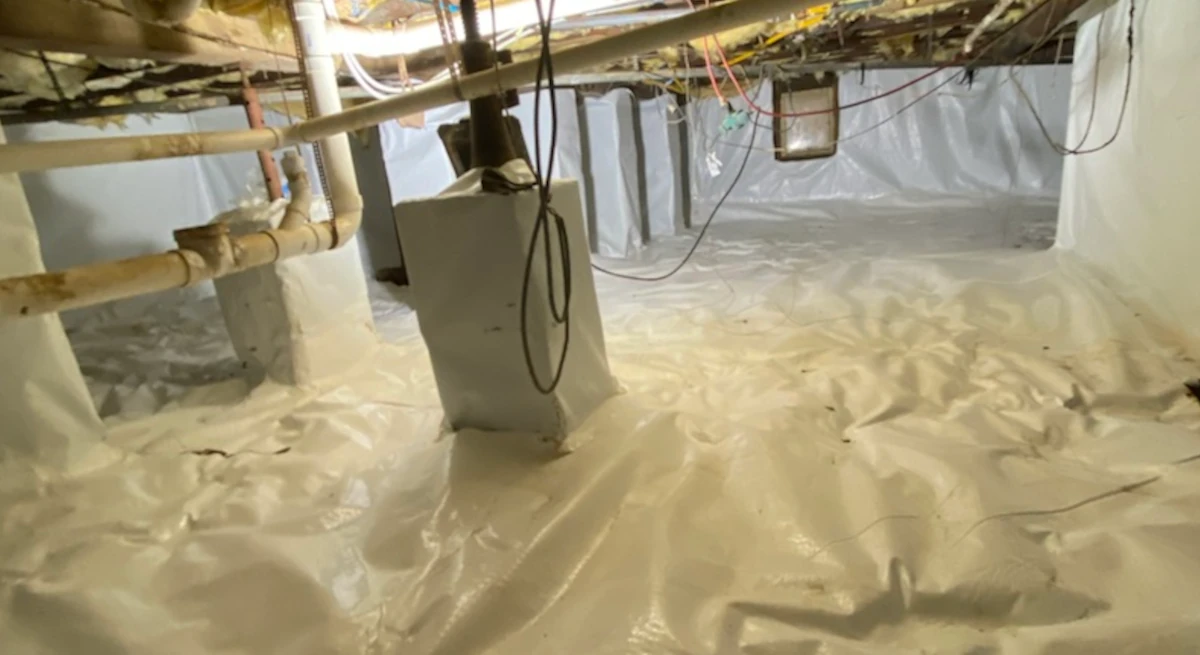
What is a vapor barrier in a crawl space? Well, that one is easy! A vapor barrier is a material installed to slow or prevent the movement of moisture vapor through a building assembly. In crawl spaces, it is typically installed directly over exposed soil and sometimes extended up foundation walls to reduce moisture intrusion at its source. While the term “vapor barrier” is commonly used, many crawl space systems technically function as vapor retarders, meaning they allow extremely limited vapor transmission rather than blocking it entirely.
From a homeowner’s perspective, the distinction is less important than the function. Whether classified as a barrier or retarder, the goal is the same: to stop ground moisture from entering the crawl space environment and creating conditions that allow mold and structural damage to develop.
Common vapor barrier materials include polyethylene plastic sheeting, reinforced or woven barriers for added durability, and rigid materials used in full crawl space encapsulation systems. The material choice impacts longevity, performance, and suitability for different crawl space conditions.
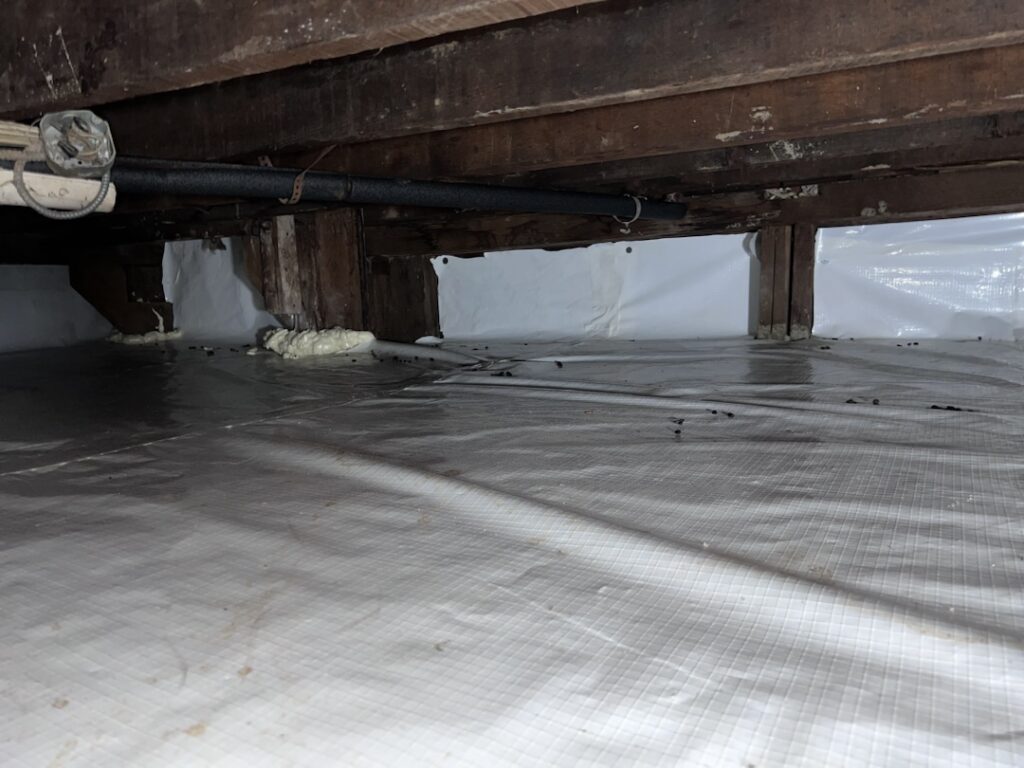
How a Vapor Barrier Works
Instead of thinking about moisture as “water leaks,” it helps to understand how moisture actually behaves under a home.
Here’s what’s happening beneath your crawl space:
- Soil Constantly Releases Moisture Vapor: Even when the ground appears dry, moisture naturally moves upward through a process called vapor diffusion. This is intensified in areas with high humidity or shallow groundwater.
- That Vapor Fills the Crawl Space Air: In an unprotected crawl space, moisture accumulates in the air and is absorbed by wood framing, insulation, and subflooring.
- A Vapor Barrier Stops the Process at the Source: By sealing off the soil surface, a vapor barrier prevents moisture from evaporating into the crawl space in the first place.
This source-control approach is far more effective than trying to remove moisture after it has already entered the structure and begun causing damage.
Why Crawl Space Vapor Barriers Matter
Mold growth in crawl spaces is almost always tied to excess moisture. When humidity remains elevated for long periods, mold spores that naturally exist in the environment can settle and grow on wood, insulation, and other organic materials. Once established, mold can spread quickly and often becomes difficult to eliminate without professional remediation.
A properly installed vapor barrier reduces one of the most consistent moisture sources beneath a home. By keeping crawl space humidity in check, it significantly lowers the risk of mold growth and helps prevent the cycle of recurring contamination.
Structural Protection
Wood framing in crawl spaces is designed to remain dry. When exposed to prolonged moisture, it can begin to rot, weaken, and lose structural integrity over time. Left unaddressed, this deterioration can lead to sagging floors, compromised joists, and repair costs that extend well beyond the crawl space itself.
Vapor barriers help protect these structural components by maintaining a drier, more stable environment. By limiting moisture exposure, they slow deterioration and extend the lifespan of both wood framing and foundation materials.
Indoor Air Quality Improvements
Air from the crawl space does not stay confined below the home. Due to pressure differences and natural air movement, often referred to as the stack effect, crawl space air is pulled upward into living areas. When that air is damp or mold-contaminated, it directly affects indoor air quality throughout the home.
By keeping crawl space air drier and cleaner, vapor barriers help reduce musty odors, airborne mold spores, and other contaminants that can impact comfort and health. This is especially important for households with allergies, asthma, or respiratory sensitivities.
Energy Efficiency Benefits
Excess moisture in a crawl space makes it harder for a home to maintain stable indoor temperatures. Damp air requires more energy to heat and cool, forcing HVAC systems to run longer and work harder to maintain comfort. Over time, this leads to higher utility bills and increased wear on mechanical systems.
A vapor barrier helps stabilize crawl space conditions, allowing insulation and HVAC systems to perform more efficiently. Many homeowners notice improved comfort and reduced energy costs once moisture levels are properly controlled.
Pest & Electrical Safety
Moist crawl spaces create ideal conditions for pests such as insects, rodents, and termites. These pests are attracted to damp soil, decaying wood, and humid environments, and once established, they can cause additional structural and health concerns.
Excess moisture can also contribute to corrosion around electrical wiring and connections in the crawl space. By keeping the area dry, vapor barriers help deter pests naturally and reduce moisture-related risks to electrical systems.
Where Vapor Barriers Go in Your Crawl Space
The most common vapor barrier installation involves placing the material directly over exposed soil in the crawl space. The barrier is overlapped at seams, sealed where possible, and extended slightly up the foundation walls to reduce moisture intrusion from the ground. This approach provides effective moisture control for many homes.
In more advanced systems, vapor barriers may also be installed along foundation walls as part of a crawl space encapsulation strategy. Encapsulation seals the entire crawl space, including walls and vents, creating a controlled environment that offers a higher level of moisture protection. While encapsulation is not always necessary, it can be the best solution for homes with persistent moisture issues.
Thickness & Material Choices
Vapor barrier thickness is measured in mils, and thickness plays a major role in durability and performance. Thinner materials may tear easily during installation or maintenance, while thicker barriers are better suited for long-term use and high-traffic crawl spaces.
In general, heavier-duty or reinforced barriers are recommended when crawl spaces are frequently accessed, have uneven or rocky soil, or are part of a full encapsulation system. Choosing the right thickness and material ensures the vapor barrier remains effective over time rather than becoming a short-term fix.
Vapor Barrier vs. Crawl Space Encapsulation (and Other Options)
A standard vapor barrier focuses on controlling ground moisture, which is often the primary source of humidity in a crawl space. By covering exposed soil, it significantly reduces moisture evaporation and helps stabilize crawl space conditions. For many homes, this level of protection is enough to prevent mold growth and structural moisture damage.
Crawl space encapsulation goes a step further by sealing the entire crawl space, including floors, walls, and vents. This creates a closed, conditioned environment that offers the highest level of moisture control and long-term performance. While encapsulation provides superior results, it also comes at a higher cost and is typically recommended only when moisture problems are persistent or severe.
The right choice depends on the severity of moisture intrusion, crawl space design, and long-term goals. A vapor barrier is often a practical, cost-effective solution, while encapsulation is best suited for homes with ongoing humidity issues that cannot be resolved through ground coverage alone.
Other Moisture Solutions (Dehumidifiers & Drainage)
In some crawl spaces, a vapor barrier alone is not enough to fully manage moisture. When groundwater intrusion, surface water runoff, or high ambient humidity is present, additional waterproofing systems may be required to maintain stable conditions.
Dehumidifiers help control airborne moisture but do not address water entering from the ground or foundation. Drainage systems, such as interior drains or sump pumps, manage active water intrusion before it can raise humidity levels. These solutions are most effective when used in combination with a vapor barrier, not as replacements for it.
Do You Need a Vapor Barrier? (Signs & Assessments)
Certain warning signs strongly suggest that a crawl space is retaining excess moisture. Standing water, damp soil, musty odors, visible mold, or persistent condensation on framing all point to moisture migrating from below the home. The presence of pests or decaying wood can also indicate long-term humidity problems.
Even when these issues are subtle, they often worsen over time. Early intervention with proper moisture control can prevent more extensive damage and costly repairs later on.
Climate & Local Code Considerations
Climate plays a major role in crawl space moisture behavior. Homes in humid, coastal, or high–water-table regions experience more consistent moisture pressure from the ground, increasing the need for vapor barriers. In colder climates, seasonal temperature differences can still lead to condensation and moisture buildup during certain times of the year.
Building codes and best practices may also influence vapor barrier requirements. While not every jurisdiction mandates crawl space vapor barriers, they are widely recognized as a best-practice solution for moisture control in most regions.
DIY vs. Professional Assessment
While some homeowners attempt to install vapor barriers themselves, not all crawl spaces are suitable for DIY solutions. Limited access, uneven ground, existing moisture damage, or structural concerns can make proper installation difficult without experience.
A professional crawl space assessment helps identify moisture sources, evaluate existing conditions, and determine whether a vapor barrier alone is sufficient or if additional systems are needed. In many cases, professional guidance prevents under-installation or misapplication that could limit long-term effectiveness.
Vapor Barrier Maintenance and Lifespan
A properly installed vapor barrier can last many years, but it should not be considered maintenance-free. Periodic inspections help ensure the material remains intact, properly positioned, and free of damage from pests or foot traffic. Minor repairs made early can prevent larger issues later on.
Seasonal checks are especially important after heavy rain, flooding, or extreme temperature changes. Monitoring crawl space conditions over time helps ensure the vapor barrier continues to perform as intended and provides long-term protection against moisture and mold.
Why Vapor Barriers Matter for Long-Term Moisture Control: Final Thoughts
A crawl space vapor barrier is not a cosmetic upgrade or an optional add-on—it is a foundational moisture-control measure. By blocking ground moisture at its source, a properly installed vapor barrier helps protect the structure of the home, reduce the risk of mold growth, and stabilize indoor air quality and energy performance. When moisture is controlled below the home, many of the problems homeowners experience above it begin to resolve.
The right solution depends on crawl space conditions, climate, and how moisture is entering the space. Some homes benefit from a simple ground vapor barrier, while others require additional drainage or full encapsulation. The most effective approach starts with identifying the moisture source, selecting the correct barrier type and thickness, and ensuring it is installed correctly for long-term performance.
Frequently Asked Questions About Sump Pump Installation and Replacement Costs
Is a vapor barrier required by building code?
Building code requirements vary by location, but many jurisdictions either require or strongly recommend vapor barriers in crawl spaces, especially in humid or moisture-prone regions. Even where not explicitly required, vapor barriers are widely recognized as a best-practice solution for moisture control. Homes without them often experience preventable mold and structural issues over time.
Can I install a vapor barrier myself?
In simple crawl spaces with good access and minimal moisture issues, some homeowners choose to install vapor barriers themselves. However, improper material selection, poor sealing, or incomplete coverage can significantly reduce effectiveness. Crawl spaces with standing water, uneven soil, low clearance, or existing mold problems are typically better handled by professionals.
Will a vapor barrier solve all moisture problems?
A vapor barrier addresses ground moisture, which is one of the most common crawl space moisture sources. It does not stop bulk water intrusion from foundation leaks, plumbing issues, or poor exterior drainage. In those cases, vapor barriers work best when combined with drainage systems or other moisture-control solutions.
What is the best mil thickness for my home?
Thicker barriers provide better durability and longer service life. Thin materials may tear or shift over time, especially in crawl spaces that require occasional access. Many professionals recommend heavier-duty or reinforced barriers for long-term reliability, particularly when moisture exposure is ongoing or when the barrier is part of a larger encapsulation system.
Can mold grow behind a vapor barrier?
Mold does not grow on clean plastic itself, but it can grow on organic materials if moisture is trapped improperly. This is why correct installation matters. When a vapor barrier is installed over clean, dry soil and sealed correctly, it reduces moisture rather than trapping it. Problems typically arise only when barriers are installed over wet conditions or without addressing existing moisture sources.
How long does a crawl space vapor barrier last?
A properly installed vapor barrier can last many years, but lifespan depends on material thickness, crawl space traffic, and moisture conditions. Higher-quality, reinforced barriers typically last significantly longer than thin plastic sheets, especially when seams and edges are well sealed.
Does a vapor barrier help with musty crawl space odors?
Yes. Musty odors often come from moisture and microbial activity in the crawl space. By reducing ground moisture evaporation, a vapor barrier can noticeably improve air quality and reduce odors that travel upward into the living space.
Will a vapor barrier affect indoor air quality inside the home?
Crawl spaces influence the air inside a home more than many homeowners realize. By limiting moisture and damp conditions below the house, a vapor barrier can help reduce humidity, odors, and airborne contaminants that may otherwise circulate indoors.
Can a vapor barrier be installed in an existing home?
Yes. Vapor barriers are commonly installed in existing homes and do not require new construction. Installation is typically customized to the crawl space layout, access points, and moisture conditions present at the time of installation.
Is a crawl space vapor barrier the same as full encapsulation?
No. A vapor barrier is one component of crawl space moisture control. Full encapsulation includes sealing walls, vents, and sometimes adding dehumidification or drainage systems. Some homes benefit from a vapor barrier alone, while others require a more comprehensive approach.