

Mold doesn’t appear in houses by accident. It grows when specific conditions allow moisture to linger long enough for spores to take hold and spread. That’s why mold problems tend to follow patterns rather than random events.
Many homeowners assume mold is a cleanliness issue, but that framing misses the real cause. Mold spores are always present in indoor air; growth only happens when moisture creates the right environment. Understanding that distinction is key to identifying real risk.
This guide explains what causes mold in houses, including the less obvious conditions that allow it to grow unnoticed. By the end, you’ll understand why mold shows up where it does, and why some homes struggle with it repeatedly while others don’t.
Noticing Mold in Your Long Island Home? Contact Us to Schedule a Free Mold Inspection! Our Expert Opinion is Always Free!
The Root Cause of Mold in Houses: Moisture
At the core of every mold problem in a house is one factor: excess moisture that isn’t removed quickly enough. Without moisture, mold cannot grow, regardless of how many spores are present.
Once materials stay damp for as little as 24-48 hours, mold can begin to develop. Common building materials like drywall, wood, insulation, fabrics, and dust provide more than enough organic matter for growth when moisture is present.
This is why all mold ultimately traces back to moisture. As explained earlier, it’s not about cleanliness or the age of the home. It’s about how water enters, accumulates, and fails to dry.
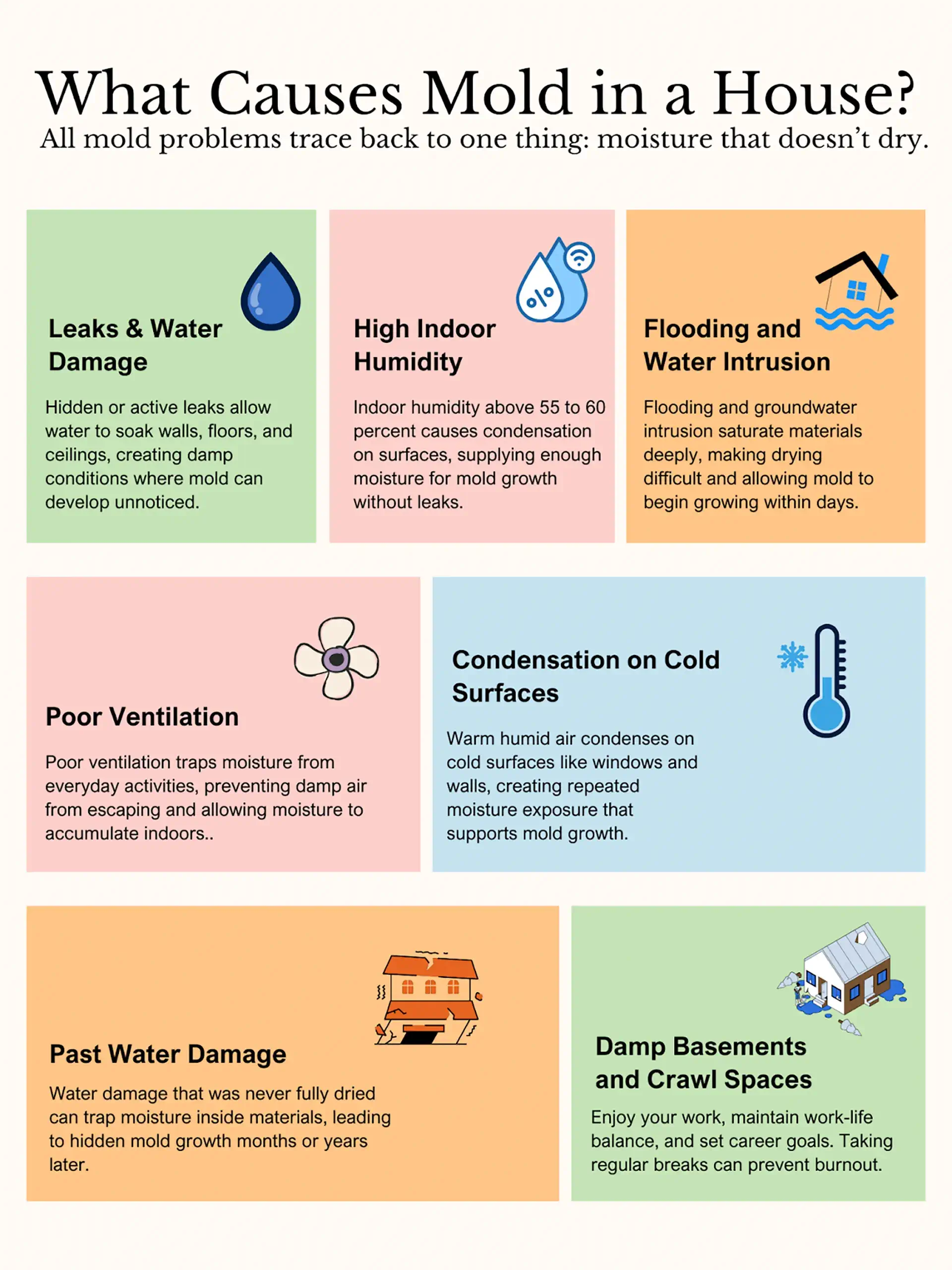
Common Causes of Mold in Houses
While moisture is the underlying cause, it enters and accumulates in homes in several predictable ways. These causes often overlap, which is why mold problems can feel confusing or persistent even after a single issue is addressed.
The sections below break down the most common sources of indoor moisture and explain how each one creates conditions that allow mold to grow.
Plumbing, Roof, and Window Leaks
Leaks are one of the most direct and common causes of mold in houses, especially when they occur out of sight. As discussed earlier, this is one of the clearest ways moisture enters a home and remains trapped long enough for mold to develop.
Slow leaks are often more dangerous than active ones because they can go unnoticed for long periods. Moisture from these leaks can saturate building materials behind walls or floors, allowing mold to grow before any visible damage appears.
Common leak sources include:
- Plumbing pipes and fittings inside walls or under sinks
- Appliances such as dishwashers, refrigerators, and washing machines
- Roof damage, flashing failures, or missing shingles
- Window and door frames with failed seals or flashing
High Indoor Humidity
Mold can grow in homes with no visible leaks when indoor humidity stays consistently too high. Even without a direct water source, moisture can accumulate through humidity alone and create the conditions mold needs.
When indoor humidity exceeds 55-60%, condensation can form on walls, windows, and other cooler surfaces. Climate, daily household activities, and poor ventilation all contribute to this type of moisture buildup.
Common contributors to high indoor humidity include:
- Humid climates or seasonal weather patterns
- Showering, cooking, and laundry without adequate ventilation
- Poor airflow or ineffective exhaust fans
- Tightly sealed homes that trap moist air
Flooding and Water Intrusion
Flooding and water intrusion create ideal conditions for mold because they saturate materials faster than they can dry. As noted earlier, mold can begin growing within days if building materials remain wet.
Water from storms, rising groundwater, or foundation seepage often penetrates deeper than surface drying can reach. If drying is delayed or incomplete, moisture can remain trapped in walls, flooring, and structural components long after the visible water is gone.
Common sources of water intrusion include:
- Flooding from heavy rain or storm surge
- Groundwater seepage into basements or crawl spaces
- Foundation cracks or poor exterior drainage
- Improperly sealed below-grade walls
Poor Ventilation
Poor ventilation allows moisture from normal household activities to accumulate instead of escaping. As explained earlier, when moisture has nowhere to go, it creates conditions that support mold growth even without leaks or flooding.
Everyday activities release moisture into the air, and without adequate airflow, that moisture settles into surfaces and enclosed spaces. Over time, repeated exposure allows dampness to persist long enough for mold to develop.
High-risk areas with poor airflow include:
- Bathrooms without effective exhaust fans
- Kitchens where cooking moisture isn’t vented outdoors
- Attics with blocked or inadequate ventilation
- Closets, especially those on exterior walls
Condensation on Cold Surfaces
Condensation occurs when warm, humid air meets cold surfaces, creating repeated moisture exposure. This is another way moisture forms even without leaks or visible water intrusion.
When condensation happens regularly, surfaces may appear dry between cycles while still absorbing moisture over time. These repeated wet-dry patterns are especially favorable for mold growth.
Common condensation surfaces include:
- Windows and window frames
- Exterior walls
- Uninsulated pipes and ductwork
- Cold corners of rooms
Past Water Damage That Was Never Fully Dried
Mold often appears months or even years after a water event that was never fully dried. Even when water damage seems resolved, moisture can remain trapped inside building materials.
Cosmetic repairs like repainting or replacing surface materials don’t address moisture deep within walls, floors, or insulation. Over time, hidden dampness creates conditions that allow mold to grow out of sight.
Examples of overlooked past water events include:
- Minor flooding or overflow that dried on the surface only
- Roof or plumbing leaks repaired without proper drying
- Water damage hidden behind drywall or flooring
Damp Basements and Crawl Spaces
Basements and crawl spaces are especially prone to mold because they’re naturally cooler and closer to groundwater. As explained earlier, these areas tend to collect moisture even in otherwise dry homes.
Ground contact, limited airflow, and drainage issues allow damp conditions to persist. Without proper moisture control, these spaces can feed mold growth that eventually affects the rest of the house.
Common moisture contributors in these areas include:
- Groundwater seepage
- Poor exterior drainage or grading
- Missing or damaged vapor barriers
- Cooler temperatures that slow drying
Why Mold Often Goes Undetected in Houses
Mold often grows in places homeowners don’t regularly see, which is why it can spread unnoticed. Early growth typically occurs behind finishes or in enclosed spaces where moisture accumulates quietly.
Because mold doesn’t always produce immediate visual signs, problems are often discovered only after odors, staining, or structural changes appear.
Common hidden growth locations include:
- Inside walls and ceilings
- Behind cabinets or large furniture
- Under flooring or carpets
- Inside attics, crawl spaces, and HVAC systems
What Causes Mold in Houses: Final Thoughts
Understanding what causes mold in houses comes down to recognizing one simple truth: without persistent moisture, mold cannot grow. Every cause discussed, from leaks to humidity to ventilation, ultimately ties back to how moisture enters, accumulates, and fails to dry.
When moisture is managed effectively, mold struggles to survive. Early awareness of these conditions helps homeowners recognize risk sooner, reducing the chance of larger, more disruptive problems later.
Don’t Let Mold Ruin Your Long Island Home and Endanger Your Health! Contact Us for a Free Mold Testing Now!
Frequently Asked Questions About What Causes Mold in Houses:
What is the main cause of mold in houses?
The primary cause of mold in houses is excess moisture that isn’t removed quickly enough. Mold spores are always present, but growth only occurs when moisture lingers for 24-48 hours or longer.
Can mold grow in a clean house?
Yes. Mold growth has nothing to do with cleanliness. Even spotless homes can develop mold if moisture builds up due to leaks, humidity, condensation, or poor ventilation.
How long does it take for mold to start growing after moisture appears?
Mold can begin growing in as little as 24 to 48 hours if materials like drywall, wood, or insulation remain damp.
Can high humidity alone cause mold, even without leaks?
Yes. Consistently high indoor humidity (above 55-60%) can cause condensation on surfaces, which creates enough moisture for mold to grow, even when there are no visible leaks.
Why do slow leaks cause more mold than obvious leaks?
Slow leaks often go unnoticed for long periods, allowing moisture to soak deep into walls or floors. This creates ideal conditions for hidden mold growth before any visible damage appears.
Why are basements and crawl spaces so prone to mold?
Basements and crawl spaces are cooler, closer to groundwater, and often poorly ventilated. These conditions allow moisture to persist, making them some of the highest‑risk areas for mold growth in a home.
Can mold grow from past water damage that looks “fixed”?
Yes. If water damage wasn’t fully dried at the time, moisture can remain trapped inside building materials. Mold may appear months or even years later, long after cosmetic repairs are done.
Why does mold often go undetected in houses?
Mold commonly grows in hidden areas such as inside walls, under flooring, behind cabinets, or in attics and HVAC systems. These areas aren’t regularly inspected, allowing mold to spread quietly.
Does poor ventilation really contribute to mold growth?
Absolutely. Poor ventilation traps moisture from everyday activities like showering, cooking, and laundry. Without airflow, that moisture settles into surfaces and creates conditions mold needs to grow.
If moisture is controlled, can mold still grow?
No. Without persistent moisture, mold cannot survive. Controlling how water enters, accumulates, and dries is the single most effective way to prevent mold growth.