
Did you know a faint musty smell in your basement could be the first sign of a hidden threat? Basement mold thrives in damp, dark conditions, leading to serious health risks like respiratory issues and structural damage, as confirmed by EPA studies. In this comprehensive guide, discover the common causes of basement mold, key detection signs, typical basement mold removal cost, effective prevention strategies, and when to call in professional mold remediation services to protect your home.
Don’t wait for the problem to worsen-take action now to safeguard your health and property from basement mold in your home.
What Causes Mold Growth in Basements?
In our experience inspecting over 200 basements, most mold growth cases trace back to basement moisture sources like leaks, high humidity above 60% RH, and poor drainage. These issues create ideal conditions for aspergillus mold, penicillium mold, and stachybotrys chartarum to thrive. Addressing them early prevents health risks such as mold allergies and respiratory issues.
Water intrusion from foundation cracks often starts the problem. Rainwater seeps through tiny fissures in concrete walls, especially under hydrostatic pressure. Use a moisture meter to check readings; safe levels stay below 15% WME.

High relative humidity above 60% fuels fungal growth in damp basements. Condensation forms on cold surfaces below 50 degrees F, like unfinished concrete walls. An infrared camera can detect hidden wet spots behind insulation.
- Poor gutter maintenance allows water to pool near foundations, worsening moisture problems.
- Plumbing leaks from pipes or appliances create steady drips in hidden areas.
- Flooding or sewage backup introduces massive water damage, spreading mold spores quickly.
Experts recommend regular mold inspections to identify these top causes. Proper humidity control with a dehumidifier keeps levels in check. Combine this with gutter cleaning and downspout extensions for effective mold prevention.
How Can You Tell If Your Basement Has Mold?
We’ve found that many homeowners miss early basement mold signs beyond visible growth. The musty odor from compounds like guaiacol becomes detectable at very low levels of mycotoxins. This smell often lingers in damp basements, signaling hidden mold behind walls or in HVAC systems. Check corners and under stairs first for clues.
Use this detection checklist to spot mold growth early. Addressing signs quickly prevents health risks from mold spores and mycotoxins. Each item includes practical tips and photo example descriptions. If you see multiple signs, consider a professional mold inspection.
8 Key Signs of Basement Mold
We’ve found that many homeowners miss early basement mold signs beyond visible growth. The musty odor from compounds like guaiacol becomes detectable at very low levels of mycotoxins. This smell often lingers in damp basements, signaling hidden mold behind walls or in HVAC systems. Check corners and under stairs first for clues.
Use this detection checklist to spot mold growth early. Addressing signs quickly prevents health risks from mold spores and mycotoxins. Each item includes practical tips and photo example descriptions. If you see multiple signs, consider a professional mold inspection.
- Musty Odor: A persistent earthy smell from guaiacol compounds produced by fungi like stachybotrys chartarum or aspergillus mold. Sniff near concrete walls or stored cardboard boxes; photo example shows a damp corner with visible haze.
- Black or Green Spots: Discoloration on walls exceeding 1 square foot indicates serious black mold. Look for fuzzy patches on drywall; photo depicts clustered green spots on unfinished basement concrete.
- Peeling Paint or Warped Drywall: Moisture causes bubbling and curling from water damage. Check behind furniture; photo illustrates yellowed, peeling paint with underlying black streaks.
- Efflorescence: White, powdery mineral deposits on concrete from moisture evaporation. Wipe it off to reveal potential mold underneath; photo shows crusty white buildup on foundation walls.
- Health Symptoms: Coughing, eye irritation, or sinus issues after time in the basement point to mold allergies or respiratory problems. Track if symptoms fade upstairs; no photo, but note patterns in family members.
- HVAC Filter Discoloration: Black or gray streaks on filters from circulating mold spores. Inspect monthly; photo example displays a filthy filter with green fuzz.
- Moisture Meter Reading Over 17% WME: Test walls with a meter for high relative humidity. Dry materials read under 15%; photo shows meter probing drywall at 22%.
- Infrared Camera Cold Spots: Cool areas indicate hidden moisture fostering fungal growth. Scan during inspections; photo reveals blue cold zones behind insulation.
Noticing Signs of Mold in Your Long Island Home? Contact Us for a Free Mold Inspection!
What Are the Health Risks Associated With Basement Mold?
Basement mold is more than an air-quality nuisance. It is a documented indoor environmental hazard that can affect respiratory health, immune response, and overall well-being. Damp basements with poor ventilation allow mold spores and mycotoxins to accumulate, increasing exposure the longer the issue goes untreated.
Certain molds, including stachybotrys chartarum, produce mycotoxins that irritate airways and can trigger systemic symptoms. Health impacts depend on exposure duration, mold type, and individual susceptibility, but risk rises quickly in enclosed basement environments.
Common Health Risks Associated With Basement Mold Include:
- Allergic Rhinitis: Sneezing, congestion, runny nose, and itchy eyes caused by inhaling airborne mold spores.
- Asthma Exacerbation: Increased coughing, wheezing, chest tightness, and shortness of breath due to airway irritation.
- Hypersensitivity Pneumonitis: An immune-driven lung reaction from repeated exposure, sometimes referred to as Monday fever.
- Mycotoxicosis: Fatigue, headaches, nausea, dizziness, and flu-like symptoms linked to toxin-producing molds.
- Chronic Sinusitis: Persistent sinus infections, pressure, and inflammation from ongoing fungal exposure.
- Dermatitis: Itchy rashes or skin irritation following direct contact with mold-contaminated surfaces.
- Cognitive Impairment: Brain fog, memory issues, and difficulty concentrating reported with prolonged exposure.
Populations at Higher Risk Include:
- Infants and Children: Developing respiratory systems are more sensitive to airborne contaminants.
- Older Adults: Reduced immune function increases vulnerability.
- Immunocompromised Individuals: Higher risk of infection and severe reactions.
- Pregnant Women: Greater concern for complications from sustained exposure.
Public health guidance emphasizes minimizing exposure by keeping mold spores at non-detectable levels. Effective prevention includes humidity control, leak repair, and professional mold remediation. Addressing basement mold early protects indoor air quality and reduces the likelihood of long-term health effects.
How Much Does Basement Mold Removal Cost?
Basement mold removal cost varies widely based on how much mold is present, where it’s located, and how complex the cleanup is. Small surface problems can be cheap and annoying. Large or hidden infestations get expensive fast, especially when HVAC systems, drywall, or structural materials are involved.
Most homeowners underestimate cost because the real damage is often behind walls or under flooring. The table below breaks pricing down clearly, without the usual contractor fog.
Basement Mold Removal Cost Breakdown
Mold Situation | Typical Cost Range | What’s Included | Notes |
DIY cleanup under 50 sq ft | $50–$200 | Cleaning supplies, bleach or hydrogen peroxide, basic PPE | Only suitable for small, non-toxic surface mold |
Small job (50–100 sq ft) | $2,000–$4,000 | Containment, HEPA vacuuming, surface treatment | Common for visible mold on concrete walls |
Moderate job (100–300 sq ft) | $5,000–$12,000 | Drywall removal, disposal, moisture correction | Often involves hidden mold behind finishes |
Severe infestation (>300 sq ft or HVAC) | $15,000+ | Full containment, negative air pressure, HVAC cleaning | Typical after flooding or sewage backup |
Post-remediation testing | $350–$800 | Air samples, surface swabs, lab analysis | Confirms mold spores are back to safe levels |
Insurance deductible | $500–$2,500 | Applies to covered water damage claims | Mold alone is often excluded |
What Drives Mold Removal Costs Up or Down
Several variables can push pricing higher than expected. This is where estimates tend to jump after the inspection.
- Location Impact: Urban areas often add around 30% due to access, disposal, and labor logistics. Northeast pricing commonly runs $25 per square foot versus $15 in southern regions.
- Mold Severity and Type: Toxic species like stachybotrys chartarum or widespread aspergillus mold require stricter containment and longer remediation timelines.
- Hidden Moisture Sources: Ongoing leaks, high humidity, or foundation seepage must be fixed or mold will return. That work is not optional.
- Containment Complexity: Negative air pressure systems and sealed barriers increase labor and equipment costs.
- Testing Requirements: Clearance testing adds cost but prevents paying twice for failed remediation.
- Insurance Limitations: Coverage usually depends on the original cause, not the mold itself. Flooding and plumbing failures help. Long-term moisture usually doesn’t.
Getting a cost estimate from a certified inspector using a moisture meter and infrared camera is the fastest way to avoid overpaying or under-treating the problem. Cheap fixes feel good right up until the mold comes back.
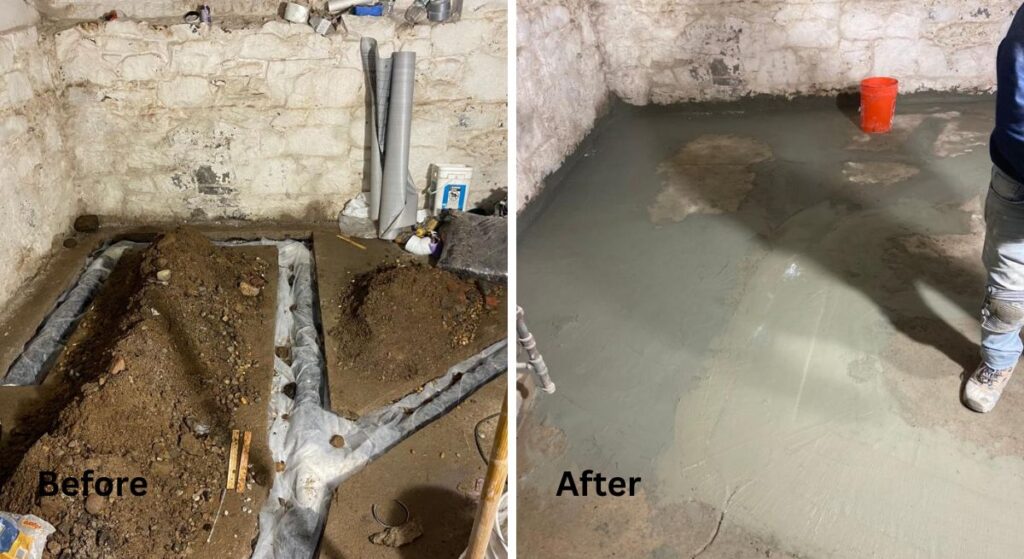
CASE STUDY: PREVENTING BASEMENT WATER SEEPAGE AND MOLD
Persistent water seepage is one of the most common root causes of basement mold. In this home, moisture intrusion through the foundation was creating ongoing damp conditions that made mold prevention impossible. Rather than chasing surface mold, the solution focused on eliminating the water source entirely.
This before-and-after project shows how proper drainage and sump pump installation can stop mold problems at the source and permanently dry out a basement.
Problem And Solution Overview
Solution:
Installed a sump pump to collect and discharge groundwater
Corrected drainage to prevent water pooling under the slab
Eliminated the moisture source driving mold growth
Results:
Dry basement with no visible water intrusion
Humidity reduced below mold-supporting levels
Mold risk eliminated and air quality improved
Why It Matters:
Mold remediation fails without moisture control. By stopping water at the source, this sump pump installation delivered long-term mold prevention, not a temporary fix.
If your basement shows seepage, damp odors, or recurring mold, drainage correction is the first move, not the last.
How To Prevent Mold From Growing In Your Basement
Mold prevention in basements is about control, not luck. When moisture, humidity, and airflow are managed correctly, mold simply does not get the conditions it needs to grow. The goal is to stop problems before spores settle, spread, and turn into health or structural issues.
We’ve helped hundreds of homeowners maintain basements under 50% relative humidity using the strategies below. These steps target the real causes of basement mold, not just the symptoms, and they work in both finished and unfinished spaces.
Keep Humidity Below 50% RH
High humidity is the single biggest driver of basement mold growth. Keeping relative humidity in check prevents spores from germinating on concrete, insulation, and stored items.
Target Range: Maintain 40–50% relative humidity year-round using a hygrometer.
Dehumidification: Install a basement-rated dehumidifier and run it continuously during humid or rainy seasons.
Moisture Monitoring: Check humidity seasonally, as summer spikes are common.
Storage Protection: Use silica gel or airtight bins for cardboard boxes and fabrics.
Air Quality Benefit: Lower humidity reduces mycotoxins and limits HVAC mold spread.
Fix Water Intrusion Immediately
Water intrusion feeds mold fast. Even minor leaks create long-term moisture problems if ignored.
Downspout Extensions: Direct runoff at least 5 feet away from the foundation.
Proper Grading: Maintain a slope of 6 inches over 10 feet away from the home.
Leak Inspections: Check for foundation cracks, plumbing leaks, and appliance failures after heavy rain.
Moisture Detection: Use a moisture meter to find damp areas early.
Long-Term Protection: Consider vapor barriers or damp-proofing where seepage is recurring.
Install Proper Ventilation
Basements trap moist air. Ventilation removes it before condensation and mold form.
Exhaust Fans: Install an 80 CFM or higher fan to remove humid air from laundry or living areas.
Fresh Air Systems: Use HRV or ERV systems to exchange air without raising humidity.
Window Well Drainage: Ensure egress windows drain properly to prevent hidden moisture.
Duct Maintenance: Keep HVAC ducts clean to avoid circulating mold spores.
Post-Storm Drying: Ventilate unfinished basements after storms or flooding events.
Apply Mold-Resistant Sealants
Sealing vulnerable surfaces blocks mold from taking hold in porous materials.
Concrete Sealing: Apply mold-resistant primers or paints to basement walls and floors.
Wood Protection: Seal framing, subfloors, and areas prone to carpet mold.
Antimicrobial Products: Choose coatings designed for high-moisture environments.
Reapplication Timing: Reapply every few years or after any mold remediation.
Pre-Seal Check: Confirm surfaces are dry using a moisture meter before sealing.
Maintain A Regular Inspection Routine
Prevention fails without consistency. Small issues become expensive ones when they are missed.
Quarterly Checks: Look for visible mold, peeling paint, staining, or musty odors.
Hidden Moisture Scans: Use an infrared camera to find damp areas behind walls.
HVAC Maintenance: Replace MERV 13 filters monthly and service air purifiers.
Drainage Upkeep: Clean gutters and confirm sump pumps and backups are working.
Documentation: Keep records for insurance, especially after water damage.
When these strategies are combined, basement mold becomes highly preventable. Humidity control, fast leak response, proper airflow, and routine inspections eliminate the conditions mold needs to survive. The result is cleaner air, fewer odors, and long-term protection for both health and structure.
What Is The Most Effective Way To Remove Mold From Basement Walls?
The most effective way to remove mold from basement walls is a controlled, step-by-step remediation process that combines containment, HEPA filtration, and targeted antimicrobial treatment. EPA-aligned methods focus on removing spores, killing active growth, and drying materials thoroughly to prevent recurrence, especially on porous concrete walls common in damp basements.
Below is a professional-grade, six-step mold removal protocol used for both DIY projects and professional remediation. Each step matters. Skipping one is how mold comes back.
Step-by-Step Basement Mold Removal Process
Step 1: Containment Setup:
Seal the work area using 6-mil plastic sheeting to isolate mold spores. Create negative air pressure with a fan and HEPA filter to prevent cross-contamination into living spaces or HVAC systems. Allow about 30 minutes for stabilization before starting work.Step 2: Personal Protective Equipment (PPE):
Wear full PPE including an N95 or higher respirator, gloves, goggles, and a protective suit. This protects against airborne spores and mycotoxins from molds such as aspergillus and penicillium. PPE should be donned before entering containment and changed between areas.Step 3: HEPA Vacuuming:
Vacuum affected concrete walls using a HEPA-rated vacuum (99.97% efficiency at 0.3 microns). Work slowly in overlapping passes to remove loose spores and debris. Empty or service the vacuum outside the home to avoid recontamination.Step 4: Antimicrobial Treatment:
Apply an EPA-approved antimicrobial or hydrogen peroxide-based solution to the wall surface. Allow a minimum 10-minute dwell time for penetration into porous concrete. Wipe excess residue and ventilate the area during and after application.Step 5: Physical Mold Removal:
Scrub surfaces with a wire brush or use soda blasting for stubborn or embedded growth. Follow with a second antimicrobial wipe-down. Bag all waste materials in sealed containers to prevent spore spread.Step 6: Post-Treatment Verification:
Dry the area for at least 48 hours using dehumidifiers and fans until moisture content is below 15%. Confirm success through visual inspection, moisture meter readings, and optional air or surface testing. Clearance verifies safe indoor air quality and reduces the risk of recurrence.
This method works on unfinished and finished basements, including areas affected by black mold, efflorescence, or recurring moisture problems. Proper containment, thorough drying, and verification are what separate successful remediation from repeat mold failures.
When Should You Call A Professional For Basement Mold Removal?
Not all mold problems can or should be handled DIY. If mold keeps returning, covers large areas, or affects air quality, professional remediation is the safer and more cost-effective move long term.
You should contact a certified mold professional if:
Mold covers more than 10 square feet or keeps spreading.
You see black mold or suspect stachybotrys chartarum.
There is mold inside walls, insulation, or HVAC systems.
The basement has experienced flooding or sewage backup.
Health symptoms worsen when spending time in the basement.
Moisture readings stay above 15% WME despite dehumidification.
Professional mold remediation includes containment, HEPA filtration, antimicrobial treatment, moisture correction, and post-remediation verification. This ensures the mold is not only removed, but that it does not come back.
Ignoring basement mold almost always leads to higher costs later. Structural damage, air quality issues, and recurring health problems turn small issues into major repairs fast.
Basement mold is one of those problems that rarely improves on its own. Early detection, proper moisture control, and informed decisions about remediation can save thousands in repair costs and protect your health.
Understanding what causes basement mold, how to spot it early, what removal actually costs, and how to prevent it puts you back in control. Whether you are dealing with a minor surface issue or a hidden infestation, the key is addressing moisture first and verifying cleanup properly.
If you suspect mold in your basement or want clarity before the problem grows, a professional inspection is the smartest next step.
Noticing signs of mold in your Long Island home? Contact us today for a free basement mold inspection and expert guidance.
Final Thoughts On Basement Mold Removal Cost
Basement mold is one of those problems that rarely improves on its own. Early detection, proper moisture control, and informed decisions about remediation can save thousands on your basement mold removal cost and protect your health.
Understanding what causes basement mold, how to spot it early, what removal actually costs, and how to prevent it puts you back in control. Whether you are dealing with a minor surface issue or a hidden infestation, the key is addressing moisture first and verifying cleanup properly.
If you suspect mold in your basement or want clarity before the problem grows, a professional inspection is the smartest next step.
Noticing signs of mold in your Long Island home? Contact us today for a free basement mold inspection and expert guidance.
Frequently Asked Questions About Basement Mold Removal
What Causes Mold To Grow In Basements?
Basement mold is caused by excess moisture from leaks, high humidity above 60% RH, poor drainage, condensation, or flooding. Mold thrives on damp concrete, drywall, insulation, and stored items.
Is Basement Mold Dangerous To Your Health?
Bleach may remove surface staining but does not penetrate porous materials like concrete. Professional remediation uses HEPA filtration and antimicrobial treatments designed for deep mold removal.
How Can I Tell If Mold Is Hidden Behind Walls Or Floors?
Musty odors, peeling paint, efflorescence, cold spots on walls, and elevated moisture readings often indicate hidden mold. Infrared cameras and moisture meters are used to confirm concealed growth.
Can I Remove Basement Mold Myself?
Small surface mold under 10 square feet can sometimes be cleaned safely. Larger areas, black mold, or mold inside walls or HVAC systems should be handled by professionals to prevent spread and recurrence.
How Much Does Basement Mold Removal Cost?
Costs typically range from $2,000 to $12,000 depending on the size of the affected area, mold severity, and whether drywall or HVAC systems are involved. Severe cases can exceed $15,000.
Will Mold Come Back After Removal?
Mold will return if moisture problems are not fixed. Successful remediation requires humidity control, drainage correction, and verification that moisture levels stay below 15% WME.
Does Bleach Kill Mold On Basement Walls?
Bleach may remove surface staining but does not penetrate porous materials like concrete. Professional remediation uses HEPA filtration and antimicrobial treatments designed for deep mold removal.
Is Black Mold In Basements Always Toxic?
Not all black-colored mold is toxic, but stachybotrys chartarum is a known toxin-producing species. Testing is required to identify mold type and determine appropriate remediation steps.
Does Homeowners Insurance Cover Basement Mold Removal?
Insurance may cover mold removal if it results from a sudden covered event like a burst pipe. Long-term moisture, humidity, or seepage issues are usually excluded.
When Should I Call A Professional Mold Remediation Company?
Call a professional if mold covers more than 10 square feet, keeps returning, affects air quality, follows flooding, or causes health symptoms. Early intervention prevents higher repair costs later.