
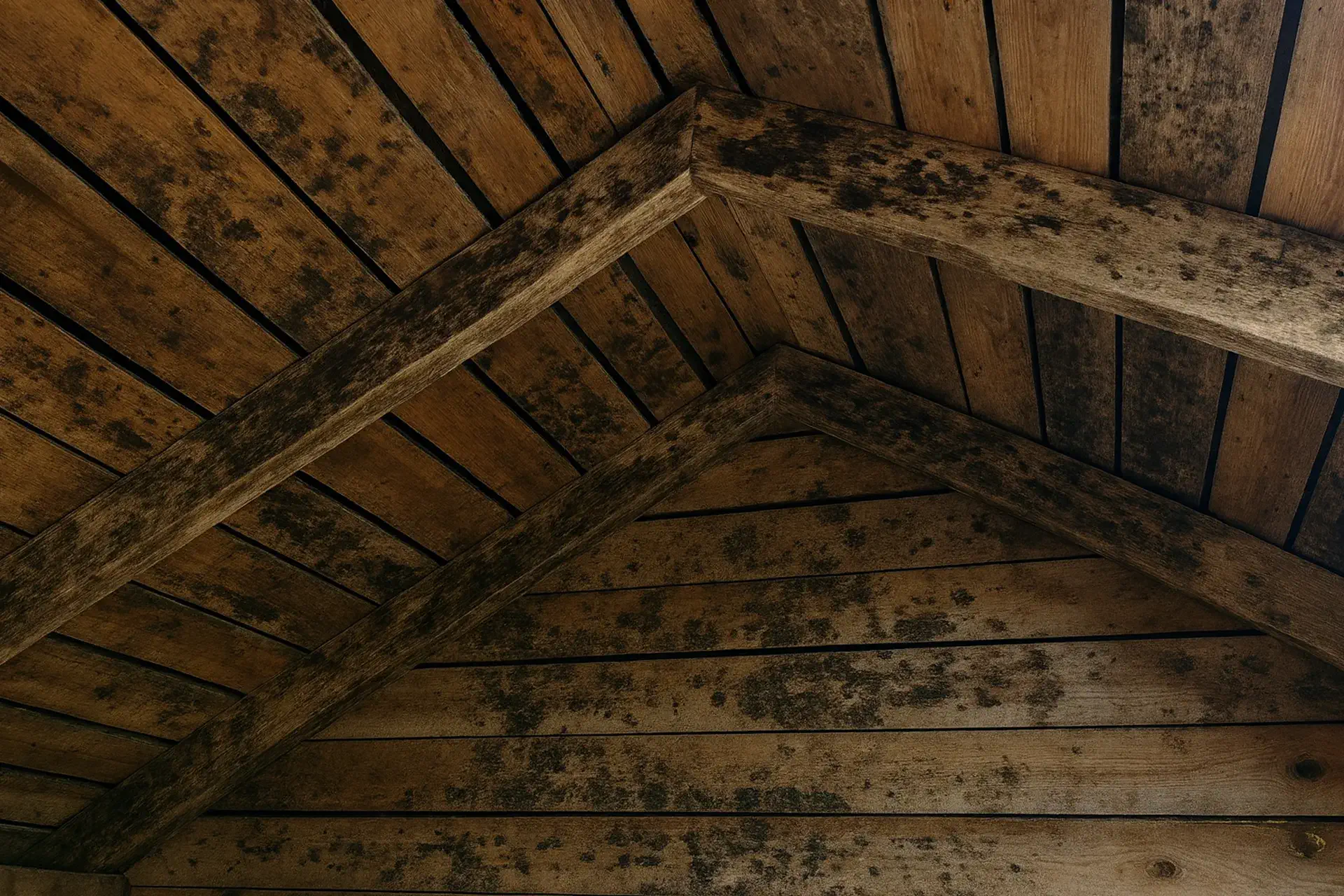
If you’re seeing strange colors on wooden beams, furniture, subflooring, framing, or decking, it isn’t just a cosmetic issue. Different colors of mold on wood can indicate different species, moisture histories, and risk levels, and some are far more serious than others.
Below, we break down what causes mold on wood, what each color may mean, and what steps to take next to protect both your structure and your health. If you’re in the Long Island, Brooklyn, Queens, or The Bronx areas of New York, you can call on Mold Removal Experts any time for a free mold inspection and meet up with one of our experts at your convenience. We’re always here to help and give expert opinions on how to remediate mold and protect your home.
Let’s get started!
So, What Causes Mold on Wood?
Mold on wood, whether it shows up white, green, black, yellow, or any other color, forms for one reason only: moisture meets organic material in an area with poor airflow. Wood is porous and naturally rich in cellulose, which becomes an ideal food source the moment humidity rises, a leak occurs, or water intrusion goes unresolved.
Because every mold species relies on the same basic conditions, the color you see doesn’t change the underlying reality: all mold on wood signals a moisture problem, and all of it is bad news.
Most mold growth on wood happens when one or more of the following conditions are present:
- Roof or plumbing leaks
- Flooding or water intrusion
- High indoor humidity (typically above 60%)
- Condensation on cold surfaces
- Poor ventilation in crawl spaces, basements, attics, or storage areas
- Wood stored in damp or unconditioned environments
Different species may appear in different colors. White mold from chronic humidity, green mold thriving in warm damp zones, black mold taking hold after long-term water exposure, but they all function the same way: they feed, they spread, they weaken wood fibers, and they impact indoor air quality.
In short: all mold on wood grows for the same reason, behaves the same way, and points to the same underlying problem: excess moisture that needs to be fixed immediately.
Why Mold on Wood Is More Serious Than Mold on Other Surfaces
Mold on wood is more dangerous than mold on non-porous materials because wood allows deep penetration of fungal roots into its structure. While tile or metal can sometimes be fully cleaned, wood often absorbs mold, moisture, and spores well below the surface.
Over time, this can lead to:
- Structural weakening
- Warping and softening of beams
- Hidden spread inside walls and floors
- Repairing exterior drainage issues
- Sealing and protecting exposed wooden surfaces
When moisture is controlled, wood becomes an environment that mold can no longer survive in. This is why mold on wood should never be ignored or treated only cosmetically.
How to Avoid Mold Growth on Surfaces
Mold grows on surfaces for one simple reason: moisture is allowed to stay too long. Whether it’s wood, drywall, concrete, insulation, or fabrics, any surface that stays damp for extended periods can become a breeding ground for mold. Preventing growth is far easier and far more affordable than dealing with a full infestation later.
Here are the most reliable ways to prevent mold growth on surfaces throughout your home or building:
- Keep indoor humidity below 50 percent, ideally between 30 and 50 percent
- Use dehumidifiers in basements, crawl spaces, laundry rooms, and bathrooms
- Fix roof leaks, plumbing leaks, and foundation cracks immediately
- Improve ventilation with fans and open airflow in closed spaces
- Dry wet areas within 24 to 48 hours after spills or leaks
- Clean and maintain gutters and downspouts to prevent water intrusion
- Make sure downspouts drain water away from the foundation
- Avoid storing items directly against damp walls or floors
- Use mold-resistant building materials when remodeling
- Inspect under sinks, around windows, and behind appliances regularly
By staying proactive and eliminating moisture before it becomes a problem, you can protect your surfaces, your indoor air quality, and the overall structural integrity of your property. Mold prevention is all about removing the conditions that allow one to happen in the first place.
When to Call a Professional for Mold on Wood
You should contact a mold professional when mold growth on wood moves beyond a minor surface issue and becomes a potential structural or health risk. While small, isolated spots can sometimes be addressed with careful cleaning, many situations require a trained expert to properly assess the extent of the problem and prevent it from spreading deeper into the material.
Call a professional if:
- The mold covers more than 10 square feet
- The wood feels soft, spongy, warped, or shows signs of decay
- There is a persistent musty or earthy odor that does not go away
- Allergies, headaches, coughing, or fatigue improve when you leave the property
- The mold continues to return after repeated cleaning attempts
- There was recent flooding, storm damage, or long-term plumbing or roof leaking
- The affected wood is part of a structural system, such as beams, subflooring, wall framing, attic trusses, or support posts
- You cannot identify or eliminate the moisture source that caused the growth
- Mold is located in hard-to-reach or enclosed spaces such as crawl spaces, attics, or inside walls
If you suspect mold has compromised any part of your property’s structure, electrical systems, or indoor air quality, do not delay professional evaluation. Early intervention can prevent thousands of dollars in future repairs and protect the health of everyone in the building.
What Causes Mold on Wood: Final Thoughts
Mold on wood is a clear sign that moisture has been present long enough to allow growth. Because wood is porous and rich in organic material, it becomes an easy target for mold when leaks, condensation, or high humidity go unchecked. Once it starts, mold can spread beneath the surface and weaken the material over time.
Color can hint at the type of mold, but the real issue is always the same: uncontrolled moisture. The most effective solution is to find and fix the source of the water, improve airflow, and act quickly before the problem spreads. If the damage is extensive or keeps returning, a professional inspection is the smartest next step.
Don’t Let Mold Stay to Destroy Your Home! Get a Free Mold Inspection Now!
Frequently Asked Questions: What Causes Mold on Wood
What causes mold on wood to grow in the first place?
Mold on wood is caused by excess moisture combined with organic material and poor airflow. Wood naturally contains cellulose, which becomes a food source when damp conditions persist.
How quickly can mold grow on wood after it gets wet?
Mold can begin growing on wood within 24 to 48 hours of water exposure if the area remains damp and poorly ventilated.
Is mold on wood always dangerous?
Not all mold on wood is toxic, but any growth should be taken seriously. Some types can damage the structure and trigger respiratory symptoms over time.
Can I just sand or paint over mold on wood?
No. Sanding or painting over mold does not eliminate the underlying problem. Mold can live beneath the surface and will return if moisture is still present.
What type of wood is most prone to mold growth?
Untreated or unsealed wood is most vulnerable to mold growth, especially in humid environments or areas exposed to leaks and condensation.
Does humidity alone cause mold on wood?
Yes. High humidity levels, especially above 60 percent, can cause mold to grow on wood even without direct water leaks.
What rooms are most likely to have mold on wood?
Basements, crawl spaces, bathrooms, attics, laundry rooms, and kitchens are the most common places where mold grows on wood.
Can sunlight prevent mold on wood?
Sunlight can slow mold growth, but it will not stop it completely if moisture and humidity remain high.
Is white mold on wood safer than black mold?
Not necessarily. While some white molds are less toxic, they still indicate a moisture problem and can weaken wood over time.
When should I call a professional for mold on wood?
You should call a professional if the mold covers a large area, keeps returning, causes health symptoms, or affects structural wood such as beams and framing.