
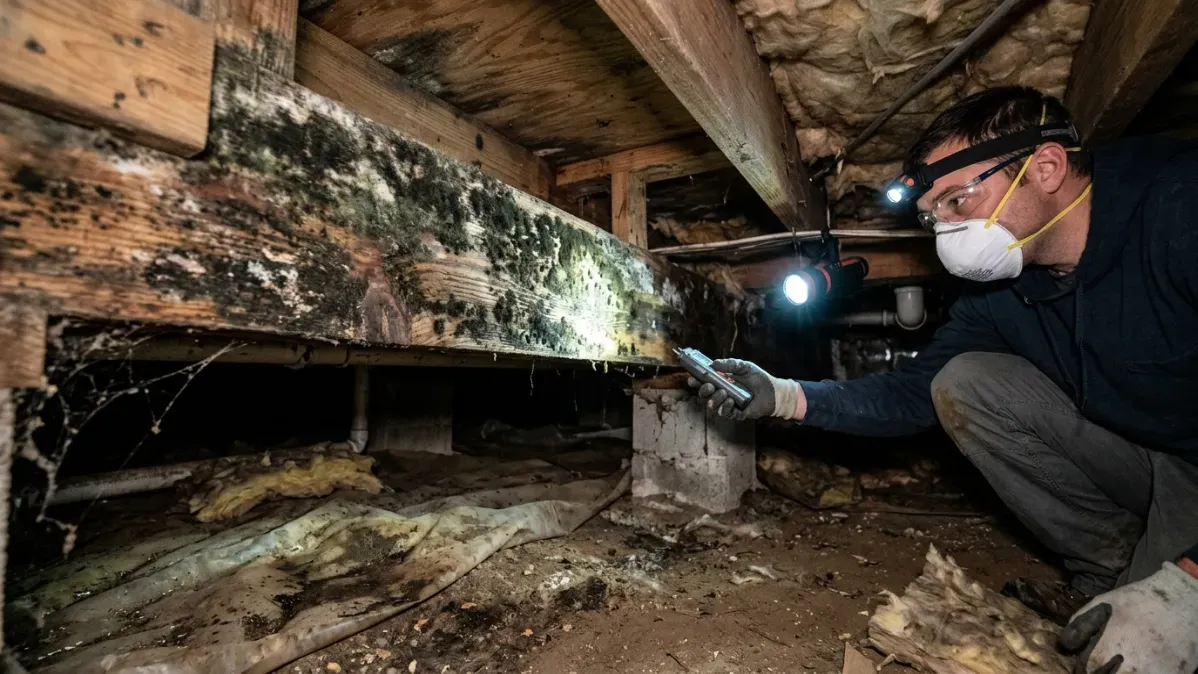
If you have spotted fuzzy white patches, black streaks, or a stale musty smell drifting up from under your home, you may be dealing with mold on floor joists in crawl space areas. It is one of the most common problems homeowners find beneath their floors, and it is also one of the easiest to underestimate. Those wooden joists are the backbone of your floor system, so mold growing on them is never just a cosmetic issue. It is a clear signal that moisture is attacking the structure that holds your home up. The good news is that this problem is both fixable and preventable once you understand what is causing it. In this guide, we will cover what leads to mold on floor joists in crawl space environments, how to recognize it, the risks of leaving it alone, and the most effective way to remove it for good.
Protect Your Floors Before Crawl Space Mold Spreads! Schedule Your Free Assessment Now!
What Causes Mold on Floor Joists in Crawl Space Areas?
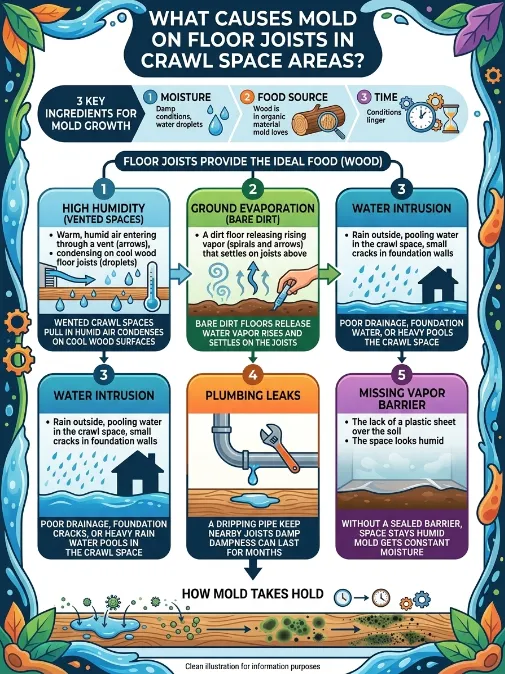
Mold needs moisture, a food source, and time. Floor joists provide the perfect food source because they are made of wood, which is rich in the organic material mold loves. The moisture usually comes from one or more of these sources:
- High humidity. Vented crawl spaces pull in warm, humid air that condenses on cooler wood surfaces.
- Ground evaporation. Bare dirt floors release water vapor that rises and settles on the joists above.
- Water intrusion. Poor drainage, foundation cracks, or heavy rain can let water pool in the crawl space.
- Plumbing leaks. A dripping pipe running through the crawl space can keep nearby joists damp for months.
- Missing vapor barrier. Without a sealed barrier, the space stays humid and mold gets a constant supply of the moisture it needs.
When any of these conditions linger, the joists stay damp long enough for spores to take hold and spread along the grain of the wood.
How to Identify Mold on Floor Joists in Crawl Space Wood
Catching the problem early makes the fix far simpler. Watch for these signs:
- Discoloration. White, green, gray, or black patches on the wood are the clearest indicator.
- Fuzzy or powdery texture. Mold often looks like a layer of fuzz or fine dust on the surface of the joist.
- Musty odor. A persistent earthy smell in your home, especially near floor vents, often traces back to the crawl space.
- Sagging or soft floors. When mold and rot weaken the joists, the floors above can feel springy or uneven.
- Allergy flare-ups. Increased sneezing, congestion, or respiratory irritation indoors can point to spores circulating from below.
White Mold Versus Black Mold on Joists
Not all growth looks the same. White mold is the most common type found on crawl space joists and often appears alongside efflorescence, which is a harmless salt deposit. Black mold is darker and can include more harmful varieties. Color alone is not a reliable way to judge severity, so any growth on structural wood deserves a professional look.The Benefits of Treating Mold on Floor Joists in Crawl Space Quickly
Addressing the problem sooner rather than later pays off in several ways. The benefits of treating mold on floor joists in crawl space areas right away include:
- Preserved structural strength. Removing mold before it turns into rot keeps your joists solid and your floors level.
- Better indoor air quality. Because air rises from the crawl space into your living areas, clean joists mean cleaner air upstairs.
- Lower repair costs. Surface mold is inexpensive to treat. Rotted, failing joists are not.
- Protection from pests. Dry, treated wood is far less attractive to termites and other wood-destroying insects.
- Peace of mind. Knowing the foundation of your floor system is healthy removes a major source of homeowner stress.
How Professionals Remove Mold on Floor Joists in Crawl Space Wood
A thorough remediation follows a proven sequence rather than a single quick treatment.
Inspection and Moisture Source Detection
The first step is finding out why the wood is wet. A technician measures humidity, traces leaks, and assesses how far the mold has spread. Fixing the mold without fixing the moisture source guarantees it comes back.
Mold Removal and Wood Treatment
Active mold is cleaned from the joists using professional treatments, and the surface is treated to slow future growth. In cases where the wood has begun to rot, a contractor may recommend sistering, which means reinforcing the weakened joist with a new board, or replacing the joist entirely.
Drying and Moisture Control
The space is dried thoroughly. To keep the joists dry going forward, professionals typically install a vapor barrier, seal vents, improve drainage, and often add a dehumidifier. Encapsulating the crawl space is the most reliable way to keep humidity under control for the long run.
Why Professional Remediation Is the Best Option for Mold on Floor Joists in Crawl Space Repair
It is tempting to grab a spray bottle of bleach and call it done. The trouble is that bleach mostly treats the surface and does nothing about the moisture that caused the growth in the first place. Within a few months, the mold returns, and the joists keep degrading underneath.
Professional remediation is the best option for mold on floor joists in crawl space situations because it addresses the full problem: the existing growth, the structural condition of the wood, and the moisture source feeding it. A trained team can tell the difference between surface mold and active rot, recommend the right repair, and seal the space so the issue does not return. That combination of expertise and lasting moisture control is something a quick DIY treatment simply cannot match.
How to Prevent Mold From Coming Back
Once your joists are clean, keeping them that way is mostly about controlling moisture:
- Install and maintain a quality vapor barrier across the crawl space floor.
- Keep gutters clean and direct downspouts away from the foundation.
- Grade the soil around your home so water flows away from it.
- Fix plumbing leaks promptly.
- Consider full encapsulation with a dehumidifier for the most reliable long-term protection.
Mold on Floor Joists in Crawl Space: Final Thoughts
Mold on floor joists in crawl space areas is a problem you never want to ignore, because the joists it grows on are the very wood that supports your floors. Left unchecked, surface mold turns into rot, repair bills climb, and the air quality inside your home suffers. Treated early, it is a manageable fix that protects both your health and your home’s structure. The most reliable path forward combines proper mold removal, any needed wood repairs, and long-term moisture control through a sealed, encapsulated crawl space. If you have noticed discoloration, a musty smell, or soft spots in your floors, do not wait for the damage to spread. Have a professional inspect for mold on floor joists in crawl space wood, confirm the source of the moisture, and put a lasting solution in place so your floors stay strong and your home stays healthy for years to come.
Frequently Asked Questions About Mold on Floor Joists in Crawl Space
Is Mold on Floor Joists in a Crawl Space Dangerous?
Mold on floor joists can be dangerous because it affects both indoor air quality and the wood structure beneath your home. Mold spores can move upward into living areas, while the moisture feeding the mold can weaken joists, subflooring, and other crawl space materials over time.
What Causes Mold on Floor Joists in a Crawl Space?
Mold on crawl space floor joists is usually caused by excess moisture. Common sources include high humidity, poor ventilation, exposed dirt floors, plumbing leaks, foundation seepage, standing water, and missing vapor barriers. Mold grows when wood stays damp long enough for spores to colonize the surface.
Can Mold on Floor Joists Make You Sick?
Mold on floor joists can trigger symptoms in sensitive people, especially those with asthma, allergies, chronic respiratory conditions, or weakened immune systems. Possible symptoms include coughing, sneezing, congestion, itchy eyes, throat irritation, and worsened asthma. The risk is higher when crawl space air moves into the home through gaps in the floor system.
Can I Remove Mold From Floor Joists Myself?
Small, isolated surface mold may sometimes be cleaned by a homeowner using proper protection and safe cleaning methods. However, widespread growth, recurring mold, musty odors, wet insulation, or any sign of wood rot should be handled by a professional. Cleaning alone will not solve the problem if the crawl space moisture source remains.
Will Mold Come Back After Crawl Space Treatment?
Mold can come back after treatment if humidity, leaks, standing water, or exposed soil are not corrected. Lasting crawl space mold remediation should include both mold removal and moisture control. Encapsulation, drainage, insulation upgrades, air sealing, and dehumidification help prevent regrowth.
How Do I Know If Mold Is Growing on My Floor Joists?
Common signs of mold on floor joists include fuzzy white patches, black or green staining, a musty smell, sagging insulation, damp wood, condensation, and allergy-like symptoms that worsen indoors. In some homes, the first clue is a stale odor coming from vents, floors, or crawl space access points.
Does Mold on Floor Joists Mean the Wood Is Rotten?
Mold on floor joists does not always mean the wood is rotten, but it means the joists have been exposed to too much moisture. Mold grows on the surface, while rot breaks down the wood itself. A professional inspection can determine whether the joists only need cleaning or whether structural repair is needed.
How Much Does It Cost to Remove Mold From Crawl Space Floor Joists?
The cost to remove mold from crawl space floor joists depends on the size of the crawl space, the severity of the mold, the condition of the wood, and whether moisture repairs are needed. Smaller surface mold jobs cost less, while widespread growth, damaged insulation, drainage work, encapsulation, or joist repair increases the price.
Is Crawl Space Encapsulation Worth It After Mold Removal?
Crawl space encapsulation is often worth it after mold removal because it helps control the moisture that caused the mold in the first place. A sealed vapor barrier, proper drainage, air sealing, and a crawl space dehumidifier can protect floor joists, reduce musty odors, improve indoor air quality, and lower the risk of mold returning.
When Should I Call a Professional for Mold on Floor Joists?
Call a professional if the mold covers a large area, keeps coming back, smells musty, appears with wet wood or insulation, or is connected to leaks, standing water, or foundation seepage. You should also get help if anyone in the home has asthma, allergies, respiratory illness, or immune system concerns. Professional remediation removes the mold and fixes the moisture conditions that allowed it to grow.