

text here
It makes a difference exactly what your inspector found in the inspection…
Before you respond to the report, understand what home inspectors are trained to do and what they aren’t.
A general home inspector is qualified to identify visible mold-like substances, document moisture conditions that support mold growth, and flag areas requiring further evaluation. They are not qualified to identify the mold species, quantify the extent of contamination, determine whether the mold is currently active or dormant, assess the underlying cause comprehensively, or specify the remediation scope.
This matters because the inspector’s report is documenting a finding, not delivering a diagnosis. “Mold-like growth observed in basement near foundation wall” tells you something is there. It doesn’t tell you what it is, how bad it is, what caused it, or what it will take to address.
Common findings on inspection reports and what they actually mean:
- Mold-Like Substance Observed: The inspector saw what appears to be mold. It could be active mold, dormant residue from a past moisture event, or staining that resembles mold but is not mold. This requires specialist assessment to clarify.
- Evidence Of Past Or Present Moisture: Water staining, efflorescence, dampness, or related indicators. This may or may not be associated with current mold growth. It indicates a moisture source that needs investigation.
- Recommend Further Evaluation By Mold Specialist: The inspector found enough to raise concern but is not qualified to fully assess the situation. This is the most common language used when the finding could range from minor to significant.
- Active Mold Growth In [Location]: The inspector observed what they believe is currently growing mold. This is a more serious finding but still requires specialist confirmation of species, extent, and cause.
- High Humidity / Elevated Moisture Readings: Conditions favorable to mold growth, possibly without visible mold present yet. This matters because mold growing inside walls or behind finishes will not be visible to the inspector.
Whatever your report says, the appropriate next step is professional mold assessment.
Your Real Options if Mold Was Found in Your Home Inspection
You have five real options in this situation.
The right one depends on how serious the finding is, your timeline, your risk tolerance, and the specifics of your contract. We’ll work through each.
Option 1: Get A Specialist Assessment Before Deciding Anything
This should be your first move in almost every situation. A professional mold assessment by a qualified remediation specialist or industrial hygienist clarifies what you are actually dealing with.
This Should Include:
And...
- Underlying Cause Assessment:
Evaluation of water intrusion, ventilation, and humidity
- Written Report:
Documentation of what problems were found, recommended remediation scope, and estimated repair costs.
- Laboratory Analysis:
Third-party lab interpretation of collected samples when testing is performed.
The biggest mistake we see buyers make is negotiating off the home inspector’s one-line note instead of getting a real assessment first. The inspector’s job is to flag what looks wrong. Our job is to tell you exactly what it is, what caused it, and what it actually costs to fix. Those are two very different conversations, and the second one is the one you want to bring to the seller.
— Jake, Manager, Mold Removal Experts
Schedule Your Free Advanced Mold Testing Now!
If Your Mold Problem is Anywhere in Nassau or Suffolk Counties, Schedule a Expert Inspection Now and Rest Easy!
Option 2: Request The Seller Address It Before Closing
The most common path. You ask the seller to complete professional mold remediation before closing, with proper documentation. The advantages are that you receive a property with the issue addressed, you have remediation documentation for future reference and resale, and warranty coverage typically transfers if the work was completed properly.
When you choose this route, request specific terms:
This Should Include:
- Licensed Remediation Contractor:
Not the seller’s handyman or a general labor crew.
- Itemized Scope Of Work:
Clear documentation of exactly what will be removed, cleaned, repaired, or replaced.
- Post-Remediation Verification:
Professional clearance testing and documqzentation after the work is complete.
AND:
- Transferable Warranty:
Written warranty coverage that transfers to you after closing.
- Final Verification Rights:
Final Verification Rights: Your right to inspect and verify completion before closing.
- Repair Documentation Package:
Copies of remediation reports, invoices, warranty information, and clearance testing.
NOTE: Most reputable specialists can complete the assessment within 2 to 5 business days. If you are under a tight inspection contingency, communicate the timeline pressure when scheduling.
Option 3: Negotiate A Credit At Closing
The seller provides a credit toward your closing costs equal to the estimated remediation expense, typically more, because buyers also price in inconvenience and uncertainty. You then handle the remediation yourself after closing using your preferred contractor.
Advantages
Typical Credit Amount:
Usually 1.5x to 2x the lowest remediation estimate, accounting for contingency and hidden conditions. Do not accept a credit equal only to the contractor’s base estimate. Mold projects frequently uncover additional issues once work begins.
Option 4: Negotiate A Price Reduction
Similar to a closing credit, except the home’s purchase price itself is reduced. This can create cleaner accounting and may carry different financing or tax implications than a closing-cost credit.
The important distinction is that price reductions can sometimes affect appraisal outcomes or financing terms. Closing credits usually do not alter appraised value. Speak with your lender if the reduction could impact loan-to-value thresholds or underwriting conditions.
Option 5: Walk Away
If you are still within your inspection contingency period and the finding is significant enough, or the seller refuses reasonable accommodation, walking away may be the correct decision. Mold findings during the contingency window are commonly considered a legitimate basis for contract termination and earnest money recovery.
When Walking Away Makes Sense:
- Severe Mold Findings:
Significant contamination with little or no seller cooperation.
- Expanded Damage Discovery:
Structural damage, widespread contamination, or unresolved moisture sources discovered during specialist assessment.
- Multiple Property Problems:
Mold is only one of several major concerns.
- Seller Resistance:
The seller becomes hostile, dismissive, or refuses documented findings.
- Low Risk Tolerance:
You are uncomfortable with uncertainty or future liability.
When Walking Away Might Not Make Sense:
- Minor, Solvable Findings:
The issue is limited and professionally remediable.Comparable homes are difficult to find in your market.
- Reasonable Seller Cooperation:
The seller is offering legitimate remediation or financial accommodation.
- Strong Overall Property Fit:
The home otherwise meets your goals and the issue is manageable.
- Limited Market Alternatives:
Comparable homes are difficult to find in your market.
Walking away is always an option, but it should not automatically be your first response. Real estate transactions involving mold findings close successfully every day when both parties handle the situation reasonably and professionally.
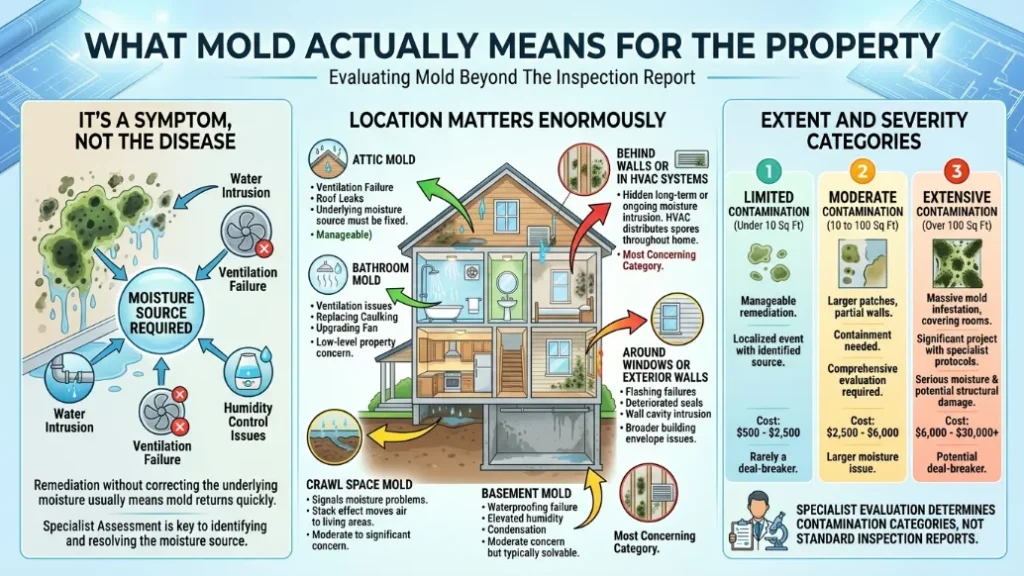
What Mold Actually Means For The Property
Beyond the immediate negotiation, here is what you are really evaluating when you see mold mentioned in an inspection report.
It’s A Symptom, Not The Disease
Mold does not grow without a moisture source. The presence of mold means the home has had or currently has water intrusion, ventilation failure, humidity control issues, or some combination of those problems. Remediating visible mold without correcting the underlying moisture issue usually means the mold returns, often quickly.
This is why specialist assessment matters more than simply looking at visible growth. A real evaluation identifies the moisture source. If the moisture source can be fully resolved, the mold problem can usually be fully resolved. If it cannot, you may be dealing with a recurring issue.
Location Matters Enormously
Mold in different parts of the home often points to very different underlying problems.
- Bathroom Mold: Usually caused by ventilation issues. Easy to identify, relatively easy to correct, and generally considered a low-level property concern. Common solutions include improved ventilation, replacing caulking, and upgrading the exhaust fan. In most cases, this is not considered a major red flag.
- Basement Mold: Indicates moisture inside the basement environment. This could involve waterproofing failure, elevated humidity, condensation, or isolated water events. Moderate concern that requires assessment but is typically solvable.
- Crawl Space Mold: Often signals moisture problems affecting the entire home through the stack effect, where air from the crawl space moves upward into living areas. Crawl space moisture frequently impacts indoor air quality throughout the property. Moderate to significant concern depending on severity.
- Attic Mold: Typically associated with ventilation failure, roof leaks, or inadequate attic airflow systems. Usually correctable, but the underlying moisture source must be addressed for remediation to succeed.
- Behind Walls Or In HVAC Systems: Generally the most concerning category. Hidden mold often suggests long-term or ongoing moisture intrusion. HVAC contamination can distribute spores throughout the home. These situations typically require more extensive evaluation and remediation.
- Around Windows Or Exterior Walls: May indicate flashing failures, deteriorated seals, or moisture intrusion inside wall cavities. In some cases, this points to broader building envelope issues beyond the visible mold itself.
Extent And Severity Categories
- Limited Contamination (Under 10 Square Feet): Usually manageable with professional remediation. Typical cost ranges from $500 to $2,500. Often caused by a single localized moisture event with an identifiable source. Rarely considered a deal-breaker.
- Moderate Contamination (10 To 100 Square Feet): Requires more substantial remediation with containment procedures. Typical cost ranges from $2,500 to $6,000. Often indicates a larger moisture issue requiring more comprehensive evaluation.
- Extensive Contamination (Over 100 Square Feet): Significant remediation project involving specialized containment and removal protocols. Typical cost ranges from $6,000 to $30,000 or more depending on accessibility and structural involvement. Frequently associated with serious moisture problems and potential structural damage. In some situations, this may become a deal-breaker.
The inspection report itself usually will not identify which category applies to your situation. That determination requires specialist evaluation.
| Mold Remediation Type | Typical Cost Range |
|---|---|
| Surface Mold Treatment: Small affected areas without underlying structural damage. | $500 – $1,500 |
| Bathroom Or Single-Room Remediation: Limited contamination combined with ventilation correction. | $1,000 – $3,000 |
| Basement Mold Remediation: Moderate contamination with moisture-source repair. | $3,000 – $10,000 |
| Crawl Space Mold Remediation: Moderate contamination often involving vapor barriers, drainage improvements, or encapsulation. | $5,000 – $15,000 |
| Attic Mold Remediation: Typically combined with ventilation corrections and moisture repairs. | $2,000 – $8,000 |
| HVAC System Mold Remediation: Cleaning and treating ductwork and HVAC components. | $2,000 – $8,000 |
| Whole-House Mold Remediation: Extensive contamination involving multiple areas of the property. | $15,000 – $40,000+ |
| Mold-Related Structural Repairs: Wood rot repair commonly ranges from $200 to $800 per joist depending on severity and accessibility. Subfloor replacement generally ranges from $5 to $15 per square foot. | Varies By Severity |
What Mold Remediation Will Actually Cost
These are realistic market ranges for mold remediation services that matter during negotiation and decision-making.
- Surface Mold Treatment: Small, affected areas without underlying structural damage typically range from $500 to $1,500.
- Bathroom Or Single-Room Remediation: Limited contamination combined with ventilation correction usually ranges from $1,000 to $3,000.
- Basement Mold Remediation: Moderate contamination with moisture-source repair generally ranges from $3,000 to $10,000.
- Crawl Space Mold Remediation: Moderate contamination often involving vapor barriers, drainage improvements, or encapsulation usually ranges from $5,000 to $15,000.
- Attic Mold Remediation: Typically combined with ventilation corrections and moisture repairs, generally ranging from $2,000 to $8,000.
- HVAC System Mold Remediation: Cleaning and treating ductwork and HVAC components usually ranges from $2,000 to $8,000.
- Whole-House Mold Remediation: Extensive contamination involving multiple areas of the property may range from $15,000 to $40,000 or more.
- Mold-Related Structural Repairs: Structural repairs add substantial additional cost. Wood rot repair commonly ranges from $200 to $800 per joist depending on severity and accessibility. Subfloor replacement generally ranges from $5 to $15 per square foot.
For broader pricing comparisons across different contamination levels and property conditions, see our complete mold removal cost guide.
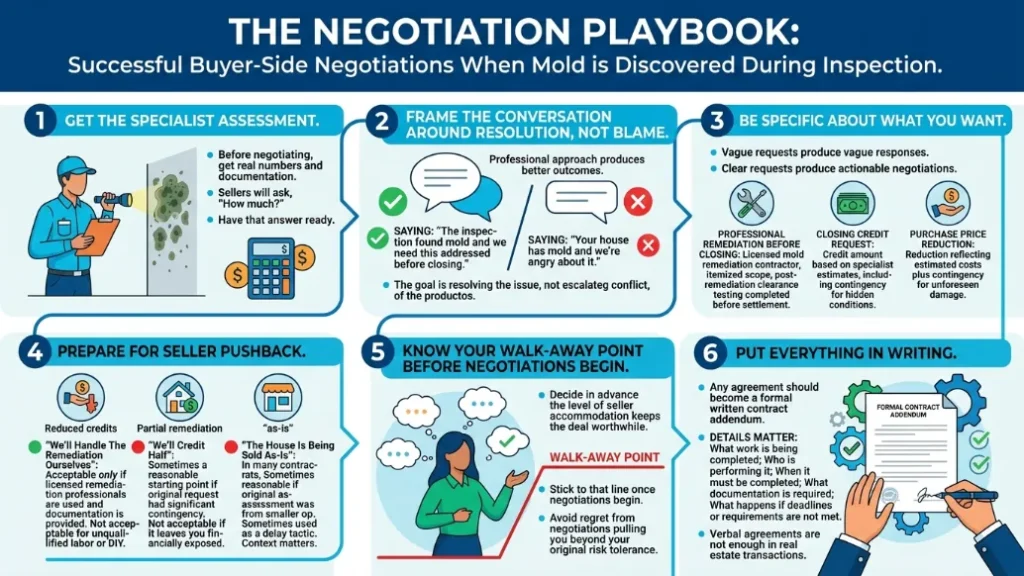
When The Mold Finding Is Actually A Bigger Deal Than It Looks
Some mold inspection findings are relatively minor. Others are signs of much larger underlying problems. These warning signs suggest the issue may be more serious than the inspection report initially indicates. (check out our Mold Inspection Checklist to see what we do differently)
Multiple Affected Areas: Mold in one bathroom is usually a ventilation issue. Mold in the bathroom, attic, and basement simultaneously may indicate systemic moisture problems throughout the property.
Fresh Paint Or New Finishes In Moisture-Prone Areas: Recently painted basements, fresh drywall patches, or newly finished surfaces may indicate attempts to conceal moisture damage before listing.
Persistent Musty Odors Without Visible Mold: Odors often indicate hidden contamination the inspector could not directly see.
Visible Water Damage History: Stained drywall, warped flooring, or efflorescence on foundation walls often suggest long-term moisture exposure.
Recent Water Damage Insurance Claims: Prior claims can indicate recurring problems or unresolved moisture issues.
HVAC Contamination Indicators: Musty smells or visible contamination around vents are more serious because HVAC systems can distribute spores throughout the home.
Evidence Of Failed DIY Remediation: Incomplete or improper cleanup attempts may hide the original issue while complicating future professional remediation.
Additional Structural Or Drainage Concerns: If the inspection also flagged grading, drainage, foundation, or structural moisture problems, the mold may only be one symptom of a larger property condition issue.
When several of these warning signs appear together, walking away may ultimately make more sense than negotiating further.
Special Considerations
VA, FHA, And USDA Loans
Government-backed loan programs often impose stricter property condition requirements. Visible mold may trigger lender or appraiser concerns even if the buyer and seller are willing to proceed.
This can work in the buyer’s favor because it forces the issue to be addressed before closing, but it can also compress timelines and delay final loan approval.
Coordinate closely with your lender and loan officer if mold is discovered during the financing process.
Cash Buyers And Investors
Cash buyers generally have more flexibility because they are not restricted by lender property requirements. Some investors intentionally purchase distressed properties and budget for remediation work upfront.
That flexibility also means accepting more direct financial risk.
New Construction Homes
Mold in new construction is unusual and should be treated seriously. It often points to construction defects involving moisture management, ventilation, or building envelope failures.
Do not accept statements suggesting mold is “normal” in new construction. It is not.
Older Homes
Older homes are more likely to experience moisture-related issues because of outdated construction methods, aging materials, and decades of wear. That does not make mold acceptable, but it does make proper moisture management especially important.
Recently Renovated Properties
Recent renovations can either resolve moisture problems or conceal them.
Well-executed renovations that corrected moisture sources are beneficial. Cosmetic renovations hiding unresolved moisture issues are much more concerning.
Foreclosures And Short Sales
Banks and distressed sellers are often less willing or less financially capable of addressing mold concerns. Negotiation flexibility is usually more limited in these transactions.
Because of that, walking away is sometimes the best decision when significant issues are uncovered.
Mold findings can affect more than just the current transaction.
Insurance Considerations: Some insurance carriers ask about prior mold issues during underwriting. Professionally documented remediation is usually manageable. Unresolved or undisclosed mold history can affect both rates and coverage availability.
Future Resale Impact: When you eventually sell the property, known mold history may require disclosure. Proper remediation documentation, warranties, and clearance testing substantially reduce future resale concerns.
Value Protection: Homes with professionally documented remediation generally maintain stronger resale value than homes with undocumented or DIY cleanup histories.
Long-Term Indoor Air Quality: Inadequately addressed mold can continue affecting indoor air quality for years. This is especially important for individuals with allergies, asthma, or respiratory sensitivities.
Mold Found in Home Inspection: Final Thoughts
If your inspection report flagged mold and you are trying to determine the right next step, a professional mold assessment provides the clarity you need before making major financial decisions.
Our specialists provide mold assessments throughout the New York metro area, including Manhattan, Brooklyn, Queens, the Bronx, Long Island, and the Hamptons.
Assessments include:
- Visual Evaluation
- Moisture Mapping
- Source Identification
- Photo Documentation
- Written Findings Report
- Remediation Scope And Cost Estimate When Needed
We work within inspection contingency timelines and can usually complete assessments within a few business days. This documentation gives you the information needed to negotiate confidently, or walk away confidently if necessary.
Request Your Professional Mold Assessment Today
This becomes a very different legal and financial situation.
Was The Mold Properly Disclosed? Review seller disclosures carefully. If the seller denied prior mold or water issues despite knowing about them, there may be potential legal exposure for undisclosed defects.
Should The Inspector Have Found It? If visible mold was missed during inspection, there may be questions about inspector negligence, though these cases can be difficult to pursue successfully.
How Long Ago Did You Close? Most states impose statutes of limitations on undisclosed defect claims, often ranging from 2 to 5 years.
What Does Insurance Cover? Most homeowners insurance policies exclude mold caused by long-term moisture problems. Mold tied to sudden covered events — such as burst pipes — may receive limited coverage.
If mold is discovered after closing, speaking with a real estate attorney before contacting the seller is often the smartest approach.
This becomes a very different legal and financial situation.
Was The Mold Properly Disclosed? Review seller disclosures carefully. If the seller denied prior mold or water issues despite knowing about them, there may be potential legal exposure for undisclosed defects.
Should The Inspector Have Found It? If visible mold was missed during inspection, there may be questions about inspector negligence, though these cases can be difficult to pursue successfully.
How Long Ago Did You Close? Most states impose statutes of limitations on undisclosed defect claims, often ranging from 2 to 5 years.
What Does Insurance Cover? Most homeowners insurance policies exclude mold caused by long-term moisture problems. Mold tied to sudden covered events — such as burst pipes — may receive limited coverage.
If mold is discovered after closing, speaking with a real estate attorney before contacting the seller is often the smartest approach.