
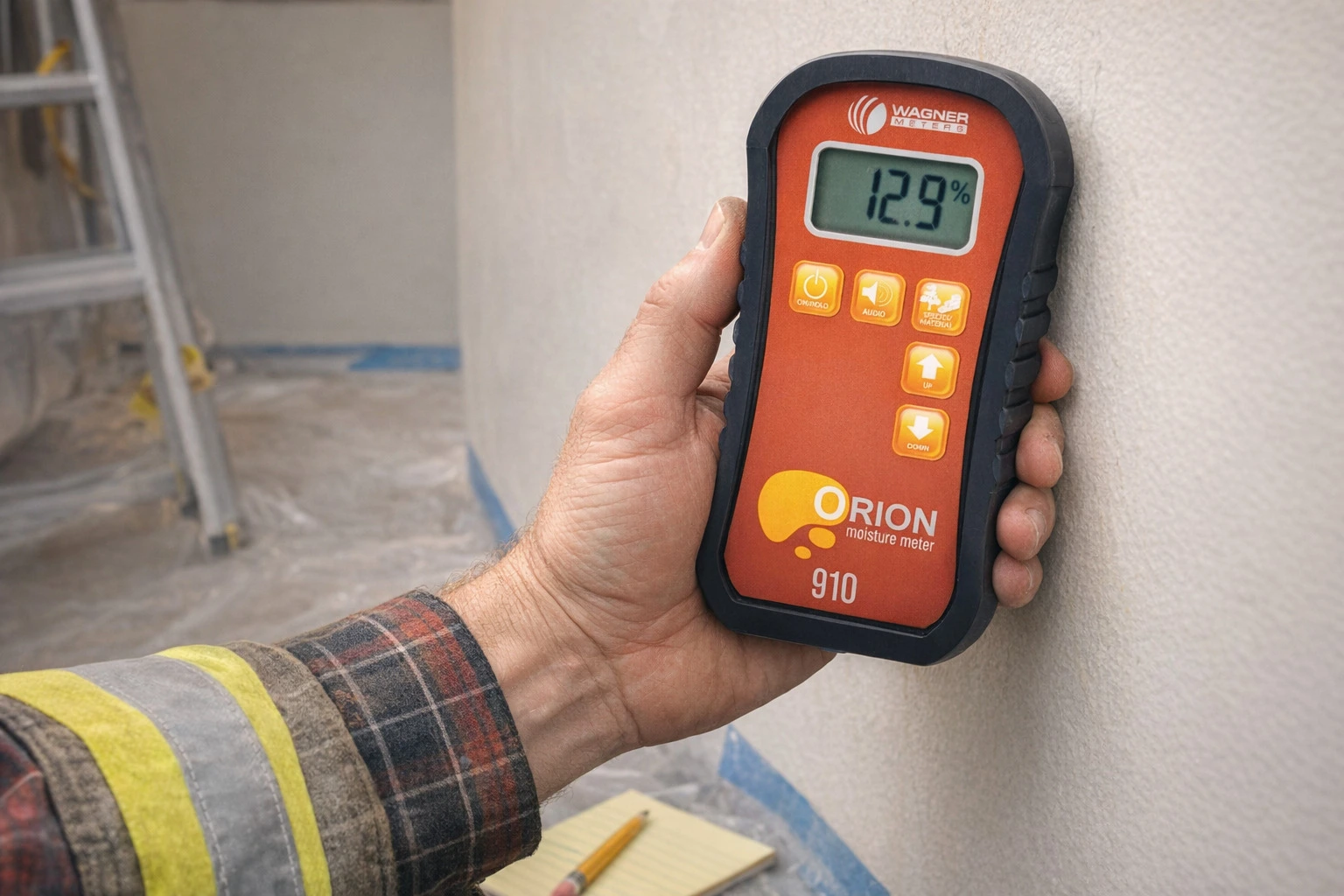
Water doesn’t always show up as a puddle. Sometimes it hides inside walls, beneath floors, and above ceilings, quietly spreading, weakening materials, and creating the perfect environment for mold growth. Moisture mapping is a systematic process used to detect, measure, and document hidden moisture within a building’s structure.
Instead of guessing where water has traveled, a structured building moisture inspection identifies affected areas, establishes baseline moisture readings, and creates a clear record of what’s wet and what’s not.
This process is commonly used during water intrusion assessment, leak investigations, mold evaluations, storm damage inspections, and insurance documentation. It provides clarity when moisture isn’t visible, but damage is suspected.
Now, let’s break down how moisture mapping actually works in a real property.
Protect Your Long Island Or Brooklyn Property Before Hidden Moisture Becomes Mold Or Structural Damage.
How Moisture Mapping Works Step By Step
Moisture mapping follows a structured, data-driven sequence designed to eliminate guesswork. Each step builds on the previous one to confirm where moisture exists, how far it has spread, and how severe the impact may be. Instead of relying on surface appearance alone, the process verifies conditions through comparative measurements and documented findings. Here is how moisture mapping works step by step inside a real property.
- 1. Visual Inspection $20
The inspection begins with a structured walk-through of the property. Areas showing staining, warping, swelling, or musty odors are identified as potential moisture pathways.
- 2. Moisture Meter Scanning $9
Technicians take moisture meter readings across walls, floors, and ceilings. Surface (non-penetrating) meters scan large areas quickly to identify elevated moisture just below the surface. Penetrating meters use probes inserted into materials to measure internal moisture content percentage at deeper levels. Readings are compared to dry control areas within the same structure to determine what qualifies as elevated versus normal baseline moisture readings.
- 3. Thermal Imaging Usage $32
An infrared moisture scan helps identify temperature differentials that may indicate trapped moisture behind surfaces. Thermal imaging moisture detection does not confirm moisture alone but helps narrow down areas requiring direct meter verification.
- 4. Establishing Baseline Documentation $32
All confirmed readings are recorded to create formal moisture map documentation. This establishes baseline moisture levels for unaffected areas and highlights impacted zones.
- 5. Mapping Affected Vs. Unaffected Areas $32
The final step visually outlines wet versus dry sections of the structure. This clear documentation supports restoration planning, insurance claims, and ongoing monitoring.
Who Does Moisture Mapping?
Moisture mapping services are performed by different professionals depending on the purpose of the inspection. The right provider depends on whether you’re addressing active water damage, suspected mold growth, structural concerns, or insurance documentation. If you’re in Nassau or Suffolk counties in New York, just reach out to Mold Removal Experts. We’ve got advanced moisture mapping equipment, years of experience in waterproofing and mold remediation, and our expert opinion is always free!
Professionals Who Perform Moisture Mapping:
- Water Damage Restoration Companies: These companies conduct moisture mapping as part of a water damage inspection and drying strategy. Many technicians carry IICRC WRT (Water Restoration Technician) certification and focus on mitigation planning after flooding or leaks.
- Mold Inspectors / Mold Assessors: A mold assessment inspection often includes moisture mapping to identify conditions supporting mold growth. In some states, including New York, mold assessors must hold a state-issued license separate from remediation contractors.
- Indoor Environmental Professionals (IEPs): These specialists provide third-party documentation and neutral reporting, particularly useful in disputes, real estate transactions, or health-related investigations.
- Structural Engineers (Case-Specific): When long-term moisture exposure may have compromised framing, foundations, or load-bearing systems, an engineer may be involved to assess structural impact.
- Insurance Adjusters (Limited Use): Adjusters may document visible conditions but typically rely on a certified moisture inspector or restoration company to provide detailed moisture mapping documentation.
Licensing and certification requirements vary by state. Some regions require licensed mold assessors for official reports, while others allow certified restoration professionals to provide moisture mapping services independently. Always confirm credentials, including IICRC WRT certification or applicable state mold licenses.
What Happens If Hidden Moisture Is Not Detected?
Moisture that remains inside structural assemblies rarely resolves on its own. The risks compound over time.
- Mold Colonization: Elevated moisture creates ideal conditions for mold growth within 24–72 hours. The mold risk from water intrusion increases significantly when damp materials remain undocumented and untreated.
- Structural Wood Rot: Prolonged exposure leads to structural decay from moisture, weakening joists, sill plates, and framing members. What begins as dampness can evolve into costly structural repair.
- Insulation Breakdown: Wet insulation loses thermal resistance and may compress or deteriorate. This affects energy efficiency and can trap additional moisture against framing materials
- Insurance Denial: As explained earlier, moisture mapping establishes baseline readings. Without that documentation, proving when damage occurred becomes difficult, increasing the risk of partial or denied claims.
- Recurring Leaks: When moisture pathways are not clearly identified, temporary fixes fail. The result is repeated staining, odor return, and escalating repair costs.
Moisture Mapping Cost: What To Expect
Moisture mapping cost varies based on property size, scope, and reporting depth. For most residential properties, moisture inspection pricing falls within a predictable range.
Typical Pricing Ranges
| Service Type | Typical Price Range |
|---|---|
| Small Residential Scan (Targeted Area) | $300 – $600 |
| Full Residential Property Mapping | $600 – $1,500 |
| Commercial Moisture Mapping | $1,500 – $5,000+ |
| Insurance Documentation Add-On | $150 – $400 |
Final Thoughts On Moisture Mapping
Moisture mapping is a structured way to detect, measure, and document hidden moisture within a building. It is most valuable after flooding, leaks, unexplained odors, or when documentation is needed for insurance or property transactions. Early identification prevents structural decay from moisture, reduces mold risk, and supports informed repair decisions.
Whether you are addressing recent water intrusion or investigating ongoing dampness, understanding the scope and purpose of moisture mapping allows you to act strategically rather than reactively. Clear documentation protects both your property and your financial investment.
Schedule A Professional Moisture Mapping Inspection Today
Frequently Asked Questions About Moisture Mapping
Is moisture mapping the same as mold testing?
No. Moisture mapping identifies elevated moisture conditions, while mold testing analyzes air or surface samples for spores. Moisture mapping often precedes mold testing to determine where growth conditions exist.
How long does moisture mapping take?
Typically no. Most inspections are non-destructive, though minor probe access may be required in specific materials.
Is it invasive?
Yes. Penicillium releases lightweight spores that easily become airborne and can circulate throughout a home via normal air movement and HVAC systems.
Can it detect slab leaks?
It can help identify moisture patterns consistent with slab leaks. However, licensed plumbers perform final leak confirmation.
Can homeowners do it themselves?
Basic meters are available, but without baseline comparisons and documentation standards, results may be unreliable for insurance or remediation planning.
Does insurance require it?
Insurance companies do not always require it, but documented moisture readings strengthen claims and reduce disputes.
Does cleaning visible mold remove penicillium completely?
No. Thermal imaging highlights temperature differences but must be confirmed with moisture meter readings.
How accurate are moisture meters?
Professional-grade meters are highly reliable when used properly and compared against dry control readings.