

What Is Cladosporium?
This section clears the fog and replaces internet panic with basic reality. Cladosporium is not rare, exotic, or sneaky. It is one of the most common molds people encounter in everyday life, whether they realize it or not. Cladosporium is a mold that exists both indoors and outdoors, year-round.
Outside, it lives on plants, soil, and decaying organic matter. Inside, it shows up wherever normal household moisture and airflow overlap. Because it produces lightweight spores, it is often airborne, which means it moves easily through open windows, doors, and ventilation systems.
People encounter Cladosporium so often because homes unintentionally create perfect conditions for it. Bathrooms produce steam. Windows collect condensation. HVAC systems move air that carries spores from outdoors to indoors.
Once spores land on a slightly damp surface, they can settle and grow without any dramatic leak or flood event. This is why Cladosporium commonly appears around window frames, bathroom ceilings, vents, and air registers. It is not a sign of neglect. It is a sign of moisture plus air movement, which exists in almost every building.
Why People Think Cladosporium Mold Is Toxic
This confusion did not come out of nowhere. It is the result of how mold is talked about online, not how it actually behaves in buildings. The biggest driver is the phrase “black mold.” Cladosporium is often dark green, brown, or black in color, and many online lists treat color as a danger signal. Those lists lump all dark molds together and label them toxic without explaining differences in behavior, growth patterns, or health relevance. Once someone sees a dark patch and reads a generic warning article, anxiety fills in the rest.
Symptoms add another layer of confusion. Exposure to Cladosporium can cause irritation in sensitive people, especially those with allergies or asthma. Sneezing, congestion, itchy eyes, or coughing overlap heavily with common allergy responses. When Cladosporium mold symptoms occur at home and improve elsewhere, people assume toxicity rather than considering airborne allergens and moisture conditions.
Air testing makes things worse when it is misunderstood. Cladosporium spores are common in both indoor and outdoor air samples. Seeing its name on a report can feel alarming, even when levels are normal for the environment. A lab result does not mean a mold is dangerous, active, or even growing inside the structure. Without context, air tests turn a common background organism into a perceived threat.
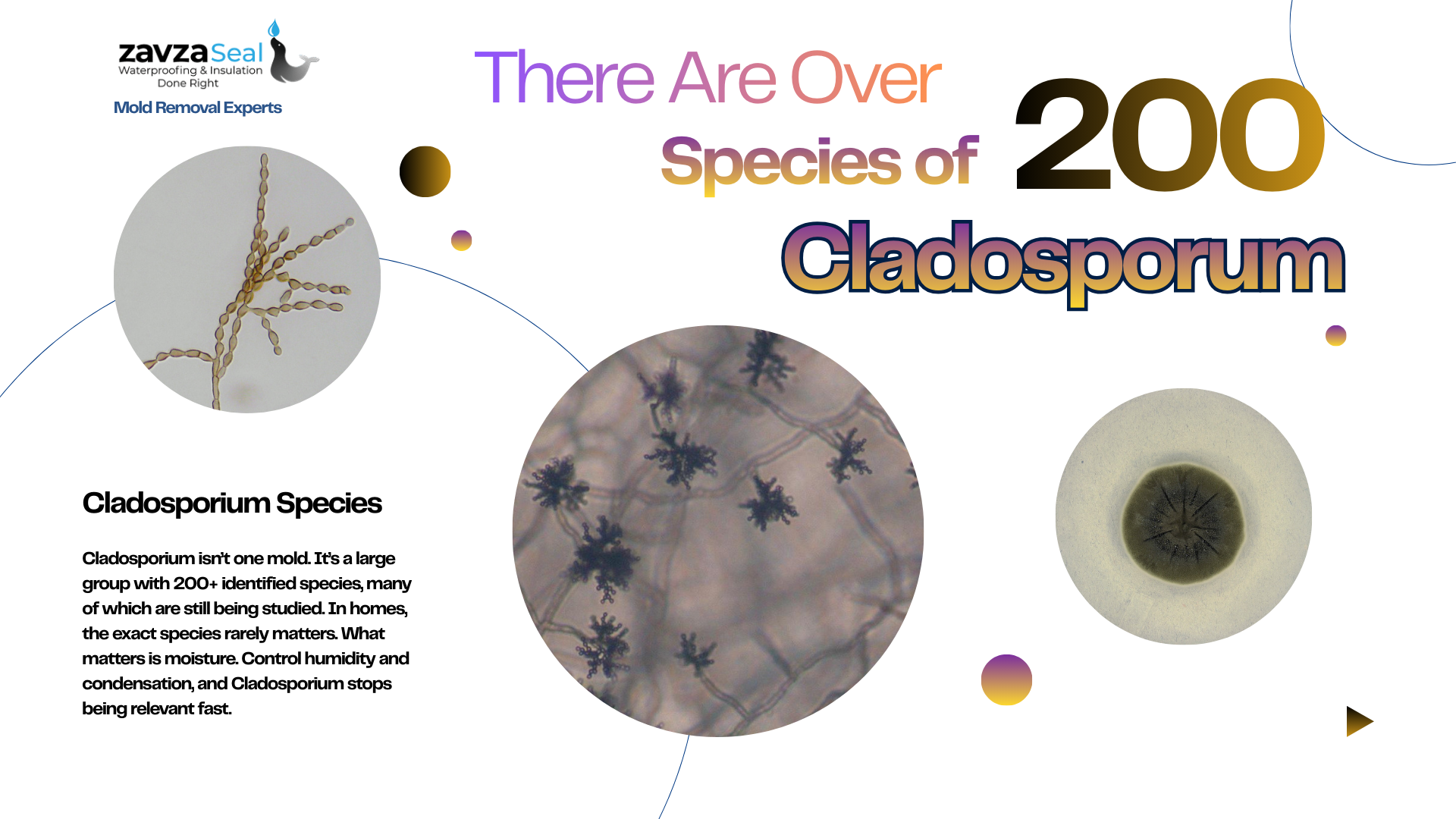
What Cladosporium Looks Like
Cladosporium typically appears as flat or slightly fuzzy patches rather than thick, wet buildup. It often spreads unevenly, forming speckled or blotchy areas instead of dense clusters. The color ranges from olive green to brown or dark gray, sometimes appearing almost dusty on the surface.
Common surfaces include painted drywall near windows, bathroom ceilings, grout lines, HVAC vents, and areas where condensation forms regularly. It tends to stay on the surface rather than growing deep into materials unless moisture is persistent.
Just as important is what it usually does not look like. Cladosporium is not shiny, slimy, or tar-like. It does not form thick, dripping layers. It does not typically appear embedded deep inside drywall or framing without long-term moisture exposure. When you see dramatic texture, saturation, or material breakdown, you are likely dealing with a different moisture issue entirely.
Health Effects of Cladosporium: Should You Be Concerned?
Cladosporium exposure is most often associated with irritation rather than toxicity. For many people, it behaves like a typical airborne allergen. When symptoms occur, they tend to be mild and situational, not progressive or severe.
A common pattern is environmental. People notice symptoms are worse when they are at home and noticeably better when they leave for work, school, or travel. That pattern points to indoor air quality and moisture conditions, not a dangerous organism taking over the body.
Certain groups are more sensitive, but this does not mean danger is inevitable. Individuals with allergies, asthma, compromised immune systems, or respiratory conditions may react more strongly to airborne spores. Children and older adults may also be more reactive. The key point is sensitivity, not poisoning. The environment is the driver, not the mold name.
Risk Segmentation: When Cladosporium Is a Problem
This is where reassurance turns into practical judgment. Cladosporium itself is common. The conditions that allow it to keep growing are what determine whether action is needed.
- Small Surface Growth: Small patches near windows, vents, or bathroom ceilings are generally low risk. These areas usually point to condensation or brief humidity spikes rather than a structural issue.
- Recurrent Growth In The Same Area: When Cladosporium keeps returning after cleaning, moisture persists. This signals a ventilation, humidity, or condensation problem that needs correction, not repeated surface cleaning.
- Widespread Or Hidden Growth: Growth across multiple rooms, inside HVAC components, or behind walls suggests a broader moisture source. This is when investigation matters, not because the mold is dangerous by name, but because moisture is no longer controlled.
In every scenario, moisture persistence is the deciding factor. Mold is the indicator. Moisture is the cause.
What To Do Next
This section gives readers permission to stop overreacting or underreacting. The right response depends on scale and location, not fear.
- Monitor: If growth is minimal and isolated, focus on reducing humidity, improving ventilation, and watching for recurrence. No testing is needed in this scenario.
- DIY Clean, Limited Scope:Small, accessible surface growth can usually be cleaned safely using proper containment and basic precautions. The priority is fixing condensation or airflow issues so the growth does not return.
- Professional Inspection: Inspection makes sense when growth is recurring, widespread, hidden, or tied to unknown moisture sources. This is about identifying conditions, not confirming scary labels.
Testing is often unnecessary for visible, limited Cladosporium growth. Knowing the moisture source matters more than knowing the species.
Is Cladosporium Mold Toxic? Final Thoughts
We hope this blog has answered your question, “Is Cladosporium mold toxic?” and any other questions you may have had about it. Remember, Cladosporium is one of the most common molds found in homes, and its presence alone does not mean danger. In most cases, it reflects everyday moisture, condensation, and airflow patterns rather than a serious indoor air issue. Health concerns are typically irritation-based and tied to exposure levels, not toxicity. The deciding factor is always moisture. Control the conditions, and Cladosporium stops being a problem.
If you are seeing recurring mold, unexplained humidity, or growth you cannot access or explain, the next step is not panic or testing. It is understanding where moisture is coming from. Schedule a professional inspection to identify conditions early, prevent escalation, and protect the long-term health of your home.
Frequently Asked Questions About Cladosporium Mold
Is Cladosporium toxic to humans?
Cladosporium is not considered toxic in the way most people mean that term. It is more commonly associated with irritation and allergy-like responses related to airborne exposure and moisture conditions, not toxin production.
I think I found Cladosporium in my bathroom. Can it hurt me or my pets?
Bathrooms are a frequent location due to steam and condensation. Small surface growth is usually low risk but indicates that ventilation or humidity control needs improvement.
Can Cladosporium grow in HVAC systems?
Yes. Because Cladosporium spores are often airborne, they can settle in vents, coils, or ducts if condensation or moisture is present. This points to airflow or maintenance issues rather than inherent danger.
What health symptoms are linked to Cladosporium?
Symptoms are typically irritation-based, such as sneezing, congestion, itchy eyes, or coughing, especially in people with allergies or asthma. Symptoms often improve when away from the affected environment.
Is Cladosporium harmful to children or older adults?
Children, older adults, and people with respiratory sensitivities may react more strongly, but this reflects sensitivity to airborne irritants rather than toxicity.
Should I get mold testing if I find Cladosporium?
Testing is usually unnecessary for small, visible surface growth. Identifying and correcting moisture problems is typically more useful than confirming the mold type.
Can I clean Cladosporium myself?
Small, accessible surface growth can often be cleaned safely with proper precautions. The key is addressing the moisture or condensation that caused it to grow.
When does Cladosporium require professional inspection?
Professional inspection makes sense when growth is recurring, widespread, hidden, or associated with an unknown moisture source. The goal is to identify conditions, not label the mold.
Does Cladosporium mean there is a moisture problem?
Often, yes. Cladosporium typically grows where condensation, high humidity, or poor ventilation persists. The mold itself is not the issue. Ongoing moisture is what allows it to return or spread.
Why does Cladosporium keep coming back after cleaning?
Recurring growth usually means the underlying moisture source has not been corrected. Surface cleaning removes what you see, but without fixing humidity, airflow, or condensation, spores can resettle and grow again.