
Basement water problems rarely start with a puddle. They begin quietly, with hydrostatic pressure building beneath the slab, moisture collecting along the footing, and humidity rising behind finished walls. By the time you see water on the floor, the system beneath your basement has already failed to manage groundwater properly.
An interior basement drainage system is engineered to intercept that pressure before it turns into recurring seepage, mold growth, or structural deterioration. In this guide, you’ll learn exactly what an interior drainage system is, how it works beneath the slab edge, the different system types available, when it’s the right solution, and when it isn’t. We’ll also break down cost factors, compare interior vs. exterior systems, and explain how drainage directly impacts basement mold risk and air quality.
If you’re dealing with floor seepage, water at the cove joint, recurring dampness, or a musty basement smell in Long Island, Brooklyn, Queens, or the Bronx, a properly designed interior drainage system may be the long-term solution. Our local experts provide free mold inspections and free interior drainage assessments to identify the true moisture source before recommending any work.
Schedule Your Free Basement Mold & Drainage Inspection Today!
What Is an Interior Basement Drainage System?
An interior basement drainage system is a sub-slab water management system installed along the inside perimeter of a foundation wall, directly beneath the slab edge. Its purpose is to intercept groundwater before it reaches the basement floor surface.
Unlike surface sealers or coatings, this system manages hydrostatic pressure below the slab rather than attempting to block moisture at the wall surface.
Core characteristics:
- Installed along the interior foundation perimeter
- Positioned beneath the slab edge at the footing line
- Designed to intercept groundwater under pressure
- Works in conjunction with a sump pump system
- Redirects water away from the structure
How Interior Basement Drainage Systems Differ from Other Waterproofing Methods
Interior basement drainage systems are often confused with traditional waterproofing methods, but they serve a different purpose. Rather than attempting to seal or block moisture at the wall surface, these systems are designed to manage groundwater pressure beneath the slab. Understanding this distinction is essential when selecting the right solution for long-term basement moisture control.
Exterior Excavation Systems
These require digging around the outside of the home to install exterior footing drains or membranes. While effective, they are invasive, expensive, and disruptive to landscaping and hardscaping.
Waterproof Coatings or Sealants
These are surface treatments applied to foundation walls. They do not relieve hydrostatic pressure and cannot stop water intrusion caused by subsurface groundwater movement.
An interior basement drainage system does not attempt to “block” water. Instead, it manages water by collecting and redirecting it before it reaches finished surfaces. This distinction builds entity clarity: it is a water control system, not merely a sealant.
How Interior Basement Drainage Systems Work
Interior basement drainage systems are engineered to control groundwater at the point where pressure builds along the foundation footing. Instead of blocking moisture at the surface, they redirect subsurface water into a managed discharge system. The process follows a predictable hydraulic sequence:
Groundwater Pressure
↓
Perimeter Channel or Perforated Drain Tile
↓
Collection Pipe System
↓
Sump Basin
↓
⇒
Pump Discharge Line Directing Water Away from the FoundationAs groundwater builds against the foundation footing, it enters the perforated drain channel installed beneath the slab edge. The system directs collected water through a sloped pipe network into a sump basin. When the basin reaches a set level, the sump pump activates and discharges water safely away from the structure
Types of Interior Basement Drainage Systems
As groundwater builds against the foundation footing, it enters the perforated drain channel installed beneath the slab edge. The system directs collected water through a sloped pipe network into a sump basin. When the basin reaches a set level, the sump pump activates and discharges water safely away from the structure
Interior French Drain Systems
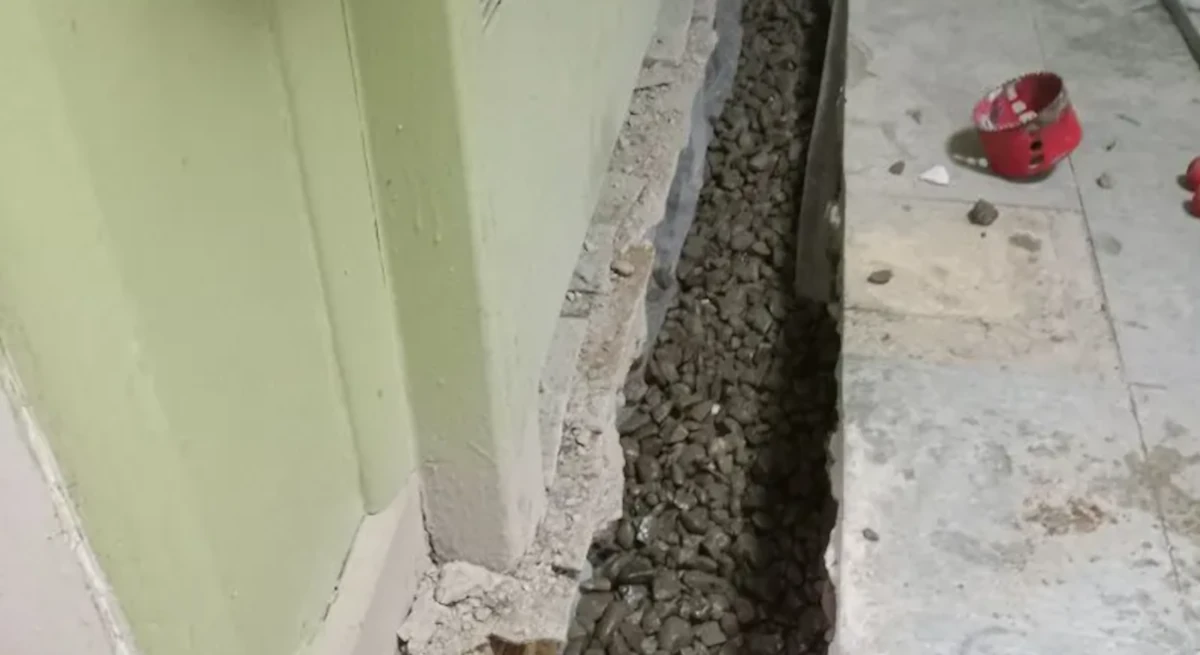
Interior French drains are trench-based systems installed along the inside perimeter of the basement floor. They are designed to intercept groundwater at the footing level and redirect it into a controlled discharge system.
Basic Structure:
- Concrete slab is cut along the perimeter
- Perforated drain pipe installed alongside the footing
- Clean gravel aggregate surrounds the pipe
- Trench is re-concreted flush with floor surface
- Connected directly to a sump basin and pump
Benefits:
- Relieves hydrostatic pressure at the lowest structural point
- Highly effective for chronic seepage and cove joint leaks
- Strong long-term durability
- Integrates seamlessly with sump pump systems
Suitable for high groundwater conditions
Baseboard / Channel Drain Systems
Baseboard or channel drain systems are low-profile drainage solutions installed at the wall-floor joint. Some proprietary versions sit slightly above the footing and are designed to capture wall seepage before it reaches the slab edge.
Basic Structure:
- Surface-level or shallow channel at wall-floor seam
- Drainage conduit positioned slightly above footing
- May include integrated wall vapor channel
- Sloped toward a sump collection point
Benefits:
- Less invasive than full-depth trench systems
- Effective at capturing wall seepage
- Faster installation in finished basements
- Minimal slab disruption
Can integrate vapor redirection features
Drainage Mat & Subfloor Systems
Drainage mat systems use dimpled membranes or drainage boards installed beneath the slab or along foundation walls. They create a capillary break and allow water to move toward a collection system without direct slab saturation.
Basic Structure:
- Dimpled drainage board beneath slab or against wall
- Air gap for moisture channeling
- Connected to perimeter drain or sump basin
- Often paired with vapor barrier systems
Benefits:
- Helps relieve vapor pressure
- Supports finished basement retrofits
- Improves subfloor moisture management
- Reduces minor seepage accumulation
- Enhances overall drainage system performance when combined with perimeter drains
Interior Footing Drain Systems
Interior footing drain systems are installed directly adjacent to the structural footing. They are designed to relieve hydrostatic pressure precisely where load-bearing stress occurs.
Basic Structure:
- Slab cut directly along foundation footing
- Drain pipe positioned at footing base
- Gravel envelope for filtration and flow
- Direct tie-in to sump basin system
Benefits:
- Targets groundwater at the lowest structural level
- Reduces long-term foundation stress
- Effective for persistent water intrusion
- Provides structural-level pressure relief
- Ideal when hydrostatic pressure is severe
Interior Basement Drainage vs Exterior Drainage Systems
Interior and exterior drainage systems both address groundwater intrusion, but they solve the problem at different stages of water movement around the foundation. The right solution depends on soil conditions, budget, accessibility, and the severity of hydrostatic pressure. Interior systems focus on managing water beneath the slab after it reaches the footing zone. Exterior systems aim to intercept groundwater before it contacts the foundation wall.
Interior Drainage Systems
- Less invasive installation
- Installed from inside the basement
- Does not stop water from entering surrounding soil
- Manages and relieves hydrostatic pressure
- Redirects water into a sump pump system
Exterior Drainage Systems
- Excavation around the foundation required
- Installed along the exterior footing
- Stops water before it reaches foundation walls
- Often paired with exterior waterproof membranes
- Higher overall cost due to labor and site restoration
Do Interior Drainage Systems Prevent Mold?
Interior drainage systems reduce mold risk by controlling groundwater intrusion and lowering persistent moisture at the slab edge. By relieving pressure and preventing standing water, they support improved humidity management and better indoor air quality. However, they do not remove existing mold growth or replace proper remediation. For active contamination or air quality concerns, refer to your mold remediation authority page for inspection and professional treatment guidance.
Interior Drainage System Cost
The interior basement drainage system cost varies depending on basement size, installation complexity, and system components. Most interior drainage system cost estimates are calculated per linear foot, but total investment depends on several structural and mechanical variables. Understanding what drives pricing prevents unrealistic expectations and helps homeowners compare proposals accurately.
Primary Cost Factors
Linear Footage
Most contractors price interior systems per linear foot of perimeter. Larger basements increase material, labor, and debris removal costs.
Slab Cutting & Trenching
Concrete thickness, access constraints, and dust control measures affect labor intensity and disposal expenses.
Sump Basin Installation
Includes excavation, basin liner, gravel base, sealing, and lid installation. Multiple basins increase cost.
Pump System
Price varies by horsepower, submersible vs pedestal configuration, and whether a battery backup system is included.
Discharge Configuration
Longer exterior routing, freeze protection, buried discharge lines, or tie-ins to drainage systems increase complexity and cost.
For a full pricing breakdown, regional averages, and interior vs exterior comparisons, refer to the dedicated cost guide.
When an Interior Drainage System Is the Right Solution
An interior drainage system is often the correct solution when groundwater pressure is the primary cause of intrusion. These systems are especially effective in finished basements where exterior excavation would cause major disruption. They are also appropriate for chronic floor-level seepage that occurs after heavy rainfall or seasonal thaw.
Common Scenarios
- Hydrostatic pressure beneath the slab
- Water entering through the cove joint (wall-floor seam)
- Recurrent seepage at the slab edge
- Finished basements requiring low-disruption solutions
- Situations where exterior excavation is impractical
When properly installed, interior systems provide long-term pressure relief and controlled discharge.
When It’s NOT Enough
Interior drainage systems manage groundwater, but they are not structural repair systems. In certain conditions, they must be paired with additional corrective measures.
Situations Requiring More Than Interior Drainage
- Structural foundation cracks
- Exterior grading failures causing surface pooling
- Collapsed or crushed exterior footing drains
- Wall bowing due to expansive soil pressure
Addressing underlying structural or site drainage issues may be necessary before or alongside interior drainage installation.
Interior Basement Drainage Systems: Final Thoughts
Interior basement drainage systems are engineered pressure-management solutions, not surface sealers and not structural repairs. When matched to the correct conditions, they provide reliable groundwater control and long-term basement protection. The key is accurate diagnosis before installation.
If you are experiencing basement water intrusion, recurring seepage, or signs of hydrostatic pressure, schedule a professional evaluation to determine whether an interior drainage system is the right solution for your home.
Frequently Asked Questions About Interior Basement Drainage Systems
How much does an interior basement drainage system cost?
Costs vary based on linear footage, slab cutting, sump installation, and discharge routing. Most projects are priced per linear foot with additional mechanical components affecting total investment.
Is an interior drainage system better than exterior waterproofing?
It depends on the water source. Interior systems manage pressure beneath the slab, while exterior systems stop water before it reaches the foundation wall.
Does an interior drainage system stop water from entering the soil?
No. It does not prevent groundwater from entering surrounding soil. It redirects water once pressure builds at the footing.
Will an interior drainage system eliminate basement mold?
It reduces moisture conditions that support mold growth but does not remove existing contamination. Active mold requires professional remediation.
How long does installation take?
Most interior drainage systems are installed within two to four days, depending on basement size and complexity.
Do interior systems require maintenance?
Periodic sump pump testing and discharge line inspections are recommended to ensure proper function.
Can interior drainage systems be installed in finished basements?
Yes. They are often chosen for finished basements because installation occurs from inside and minimizes exterior disruption.
What is hydrostatic pressure?
Hydrostatic pressure occurs when saturated soil pushes groundwater against the foundation footing and slab.
Do I still need a dehumidifier after installation?
In most cases, yes. Drainage systems control liquid water, while dehumidifiers manage airborne moisture.
How do I know if interior drainage is the right solution?
A professional inspection can determine whether water intrusion is caused by subsurface pressure, structural cracks, or surface drainage issues.