
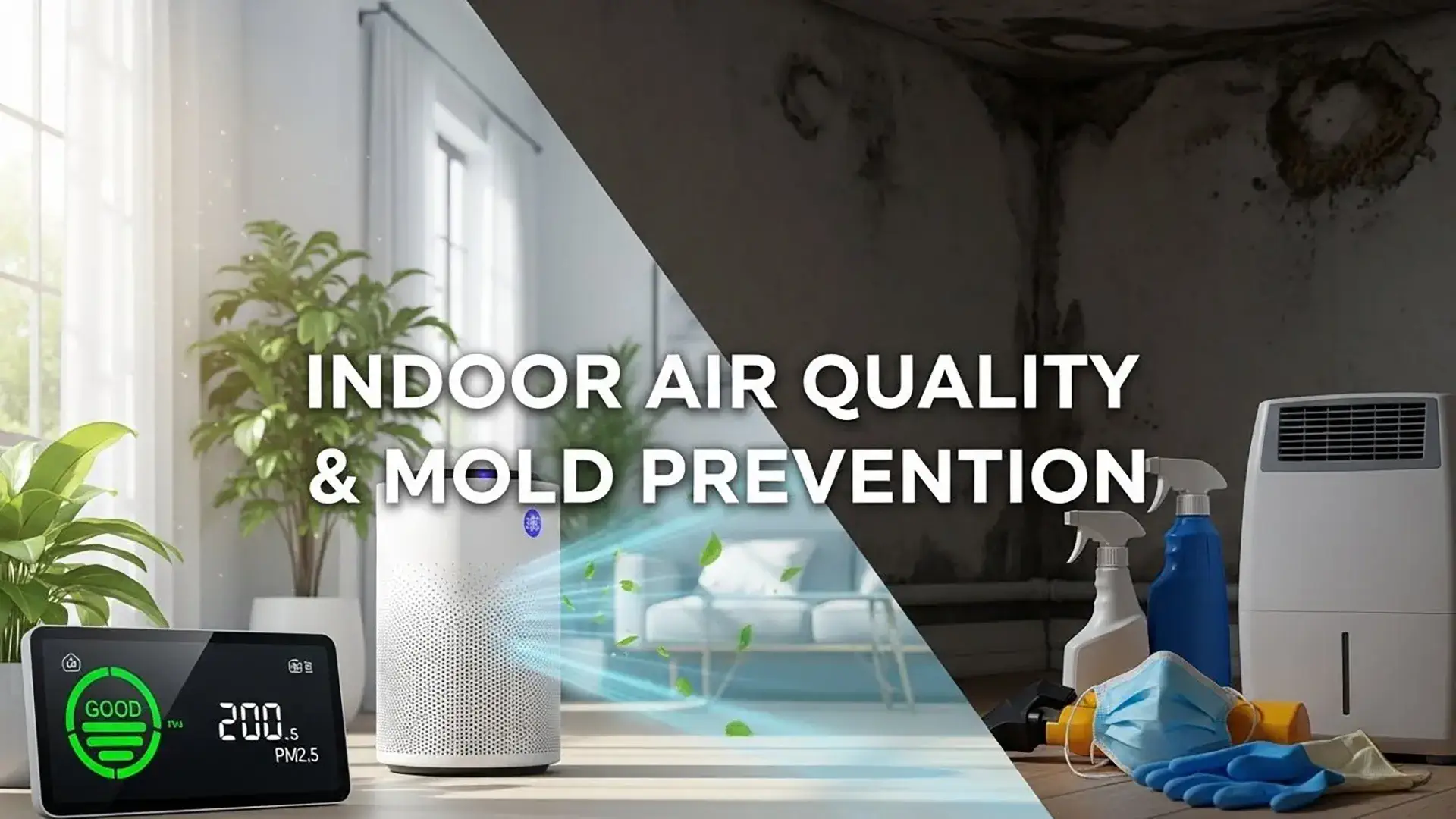
Indoor Air Quality (IAQ) is the measure of how clean and safe the air inside your home really is. It includes humidity, airflow, and pollutants, all factors that directly affect your health and your home’s durability. Poor IAQ is the leading trigger for mold growth, especially in low-airflow, high-moisture areas.
In this blog, we’ll discuss the importance of learning how to prevent mold on wood, walls, concrete, and bathrooms by controlling humidity and airflow. We’ll also show you how IAQ and mold prevention work together, what signs to watch for, and the proven solutions that keep your home healthy, dry, and resilient.
Don’t Let Mold Take Over Your Long Island Home or Business! Contact Mold Removal Experts for a Free Mold Testing Today!
What Is Indoor Air Quality & How It Impacts Mold Growth?
Indoor air quality (IAQ) refers to the condition of the air inside your home, including: humidity, airflow, and temperature. These three factors determine whether your space stays healthy or quietly becomes a perfect environment for mold to grow.
- Humidity: Humidity is the biggest driver. When moisture stays high for long periods, surfaces remain damp enough for mold to anchor and spread. This is why homeowners frequently ask questions like “can a dehumidifier prevent mold?”. And the short answer is yes, reducing excess moisture removes one of mold’s key ingredients.
- Airflow: Airflow is equally important. Mold thrives in low-air-circulation environments, such as behind furniture, inside closets, in corners, or in closed crawl spaces. When air doesn’t move, humidity lingers and surfaces dry slowly, allowing mold to colonize. This is why people often wonder “does air circulation prevent mold?”. And again, the answer is yes: moving air interrupts mold growth conditions.
- Temperature: Temperature also plays a supporting role. Warm, stagnant, humid conditions fuel faster mold reproduction, while cooler, drier, well-ventilated conditions slow it down.
Comparison Chart: Good IAQ vs. Conditions Where Mold Thrives
| Good IAQ | Where Mold Thrives | |
|---|---|---|
| Humidity 30–50% | ⇢ | Humidity above 60% for long periods |
| Active airflow (fans, vents, open paths) | ⇢ | Closed, stagnant rooms with little air movement |
| Balanced temperatures | ⇢ | Warm + humid + poor airflow |
| Surfaces dry quickly | ⇢ | Damp surfaces stay wet for 24–48 hours |
Why Indoor Air Quality Matters for Mold Prevention
Poor IAQ doesn’t just make the air feel “stuffy”. It creates the exact conditions mold needs to grow after storms, leaks, or high-humidity days. Good IAQ helps prevent mold after a flood, prevent mold after a leak, and even prevent mold in a crawl space, where moisture naturally collects.
1. Health Impacts
Mold exposure can lead to headaches, coughing, congestion, eye irritation, fatigue, and worsening asthma or allergies. Long-term exposure increases the chance of chronic respiratory issues, especially in young children, older adults, and anyone with sensitive lungs.
2. Home Damage
When mold settles into wood, drywall, insulation, or concrete, it breaks down materials from the inside out. Homeowners may notice warping, soft spots, crumbling drywall, persistent odors, or visible staining; all signs of hidden moisture and poor IAQ.
3. Financial Impact
Uncontrolled mold often results in expensive repairs: replacing damaged walls, removing contaminated insulation, disinfecting structural materials, or remodeling bathrooms and basements after moisture intrusion. Addressing IAQ early is far more cost-effective than restoring a mold-damaged home.
Concerned About Mold Conditions? Get an IAQ + Moisture Assessment Today.
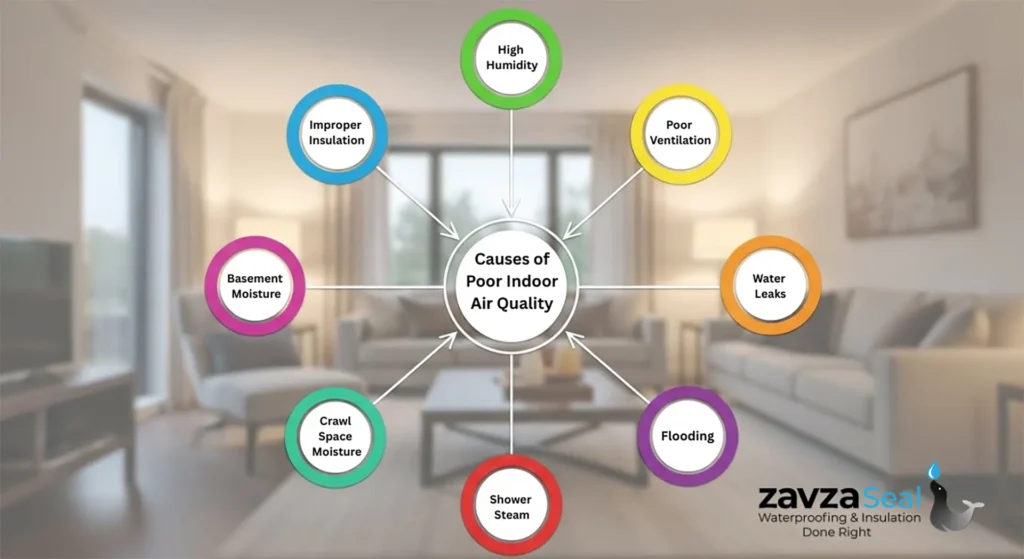
The Top Causes of Poor Indoor Air Quality (and How They Create Mold)
Poor IAQ develops from specific conditions that trap moisture, slow airflow, and keep surfaces damp. These are the same conditions that make it hard to prevent mold on wood, prevent mold in new construction, and prevent mold on concrete.
Main Causes:
- High humidity: Moisture lingers on surfaces long enough for mold to colonize quickly[.
- Poor ventilation: Stagnant air prevents drying and creates hidden pockets where mold thrives.
- Water leaks: Even small leaks inside walls turn framing, insulation, and wood into long-term moisture sources.
- Flooding: Saturated materials remain wet for days, giving mold its ideal conditions to spread aggressively.
- Shower steam: Bathrooms with no exhaust fan trap warm moisture, leading to mold on ceilings, grout, and drywall.
- Crawl space moisture: Exposed soil, condensation, and poor airflow push moisture upward into floors and framing.
- Basement condensation: Cold concrete attracts humidity, causing dampness and mold to form on slabs or storage items.
- Improper insulation: Temperature imbalances cause condensation behind walls, a hidden driver of mold growth.
If you have more than two of these issues, mold prevention steps are needed.
Signs & Symptoms of Poor Indoor Air Quality (Your Early Mold Warnings)
Before mold becomes visible, IAQ changes often reveal the problem first. These early signs help homeowners recognize when conditions are shifting toward mold growth. And when it’s time to learn how to prevent mold on walls or how to prevent mold and mildew in shower areas.
Health Indicators:
- Coughing or throat irritation
- Allergy flare-ups
- Frequent headaches
- Breathing problems, especially in the morning
- Eye or sinus irritation
Home Indicators:
- Musty or earthy odors (classic mold warning)
- Condensation on windows or walls
- Black spots in bathrooms or showers
- Wood discoloration or softening
- Yellow or brown stains on walls or ceilings
Noticing these signs? Schedule a mold + IAQ inspection.
Indoor Air Quality Testing & Mold Risk Assessment: What Homeowners Should Expect
IAQ and mold assessments give homeowners a clear picture of what’s happening behind walls, inside materials, and throughout the air in their home. These tests also help determine whether you need improvements like airflow correction or installing a dehumidifier to prevent mold in basement areas.
What IAQ Testing Looks For
- Humidity levels throughout the home
- Airflow patterns and stagnant zones
- Temperature variations
- VOCs (volatile organic compounds)
- Particulate levels such as dust, spores, and allergens
What Mold Assessments Look For
- Moisture readings inside walls, floors, and building materials
- Thermal imaging to locate hidden leaks or cold spots
- Surface sampling (when needed)
- Inspection of crawl spaces, basements, and bathrooms
- Evidence of past water damage
Most IAQ + mold assessments take 45-90 minutes, depending on home size and moisture issues. Most professionals provide initial findings the same day, with detailed reports available within 24-48 hours, including recommendations for repairs, moisture control, and mold prevention.
Proven Solutions That Improve IAQ & Prevent Mold Growth
These are the most reliable ways to control moisture, improve airflow, and stop mold from forming — whether you’re trying to prevent mold after leak, prevent mold after flood, or protect vulnerable areas like crawl spaces, bathrooms, and basements.
Humidity Control Solutions
- Dehumidifiers: Reduce moisture in the air and lower the risk of mold growth on wood, concrete, and drywall.
- Crawl Space Dehumidification: Stabilizes moisture below the home to prevent mold in crawl space and protect flooring systems.
- Basement Humidity Control: Using a dehumidifier to prevent mold in basement keeps concrete surfaces and stored belongings dry.
- Whole-home Humidity Balancing: Monitors and adjusts moisture levels from room to room to maintain healthy IAQ across the entire house.
Not Sure Which Solution Fits Your Home? Get a Custom IAQ + Mold Prevention Plan.
Ventilation Improvements
- HRVs/ERVs: Exchange stale indoor air with fresh, filtered outdoor air while regulating humidity.
- Bathroom exhaust fans: Essential to remove steam and moisture before it settles on ceilings and walls.
- Shower venting strategies: REDUCES moisture buildup and teaches homeowners how to prevent mold growth in shower areas.
- Air circulation upgrades: Fans and airflow pathways answer the question: “Does air circulation prevent mold?” Yes, by drying surfaces faster.
Filtration & Purification Solutions
- Air Purifiers: Many homeowners ask: “Do air purifiers prevent mold?” Purifiers don’t kill mold, but they reduce airborne spores and improve IAQ.
- HEPA Filters: Capture mold spores, allergens, and particulates that worsen IAQ and respiratory symptoms.
- HVAC Filtration Upgrades: Prevent buildup inside ductwork and help maintain cleaner air throughout the home.
Surface Protection & Building Material Prevention
- Mold-resistant Paint: Helps protect surfaces and homeowners often ask: “Does painting wood prevent mold?” It helps resist moisture but does not replace airflow or humidity control.
- Lumber Treatments for New Builds: Essential to prevent mold in new construction, especially during humid or rainy building seasons.
- Basement & Crawl Space Vapor Barriers: Basement and crawl space vapor barriers reduce moisture coming through concrete or soil, helping to protect walls and prevent mold on concrete.
Leak & Moisture Source Control
- Fixing Roof Leaks: Stops water intrusion that can fuel mold behind ceilings and walls.
- Fixing Plumbing Leaks: Prevents ongoing dampness that can quietly feed mold growth for months.
- Drying Materials After Water Damage: Critical to prevent mold after flood or prevent mold after leak before moisture takes hold.
Not sure which solution fits your home? Get a custom IAQ + Mold Prevention Plan.
Cost Guide: Realistic Pricing Expectations
Understanding the cost of IAQ improvements helps homeowners plan ahead and choose the right level of protection. These ranges reflect typical services, equipment, and installation needs and support natural keyword coverage for prevent mold cost and IAQ testing cost.
IAQ Testing Cost Range
- Basic IAQ testing: low-to-mid range
- Full IAQ + mold risk assessment: mid-to-upper range
Equipment & System Costs
- Dehumidifiers (portable or basement units): low-to-mid range
- Whole-home dehumidification systems: mid-to-upper range
- Air purifiers and filtration upgrades: low-to-mid range
- HRV/ERV installations: mid-to-high range depending on home complexity
Mold Prevention Services
- Crawl space moisture control: variable
- Vapor barrier installation: mid range
- Whole-home mold prevention package: broad range depending on home size and severity of issues
Note: Many service companies offer payment plans or financing options for larger IAQ upgrades or moisture-control installations.
Creating a Safe, Dry, Healthy Home Environment
Mold prevention is completely achievable, and most IAQ solutions start working fast. When you control moisture, manage ventilation, and protect materials like wood, concrete, walls, and bathrooms, you build long-term defense against mold and create a cleaner, healthier home.
Indoor Air Quality and Mold Prevention: Final Thoughts
Indoor air quality is the foundation of mold prevention. When humidity stays balanced, air moves freely, and materials dry quickly, mold loses the conditions it needs to grow. As we’ve covered, poor IAQ quietly creates the perfect environment for mold to form on wood, walls, concrete, bathrooms, basements, and crawl spaces.
For Long Island homeowners, coastal humidity and hidden moisture make proactive IAQ management especially important. The right steps; dehumidification, better ventilation, leak repair, and proper filtration work together to keep your home dry, healthy, and protected long-term.
If you’ve noticed musty odors, condensation, or recurring humidity issues, now is the time to get ahead of mold before it spreads.
Schedule Your Indoor Air Quality & Mold Prevention Assessment Today
Frequently Asked Questions About:
Does bleach prevent mold or is it a myth?
Bleach may lighten stains, but it does not reliably prevent mold. It often fails to penetrate porous materials like wood and drywall.
Do air purifiers prevent mold or just remove spores?
Let’s answer the first question first: Do air purifiers prevent mold? They do not stop mold growth on surfaces, but they do remove airborne contaminants and improve IAQ, which helps reduce how quickly mold spreads through the home.
As for the second question, air purifiers remove spores, not moisture. Mold needs humidity and a damp surface to grow. Purifiers can reduce what you breathe, but they cannot replace humidity control, leak repair, or ventilation.
In short: Air purifiers support mold prevention, but they cannot prevent mold on their own.
How do I prevent mold in my shower grout?
Use daily ventilation, proper fan use, and cleaning routines to prevent mold growth in shower grout areas.
How do I prevent mold on my bathroom ceiling?
Increase airflow, reduce humidity, and ensure your bathroom exhaust fan is sized correctly.
How do I prevent mold and mildew in my shower long-term?
Ventilate during and after showers, keep surfaces dry, and maintain a consistent cleaning schedule using mold-resistant products.
Does air circulation prevent mold or just reduce odors?
Does air circulation prevent mold? Yes. Moving air dries surfaces and reduces the moisture mold needs.
How do I prevent mold on wood, decks, and porches?
Improve airflow, reduce moisture exposure, and use protective coatings to prevent mold on wood and outdoor surfaces.
How do I prevent mold on my screened porch?
Keep humidity low, increase airflow, and clean surfaces regularly to reduce organic buildup.
How do I prevent mold in new construction homes?
Use treated lumber, humidity control, and proper insulation to prevent mold in new construction.
How do I prevent mold on concrete surfaces?
Use dehumidifiers, vapor barriers, and airflow strategies to prevent mold on concrete and reduce condensation.
How do I prevent mold in crawl space areas?
Combine vapor barriers, moisture sealing, and crawl space dehumidification to prevent mold in crawl space environments.
How do I prevent mold after a flood or leak?
Dry materials quickly, remove soaked insulation, and use dehumidifiers aggressively to prevent mold after flood or prevent mold after leak events.
How to prevent mold on walls?
Reduce humidity, improve ventilation, and fix leaks promptly to maintain dry interior surfaces.
Q: Can a dehumidifier prevent mold?
Yes — steady humidity reduction is one of the most effective ways to stop mold before it can form.
Q: What about preventing mold in basements?
Use a dehumidifier to prevent mold in basement, improve drainage, and seal vapor intrusion points.