
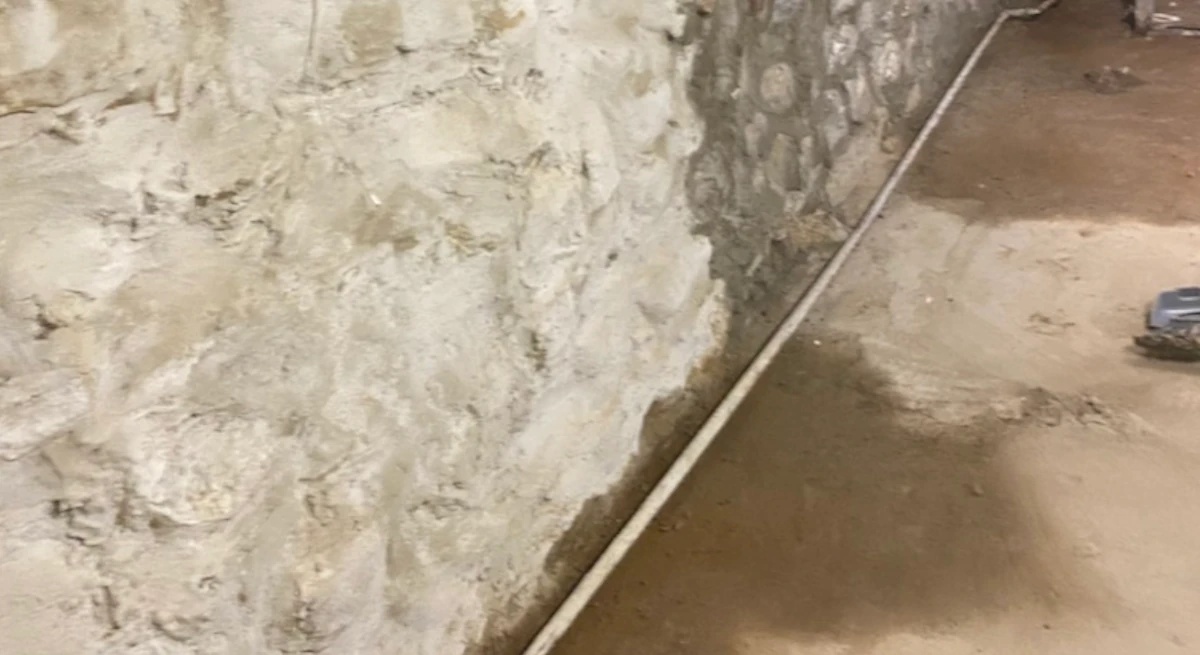
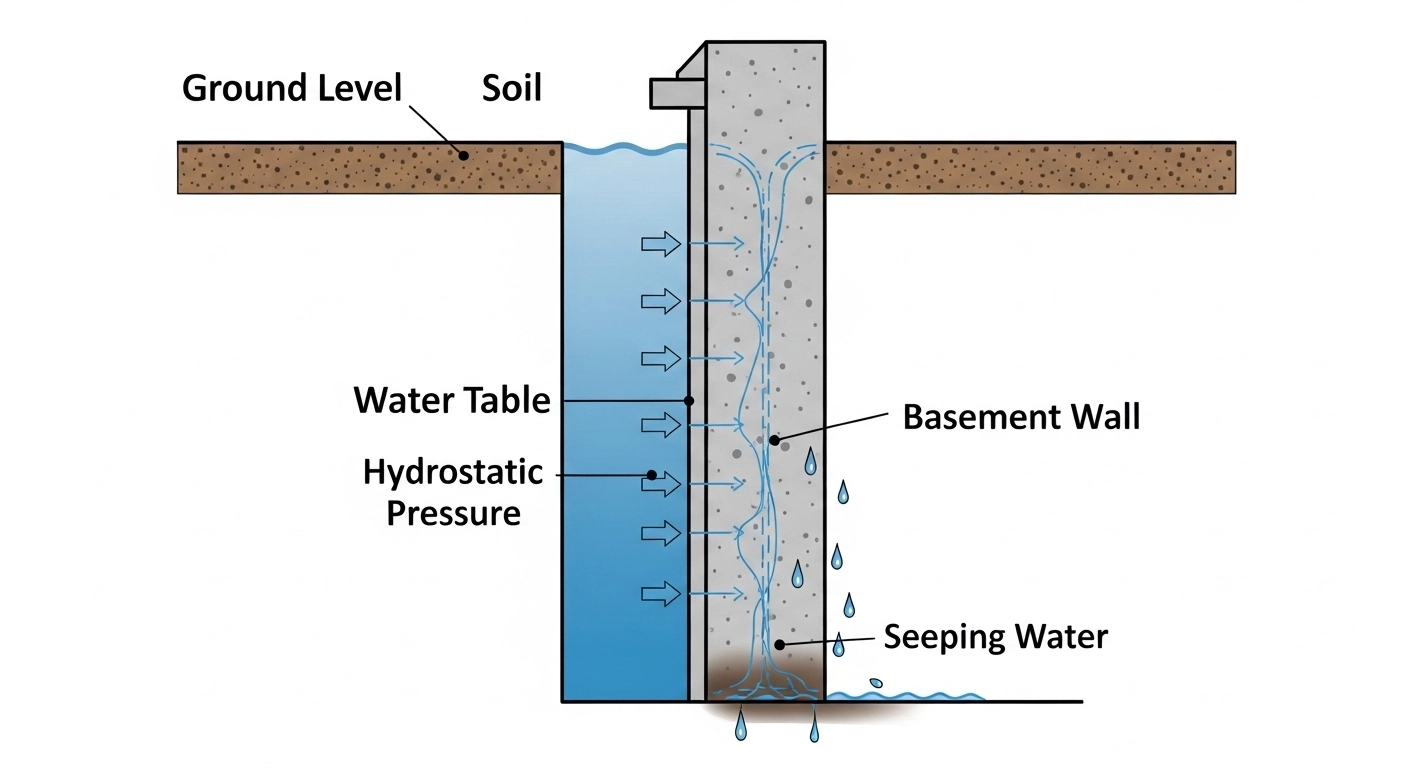
Hydrostatic pressure is one of the most misunderstood, and most destructive forces acting on your home. When groundwater saturates the soil around your foundation, it creates relentless outward and downward pressure against your basement walls and slab. Over time, that pressure doesn’t just “sit there.” It builds. It pushes. And eventually, it finds a way in.
In this guide, you’ll learn exactly what hydrostatic pressure is, why it’s the driving force behind many basement leaks, what causes it to intensify, and how to recognize the early warning signs before minor seepage turns into structural damage. We’ll also walk through practical prevention strategies and professional solutions that can relieve pressure and protect your foundation long term.
If you’re seeing damp walls, musty odors, or water at the cove joint in your Long Island or Brooklyn home, don’t ignore it. Hydrostatic pressure will only get worse. Let’s fix the problem now before it gets worse and more expensive!
Protect Your Long Island Or Brooklyn Basement Before The Damage Gets Worse
What Is Hydrostatic Pressure?
Hydrostatic pressure is the force water exerts when it’s at rest in the soil around your home’s foundation. This force increases as soil becomes saturated after rain, snowmelt, or a rising water table, pushing water against basement walls and floors.
Because soil retains water and pressure builds with depth, this force can lead to serious moisture intrusion even through tiny cracks. Understanding hydrostatic pressure is essential for preventing basement leaks and structural damage.
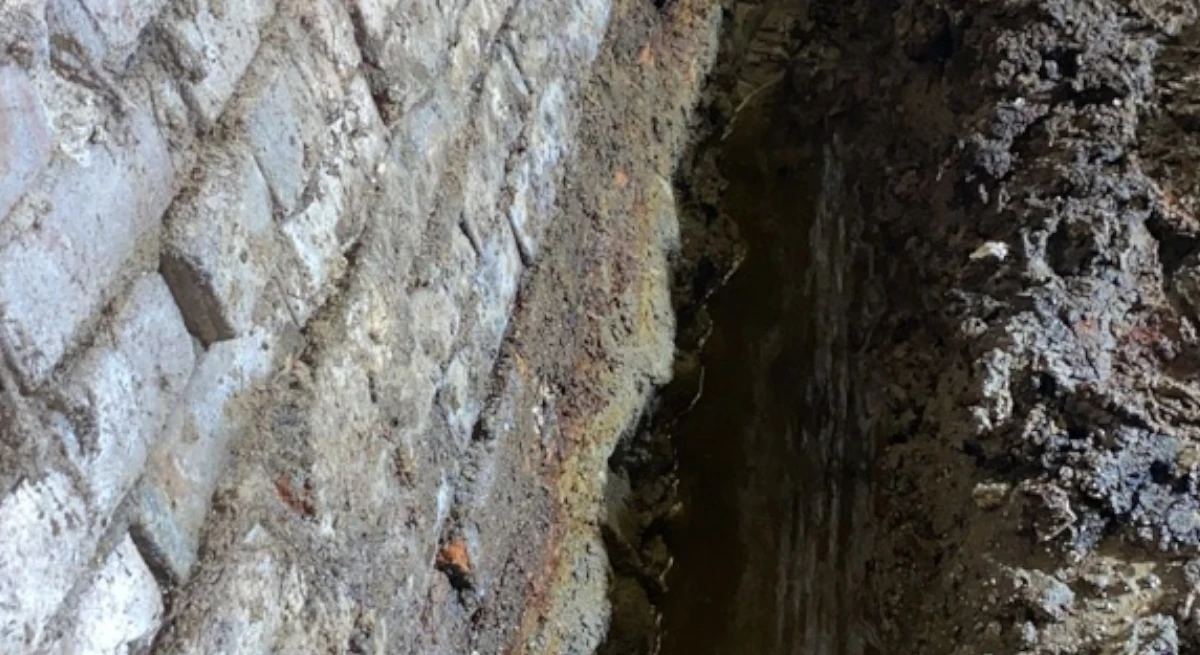
Signs of Hydrostatic Pressure
Hydrostatic pressure builds gradually beneath your foundation, often long before major water intrusion occurs. It rarely starts with dramatic flooding. Instead, it shows up as subtle warning signs that many homeowners overlook. Identifying these early indicators can help prevent structural damage, mold growth, and costly foundation repairs. The sooner you recognize the pattern, the easier and less expensive it is to correct.
- Damp or Wet Basement Walls and Floors: Persistent moisture on concrete surfaces is one of the earliest signs that groundwater pressure is forcing moisture through porous materials.
- Efflorescence (White Mineral Residue on Walls: A chalky white substance on masonry indicates water has evaporated from the surface, leaving behind mineral deposits, proof that moisture is passing through the wall.
- Musty Odors and Mold Growth: Elevated humidity from trapped moisture creates an environment where mold and mildew thrive, often before visible water is present.
- Visible Cracks in Walls or Slab: Hairline or widening cracks may form as external pressure stresses foundation walls and floor slabs over time.
- Water Seepage at the Wall-Floor Joint (Cove Joint): The seam where the wall meets the floor is a common weak point, and seepage here frequently signals hydrostatic pressure buildup around the foundation.
What Causes Hydrostatic Pressure?
Hydrostatic pressure doesn’t happen randomly. It’s the result of specific environental and construction factors that affect soil saturation and water movement around your home.
Key Contributing Factors
- Heavy rain and snowmelt increasing soil moisture
- Poor yard grading is causing water to pool near the foundation
- Clogged or ineffective gutters and downspouts
- High water table or poorly draining soil (like clay)
- Inadequate exterior
Hydrostatic pressure doesn’t happen randomly. It’s the result of specific environmental and construction factors that affect soil saturation and water movement around your home.
Hydrostatic Pressure Problems in Long Island & Brooklyn Basements
Hydrostatic pressure behaves differently depending on soil type, water table depth, and foundation style. In Long Island and Brooklyn, basement leaks are rarely random. They’re predictable based on local environmental conditions.
Why It’s So Common Here
High Water Table on Long Island
Many areas sit close to the natural water table. After heavy rain or snowmelt, groundwater rises and increases lateral pressure against basement walls and floors.
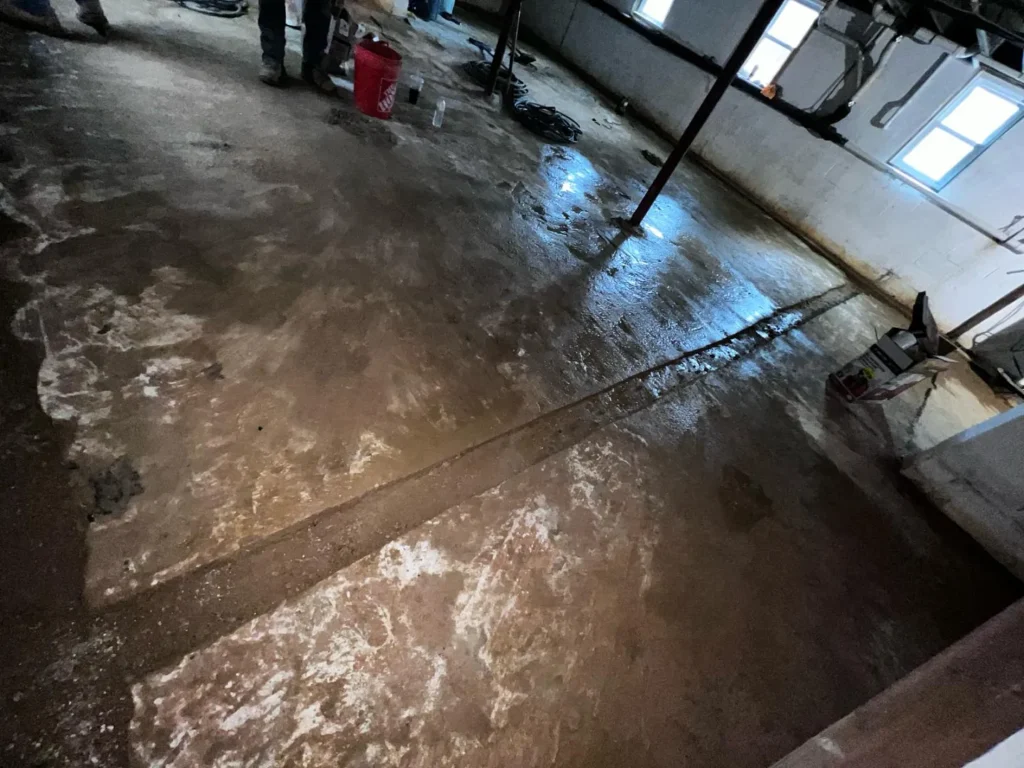
Clay and Dense Soil Pockets
Certain neighborhoods contain clay-heavy soil that retains water instead of allowing it to drain. This traps moisture around foundations and intensifies hydrostatic force.Older Brick and Masonry Foundations in Brooklyn
Brownstones and older homes often lack modern waterproof membranes. Mortar joints deteriorate over time, creating entry points for water seepage.Coastal Storms and Nor’easters
Intense rain events saturate soil quickly. When the ground can’t absorb more water, pressure builds and forces moisture through the weakest structural points. If you’re noticing water coming through your basement wall, water rising through the basement floor, or seepage at the cove joint after storms, hydrostatic pressure is likely the underlying cause.
Ignoring it allows small leaks to turn into structural damage.
Best Solutions for Hydrostatic Pressure Relief
Hydrostatic pressure cannot be “sealed away.” It must be relieved, redirected, or stopped before structural damage occurs. The correct approach depends on soil saturation levels, foundation design, water table depth, and whether intrusion is isolated or systemic.
Below is a clear comparison of the most effective long-term solutions.
Interior Drain Tile System (French Drain)
How It Works: A perimeter trench is installed beneath the basement slab to capture groundwater and channel it into a sump basin before pressure forces it through walls or floors.
Best For: Recurring seepage at the cove joint or floor-wall seam
Longevity: Long-term
Primary Advantage: Relieves hydrostatic pressure consistently without full exterior excavation
Limitation: Does not prevent groundwater from contacting the foundation wall. It manages it after it reaches the footing
When It’s Ideal: Homes with chronic wall-floor joint leaks or high groundwater movement beneath the slab.
Sump Pump System
How It Works: Groundwater collected by a drain system is pumped safely away from the foundation before pressure accumulates.
Best For: High water table regions and frequent storm-related saturation
Longevity: Long-term (with routine maintenance and backup protection)
Primary Advantage: Critical pressure relief in Long Island and coastal environments
Limitation: Mechanical system requiring power and periodic servicing
When It’s Essential: If groundwater levels rise seasonally or after heavy rainfall, a sump pump becomes a foundational defense layer — not an upgrade.
Exterior Waterproofing Membrane
How It Works: Soil is excavated to expose foundation walls, which are sealed with a waterproof membrane and often paired with drainage board and footing drains.
Best For: Severe wall penetration, deteriorated masonry, or foundational cracks
Longevity: Long-term
Primary Advantage: Stops water before it contacts the wall
Limitation: Higher upfront cost due to excavation and labor
When It’s Strategic: If walls show widespread moisture migration or structural vulnerability, exterior intervention addresses the root source directly.
Exterior Footing Drains
How It Works: Drain piping installed at footing depth intercepts groundwater and carries it away from the structure.
Best For: Poor yard grading or inadequate perimeter drainage
Longevity: Long-term
Primary Advantage: Direct pressure diversion at the base of the foundation
Limitation: Requires excavation and proper slope engineering
When It’s Effective: Homes where hydrostatic buildup originates from surrounding soil saturation rather than wall failure.
Polyurethane Crack Injection
How It Works: Expanding polyurethane foam seals the crack internally, blocking the current leak path.
Best For: Active, isolated wall cracks
Longevity: Medium-term (varies based on external pressure conditions)
Primary Advantage: Targeted repair with minimal disruption
Limitation: Does not relieve broader hydrostatic buildup
When It Works: Small, localized intrusion with otherwise stable drainage conditions.
Vapor Barriers and Interior Sealants
How It Works: Interior coatings reduce moisture permeability through porous materials.
Best For: Minor vapor transmission or humidity control
Longevity: Short-term if external pressure persists
Primary Advantage: Surface-level moisture reduction
Limitation: Does not address hydrostatic force or groundwater saturation
When Works: Supplemental moisture control, not a primary waterproofing strategy.
How to Prevent Hydrostatic Pressure
Eliminating hydrostatic pressure isn’t possible, but you can drastically reduce its impact with targeted strategies. These solutions focus on diverting water away from your home and relieving subsurface pressure before it seeps inside.
Exterior Prevention Strategies
- Proper yard grading away from the foundation
- Clean gutters and downspouts
- Exterior drainage systems (French drains)
- Soil amendments to improve drainage
Interior Relief Methods
- Sump pump and interior drain tile systems
- Perimeter interior drainage systems
- Vapor barriers to direct moisture into drains
- Dehumidifiers for humidity control
Hydrostatic Pressure: Final Thoughts
To recap, hydrostatic pressure is a silent but powerful cause of basement leaks, structural damage, and persistent moisture problems. By understanding how it forms, recognizing the warning signs, and applying the right prevention and relief strategies, you can protect your basement and your home’s foundation. Start with proper drainage and moisture management, and consult experienced professionals if pressure-related issues continue.
Call On Mold Removal Experts for Free Mold Inspections, Waterproofing, and Drainage Systems in Long Island!
Hydrostatic Pressure: Final Thoughts
What exactly is hydrostatic pressure in a basement?
Hydrostatic pressure is groundwater pushing against the foundation walls and slab due to soil saturation.
Why does hydrostatic pressure cause basement leaks?
Pressure forces water through tiny cracks and pores in concrete once the external force exceeds internal resistance.
Is hydrostatic pressure the same as water table pressure?
They are related. Hydrostatic pressure increases as the water table rises and the soil becomes saturated.
What are common signs of hydrostatic pressure damage?
Damp walls, efflorescence, musty odors, and foundation cracks are common indicators.
Does hydrostatic pressure always cause structural damage?
Not always, but prolonged pressure can lead to bowed walls or widening cracks.
Can grading your yard reduce hydrostatic pressure?
Yes. Positive grading diverts water away from the foundation and helps prevent saturation.
Do sump pumps stop hydrostatic pressure?
They relieve pressure by collecting and ejecting water, but they don’t eliminate the pressure itself.
Are basement walls more susceptible to hydrostatic pressure than floors?
Both can be affected, but walls often show early signs due to lateral pressure.
Is soil type important in hydrostatic pressure issues?
Yes. Clay soils retain water and exert more pressure than sandy soils.
When should I call a waterproofing or foundation expert?
If DIY prevention fails or you see cracks/bowing and frequent water intrusion.