
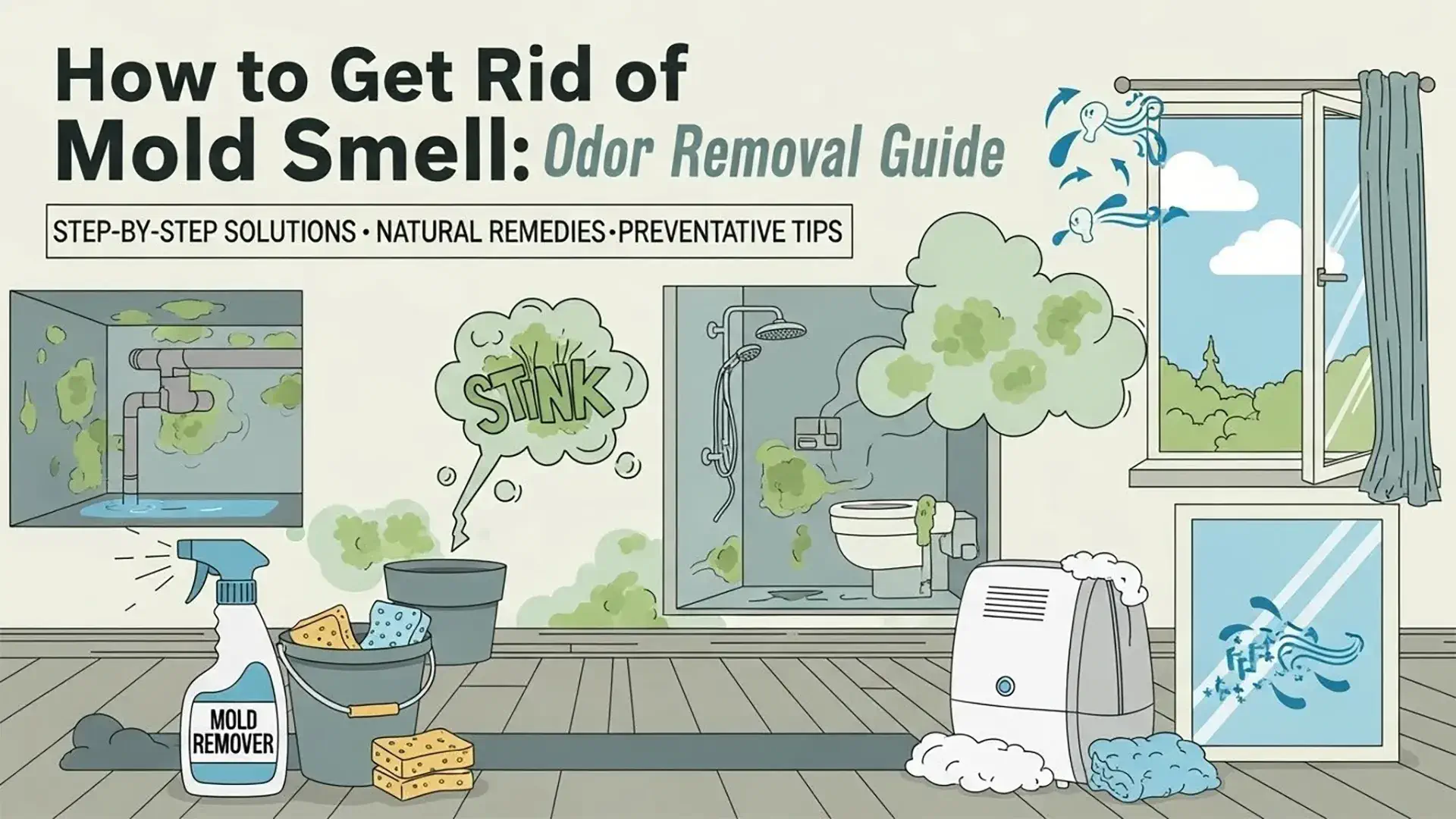
A persistent musty or moldy odor is more than unpleasant. It’s a sign that moisture and microbial growth are still present somewhere in your home. That smell doesn’t appear randomly, and it doesn’t fade permanently on its own. It’s a signal that conditions are still right for mold or mildew to exist, even if you can’t see it.
Many people try to solve mold smell with sprays, candles, or air fresheners, assuming the problem is cosmetic. But odor is not harmless, and it’s rarely isolated. When a mold smell lingers, it means moisture has interacted with building materials long enough for microbial activity to take hold, and that activity produces gases you can smell.
This guide explains how to get rid of mold smell the right way: why it happens, what actually removes it, and why it often comes back when the underlying conditions aren’t addressed. By the end, you’ll understand when DIY approaches are sufficient, when they fail, and when professional assessment is the next logical step.
How to Get Rid of Mold Smell (What Actually Works)
To understand how to get rid of mold smell permanently, it helps to know that odor removal is a process, not a product. No spray, fogger, or absorber can succeed on its own if moisture and contamination are still present. When odor treatment fails, it’s almost always because one critical step was skipped.
There is one non-negotiable rule: mold odor cannot be removed without controlling moisture first. Odor is a symptom of conditions, not the condition itself. If dampness remains in materials or the surrounding air, microbial activity continues, and the smell returns.
Effective mold odor removal follows a clear framework:
- Stop moisture at the source
- Dry affected materials thoroughly
- Remove or clean contaminated materials
- Neutralize remaining odor compounds
Each step builds on the one before it. As explained above, masking odor without addressing conditions only delays the problem. The sections that follow break down how this process works in real homes, why shortcuts fail, and how to apply it correctly.
What Causes Mold Smell in Homes
Mold smell comes from gases known as microbial volatile organic compounds (MVOCs). These gases are released as mold and mildew break down organic materials like wood, drywall, dust, and insulation. You smell MVOCs long before mold becomes visible, which is why odor is often the first warning sign.
In many homes, the source of the smell is hidden. Mold commonly develops behind walls, under flooring, inside insulation, or within HVAC systems after leaks, flooding, or prolonged humidity. Even when the original water event is long past, moisture can remain trapped in porous materials, allowing odor-producing microbes to persist.
This is why mold smell is so often misdiagnosed as a ventilation issue or “old house” problem. The odor doesn’t mean the home is dirty. It means conditions that existed, or still exist, are allowing microbial growth. And as explained in the previous section, that’s why odor removal always starts with moisture control, not fragrance.
Step-by-Step: How to Get Rid of Mold Smell Properly
With the cause understood, here’s how to get rid of mold smell step by step without shortcuts.
Step 1: Find and Stop the Moisture Source
Every successful mold odor fix begins by identifying where moisture is entering or accumulating. As explained earlier, odor is a moisture symptom. If moisture isn’t identified, the smell will return.
Moisture sources are not always obvious. Common contributors include slow plumbing leaks, roof or window intrusion, condensation from poor ventilation, groundwater seepage, or persistently high indoor humidity. As a general rule, indoor humidity above 55–60% significantly increases the likelihood of mold odor.
The goal is to confirm where moisture is present and why. Skipping this step guarantees failure, because odor removal cannot outpace ongoing moisture exposure.
Step 2: Dry the Area Completely
Mold odor persists when materials remain damp, even if the original leak has stopped. Even after moisture is controlled, drying is required before odor removal can succeed. Drying must happen quickly. Materials that stay damp longer than 24-48 hours allow microbial activity to continue or reactivate. This is where many DIY efforts fall short.
Surface drying, such as wiping visible water or running a fan, is not the same as structural drying. Moisture often remains inside drywall, subflooring, insulation, or framing. Without thorough drying, odor compounds continue to be released, and musty smells linger.
Step 3: Remove Contaminated Materials
Odor can’t be neutralized if it’s embedded in porous materials like drywall, carpet, or insulation. This is why masking sprays fail, as mentioned earlier. Some materials can be cleaned effectively if contamination is light and accessible. Non-porous or semi-porous surfaces may be salvageable once dried.
However, porous materials absorb odor deeply and often cannot be fully deodorized. Carpet padding, insulation, ceiling tiles, and damaged drywall are common odor reservoirs. When odor is trapped inside these materials, removal is often the only way to stop the smell permanently.
Step 4: Neutralize Remaining Mold Odors
Once contamination is removed, residual odors can be neutralized using appropriate methods. Only after cleaning and drying should odor neutralization be attempted. Neutralization targets odor-causing compounds left behind in the air or on surfaces. This is different from adding fragrance, which simply competes with the smell.
Some methods are effective when used correctly, while others, such as improper DIY ozone use can be ineffective or unsafe. At this stage, odor reduction is possible because the source has already been addressed. Without the earlier steps, neutralization methods cannot hold.
How to Get Rid of Mold Smell by Room or Area
Mold odors behave differently depending on where moisture is trapped in the home.
- Basements: Odor often persists due to groundwater intrusion, poor drainage, or high ambient humidity. Even without visible mold, damp concrete and framing can sustain odor.
- Bathrooms: Repeated condensation and limited ventilation allow mildew smells to return quickly if moisture control is inconsistent.
- HVAC Systems: Mold smell in HVAC systems spreads through airflow. Odor here often points to contamination inside ducts, coils, or insulation rather than surface growth.
In each space, the steps discussed earlier apply, but the reason moisture remains trapped is what determines how stubborn the odor becomes.
Why Mold Smell Keeps Coming Back
If mold smell keeps returning, it’s usually because one part of the removal process was skipped or incomplete. Common failures include moisture sources that were never fully identified, materials that were dried only on the surface, or porous items that were cleaned instead of removed. In other cases, humidity control wasn’t maintained after the initial fix.
Each of these failures ties back to the moisture-odor relationship explained earlier. Odor doesn’t “come back on its own”. It returns because conditions never fully changed.
When DIY Isn’t Enough (When to Call a Professional)
In some situations, mold odor removal goes beyond what DIY methods can safely or effectively handle.
Professional assessment is often appropriate when:
- Odor affects large areas or multiple rooms
- Smell has persisted for months or years
- There is a history of flooding or significant water damage
- Occupants experience ongoing symptoms linked to indoor air quality
- Odor appears connected to HVAC or hidden structural areas
At this point, professional help isn’t about fear. It’s about access to proper detection, drying, and verification tools when the scope exceeds surface-level solutions.
How to Get Rid of Mold Smell: Final Thoughts
Knowing how to get rid of mold smell starts with understanding that odor is your home’s warning system, not the problem itself. Mold smell signals moisture, contamination, or both, and ignoring that signal allows conditions to persist.
Long-term mold control depends on moisture management, not repeated deodorizing. When addressed correctly, odor removal becomes permanent rather than cyclical. If you’re unsure where moisture is coming from or why odor keeps returning, the next step is an inspection or professional assessment to clarify what’s really happening behind the scenes.
Stop Mold Odor at the Source With a Professional Inspection