
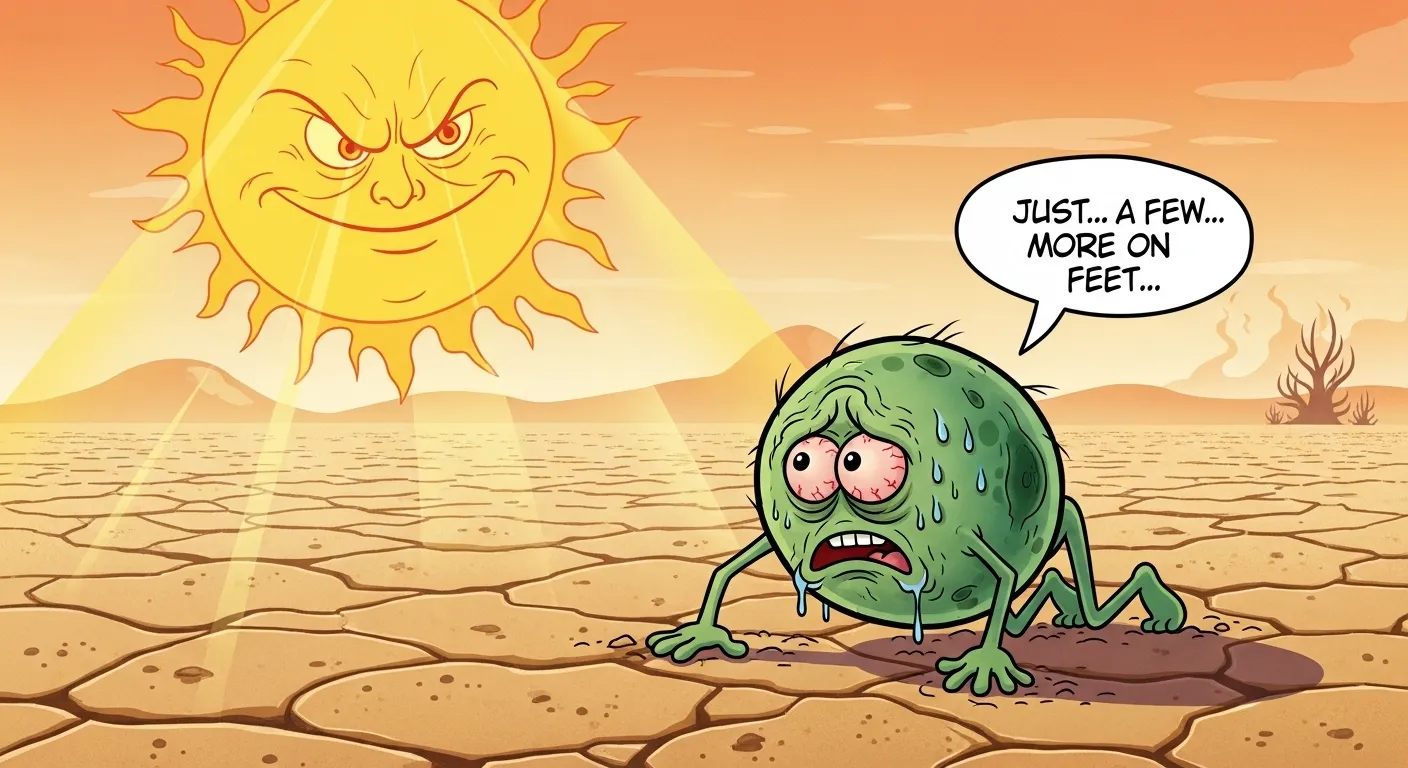
Most people assume mold disappears once an area dries out. That assumption makes sense, but it is only partially true. This section sets expectations by explaining what moisture removal actually does, what it does not do, and why mold behavior is often misunderstood.
This article explains how long mold can persist without moisture, what “survival” really means in practical terms, and how this knowledge affects real homes and decisions.
Get a Free Mold Inspection for Your Long Island Home or Business! Contact Us Here.
So, How Long Can Mold Survive without Moisture? The Basics
There is no universal expiration date for mold. Mold spores can remain present for months or years in dry environments depending on the species, the surface involved, and how long the area stayed wet before drying. You see, mold is biologically simple and brutally efficient. It does not need sunlight, fresh air, or special nutrients to survive. A lot of people know about the mold danger zone from working with food, but mold can even grow in the cold.
The single factor that determines whether mold grows or stalls?
Moisture.
A food source is almost always present indoors. It will eat anything organic. Wood, drywall paper, dust, fabrics, and adhesives all qualify. Temperature matters, but most indoor environments already fall within mold’s comfort zone.
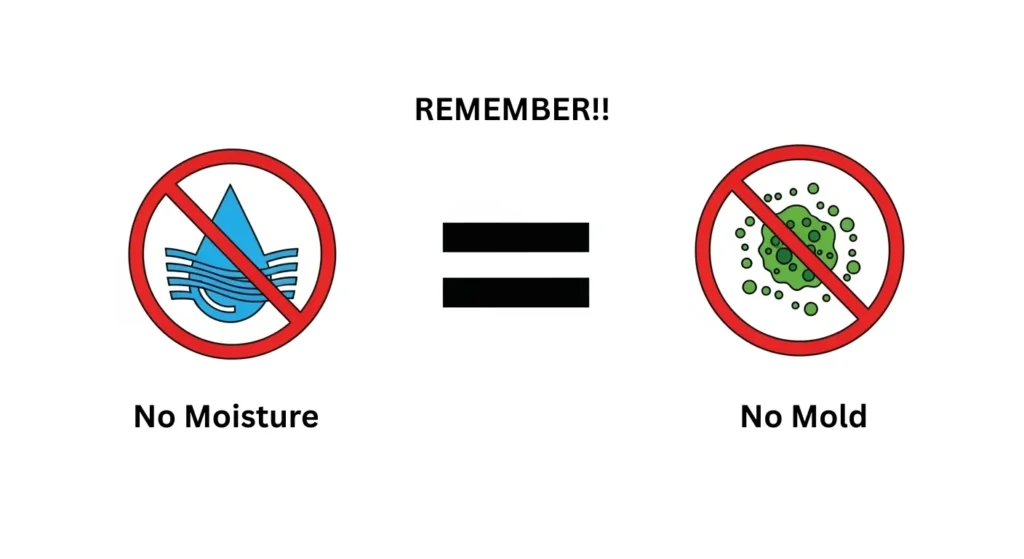
Moisture is the switch.
Flip it on…. Mold grows. Flip it off… Growth stops.
What Happens to Mold When Moisture Is Removed
Just to clarify, when moisture is removed, mold does not just vanish. It would be nice if it did, but it goes dormant. Active growth slows, then stops, but the physical structure and spores remain on or inside the material.
This is why dried areas can look normal for months or years and then suddenly show mold after a small leak or humidity spike. The mold did not magically appear. The conditions simply became favorable again.
Drying changes behavior, not history.
Why Mold Often Comes Back After Drying
Drying fixes the immediate problem, not the underlying vulnerability. Small moisture events are enough to restart activity.
Common triggers include:
- Seasonal Humidity Increases: Indoor air quietly crosses the threshold mold needs.
- Condensation Cycles: Cold surfaces create localized moisture even in “dry” homes.
- Minor Leaks: Small plumbing or roof issues that never fully dry surrounding materials.
Mold does not require flooding to return. It only needs moisture to cross the line again.
Materials Mold Can Persist On Without Moisture
Material type determines whether drying alone is realistic or wishful thinking.
- Porous Materials: Drywall, wood, insulation, and ceiling tiles allow spores and hyphae to penetrate deep into the structure, making full removal by drying alone unlikely.
- Semi-porous Materials: Carpet, fabric, and padding can retain spores even after surface drying and cleaning.
- Non-porous Surfaces: Tile, metal, and glass do not support growth internally but can still collect and redistribute settled spores.
The more porous the material, the less reliable drying becomes as a standalone solution.
Does Killing Mold Require Moisture Removal Alone
Moisture control is mandatory, but it is rarely enough by itself. Drying stops growth. It does not remove spores, damaged material, or contamination already embedded in surfaces.
Sometimes detailed cleaning is sufficient. Other times, removal is the only responsible option. The decision depends on depth of growth, material type, exposure duration, and the risk of reactivation. Stopping mold and fixing mold are not always the same task.
How Long Mold Spores Remain a Problem Indoors
Spores are the long-term issue. They can remain settled in dust or become airborne again when disturbed, even in spaces that look clean and dry. This is why people sometimes react in environments with no visible mold. Growth may be inactive, but spores still circulate when airflow, cleaning, or movement stirs them up.
A dry room is not automatically a clean room.
What This Means for Homeowners
Drying is always the first step, but it should not be the last step by default. Understanding whether mold was superficial or embedded helps prevent repeat problems.
The key is not guessing. It is evaluating moisture history, materials affected, and whether conditions that allowed mold to grow still exist.
How Long Can Mold Survive Without Moisture? Final Thoughts
Mold cannot grow without moisture, but it can persist without it. Drying stops activity, not history. Long-term solutions focus on moisture control, material condition, and realistic expectations about what drying alone can accomplish.
Clear thinking beats quick assumptions every time.