
This guide is for homeowners who have found dark mold indoors and want clarity before jumping to conclusions or costly remediation. Stachybotrys chartarum, often called black mold, has a very specific appearance and behavior that is commonly misunderstood online and misidentified in real homes.
You’ll learn how to identify black mold based on how it grows, where it grows, and what visual clues actually matter. More importantly, you’ll learn how to tell when you are likely dealing with Stachybotrys versus one of several harmless or less concerning look-alikes. This guide focuses on practical identification and decision-making, not fear, speculation, or worst-case headlines.
Get Clear Answers From a Professional Mold Inspection!
Health Issues Associated with Stachybotrys Chartarum
Stachybotrys chartarum (often called “black mold”) is primarily a moisture indicator, but in buildings with ongoing water problems, exposure can be associated with a range of health complaints. Most symptoms are non-specific and overlap with common indoor air issues, which is why mold problems are often missed or underestimated.
Health effects are more likely when exposure is ongoing, ventilation is poor, and mold growth is allowed to persist inside walls, insulation, or other building materials. Symptoms alone do not confirm mold toxicity, but they can signal an environment that needs professional evaluation. The most important factor is not the mold name, but whether moisture and contamination remain unresolved.
Commonly Reported Symptoms
- Eye, nose, or throat irritation
- Persistent coughing or congestion
- Headaches or sinus pressure
- Fatigue or difficulty concentrating
- Worsening asthma or respiratory sensitivity
- Symptoms that improve when away from the building and return after re-entry
When to Take the Next Step
If you’re in Long Island and suspect mold exposure, especially after leaks, flooding, or chronic moisture, we offer free professional mold inspections. We use advanced testing equipment to detect mold conditions that aren’t visible to the naked eye and help determine whether action is needed.
Contact Us Today To Schedule A Free Inspection And Get Clear Answers
Is It Really Stachybotrys? How to Identify Black Mold vs Look-Alikes
Ok, now that we know the dangers of Stachybotrys Chararum, the goal is to help you understand whether what you are seeing fits its typical profile or is more likely a common black mold look alike. If you are asking “what kind of black mold is this,” these traits matter far more than mold color alone.
Stachybotrys Chartarum grows slowly, needs sustained moisture, and prefers very specific materials. When those conditions are not present, it is usually something else.
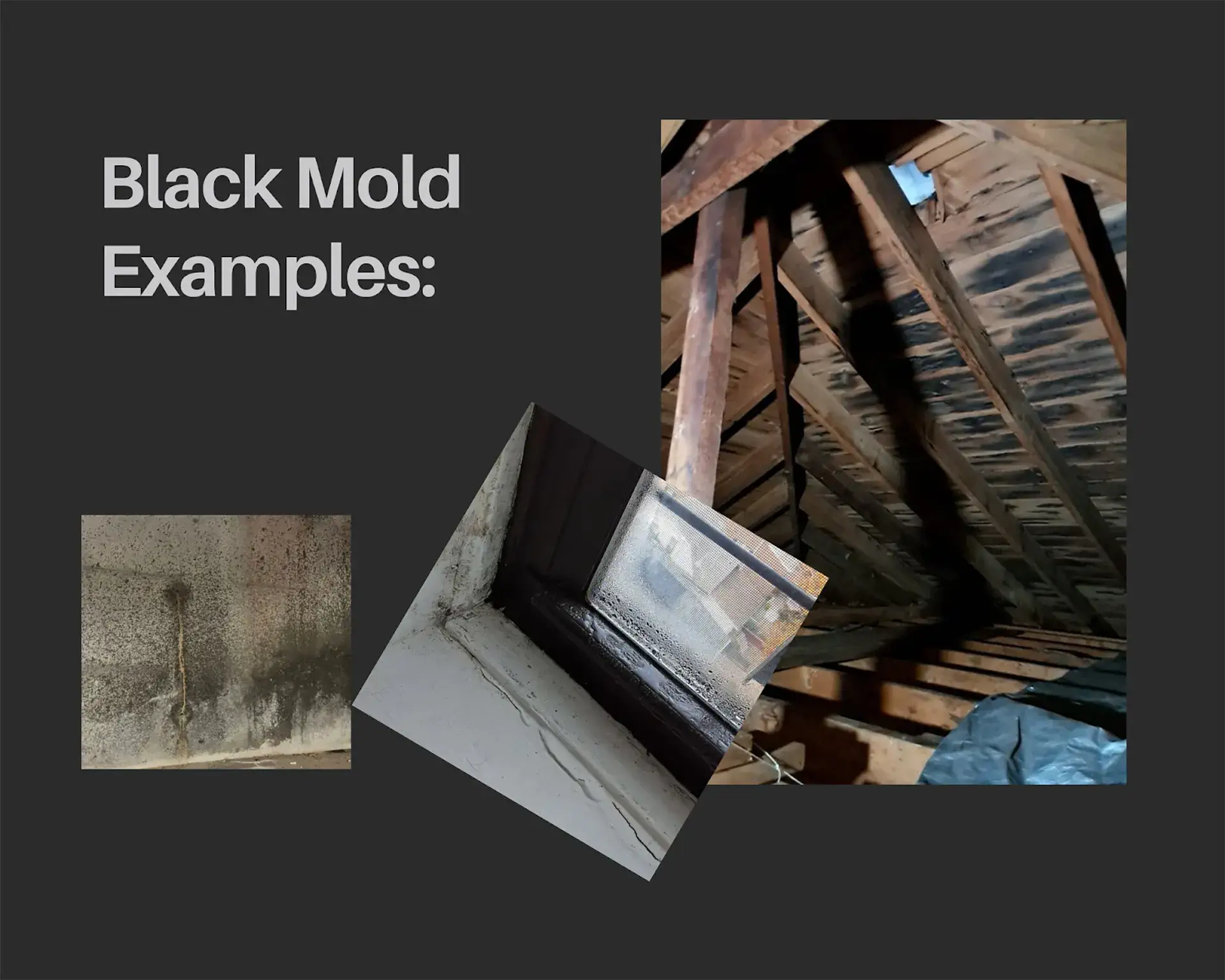
Key visual traits that matter when you identify black mold:
- Texture and Surface Finish: Stachybotrys often appears slimy or wet when actively growing and may dry to a dull, crusty surface over time. Powdery or dusty black mold is usually not Stachybotrys.
- Growth Pattern and Edges: Growth tends to be patchy with uneven borders rather than uniform circles or fine speckling. Feathered or fuzzy edges are more common with other molds.
- Surface Dependency: Stachybotrys grows almost exclusively on cellulose-rich materials such as drywall paper, wood, ceiling tiles, and cardboard. Growth on tile, metal, plastic, or sealed surfaces points away from it.
- Location Context: It is typically found in areas with long-term water damage, not short-term humidity. A single dark spot in a clean bathroom with no leaks is rarely Stachybotrys.
IMPORTANT NOTE: If you are unsure whether what you’re seeing is black mold, it’s always better to let the pros handle it. Don’t disturb it, don’t try to clean it up, just call Mold Removal Experts for a free professional mold inspection or contact your local mold remediation pros and find someone in your area who offers free inspections.
Stachybotrys vs Aspergillus vs Cladosporium: Which Black Molds Actually Matter
Not all black molds behave the same, and none can be judged by color alone.
Key Differences in Practice
- Stachybotrys: Requires sustained saturation, slow growing, surface-bound
- Aspergillus: Fast growing, easily airborne, common indoors
- Cladosporium: Widespread, tolerates changing humidity
Health Considerations
Risk depends more on amount, location, and moisture conditions than on species. All can cause irritation under the right conditions. None should be assessed visually.

What To Do If You Think You Have Mold: Next Steps Decision Tree
Many homeowners are told that under the New York State Building Code and commonly referenced national mold guidance, mold affecting less than 10 square feet doesn’t require a contractor. While this is often repeated, it’s frequently misunderstood and misapplied.
In real buildings, mold is rarely limited to what you can see. Growth size estimates are unreliable, moisture often spreads behind walls or under floors, and structural materials can be affected long before mold becomes visible. For these reasons, we always recommend calling a qualified mold remediation contractor if you suspect mold, even when the visible area seems small.
FROM THE CONTRACTOR: If you ask anyone who removes mold from basements and crawl spaces on Long Island, they’ll tell you the same thing: it’s almost always better to have a suspected mold issue checked by a professional early. Mold doesn’t usually stay where you first notice it. Once moisture is present, it can spread behind walls, under floors, and into insulation — driving up costs and increasing the risk of ongoing exposure for your family. We use professional equipment that can detect mold you can’t see with the naked eye, including air sampling tools that measure spore levels in the air. Store-bought mold tests can’t do this reliably, and they often miss hidden problems entirely. That’s why, when there’s any doubt, we recommend having it properly evaluated before the situation gets worse. |
Decision Tree: What Would You Do Next?
Start Here: Do You Suspect Mold?
- You see discoloration, staining, or fuzzy growth
- You smell a musty or earthy odor
- You’ve had leaks, flooding, or ongoing moisture
- Symptoms worsen in certain rooms
Step 1: Is There Current or Past Moisture?
- Yes → Mold risk is elevated → Call a contractor
- Not sure → Hidden moisture is common → Call a contractor
Step 2: Is Mold Clearly Visible?
- Yes → Visible mold rarely tells the full story → Call a contractor
- No → Mold can exist behind walls, floors, or ceilings → Call a contractor
Step 3: Are You Considering Cleaning It Yourself?
- If you plan to clean:
- Only attempt very small, non-porous surface areas
- Stop immediately if staining returns, spreads, or materials feel soft
- Call a contractor if growth persists or moisture is present
- If unsure or uncomfortable:
- Call a contractor first
Step 4: Get Professional Assessment
- Moisture source identified
- Hidden damage evaluated
- Mold testing used to guide decisions
- Clear next steps explained
This approach protects both your health and your structure.
Important Reminder: Mold Is Not Always Visible
Mold often grows inside walls, under flooring, above ceilings, and within insulation, especially after leaks, flooding, or humidity issues. We use advanced testing and inspection equipment to identify problems that can’t be seen on the surface.
- If you’re in Long Island: You can call us for professional mold testing and inspection.
- If you’re in another state: Look for a reputable local mold remediation contractor, ask around, and see which companies offer free mold inspections.
If you think you might have mold, the safest next step is not guessing, it’s getting answers before damage spreads.
Stachybotrys Testing: Surface Swab Testing (When Identification Actually Matters)
Surface swab testing is the most appropriate method when the goal is species identification, including confirmation of Stachybotrys chartarum. This method involves collecting a sample directly from visible mold growth and sending it to a laboratory for analysis.
Unlike air testing, which measures spores floating at a moment in time, a surface mold test focuses on what is actually growing on the material. This makes it the preferred option when homeowners want clarity about what kind of mold is present.
In terms of accuracy, lab-based surface testing is generally reliable for genus and species identification when performed correctly. Results depend on proper sampling, intact growth, and lab quality, but accuracy is typically high enough to distinguish Stachybotrys from common look-alikes.
Lab mold testing costs usually fall between $150 and $400 per sample, depending on location, lab fees, and reporting depth. If you’re in Long Island, Brooklyn, Queens, or the Bronx, we offer free mold testing with advanced equipment, just get in touch!
Homeowner’s Guide to Stachybotrys Chartarum: Final Thoughts
Black mold decisions should be based on evidence, moisture history, and building conditions, not names, photos, or fear-based headlines. But remember, whether it’s Stachybotrys Chartarum or another type of black mold, if it’s visible and moisture is present, action matters more than labels. If conditions are unclear, professional inspection provides clarity without guesswork.
Schedule Your Free Mold Inspection Now!
Frequently Asked Questions About Stachybotrys chartarum (Black Mold)
What is Stachybotrys chartarum?
Stachybotrys chartarum is a slow-growing mold that develops on cellulose-rich materials, such as drywall, wood, and ceiling tiles, when they remain wet for long periods. It is commonly associated with long-term water damage rather than short-term humidity.
Is all black-colored mold considered Stachybotrys?
No. Many molds appear dark or black, including Aspergillus and Cladosporium. Color alone is not a reliable way to identify Stachybotrys. Growth behavior, material type, and moisture history matter far more.
How can homeowners tell if mold might be Stachybotrys?
Stachybotrys typically grows in patchy, uneven areas on water-damaged materials and often appears slimy when actively growing. It usually forms only after prolonged moisture exposure, not from brief humidity or surface condensation.
Can Stachybotrys cause health problems?
Exposure in buildings with ongoing moisture issues has been associated with symptoms such as irritation of the eyes, nose, or throat, coughing, headaches, fatigue, and worsening asthma. These symptoms are non-specific and overlap with many indoor air quality issues.
Do symptoms alone confirm black mold exposure?
No. Symptoms alone cannot confirm mold type or toxicity. They can, however, indicate that indoor environmental conditions may need professional evaluation, especially if symptoms improve when leaving the space and returning after re-entry.
Is mold dangerous even if I don’t see much of it?
Yes. Mold is often hidden behind walls, under floors, or inside insulation. Visible growth is not a reliable indicator of how extensive the problem may be, especially when moisture is present.
Can I clean suspected black mold myself?
Small, non-porous surface growth may sometimes be cleaned safely, but DIY cleaning should stop immediately if mold returns, spreads, or if materials feel soft or water-damaged. Cleaning does not fix underlying moisture problems.
When does mold require professional inspection or remediation?
Professional inspection is recommended when there is visible mold combined with moisture, recurring growth, unexplained odors, or symptoms that persist in certain areas of the home. Long-term moisture conditions significantly increase risk.
How is Stachybotrys accurately identified?
The most reliable method is laboratory-based surface swab testing taken directly from visible growth. Air testing measures spores in the air but does not identify what is actively growing on materials.
What should I do if I suspect mold in my home?
The safest next step is professional evaluation. If you’re in Long Island, we offer free mold inspections using advanced testing equipment to detect both visible and hidden mold conditions. If you’re elsewhere, look for a reputable local mold remediation contractor who offers free inspections.