
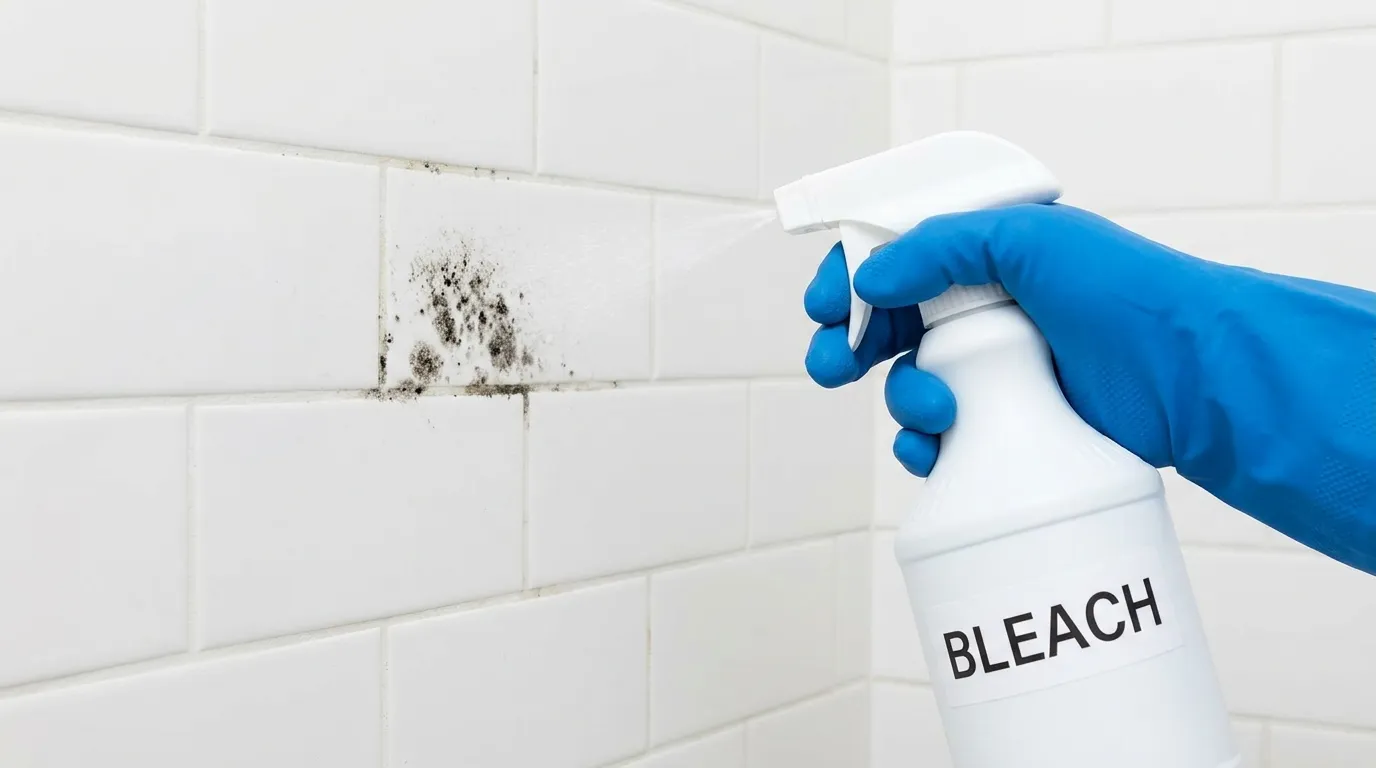
It is the first thing most people grab. The honest answer is: only sometimes, and almost never the way you hope.
The 40-second answer
Does bleach kill mold? It is the first thing most of us reach for when a dark patch shows up on the wall, and the honest answer is this: only sometimes, and almost never the way you are hoping. Bleach can wipe visible mold off hard, sealed surfaces like tile, glass, and a bathtub. But on the porous materials that make up most of your home, drywall, wood studs, grout, insulation, it mostly strips the color while the living roots survive underneath.
A few weeks later the stain is back, often darker. That gap between looking clean and being clean is the exact reason the U.S. EPA no longer recommends bleach as a routine mold treatment, and why the remediation crews who do this every day rarely pour a drop of it. Here is when bleach works, when it fails, and what actually removes mold for good.
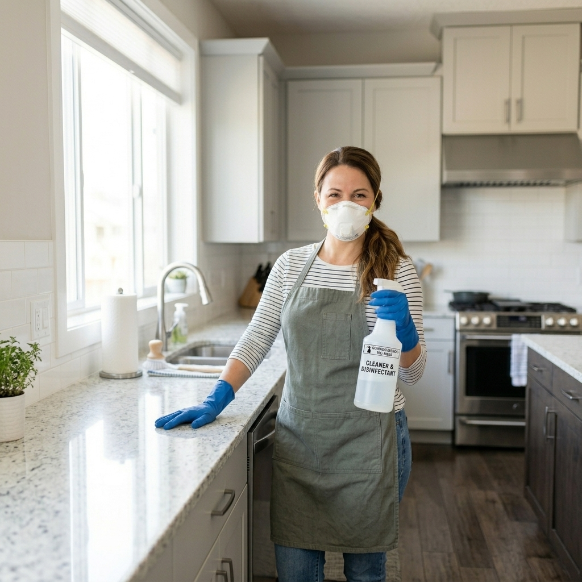
Does Bleach Kill Mold? The Honest Answer
Household bleach is roughly 3 to 8% sodium hypochlorite and more than 90% water. That ratio is the whole story. The chlorine does the disinfecting, but it is a heavy, reactive ion that stays up on the surface; the water is what soaks in. So does bleach kill mold? On a sealed, nonporous surface, bathroom tile, a glass shower door, a porcelain tub, yes, it can kill and remove the surface growth just fine. On anything porous, no. The chlorine cannot reach the roots buried in the material, and the water it leaves behind actually feeds them.
This is not a fringe opinion. The EPA’s guidance is blunt: “The use of a chemical or biocide that kills organisms such as mold (chlorine bleach, for example) is not recommended as a routine practice during mold cleanup.” If you want the full surface-by-surface playbook, our guide to how to kill mold on every surface breaks down what to use where.
The Science: Why Bleach Fails on Porous Surfaces
Mold is not a stain sitting on top of your wall, it is a living organism with a root system. Those roots, called hyphae (the web of them is the mycelium), thread down into wood fibers and the paper facing of drywall to find food and moisture. What you see on the surface is just the fruiting body throwing off spores. When you spray bleach on porous material, the chlorine oxidizes the pigment you can see, so the spot goes pale and looks gone, but the hyphae underneath are untouched. Worse, the water carrier wicks into the material and gives those roots exactly what they need. That is why bleached mold typically returns within two to four weeks, right where it was.
It is also why mold on structural materials is a removal problem, not a cleaning problem. See can mold grow on drywall for why that paper layer is basically mold food, and why disturbing certain molds without containment can make indoor air worse, not better.
Quick answer: does bleach kill mold below the surface? No, the roots live on.
When Bleach Actually Works (and How to Use It Safely)
Bleach is not useless, it is a genuinely good disinfectant on the right surface. If you have a small patch of surface mold (under about 10 square feet) on something sealed and nonporous, bleach is a reasonable choice. Here is the narrow job it is actually built for.
- Mix roughly one cup of bleach per gallon of water.
- Open a window and run a fan so the fumes clear.
- Wear gloves and eye protection before you start.
- Apply it and let it dwell for several minutes. Do not rinse the instant it hits, the contact time is what does the work.
- Wipe, then dry the surface completely so no moisture is left behind.
Anything bigger than that patch, or anything you can smell but not see, is past the DIY line.
Bleach vs Vinegar vs Hydrogen Peroxide: What Kills Mold Better?
If bleach is the wrong tool for porous mold, what is the right one? Here is the honest head-to-head for small DIY jobs. Never mix any two of these cleaners. See the safety section for more information.
| Cleaner | Best On | Reaches the Roots? | Bottom Line |
|---|---|---|---|
| Chlorine bleach | Sealed nonporous surfaces only, such as tile, glass, and tubs | No | Disinfects hard surfaces; mostly cosmetic on porous material |
| White vinegar | Porous and nonporous surfaces in small areas | Partly | Best cheap all-rounder for small porous spots |
| Hydrogen peroxide (3%) | Grout, fabric, and appliances | Yes | Good on porous stains where you want the discoloration gone too |
Verdict: For the small porous jobs where people wrongly reach for bleach, vinegar or 3% hydrogen peroxide is the smarter pick. For fast surface knockdown on hard surfaces, see what kills black mold instantly.