
Crawl space moisture is not a cosmetic issue. It is a structural liability. When damp air and ground vapor accumulate beneath a home, they create conditions that silently damage framing, contaminate indoor air, and shorten the life of mechanical systems.
Moisture fuels three primary threats:
- Mold growth that spreads through subflooring and framing
- Wood rot that weakens joists and support beams
- Air quality degradation as contaminated air rises into living areas
Because of the stack effect, air from your crawl space does not stay below the house. It moves upward. That means what happens underneath your home directly impacts the air your family breathes.
To control this, professionals use what can be described as a Moisture Control Stack, a layered strategy that addresses:
- Ground vapor
- Air movement
- Bulk water intrusion
- Humidity stabilization
When all four layers work together, crawl space conditions stabilize and long-term structural risk drops significantly.
Schedule A Professional Crawl Space Inspection To Identify Moisture Sources Before They Escalate Into Mold Or Structural Damage!
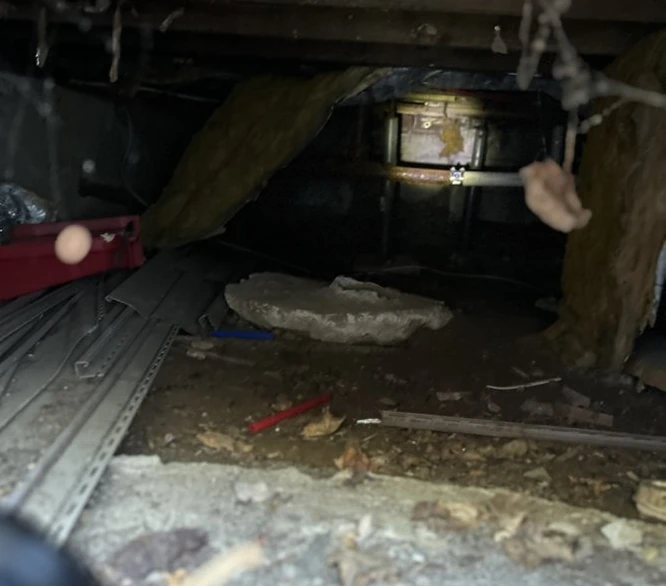
Signs Your Crawl Space Has a Moisture Problem
Crawl space moisture rarely announces itself directly. In most cases, the first warning signs appear inside the living area, long before a homeowner ever looks beneath the house. Because of the stack effect, air from the crawl space rises upward. If that air is damp or contaminated, the symptoms show up above.
Below are the most common indicators that a crawl space moisture issue is developing.
- Musty Odor in Living Areas: A persistent earthy or damp smell, especially after rain or during humid weather, is one of the earliest signs. If the odor improves when windows are opened but returns when the home is closed up, moisture below the structure is often the source.
- Sagging or Soft Floors: Excess humidity weakens wood fibers over time. Joists absorb moisture, lose rigidity, and may begin to deflect. Homeowners may notice:
- Slight floor bounce
- Uneven transitions between rooms
- Gaps forming along baseboards
These are structural stress signals, not cosmetic issues.
- High Indoor Humidity: If indoor relative humidity consistently exceeds 55–60% without a clear interior source, the crawl space may be contributing. Symptoms can include:
- Condensation on windows
- Sticky indoor air
- Increased HVAC runtime
- Visible Mold on Joists: Black, white, or gray spotting on framing members is a direct sign that humidity levels have crossed mold-growth thresholds. Surface mold on joists typically indicates prolonged exposure above 60% relative humidity.
- Rusting Ductwork: Metal HVAC ducts exposed to damp air begin to corrode. Rust flaking or sweating duct lines suggest elevated crawl space humidity. Over time, this reduces system lifespan and air quality.
- Efflorescence on Foundation Walls: White, powdery residue on masonry walls forms when water migrates through concrete or block and leaves mineral deposits behind. Efflorescence confirms ongoing moisture intrusion through foundation materials.
Moisture symptoms tend to compound. Odors become stronger. Floors soften further. Humidity levels climb. Early identification prevents structural deterioration and expensive corrective work.
If these symptoms are present, review: signs of mold in crawl space.
Why Crawl Space Moisture Is a Serious Structural Risk
Crawl spaces operate as environmental chambers beneath your home. When moisture levels rise, the entire building envelope is affected.
- Stack Effect: Air Moves Upward: Warm air rises. As it escapes through the attic, it pulls replacement air from below, often directly from the crawl space. If that lower space contains mold spores or high humidity, those contaminants circulate into the living area.
This is why crawl space issues often correlate with:
- Musty odors indoors
- Increased allergy symptoms
- Elevated indoor humidity
(See: Crawl space mold removal and mold exposure health risks.)
What Mold Needs to Grow
Mold growth is not random. It follows predictable environmental conditions. When those conditions are met, colonization becomes a matter of time.
Mold requires three core elements:
Organic Material
Oxygen
Moisture
Humidity Above 70%
When humidity climbs above 70%, growth accelerates significantly. Framing members begin absorbing moisture, surface condensation becomes more frequent, and colonies expand faster and more aggressively.
Persistent elevated humidity can lead to:
- Surface mold forming along floor joists
- Dark staining or discoloration on subfloor panels
- Insulation becoming damp and mold-prone
- Spore dispersion into HVAC ductwork
- Increased indoor allergen load due to stack effect
Importantly, mold does not require standing water. Prolonged damp air alone is sufficient. Even small seasonal humidity spikes, when repeated over time, can create cumulative growth conditions.
Controlling relative humidity below 60% is the single most important step in preventing crawl space mold development.
Wood Rot and Joist Deterioration
Moisture does not just discolor wood, it changes its structural integrity. When framing members remain damp for extended periods, fungal organisms begin breaking down the cellulose and lignin that give wood its strength. This process is known as wood decay.
Over time, fungal decay compromises:
- Floor joists
- Rim joists
- Main support beams
- Subfloor sheathing
As moisture content in wood rises above approximately 20%, decay organisms become active. The longer those conditions persist, the deeper the damage penetrates. What begins as surface staining can evolve into structural softening.
Long-term consequences may include:
- Soft or spongy floor areas
- Sagging or uneven floors
- Reduced load-bearing capacity
- Fastener loosening (nails and screws lose grip in deteriorated wood)
- Expensive framing repair or sistering work
Structural rot progresses gradually, which makes it easy to ignore, until deflection becomes visible. Early humidity control prevents long-term framing replacement.
Insulation Damage
Insulation installed between floor joists is particularly vulnerable in damp crawl spaces. Fiberglass does not repel moisture; it absorbs it.
When exposed to elevated humidity, fiberglass insulation:
- Traps moisture within its fibers
- Loses thermal resistance (R-value)
- Sags or detaches from joists
- Creates cold surfaces that encourage condensation
Wet insulation no longer performs as designed. Instead of protecting the home’s thermal envelope, it becomes a moisture reservoir. Over time, it can also support mold growth on dust and organic debris embedded in the material.
Once insulation becomes saturated, replacement is often required. Moisture control must occur first, or the problem will repeat.
HVAC Contamination
Many homes route ductwork through the crawl space. When that environment is damp, the HVAC system is directly exposed.
Ducts in high-humidity conditions are vulnerable to:
- Surface condensation
- Mold spore accumulation
- Rust and corrosion
- Air leakage due to deteriorated seams
Condensation forms when warm, humid air contacts cooler metal duct surfaces. Over time, this can lead to internal contamination and reduced airflow efficiency.
The result is twofold:
- Contaminants are distributed throughout the home.
- The HVAC system works harder, increasing energy consumption.
In severe cases, prolonged exposure to moisture shortens the lifespan of air handlers, ductwork, and related components.
Stabilizing crawl space humidity protects both indoor air quality and mechanical systems. (See: Dehumidifier cost guide for humidity stabilization solutions.)
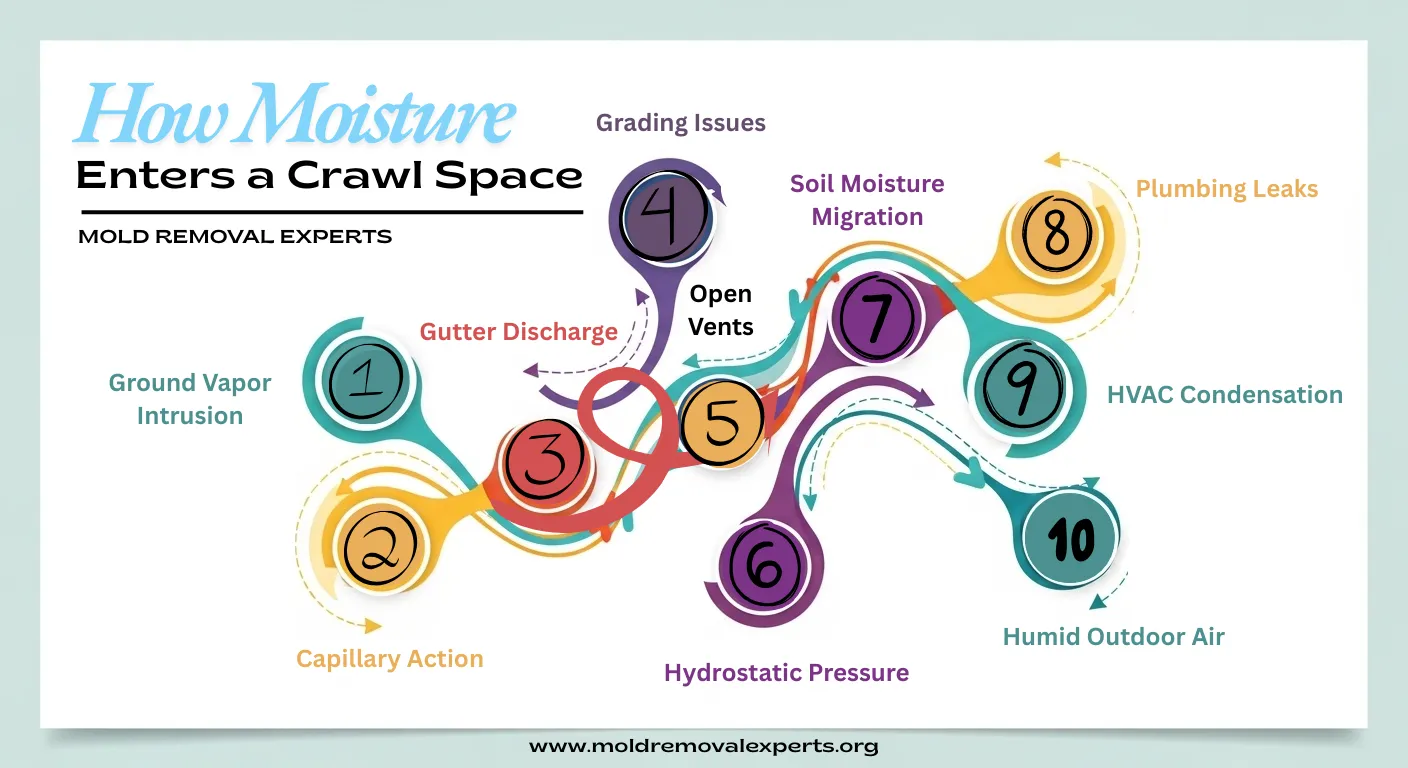
How Moisture Enters a Crawl Space
Crawl space moisture does not originate from a single source. It typically enters through multiple pathways at the same time. Identifying the dominant pathway is essential. If the primary source is ignored, moisture control measures will underperform or fail entirely.
Below are the most common entry mechanisms.
- Ground Vapor Intrusion: The soil beneath a home constantly contains moisture, even when no standing water is visible. That moisture naturally releases vapor into the air above it, creating a continuous humidity source beneath the structure.
- Capillary Action: Moisture moves upward through soil pores via capillary action, allowing groundwater to migrate toward the surface. Without a properly sealed vapor barrier, this moisture evaporates into the crawl space air daily, driven by soil saturation levels and temperature changes.
- Bare Soil Moisture Migration: Exposed earth functions as a steady humidity emitter. Even soil that appears dry releases measurable water vapor, gradually elevating baseline humidity levels in enclosed or poorly ventilated crawl spaces.
- Grading Issues: The ground surrounding the home should slope away from the foundation. Improper grading allows rainwater to pool near foundation walls, increasing soil saturation and the likelihood of moisture intrusion.
- Gutter Discharge Problems: Downspouts that terminate too close to the foundation concentrate roof runoff in a single area. Repeated discharge saturates the soil and increases hydrostatic pressure against foundation walls.
- Hydrostatic Pressure: When surrounding soil becomes waterlogged, pressure builds against foundation walls and drives water through vulnerable areas such as block cores, mortar joints, hairline cracks, and porous concrete surfaces. Even minor seepage raises crawl space humidity.
- Open Vents And Humid Outdoor Air: Traditional vented crawl spaces operate under outdated design assumptions. In humid climates, warm outdoor air enters through foundation vents and condenses on cooler surfaces, increasing relative humidity and accelerating mold potential.
- Plumbing Leaks And HVAC Condensation: Internal mechanical systems can introduce hidden moisture sources. Slow-dripping supply lines, leaking drain pipes, condensate failures, sweating ductwork, and uninsulated refrigerant lines elevate localized humidity and gradually saturate surrounding materials.
Professional Moisture Diagnosis
Moisture problems require structured evaluation rather than isolated product installation. A comprehensive inspection identifies the dominant moisture pathway, secondary contributing sources, structural moisture content levels, and the appropriate corrective layering such as vapor barriers, drainage correction, encapsulation, or dehumidification.
Timely intervention stabilizes the crawl space before mold spreads, wood rot progresses, or structural repairs become necessary, protecting both indoor air quality and long-term structural integrity.
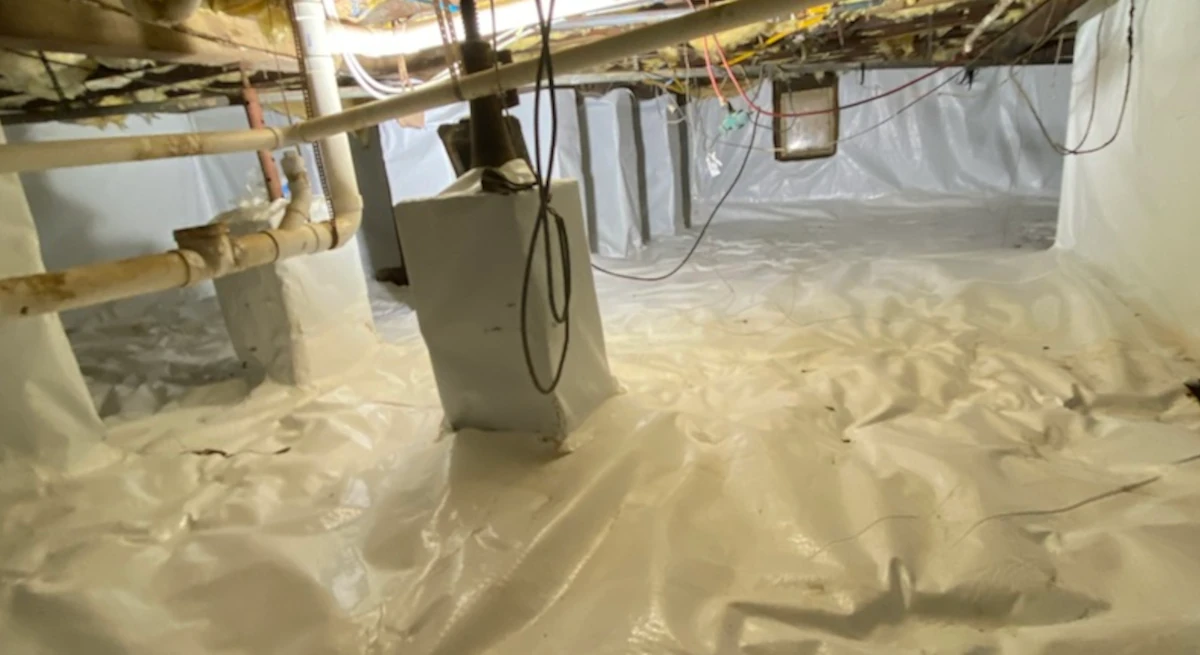
The Moisture Control Stack (The Correct Way to Fix Crawl Space Problems)
Crawl space problems are not solved with a single fix. Treating mold without lowering humidity fails. Installing a dehumidifier without blocking ground vapor fails. Effective moisture control requires a layered system in which each component reduces the burden on the next. When ground moisture, bulk water, and air humidity are addressed together, relative humidity stabilizes, mold risk declines, and structural materials remain dry long term.
The Moisture Control Stack
Ground Moisture Control (Vapor Barrier Systems): Install durable 12–20 mil reinforced liners for encapsulation-grade protection; overlap and professionally tape seams; extend and seal liner up foundation walls; individually wrap and seal support piers.
Water Management (Drainage & Sump Pumps): Use perimeter or interior French drains to intercept groundwater; route discharge lines well away from the foundation on positive grade; include battery backup systems to prevent storm-related flooding.
Air Moisture Control (Dehumidifiers): Size units based on square footage, climate, and moisture load; use gravity drains when possible or condensate pumps when elevation requires; target 50–55% relative humidity; prioritize Energy Star–rated systems with auto-defrost and humidity controls.
When implemented correctly, this integrated system transforms the crawl space from a chronic moisture source into a controlled environment. Wood framing remains structurally sound, indoor air quality improves, and long-term mold growth becomes significantly less likely.
What Happens If Crawl Space Moisture Is Ignored?
Moisture damage progresses slowly, then accelerates.
Ignoring crawl space humidity can lead to:
- Structural rot of joists and beams
- Increased termite attraction (wood-destroying organisms thrive in damp environments)
- Insulation collapse and energy loss
- Rising heating and cooling costs
- Mold migration into living spaces via stack effect
- Reduced home value during inspection or resale
This is not immediate catastrophe, but it is cumulative deterioration. Early correction is significantly less expensive than structural repair.

Crawl Space Moisture Control Cost Factors
Crawl space moisture control is not a flat-price repair. Costs vary based on severity, square footage, accessibility, existing damage, and which layer of the Moisture Control Stack is required. A home with light ground vapor issues will not require the same investment as one with standing water, structural rot, and elevated humidity.
Here is a strategic overview of what influences pricing:
- Vapor Barrier Installation Range: Determined by liner thickness (6-mil vs 12–20 mil), full wall coverage, seam sealing quality, and pier wrapping requirements.
- Drainage System Range: Influenced by crawl space perimeter length, excavation difficulty, soil conditions, and discharge routing distance.
- Sump Pump Installation: Varies based on basin depth, pump horsepower, check valve configuration, and whether a battery backup system is included.
- Dehumidifier Equipment Cost: Driven by crawl space size, moisture load, energy efficiency rating, and whether a gravity drain or condensate pump is required.
- Full Encapsulation Investment Range: Includes heavy-duty vapor barrier, vent sealing, air sealing, insulation adjustments, and humidity control equipment.
Because moisture conditions differ from home to home, accurate pricing requires inspection and moisture measurement. For a detailed breakdown of system pricing, installation ranges, and what impacts long-term operating costs, review our complete crawl space mold removal cost guide.
Crawl Space Moisture Control Guide: Final Thoughts
Crawl space moisture control is not optional maintenance; it is structural protection. Persistent humidity fuels mold growth, wood rot, insulation failure, and declining indoor air quality. When ground vapor is blocked, drainage is properly managed, and humidity is mechanically controlled, the crawl space shifts from a moisture liability to a stable, conditioned environment. Prevention is significantly less expensive than structural repair.
Routine inspections, seasonal evaluations, and early intervention protect both the building envelope and the air your family breathes. Moisture problems rarely correct themselves. They compound with time.
Take the first step toward a drier, healthier home. Schedule a professional crawl space inspection and receive a clear, structured moisture control plan tailored to your property.
Frequently Asked Questions About Crawl Space Moisture ra
Does a crawl space need a dehumidifier?
If relative humidity consistently exceeds 60%, a dehumidifier is typically required to prevent mold growth and wood damage.
Can mold return after encapsulation?
Yes, if humidity is not controlled. Encapsulation must be paired with moisture management and air sealing.
Should crawl space vents be open or closed?
In humid climates, sealed vents with controlled air are generally more effective than open venting.
How long does encapsulation last?
High-quality 12–20 mil liners can last decades when properly installed and maintained.
Is spray foam safe in crawl spaces?
Closed-cell spray foam is commonly used for rim joists and wall insulation. Proper installation and ventilation during curing are essential.
Does homeowners insurance cover crawl space mold?
Coverage varies. Sudden water events may qualify, but long-term moisture issues are often excluded.
Will encapsulation lower energy bills?
By stabilizing humidity and reducing air leakage, encapsulation often improves HVAC efficiency.
Can I install a vapor barrier myself?
DIY installation is possible, but improper seam sealing and wall attachment reduce effectiveness.