
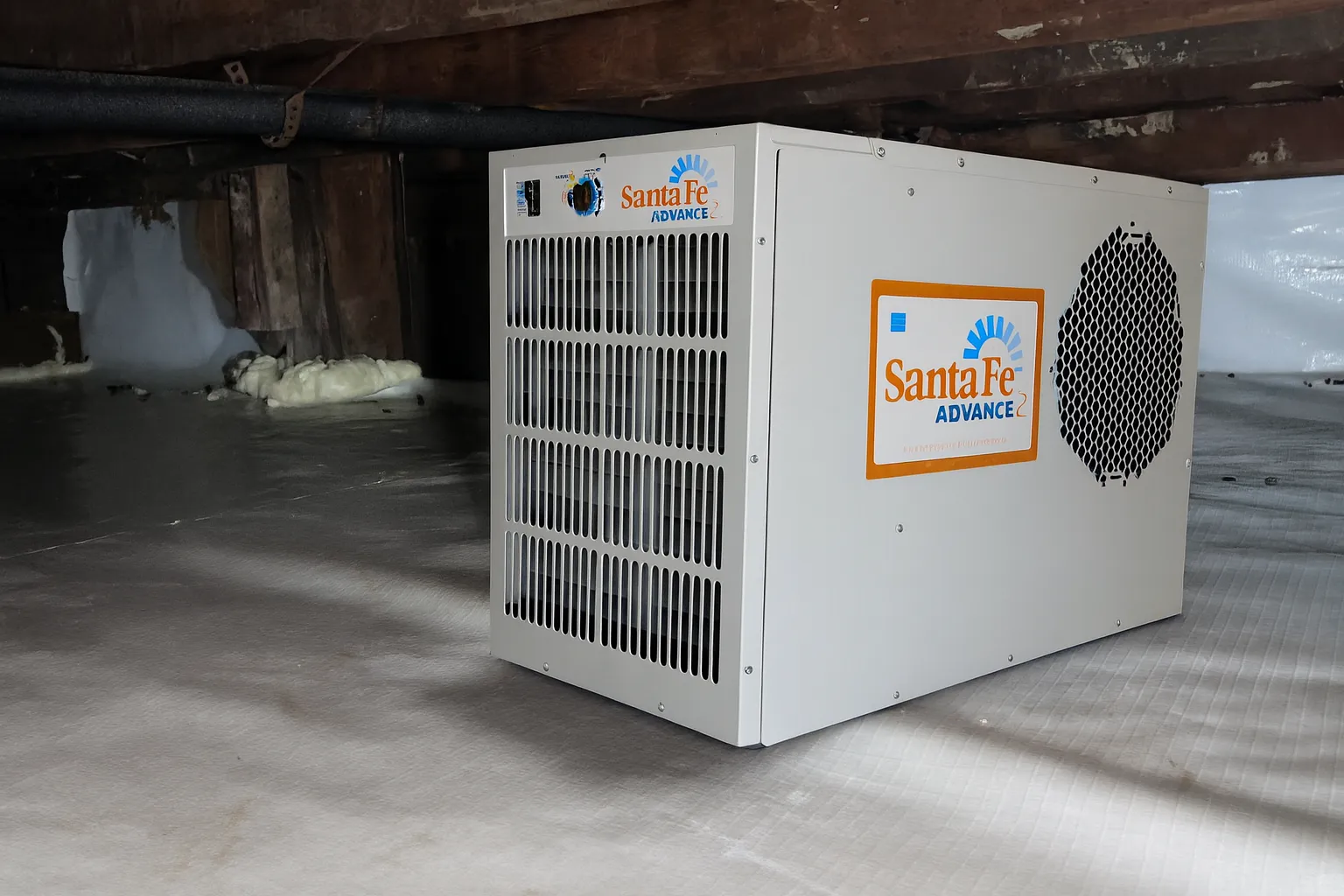
Crawl space dehumidifier pricing varies widely, and online estimates often oversimplify what actually determines cost. Two homes with identical square footage can receive very different quotes depending on access, drainage conditions, encapsulation status, and regional humidity levels.
To help you make sense of it, we’ve created a cost table below outlining typical equipment and installation ranges. But more importantly, we’ll explain what pushes costs higher, what keeps them lower, and how to avoid paying for the wrong system size.
By the end of this guide, you’ll understand not just what to expect financially, but how to choose the right approach for your crawl space.
Average Crawl Space Dehumidifier Cost (Equipment Only)
The crawl space dehumidifier cost varies significantly depending on the type of unit you choose. Standard residential dehumidifiers and sealed crawl space-rated systems are not the same product, and the price difference reflects that.
Portable residential units are designed for open living spaces and temporary moisture control. True crawl space systems are engineered for confined environments, continuous drainage, and high humidity loads.
Crawl Space Dehumidifier Equipment Cost Table
| Unit Type | Coverage | Typical Cost Range |
|---|---|---|
| Portable Residential Unit | 500–1,500 sq ft | $200–$600 |
| Mid-Range Crawl Space Unit | 1,000–2,000 sq ft | $900–$1,500 |
| High-Capacity Sealed Crawl Space System | 2,000–3,500+ sq ft | $1,500–$2,500 |
Crawl space units cost more because they are:
Portable models may appear cheaper upfront, but they are rarely appropriate for long-term crawl space moisture control.
Next, we’ll examine crawl space dehumidifier installation cost and what drives labor pricing.
Crawl Space Dehumidifier Installation Cost
After reviewing equipment pricing above, the next question is total project cost. Nationally, crawl space dehumidifier installation cost typically ranges from $800 to $2,000, depending on access, electrical requirements, and drainage configuration. Combined with equipment, most installed projects fall between $1,700 and $4,500.
Installation pricing reflects the labor and infrastructure required to ensure the unit runs continuously and safely. A crawl space dehumidifier is not simply placed on the ground and plugged in. It must be integrated into the space for long-term performance.
Typical installation components include:
- Electrical Upgrades: When a dedicated outlet or GFCI protection is required
- Drain Line Routing: If gravity drainage is not possible and a condensate pump is needed
- Mounting Platform: Elevating the unit on blocks or a suspended platform for airflow and protection
- Condensate Management: Routing discharge to an exterior termination point or sump basin
- Vent Sealing (If Applicable): Closing foundation vents to prevent humid outdoor air from re-entering
Factors that increase installation cost include:
- Limited Access Clearance: Tight crawl spaces slow labor
- Long Drain Line Runs: Extended routing adds material and time
- Electrical Panel Distance: Long wiring pulls increase complexity
- Severe Existing Moisture: Pre-install drying or debris removal may be necessary
Proper installation ensures the system operates efficiently and avoids premature failure. Undersizing or poor drainage setup can increase the long-term cost of crawl space dehumidifier ownership.
How To Choose the Right Size Dehumidifier for Your Crawl Space
Choosing the correct size is critical. A unit that is too small will run constantly without controlling humidity. A unit that is too large may short cycle and reduce efficiency. Sizing is based on both square footage and moisture load, measured in pints per day (PPD) of moisture removal. High moisture environments require significantly higher capacity even if the crawl space is modest in size.
| Crawl Space Size | Standard Conditions | High Moisture Conditions |
|---|---|---|
| Up to 1,000 sq ft | 50–70 PPD | 70–90 PPD |
| 1,000–2,000 sq ft | 70–90 PPD | 90–120 PPD |
| 2,000–3,000+ sq ft | 90–120 PPD | 120–150+ PPD |
Signs Your Crawl Space Needs More Than Just a Dehumidifier
Use this quick diagnostic checklist:
- If You See Standing Water → See Waterproofing Systems section above
- If You Smell Mold After Heavy Rain → Review Drainage + Vapor Barrier integration
- If The Unit Runs Constantly Without Lowering Humidity → Revisit the Sizing section
- If You Notice Efflorescence On Foundation Walls → Investigate hydrostatic pressure
- If Wooden Joists Feel Soft Or Damp → Evaluate bulk water intrusion first
These indicators suggest underlying moisture sources beyond airborne humidity. Addressing root causes prevents overspending on equipment upgrades.
Protecting Your Basement From Future Storm Damage: Final Thoughts
Basement flooding from rain is rarely unpredictable. As the diagnostic section demonstrated, intrusion patterns usually point to identifiable causes. Once those causes are understood, targeted solutions can be applied effectively. The layered model: exterior control, interior drainage, and controlled discharge works because it mirrors how water actually moves through soil and around foundations. When each layer performs correctly, stormwater is managed rather than resisted.
If your basement flood after heavy rain was a one-time event, maintenance may be sufficient. If the problem is recurring, revisit the earlier sections and match the symptoms to the appropriate system layer.
In the next section, we’ll answer common homeowner questions to help you make informed decisions about protecting your home long term.
Frequently Asked Questions About Basement Flooding From Rain
Why does my basement flood only during heavy rain?
Basement flooding only during heavy rain usually indicates surface runoff overload or hydrostatic pressure. Normal rainfall may not fully saturate soil, but intense storms can overwhelm drainage capacity. This pattern points to a system capacity limitation rather than a constant structural failure.
Is a flooded basement from a storm covered by insurance?
Storm-related basement flooding coverage depends on the water source and your policy. Sudden internal damage, such as a storm-caused pipe burst, may be covered. Groundwater seepage or long-term drainage issues are often excluded unless you have a water backup or flood endorsement. Always confirm coverage directly with your insurer.
Can a sump pump alone prevent basement flooding?
A sump pump alone cannot prevent all basement flooding. It removes water that reaches the basin but does not stop exterior soil saturation. If grading or drainage is inadequate, the pump may run constantly or become overwhelmed. Effective prevention requires coordinated exterior and interior water control.
What is hydrostatic pressure?
Hydrostatic pressure is water pressure from saturated soil pushing against your foundation. When soil fills with water, it presses inward and upward on walls and floors. Concrete is strong but not waterproof, so water enters through seams, cracks, and joints when pressure builds.
How much does it cost to waterproof a basement after flooding?
Basement waterproofing costs after flooding depend on severity and system scope. Minor grading corrections may cost a few thousand dollars, while full perimeter systems can exceed $20,000. The primary cost factor is whether the issue is isolated or part of a larger drainage failure.
How long does it take for mold to grow after flooding?
Mold can begin growing within 24 to 48 hours after flooding. Prolonged moisture creates ideal conditions for rapid spread. Immediate water removal and drying significantly reduce contamination risk and remediation costs.
Should I install an exterior or interior drain system?
Choosing between exterior and interior drainage depends on where water enters. Exterior systems reduce soil saturation before it reaches the foundation. Interior systems manage water at the footing level after entry. Recurrent heavy rain flooding often requires a layered combination.
Why does water come up through my basement floor?
Water coming up through a basement floor is typically caused by hydrostatic pressure. Saturated soil pushes water upward through cracks or wall-floor joints. Repeated upward seepage often signals high groundwater rather than surface runoff alone.
Can poor grading alone cause basement flooding?
Poor grading alone can cause basement flooding. When soil slopes toward the foundation, rainwater accumulates and increases soil saturation. In some cases, correcting slope and extending downspouts resolves the problem without additional drainage systems.
When should I call a professional for basement flooding from rain?
Call a professional for basement flooding when water recurs, appears in multiple areas, cracks widen, or your sump pump runs continuously during storms. Isolated incidents may require maintenance. Repeated patterns typically indicate the need for a structured drainage solution.