
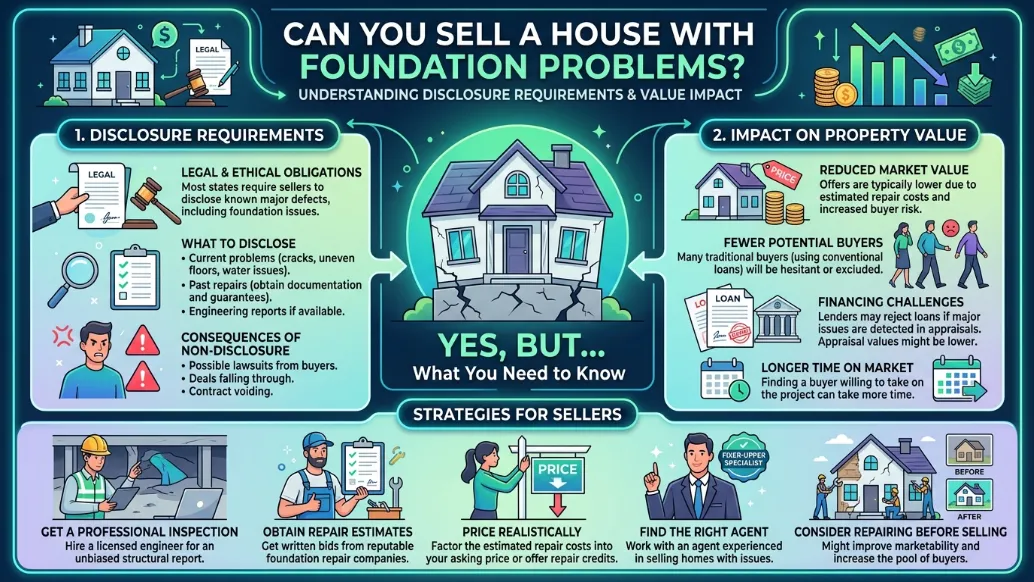
If you are preparing to sell and have discovered foundation problems, the first thing to know is that you are not stuck. Houses with foundation issues are sold every day. What changes is not whether you can sell, but how. Foundation problems affect three things at once: your legal disclosure obligations, the price buyers are willing to pay, and the pool of buyers and lenders available to you.
Homeowners get into trouble when they misunderstand or try to hide the issue, not when the issue exists. This guide explains exactly what you are required to disclose, how foundation problems affect your home’s value, the selling paths open to you, and how moisture and mold tie into the decision in ways that catch many sellers off guard.
Get a Pre-Sale Foundation Inspection

Your Legal Duty to Disclose Foundation Problems
Most jurisdictions require sellers to disclose known material defects, and a foundation issue is a textbook material defect. The exact form and requirements vary by location, but the principle is consistent: if you know about it, you generally have to tell buyers about it. Disclosure is not just a legal box to tick. It is your protection.
A buyer who learns about a known defect after closing can pursue you for nondisclosure, and that exposure can outlast the sale by years. Honesty here is both the lawful path and the safer one.
Known Cracks and Movement
Structural cracks, sloping floors, sticking doors you are aware of.
Any Past Repairs
Any prior foundation work, including the documentation and any transferable warranty.
Inspection Reports
Engineer or inspector findings already in your possession.
Related Water Issues
Basement leaks, drainage problems, and moisture intrusion tied to the foundation.
Recurring Symptoms
Problems that were patched but came back need to be disclosed.
The Value Impact of Selling a House With Foundation Problems
- Severity and Type A few minor settlement cracks influence price far less than active structural movement requiring underpinning. Buyers and appraisers respond to the scope of the fix.
- Repaired vs. Unrepaired A documented, professionally repaired foundation with a transferable warranty reassures buyers. An open, unrepaired problem invites worst-case assumptions and steeper discounts.
- The Buyer Pool Some buyers and some lenders avoid homes with active foundation issues entirely. A smaller buyer pool puts downward pressure on price regardless of the actual repair cost.
- The Repair Estimate Anchor Buyers tend to negotiate down by more than the repair estimate, not less. They are pricing in uncertainty, hassle, and risk on top of the quoted fix.
Your Options for Selling a House With Foundation Problems
Repair Before Listing
You fix the foundation, obtain documentation and a transferable warranty, and list the home as repaired. This typically yields the highest sale price and the widest buyer pool. It requires upfront cash and time.
Sell As-Is on the Open Market
You disclose the problem, price it in, and let buyers factor the repair into their offers. This avoids upfront cost but narrows your buyer pool and usually means a larger negotiated discount.
Offer a Repair Credit
You list the home and offer a credit at closing so the buyer can manage the needed repair themselves. This keeps the deal moving while acknowledging the issue directly with the buyer.
Sell to a Cash or Investor Buyer
Investors and cash buyers often purchase homes with foundation issues directly. This is the fastest path with the least friction, but the offer will be the lowest of the options.
How Foundation Problems Create Hidden Mold Issues Before a Sale
Here is the part many sellers do not see coming. Foundation problems and mold are connected, and that connection can surface at the worst possible moment, during the buyer’s inspection.
The cracks and movement that define a foundation problem also create water entry points. Over time, that moisture supports mold growth inside walls, under floors, and in crawl spaces. A seller can be entirely focused on the structural issue and completely unaware that a mold problem has developed alongside it.
When the buyer’s inspector finds that mold, the sale dynamic changes immediately. The buyer is no longer negotiating one problem. They are negotiating two, and they will assume there may be more. Deals stall, renegotiate hard, or collapse at this stage.
The sellers who avoid this outcome are the ones who get ahead of it. A pre-sale inspection that examines both the foundation and the moisture and mold conditions around it means no surprises during the buyer’s due diligence. You learn what the buyer’s inspector would find, you disclose it accurately, and you decide how to handle it on your own terms instead of under deal pressure.
Why a Pre-Sale Inspection Is the Best Way to Handle Foundation Problems
A pre-sale inspection is the best way to take control of foundation problems before they take control of your sale. It tells you the true scope of the structural issue, uncovers any related moisture or mold conditions a buyer’s inspector would later find, and gives you documented facts to disclose. With that information you can choose your selling path deliberately, repair, as-is, credit, or cash sale, instead of reacting to bad news mid-transaction. Sellers who go in informed negotiate from a position of strength. Sellers who get surprised negotiate from weakness.
Foundation Problems: Final Thoughts
Selling a house with foundation problems is entirely possible, and sellers do it successfully all the time. The outcome is decided not by the existence of the issue but by how you handle it. Disclose honestly, because a known defect you disclosed is negotiable while a concealed one is a lawsuit waiting to happen. Understand that value impact depends on severity, repair status, and your local buyer pool.
Success when selling a home with structural issues is determined by your preparation rather than the defects themselves. By choosing your sales strategy carefully and proactively addressing the moisture and mold that frequently accompany foundation damage, you can prevent the mid-sale surprises that typically derail transactions during a buyer’s inspection. Conducting a pre-sale inspection that evaluates both the structural integrity and surrounding moisture conditions equips you with all the necessary facts before listing. This approach allows you to enter the market fully informed, enabling you to negotiate from a position of strength rather than reacting to problems from a position of weakness.
Book Your Pre-Sale Foundation & Mold Inspection
Frequently Asked Questions About Selling With Foundation Problems
Do I Have To Disclose Foundation Problems When Selling?
Usually, yes. Most states require sellers to disclose known material defects, including foundation issues, to potential buyers.
How Much Do Foundation Problems Lower A Home’s Value?
Foundation problems can significantly reduce a home’s value depending on the severity of the damage, repair costs, and local market conditions.
Is It Better To Repair The Foundation Before Selling?
In many cases, yes. Repairs can increase buyer confidence, improve financing options, and help the home sell closer to market value.
Can I Sell A House With Foundation Problems As-Is?
Yes. Many investors and cash buyers purchase homes with foundation damage, though offers are typically lower to account for repair costs and risk.
Will Foundation Problems Affect A Buyer’s Mortgage Approval?
Yes. Some lenders may refuse financing until serious structural issues are repaired, which can limit the number of qualified buyers.
Can A House With Foundation Problems Still Pass Inspection?
Sometimes. Minor settling issues may not stop a sale, but significant structural movement or active water intrusion often raises inspection concerns.
How Long Does It Take To Repair Foundation Problems Before Selling?
Many foundation repairs take anywhere from several days to one week depending on the repair method and severity of the damage.
Should I Get A Foundation Inspection Before Listing My Home?
Yes. A professional inspection helps identify the severity of the problem and gives buyers more confidence during negotiations.
What Foundation Problems Scare Buyers The Most?
Horizontal wall cracks, major settlement, bowing basement walls, severe water intrusion, and visible structural movement are usually the biggest buyer concerns.
Can Foundation Problems Get Worse While A Home Is On The Market?
Yes. Foundation damage often worsens over time, especially when water intrusion, poor drainage, or soil movement remain unresolved.