
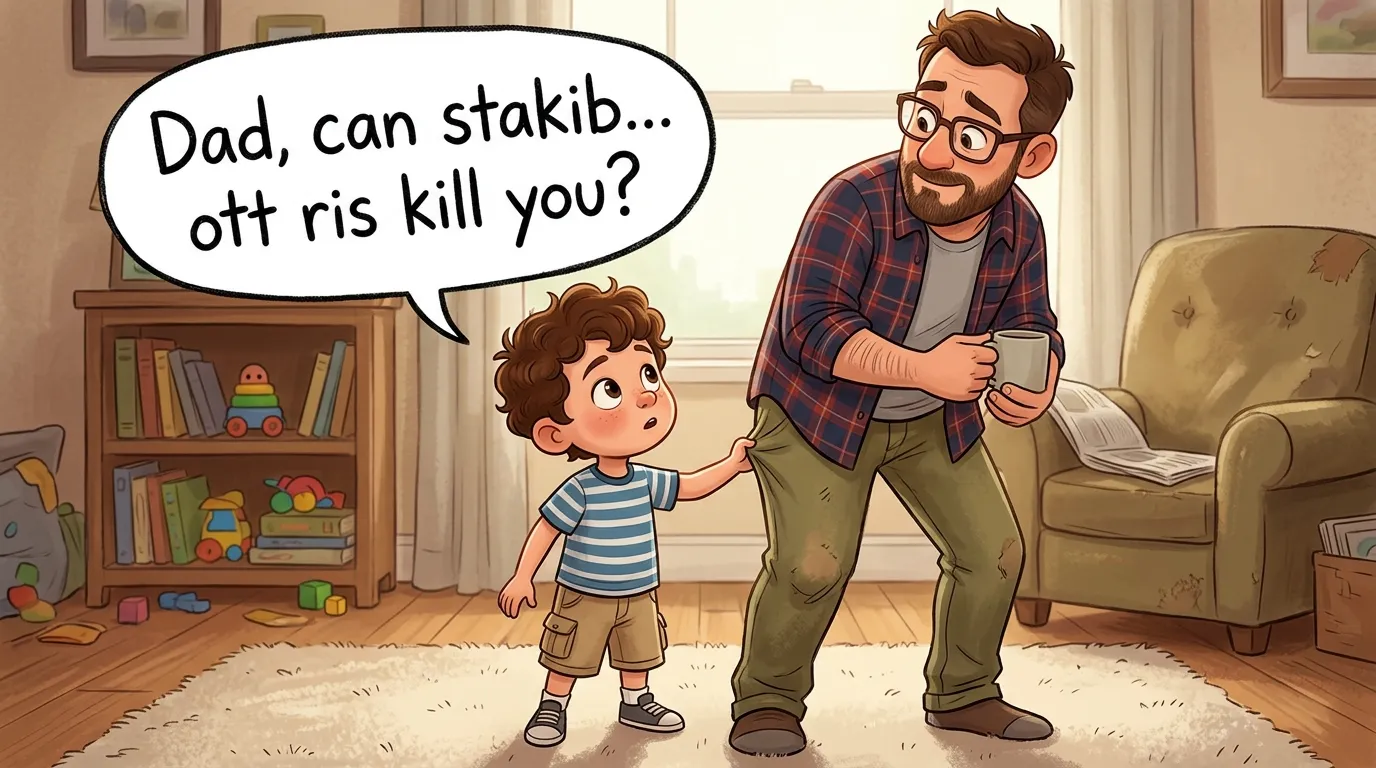
Can stachybotrys kill you? It is one of the most searched fears in the entire world of household mold, and it deserves a straight answer rather than a scary one. For the vast majority of healthy people, the honest reality is no: breathing the levels of Stachybotrys chartarum found in a typical mold-affected home is not going to kill you. The dramatic reputation of “toxic black mold” traces back to a specific 1990s health scare that was later found to be unproven, and no credible medical record documents a healthy adult dying from inhaling household black mold.
If you found black mold in your home, though, that does not mean it is harmless or that you should leave it alone. It means the danger is real but different from the myth, and understanding that difference is what lets you act calmly and correctly. For full identification and background, this page links to our complete guide to Stachybotrys chartarum.
The short answer: For healthy people, Stachybotrys is highly unlikely to be fatal. Its documented effects are allergic and respiratory, not deadly. Serious, life-threatening infection is essentially limited to people with severely weakened immune systems, and even then Stachybotrys is rarely the organism responsible. Mold removal is still strongly recommended for every home.
Can Stachybotrys Kill You? Separating Myth From Medical Reality
The belief that black mold is a silent killer is one of the most persistent myths in home health, and it is worth understanding exactly where the science actually stands. Public health agencies have looked at this carefully. The U.S. Environmental Protection Agency’s position, which you can read on its mold and health resource, treats all indoor mold the same way: it should be removed promptly and the moisture behind it corrected, but the agency does not describe household mold as a common cause of death.
The Centers for Disease Control and Prevention has been more direct about the deadly claims specifically, stating there is no proven link between Stachybotrys exposure and the severe conditions, such as bleeding in the lungs or memory loss, that the mold is often accused of causing.
In other words, the response from the people who study this for a living is not “run for your life.” It is “this is a moisture problem that should be cleaned up properly.” The distinction matters, because panic leads to bad decisions, and calm leads to the right ones.
Where the Toxic Black Mold Death Myth Started
The fear has a specific origin. In the 1990s, a cluster of infants in Cleveland developed acute pulmonary hemorrhage, and early investigators suggested a possible connection to Stachybotrys in water-damaged homes. The story spread widely and cemented black mold’s deadly image. When the CDC later reviewed that investigation, however, it concluded the association was not proven, citing serious problems with how the original studies were conducted.
The connection that launched a thousand headlines was never actually established.
The other half of the myth is the word mycotoxins. Stachybotrys can produce these toxic compounds, which is true and worth taking seriously. But the leap from “this mold can produce toxins” to “this mold will kill you in your living room” skips over the single most important factor in toxicology: dose.
The concentrated exposures that cause serious poisoning generally involve eating large amounts of contaminated agricultural material, not breathing the comparatively tiny airborne amounts present in a home. Our overview of mycotoxins and indoor mold explains that gap in more detail.
Why this still matters:
Debunking the death myth is not permission to ignore black mold. Even without a fatal risk, Stachybotrys can trigger real symptoms, worsen existing lung conditions, and signal a moisture problem that is quietly damaging your home.
Dangers of Stachybotrys to Humans
The documented effects of black mold exposure are real, common, and worth avoiding, even though they are not deadly for most people.
They include:
- Nasal congestion, sneezing, and sinus irritation
- Coughing, wheezing, and throat irritation
- Red, itchy, or watery eyes
- Skin irritation on contact
- Headaches and fatigue in a chronically damp home
- Aggravated symptoms in people who already have asthma or allergies
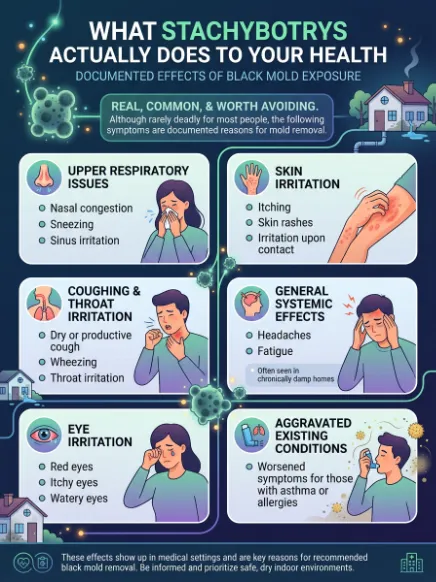
These are the effects that actually show up in medical settings, and they are the reason removal is recommended. For the full picture, see our guide to black mold symptoms and warning signs, and for how black mold compares to other feared varieties, our page on whether black mold is dangerous puts the risk in context.
Who Actually Faces Serious Risk From Stachybotrys
There is a narrow group for whom mold exposure moves from irritating to genuinely dangerous, and being honest about who that is helps everyone else relax. Infants, older adults, and people with chronic lung disease can react more strongly and should not be left in a heavily contaminated space. But the truly serious, potentially life-threatening scenario is different and rare.
Can Stachybotrys Kill You If You Are Immunocompromised?
This is the one context where the stakes rise meaningfully. In people with severely weakened immune systems, such as transplant recipients, chemotherapy patients, or those with advanced immune disorders, molds can occasionally cause invasive fungal infections that are dangerous and sometimes fatal. Even here, though, two things are true: these infections are uncommon, and Stachybotrys is rarely the organism involved, since other molds like Aspergillus are far more frequently responsible for invasive disease. So while the answer to whether Stachybotrys can be life-threatening for a profoundly immunocompromised person is technically yes in rare cases, it is not the everyday household danger the myth suggests. If someone in your home is immunocompromised, the correct move is straightforward: keep them away from the affected area and arrange professional removal quickly.
The Real Danger Black Mold Poses to Your Home
Here is the danger most homeowners overlook while worrying about the wrong one. Stachybotrys is a moisture indicator. It grows on wet cellulose, the material in wood framing and paper-faced drywall, which means its presence almost always signals water that has lingered long enough to also be damaging the structure. The mold on the surface is a symptom. The water behind it is the disease, and that water quietly softens framing, weakens subfloors, and feeds ongoing decay for as long as it is ignored. In practical terms, the threat black mold poses to your house is often more certain than the threat it poses to a healthy body.
What to Do If Stachybotrys Is Growing in Your Home
The right response is calm and decisive. Do not tear into it dry, do not paint over it, and do not panic. Small, contained patches on hard surfaces can sometimes be cleaned by a homeowner with proper protection, but larger growth, hidden growth, any history of flooding, or a vulnerable household member all call for a professional. Complete removal means pairing safe cleanup with permanent moisture control, because cleaning the mold without fixing the water guarantees it returns. Our guide on choosing the right remediation company covers what qualified, thorough removal looks like.
When to Take Black Mold Seriously
Treat Stachybotrys as a situation that needs professional attention when any of these are true:
- The growth is larger than a small patch, roughly the size of a bath towel or bigger
- It is hidden inside walls, ceilings, or under flooring
- The home recently flooded or had a significant leak
- Anyone in the household is immunocompromised, elderly, an infant, or has asthma or COPD
- The mold sits on structural wood or subfloor
- It keeps returning after cleaning, which means the moisture source was never fixed
Worried about black mold in your home?
Can Stachybotrys Kill You: Final Thoughts
So, can stachybotrys kill you? For a healthy household, the evidence says no, and the terrifying image of black mold as a household killer comes from a myth that public health agencies examined and did not confirm. The genuine risks are far more grounded: allergic and respiratory symptoms for most people, a rare and serious threat only for those with severely weakened immune systems, and a quiet, steady danger to the wood and drywall of the home itself.
The correct response is the same one the EPA recommends for all indoor mold in its brief guide to mold, moisture, and your home: remove the growth and fix the moisture that caused it. If black mold has you worried, the smartest step is to stop asking can stachybotrys kill you and start finding out what is actually behind your wall, so have it professionally inspected, learn exactly what you are dealing with, and put the fear to rest with facts.
Frequently Asked Questions About Can Stachybotrys Kill You:
Can Stachybotrys chartarum (black mold) kill you?
No. Black mold is not considered lethal to healthy individuals. Although it produces mycotoxins, research from the CDC and major toxicology groups shows that indoor airborne levels are far too low to be fatal. It can cause serious complications in people with severely weakened immune systems or advanced respiratory disease.
Is black mold more dangerous than other household molds?
No. Black mold is not uniquely hazardous. The CDC emphasizes that all indoor molds should be treated with equal caution. Color does not indicate toxicity—any mold can trigger allergies, asthma flare-ups, or sinus irritation.
What actually happens if you breathe in Stachybotrys spores?
Most people experience typical allergy-like symptoms: coughing, sneezing, congestion, itchy eyes, or mild skin irritation. It does not cause sudden poisoning. Long-term exposure can make these symptoms persistent or more irritating.
Who is most at risk from black mold exposure?
People with compromised respiratory or immune function are most vulnerable, including:
Infants
Older adults
Individuals with severe asthma or COPD
People undergoing chemotherapy
Anyone taking immunosuppressive medications
In these groups, mold exposure can trigger serious infections or severe asthma attacks.
Does black mold cause “Toxic Mold Syndrome,” memory loss, or chronic fatigue?
No. Scientific reviews have found no evidence that inhaled indoor mold causes systemic toxicity, neurological damage, or memory loss. Reports of these symptoms in water‑damaged buildings are typically linked to chronic inflammation, allergies, or poor indoor air quality—not mycotoxin poisoning.
Can black mold cause bleeding in the lungs of babies?
There is no proven connection. A 1990s investigation in Cleveland suggested a link between Stachybotrys and infant pulmonary hemorrhage, but later CDC reviews concluded the evidence was inconclusive and did not support a direct cause.
There is no proven connection. A 1990s investigation in Cleveland suggested a link between Stachybotrys and infant pulmonary hemorrhage, but later CDC reviews concluded the evidence was inconclusive and did not support a direct cause.
What makes Stachybotrys chartarum grow in a home?
Stachybotrys needs long-term, severe moisture and cellulose-rich materials. It thrives on:
Drywall
Wood
Ceiling tiles
Paper-based materials
It rarely appears in homes without chronic leaks, flooding, or major humidity problems.
Should I test my home to see if the mold is Stachybotrys?
No. The CDC and EPA do not recommend mold species testing. Health effects depend on your sensitivity, not the mold type. If you see or smell mold, the correct action is simply to remove it and fix the moisture source.
What is the safest way to clean up black mold?
For small areas (under 10 sq. ft.), DIY cleanup is safe with proper protection:
Wear an N95 mask, goggles, and gloves
Scrub with soap and water or a commercial mold cleaner
Avoid bleach on porous materials—it often doesn’t penetrate deeply enough
Most importantly: fix the leak or humidity issue, or the mold will return.
Large infestations should be handled by professionals.
How quickly do symptoms improve after mold removal?
Most people feel better within a few days to a couple of weeks once exposure stops. As airborne spores and musty VOCs disappear, the respiratory system calms down. If symptoms continue after proper remediation, consult a healthcare professional to rule out other allergens or conditions.