
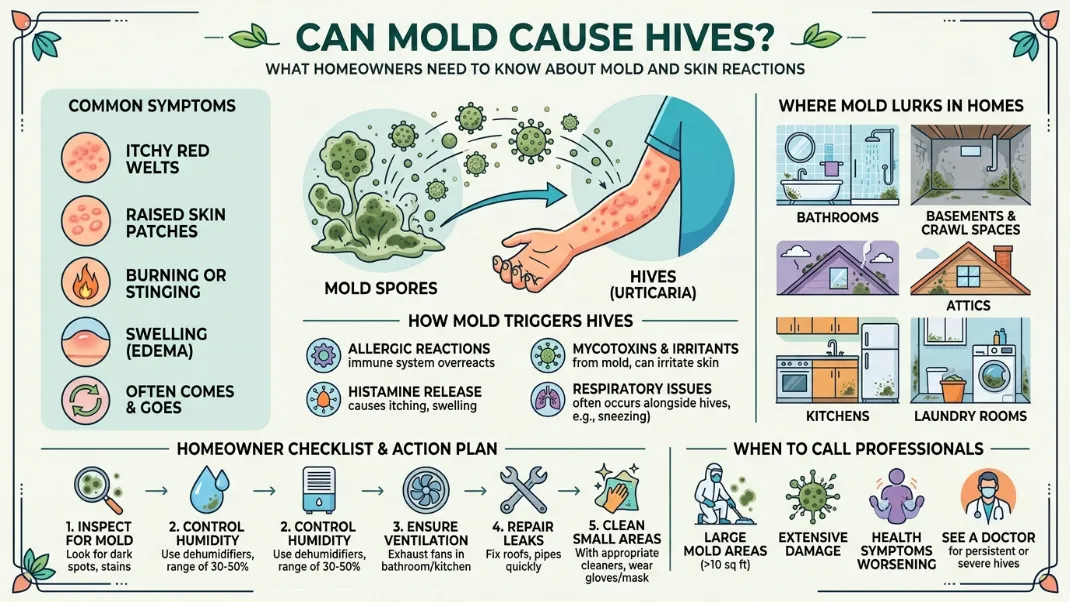
Yes, mold can cause hives. For people who are allergic to mold, breathing in or touching mold spores can set off an immune reaction that surfaces on the skin as raised, itchy welts. If you have been asking can mold cause hives because your skin keeps breaking out and you cannot pin down a cause, the short answer is that mold is a recognized and well documented trigger.
The reaction does not happen to everyone. It happens to people whose immune systems treat mold spores as a threat, and it tends to flare in damp, mold prone homes: the older houses, finished basements, and humid summer conditions common across Long Island, Queens, Brooklyn, and the Bronx. This guide explains how the reaction works, what the welts look like, how to tell mold hives apart from eczema and other rashes, who is most at risk, and exactly how to make the breakouts stop for good. The lasting fix is rarely a cream. It is finding the moisture in your home that is feeding the spores.
Mold causes hives in allergic people through an IgE driven histamine reaction. The welts look like any other hives, so the giveaway is the pattern: skin that flares at home, eases when you are away, and worsens near damp or musty spaces. Antihistamines calm the rash, but the reaction only stops for good once the mold and the moisture feeding it are removed.
How Mold Triggers Hives in Allergic People
Hives, known medically as urticaria, are a skin reaction driven by your immune system, not by direct damage to the skin. When a mold allergic person inhales or touches mold spores, the immune system recognizes the spores as a threat and produces antibodies called Immunoglobulin E, or IgE. Those antibodies attach to mast cells in the skin. On the next exposure, the mold allergen binds to the IgE, the mast cells release histamine and other chemicals, and that histamine is what produces the swelling, redness, and intense itch you see as hives. Allergists classify this as a Type I, or immediate, hypersensitivity reaction, the same fast acting pathway behind pollen and pet allergies.
The federal health agencies back this up. The U.S. Environmental Protection Agency lists skin rash among the allergic reactions that mold and other biological pollutants can trigger. The Centers for Disease Control and Prevention notes that in mold allergic individuals, both inhaling and touching mold can cause an allergic response, and that mold can irritate the skin even in people who are not allergic. So there are two separate pathways at work:

- A true allergic reaction in sensitized people, where the IgE histamine cascade produces classic hives.
- Plain irritation from contact in almost anyone, where physically handling moldy material inflames the skin without a full allergy being involved.
Knowing which one you are dealing with matters less than knowing they both trace back to the same source. Reduce the mold in the environment and both pathways quiet down.
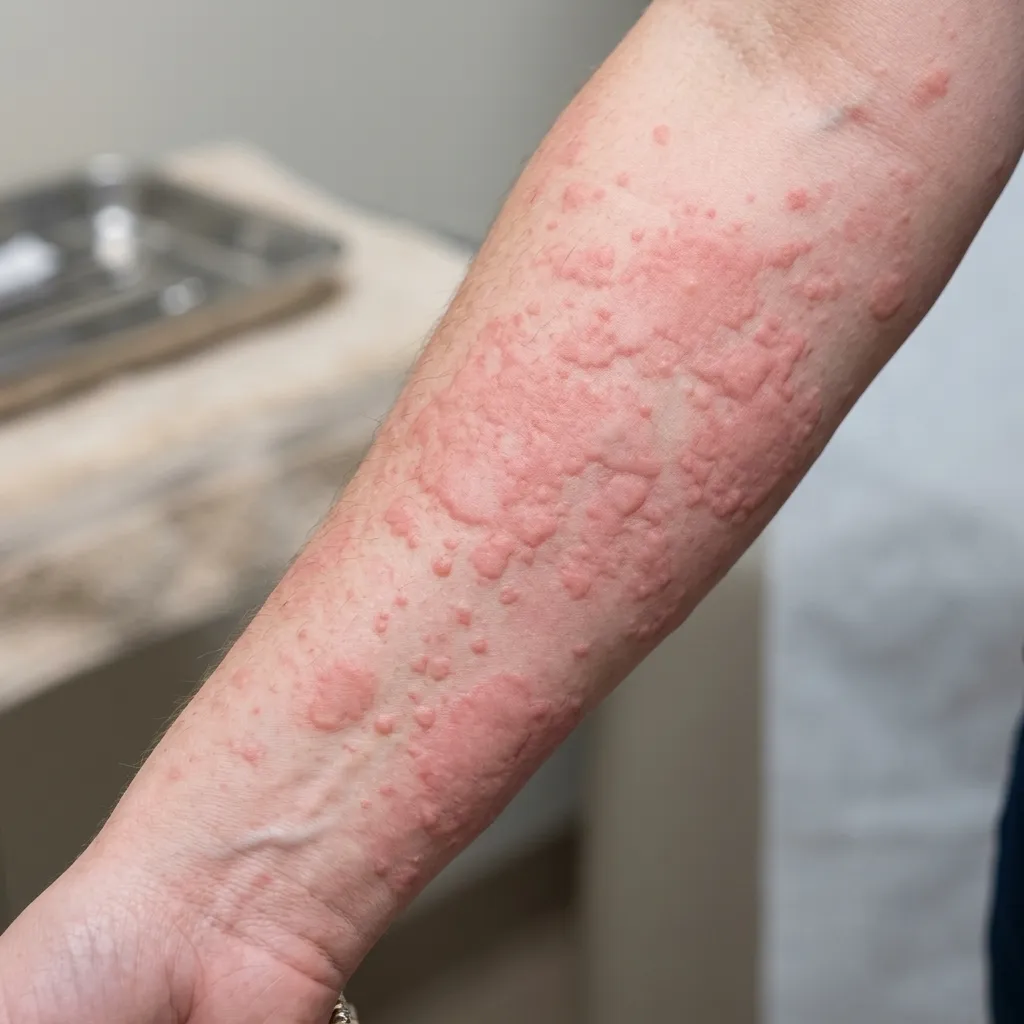
How Mold Triggers Hives in Allergic People
Mold hives look the same as hives from any other allergen, which is part of why they are so often missed. They appear as a rash or raised welts, sometimes pink or red, sometimes the color of your skin, and they itch, sting, or burn. The welts can be small dots or large blotches several inches across. Two features set true hives apart from most other rashes:
- They move. A welt can fade in one spot within hours and reappear somewhere else. Most individual welts clear within a day, even as the overall outbreak continues.
- They blanch. Press the center of a welt and it briefly turns pale or white, a classic sign of the histamine swelling underneath.
Because hives have so many possible causes, including foods, medications, pet dander, pollen, and stress, you cannot diagnose a mold cause from the rash alone. What points toward mold is the pattern. If the welts flare when you are home and ease when you are away for a few days, or worsen after you go into the basement, crawl space, or a musty room, that timing is the clue worth paying attention to.
Mold Hives vs. Eczema, Contact Dermatitis, and Heat Rash
People who break out at home often spend weeks online comparing photos, trying to name what they are looking at. Photos rarely settle it, because skin conditions look different across ages and skin tones. What helps more is knowing how these reactions actually behave, since the behavior is what separates them. Here is how mold hives compare to the rashes they are most often confused with.
| Condition | How It Looks | How It Behaves |
|---|---|---|
| Mold hives (urticaria) | Raised, smooth welts that may look pink, red, or skin colored. They are not scaly and usually blanch when pressed. | Appear fast, move around, and individual welts often fade within 24 hours. They may flare with exposure and ease when you are away. |
| Eczema (atopic dermatitis) | Dry, scaly, sometimes cracked or oozing patches. These are usually not raised welts. | Chronic and recurring in the same spots, often on the elbows, knees, or neck. It lasts weeks to years, not hours. |
| Contact dermatitis | Red, sometimes blistered patches right where the skin touched the irritant. | Tends to sting or burn more than itch. It stays where contact happened instead of moving around. |
| Heat or sweat rash | Tiny red bumps or prickly spots in skin folds and sweat zones. | Tracks with heat and humidity and clears as you cool down, not necessarily when you leave the house. |
The shorthand: hives are raised, smooth, and restless, while eczema is dry, scaly, and stubborn in fixed places.
If your rash is the raised, traveling, fast-fading kind, and it tracks with being inside a particular building, mold belongs near the top of your suspect list. For the full picture of how mold shows up beyond the skin, see our mold allergy symptoms guide.
Can Mold Cause Other Skin Reactions Besides Hives?
Hives are the most recognizable mold skin reaction, but they are not the only one. In sensitized or heavily exposed people, mold can also be linked to:
- Angioedema. Deeper swelling that often accompanies hives, typically around the eyes, lips, hands, or feet. It is the same histamine process reaching deeper tissue.
- Atopic dermatitis flares. People who already have eczema sometimes find that an indoor mold allergen makes existing patches flare and stay inflamed.
- Irritant contact dermatitis. Direct handling of moldy drywall, carpet, or stored items can inflame the skin even without a diagnosed allergy.
When swelling is an emergency
Angioedema that spreads to the lips, tongue, or throat, or hives that come with trouble breathing, a tight chest, dizziness, or facial swelling, can signal a severe reaction. That is a call 911 situation, not a wait and see one. Get emergency care first, then investigate the home.
Why Your Hives Get Worse at Home
This is the question that matters most for homeowners, and it is the one that points to a fixable cause. If your skin reacts indoors and calms down when you leave, the exposure is coming from inside the building. Indoor mold problems usually trace back to moisture: a damp basement, a humid crawl space, condensation behind walls, a slow plumbing leak, or high indoor humidity during the muggy Northeast summer. Spores from that hidden growth circulate through the air and the HVAC system, so you can be exposed all day without ever seeing the mold.
This is also where mold differs from pollen. You cannot do much about outdoor mold during a wet season except manage symptoms, but indoor mold is something you can locate and remove. As long as the source stays in the home, the spore load stays high and a sensitized person keeps reacting. That is why treating the rash without addressing the home rarely ends the cycle.
Who Is Most at Risk for Mold-Related Hives
Two people can live in the same house, breathe the same air, and only one breaks out. Susceptibility comes down to how your immune system is wired and how much mold you are exposed to. You are more likely to react with hives if you:
- Already have allergies, asthma, or eczema, which signal an atopic, allergy prone immune system.
- Have a known mold or fungal allergy, or react to other airborne allergens like pollen and dust.
- Spend long hours in a damp space, such as a finished basement bedroom, office, or laundry area.
- Live in an older, humid, or water damaged home, which describes a large share of the NY metro housing stock.
Children, older adults, and people with weakened immune systems tend to be more vulnerable to damp indoor environments in general, which is one more reason to treat a recurring rash in the home as a signal worth chasing down rather than waiting out.
Why Testing Both Your Body and Your Home Is the Best Option
On the medical side, an allergist can confirm whether you are sensitized to mold using a skin prick test or a specific IgE blood test, which the American Academy of Allergy, Asthma and Immunology describes as the standard tools for diagnosing a mold allergy. On the home side, a professional inspection determines whether you actually have a mold and moisture problem feeding the exposure. A positive allergy test plus confirmed mold in the house is about as clear as the picture gets. Testing only one side is the most common reason people stay stuck: a clean allergy panel does not rule out an irritant reaction, and a clean rash does not mean your basement is dry.
Before you book anything, you can run a simple at home pattern check that often points the way:
- Track the timing. Note when welts appear and whether they ease after a day or two away from the house.
- Track the place. Notice whether breakouts intensify after time in the basement, crawl space, or any musty room.
- Track the season. See whether flares ramp up during humid summer weeks, when indoor moisture peaks.
If two or three of those line up, an indoor source is likely, and an inspection is the logical next move. Our guide to mold inspections walks through what one covers.
Which Molds Are Most Likely to Cause Hives
Any mold can trigger an allergic reaction in a sensitized person, and severity depends far more on your individual sensitivity and the amount of exposure than on the species. That said, the molds people encounter most in damp homes are the common allergenic types: Cladosporium, Penicillium, Aspergillus, and Alternaria. So called black mold, Stachybotrys chartarum, gets the most public fear, but from a skin reaction standpoint it is one allergen among many rather than uniquely responsible for hives. If you are concerned about a specific dark growth in your home, our article on whether black mold is dangerous separates the real risks from the myths, and our overview of toxic molds explains the differences between types.
It is also worth knowing that hives are rarely the only sign. Mold allergy commonly comes with sneezing, runny nose, itchy or watery eyes, coughing, and in some people fatigue. If your skin breakouts come alongside those symptoms, that cluster strengthens the case for an indoor allergen. You can read more in our look at whether mold can make you tired.
How to Prevent Mold Hives by Controlling Moisture at Home
Once the existing mold is gone, prevention comes down to keeping moisture out, because mold cannot grow without it. The single most important number is indoor humidity. Keeping it below roughly 50 percent removes the conditions mold needs, which matters most during humid Northeast summers when basements and crawl spaces sweat. Our guide to the best humidity level to prevent mold covers the targets and the tools.
Beyond humidity, the fundamentals are straightforward:
- Fix leaks fast, and dry any water damaged area within 24 to 48 hours before mold can establish.
- Run exhaust fans in bathrooms and kitchens to vent steam outside.
- Make sure water drains away from the foundation, not toward it.
- Address damp basements and crawl spaces with real moisture control before they become spore factories.
For older NY metro homes with block foundations and chronic basement dampness, that often means waterproofing or encapsulation rather than a quick surface cleanup. Our complete mold prevention guide ties these steps together, and our piece on indoor air quality and mold prevention covers reducing the airborne allergen load that keeps sensitive skin reacting.
Can Mold Cause Hives: Final Thoughts
Yes, mold can cause hives in people who are allergic or highly sensitive to mold. The reaction is usually driven by the immune system releasing histamine after exposure to mold spores, fragments, or mold-contaminated materials.
The rash itself may look like ordinary hives, so the strongest clue is the pattern. Hives that flare at home, ease when you leave, and worsen around damp, musty, or water-damaged areas should put mold high on the suspect list.
Antihistamines may calm the welts, but they do not remove the trigger. If mold is the cause, the lasting fix is to remove the mold and correct the moisture problem that allowed it to grow. If you are in the NY metro area and want to know what is in your air, our team can inspect the property and help identify the source.
Stop the reaction at the source.
Frequently Asked Questions About Mold and Hives
Can Mold Cause Hives?
Yes. Mold can trigger hives in people who are allergic or sensitized to mold. These hives are caused by an immune response that releases histamine, leading to raised, itchy welts on the skin. The rash may flare after time spent in a damp, musty, or mold-contaminated building.
How Long Do Mold Hives Last?
An individual hive welt usually fades within 24 hours, but new welts can keep appearing if mold exposure continues. Hives that resolve within six weeks are considered acute. Hives that keep returning for more than six weeks are considered chronic and should be evaluated by a healthcare provider.
How Soon After Mold Exposure Can Hives Appear?
Mold hives can appear within minutes to a few hours in a mold-allergic person. Some reactions may show up later the same day, which can make the connection harder to spot. Tracking when the rash appears, where you were, and whether the space smelled damp or musty can help identify the trigger.
Can Touching Mold Cause Hives or a Skin Rash?
Yes. Touching mold can cause an allergic skin reaction in sensitized people, and moldy materials can also irritate the skin directly. This is why gloves, sleeves, eye protection, and proper containment matter during cleanup. People with known mold allergies should avoid handling moldy materials whenever possible.
Can Black Mold Cause Hives?
Yes, black mold can cause hives in someone who is allergic to it, but it is not the only mold that can do this. Many indoor molds can trigger allergic skin reactions. Your sensitivity, the amount of mold present, and how long you are exposed matter more than the color of the mold.
How Do I Know If My Hives Are From Mold?
You cannot confirm mold hives from appearance alone because hives look similar no matter what caused them. The strongest signs are timing and location. Hives that flare inside one building, improve when you leave, and worsen near damp rooms, leaks, crawl spaces, basements, or musty odors may be connected to mold exposure.
Can Mold Cause Hives in Children and Babies?
Yes. Children and babies can react to mold with skin rashes, including hives, especially if they are allergic or sensitive to indoor mold. Recurring unexplained hives that improve away from home should be discussed with a pediatrician. A damp, musty, or water-damaged home should also be inspected for mold and moisture problems.
Will Removing Mold Stop the Hives?
Surface cleaning may remove visible staining, but it does not eliminate hidden growth, airborne spores, or the underlying moisture source causing the problem.
Can Mold Cause Hives All Over the Body?
Yes. Mold-related hives can appear anywhere on the body because they are usually an immune response, not just a rash where the skin touched mold. Welts may show up on the arms, legs, face, trunk, or several areas at once. Hives with lip, eyelid, tongue, throat swelling, dizziness, or trouble breathing require emergency medical care.
Can a Dehumidifier Help With Mold Hives?
A dehumidifier can help prevent mold growth by lowering indoor humidity, especially in basements, crawl spaces, and damp rooms. It will not remove mold that is already growing or repair the leak, condensation, or drainage issue that caused it. For mold-triggered hives, humidity control works best after the mold source is removed.