
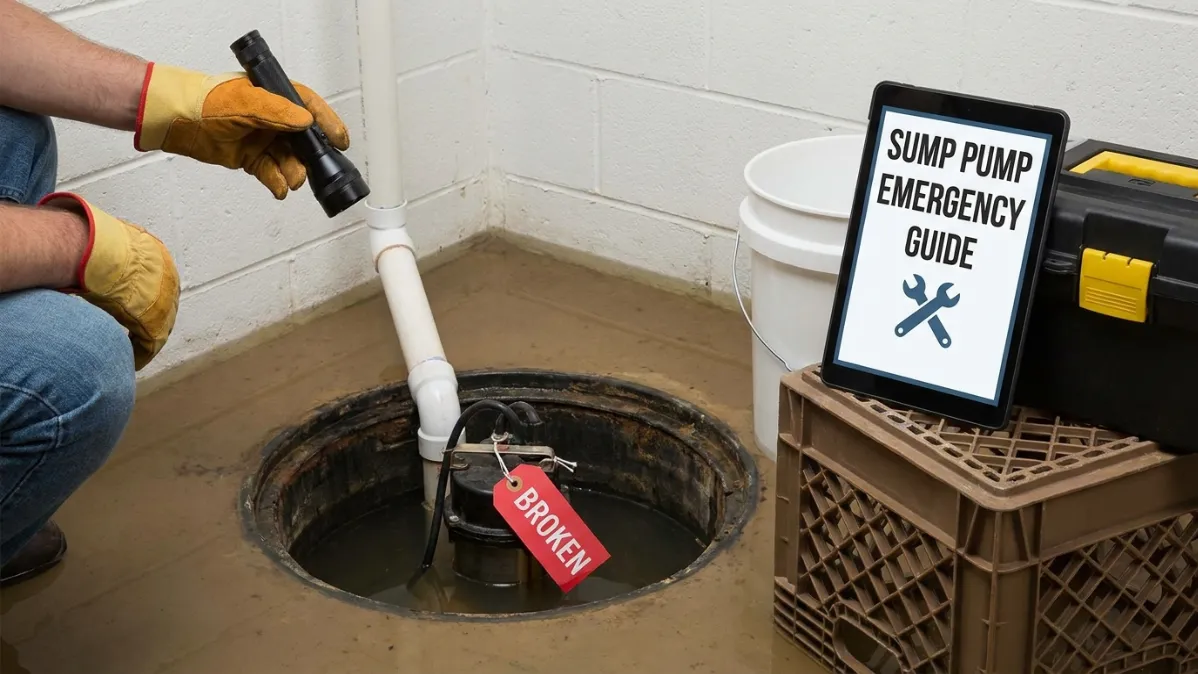
A broken sump pump usually fails for one of a handful of reasons: a stuck float switch, a clogged pit, a tripped breaker or lost power, a frozen or blocked discharge line, or simple old age. The good news is that several of these are things you can check yourself in a few minutes. The bad news is that a broken sump pump tends to reveal itself at the worst possible moment, in the middle of a storm, with water already rising in the pit. So before we get into causes, know the order of operations: confirm it has power, clear what you can, and if the water keeps climbing, get help moving fast. A flooded basement does its damage in hours, not days.
If your pump is silent when it should be running, or running nonstop and never shutting off, you are dealing with one of the failure modes below. Let’s walk through them the way we would on an actual service call.
Water rising and the pump is dead? Do not wait it out. A fast response keeps a failed pump from becoming a flooded, mold-prone basement.
Get a Free Assessment at Your Convenience Now!
Why Catching a Broken Sump Pump Early Saves Your Basement
A sump pump is the one piece of equipment in your home whose entire job is to prevent a flood, and it works silently in a pit you almost never look at. That is exactly why failures get caught late. Nobody notices a pump that has quietly stopped working until the day it is needed and the water has nowhere to go.
The cost of that gap is steep. It takes less than an inch of water across a finished basement to cause thousands of dollars in damage to flooring, drywall, and stored belongings. Worse, standing water is a mold engine. Within a day or two of a flood, the moisture pushed into framing and drywall is enough to start mold growth, which turns a water problem into an air quality problem. That is why a dead pump is never just a plumbing issue, and why our flood damage cleanup process guide exists in the first place.
Here is the part most homeowners do not know until it is too late: standard homeowners insurance often does not cover water damage from sump pump failure unless you carry a specific endorsement for it. We cover how that plays out in our breakdown of mold testing and insurance claims. Catching a failing pump before it fails is far cheaper than discovering your policy gap after the basement is underwater.
The Best First Move When You Have a Broken Sump Pump
When the pump is not running and you need to know why, work through these in order. This is the same sequence a technician runs, and you can do the first several yourself.
- Check the power. This is the most common and most embarrassing cause, and we mean that kindly. Confirm the pump is plugged in, that the outlet has power, and that the breaker has not tripped. Sump pumps draw hard when they start, and a loose cord or a flipped breaker stops everything instantly. Many pumps share an outlet with a GFCI that has quietly tripped. Reset it and listen.
- Look at the float switch. The float is the part that tells the pump when to turn on. According to the InterNACHI sump pump inspection guide, one of the single most common reasons pumps fail is the float getting jammed against the side of a pit that is too small or too cramped. If the float cannot rise, the pump never gets the signal to run. Free it up and see if the pump kicks on. A pump that runs nonstop usually has the opposite problem, a float stuck in the up position.
- Clear the pit. Debris, gravel, and sludge collect at the bottom of the pit and clog the inlet screen or jam the impeller. If the pump hums but does not move water, this is a likely culprit. A pit should be covered to keep debris out, and InterNACHI notes most pits should be no smaller than 24 inches deep and 18 inches wide to give the pump room to work. A submersible pump should also never sit directly on the bottom of the pit, since that pulls sludge straight into the inlet.
- Check the discharge line and check valve. If the pump runs but water comes back, the line carrying water outside may be clogged, disconnected, or frozen. In winter especially, a discharge line that freezes at the outlet backs water right into the pit. A stuck or broken check valve does the same thing, letting the water the pump just lifted drain straight back down, so the pump runs itself to death against a blockage it cannot clear.
- Consider its age. InterNACHI puts the typical sump pump lifespan around seven years. If yours is older than that and never had a backup, age alone may be the answer. Pumps do not usually warn you before they quit.
If you get through this list and the pump still will not move water while the pit is filling, stop troubleshooting and start protecting the basement. That is the point to call for help.
Not sure if you should repair or replace?
Repair or Replace a Broken Sump Pump?
Once the immediate emergency is handled, the real question is whether to fix the pump or replace it. The honest answer depends on age and what failed.
A stuck float switch or a clogged inlet on a pump that is only a few years old is a straightforward repair. Switches are inexpensive, and many manufacturers recommend replacing the float every couple of years as routine maintenance regardless. But if the pump is near or past that seven-year mark, if the motor has burned out, or if it has failed once already, replacement is the smarter money. You are not paying for the pump. You are paying for the basement it protects.
When you do replace, this is the moment to fix the things that caused the failure in the first place. The most important upgrade is a backup. A battery backup pump runs when the power goes out, which matters because the storms that overwhelm your basement are the same storms that knock out power. A pump with no backup is a pump that is guaranteed to fail during the exact event it exists to handle. Our guide to sump pump systems, sizing, and backup options walks through choosing the right setup, and the cost to install a sump pump in a basement covers what a proper installation runs.
What a Sump Pump Replacement Costs
Sump pump costs vary mostly with whether you are swapping a pump into an existing setup or building one from scratch, and whether you add backup protection. As a planning range:
| Project | Typical Installed Cost |
|---|---|
| Float switch or simple repair | Often under $150 in parts |
| Straightforward pump replacement, existing pit and discharge | $800 to $1,500 |
| Battery backup added to an existing system | $600 to $2,000 or more |
| Complete high-reliability system with primary and backup pump | About $2,000 to $2,500+ |
| Yearly running cost, electricity | $30 to $50 |
Against the thousands a single flood costs in flooring, drywall, and mold remediation, a backup is one of the cheapest forms of insurance in the house.
When a Broken Sump Pump Points to a Bigger Problem
Sometimes a pump that runs constantly is not broken at all. It is overwhelmed. If your pump cycles around the clock during normal weather, the issue may be how much water is reaching the pit, not the pump itself. That points to a drainage problem the pump alone will never solve.
This is where the conversation widens. A pump is the last line of defense, but it works best as part of a system. Interior basement drainage systems channel water to the pit efficiently instead of letting it find its own way through the floor. If the water is coming in faster than any pump can keep up, our overview of basement flooding solutions compared lays out the options, and longer term, basement waterproofing addresses the source rather than the symptom. If your basement only floods in heavy rain, read that alongside what causes basement flooding from rain, because a pump working overtime is often a symptom of a drainage gap upstream.
How to Test Your Sump Pump Before It Fails
The cheapest way to never face a flooded basement is to confirm the pump works on a quiet day rather than during the storm. The test takes two minutes:
- Slowly pour a five-gallon bucket of water into the pit until the float rises.
- The pump should switch on by itself, pump the pit down, and shut off cleanly.
- If nothing happens, lift the float by hand. If it runs when lifted, the switch is the problem. If it stays silent, go back to the power and motor checks.
- Listen for grinding, hammering, or squealing, which point to a worn impeller or a pump that is no longer anchored properly.
Run this test at least twice a year, and again before any season you expect heavy rain. While you are down there, clear the pit and confirm the discharge line outside is open and unfrozen.
Broken Sump Pump: Final Thoughts
A broken sump pump is one of those problems that feels like an emergency because it usually is one. Run the checklist when it happens: power first, then the float, then the pit, then the discharge line and check valve, then the pump’s age. Several of those you can solve yourself in minutes. But the deeper lesson is that the worst time to learn your pump has failed is during the storm you needed it for. Test it on a calm day, add a battery backup if you do not have one, and replace an aging unit before it quits on its own schedule. A broken sump pump can flood a basement in hours, and the homeowners who never deal with that flood are the ones who treated the pump as critical equipment long before it failed.
Say Goodbye to Wet Basements! Schedule Your Free Inspection Now!
Frequently Asked Questions About Broken Sump Pumps
Why Did My Sump Pump Suddenly Stop Working?
A sump pump usually stops working because it lost power, tripped a breaker, has a jammed float switch, has debris in the pit, or is blocked by a frozen discharge line. First, confirm the pump has power. Then check whether the float moves freely and whether the pit or discharge line is clogged.
Why Is My Sump Pump Running But Not Pumping Water?
If a sump pump runs but does not move water, the discharge line may be clogged, frozen, disconnected, or blocked by a stuck check valve. Debris can also jam the impeller. In this situation, the motor may still work, but the pump cannot push water out of the pit.
Why Does My Sump Pump Run Constantly?
A sump pump that runs constantly usually has a stuck float switch, a failed check valve, or more incoming water than the pump can handle. If it keeps cycling during normal weather, the problem may be poor drainage around the foundation rather than the pump itself. Constant operation can burn out the motor if it is not corrected.
How Long Do Sump Pumps Last?
Most sump pumps last about 7 years on average. Some fail sooner if they are used heavily, poorly maintained, or exposed to debris. Once a sump pump is near the 7-year mark, replacement is often smarter than repair, especially if the home does not have a backup pump.
How Do I Test My Sump Pump?
To test a sump pump, slowly pour water into the pit until the float rises. The pump should turn on, remove the water, and shut off by itself. If it does not start, lift the float by hand to check the switch. Test your sump pump at least twice a year and before major storm seasons.
Does Homeowners Insurance Cover Sump Pump Failure?
Standard homeowners insurance often does not cover flooding caused by sump pump failure. Many policies require a separate sump pump failure or water backup endorsement. Homeowners should check their coverage before a storm or power outage, not after water damage occurs.
How Much Does It Cost To Replace A Sump Pump?
Should I Repair Or Replace A Broken Sump Pump?
Repair a sump pump if it is newer and the problem is simple, such as a stuck float switch or minor clog. Replace it if the motor failed, the pump is close to 7 years old, or it has already failed once. When replacing a sump pump, adding a battery backup helps protect the home during power outages.
What Are The Signs A Sump Pump Is Failing?
Common signs of sump pump failure include strange noises, constant running, short cycling, visible rust, vibration, water left in the pit, or the pump failing to turn on during testing. A pump that runs but does not lower the water level needs immediate attention because the discharge system or impeller may be blocked.
Do I Need A Battery Backup For My Sump Pump?
Yes, a battery backup is strongly recommended if your basement or crawl space depends on a sump pump to stay dry. Primary sump pumps need electricity, so they can fail during the same storm that brings heavy water into the pit. A backup pump keeps the system working during power outages, pump failure, or heavy inflow.