
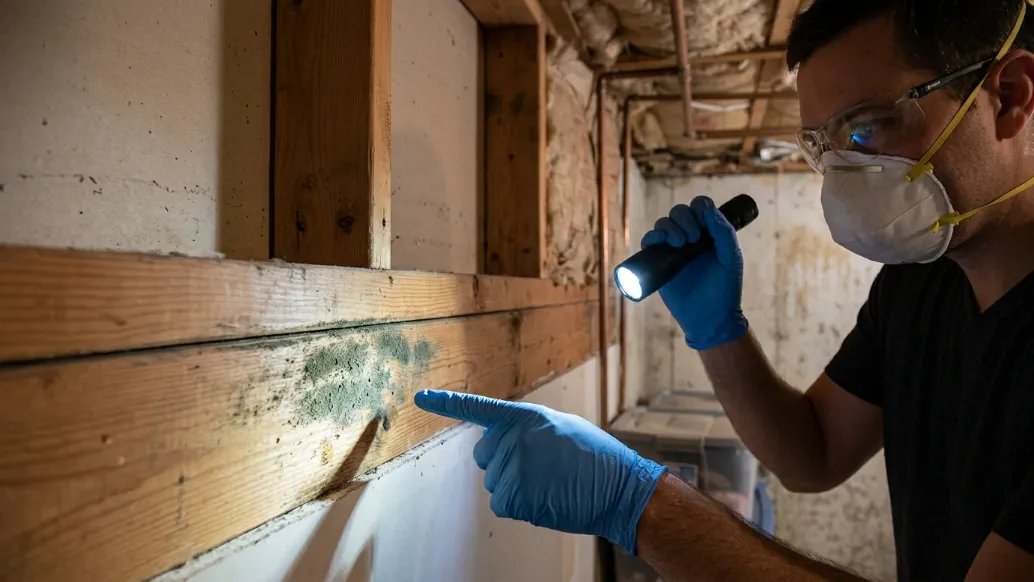
So is trichoderma mold dangerous, or is it the harmless kind you can wipe away and forget? The honest answer sits in the middle, and it depends almost entirely on two things: who is breathing it in, and how long it has been growing. For most healthy adults, exposure to typical indoor amounts causes allergy-style irritation rather than serious illness. For infants, older adults, and anyone with a weakened immune system or a lung condition, the same mold can pose a genuine health risk.
This page walks through exactly where trichoderma falls on that spectrum, what symptoms to watch for, and the point at which a green patch stops being a nuisance and starts being a reason to call for professional mold remediation. For identification and the full removal process, this page links back to our complete trichoderma mold guide.
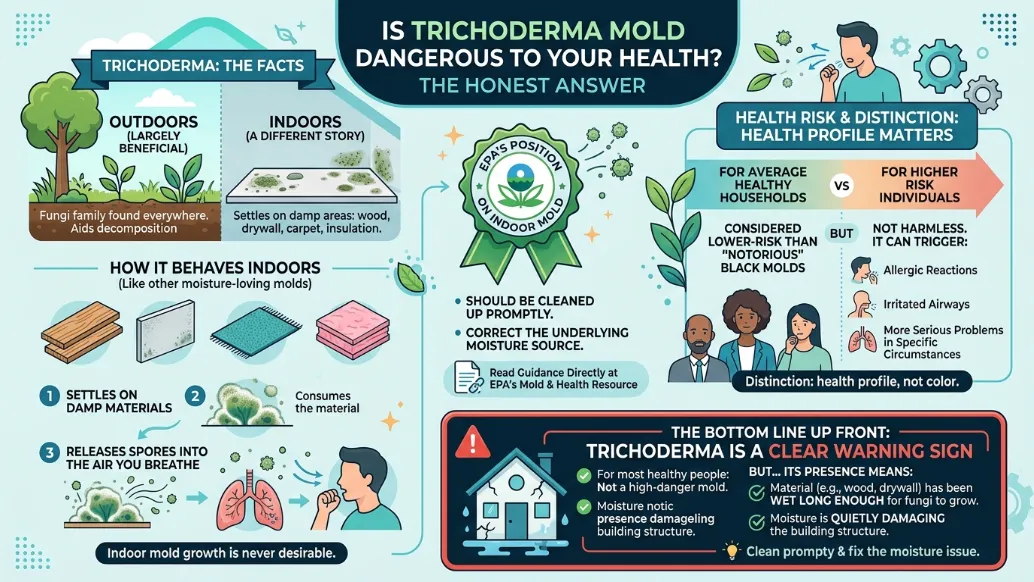
Is Trichoderma Mold Dangerous to Your Health? The Honest Answer
Trichoderma is a large family of fungi that lives almost everywhere outdoors, where it is largely beneficial. Indoors is a different story. Once it settles onto damp wood, drywall, carpet, or insulation, it behaves like any other moisture-loving mold: it spreads, digests the material it grows on, and releases spores into the air you breathe. The U.S. Environmental Protection Agency’s position is consistent for every species, including this one: indoor mold growth is never desirable and should be cleaned up promptly while the moisture behind it is corrected. You can read that guidance directly on the EPA’s mold and health resource.
For the average person in a healthy household, trichoderma is considered a lower-risk mold than the notorious black molds. That does not make it harmless. It can trigger allergic reactions, irritate the airways, and, in specific circumstances, cause more serious problems. The distinction that actually matters is not the color on the wall. It is the health profile of the people living with it.
The bottom line up front: Trichoderma is not a high-danger mold for most healthy people, but it is a clear warning sign. Its presence means a material in your home has been wet long enough for fungi to take hold, and that same moisture is quietly damaging the structure around it.
Trichoderma Mold Symptoms: What Exposure Can Actually Do
Most reactions to trichoderma look like allergy and irritation symptoms, and they often improve when the person leaves the affected space. The most commonly reported effects include:
- Nasal congestion, sneezing, and a runny or stuffy nose
- Itchy, watery, or red eyes
- Throat irritation and coughing
- Wheezing or a feeling of chest tightness
- Skin irritation or rashes on direct contact
- Headaches and a general sense of fatigue in a persistently damp home
These overlap heavily with everyday allergies, which is why mold exposure is so often missed. A useful tell is timing: if symptoms flare at home, ease when you are away, and return when you walk back in, indoor mold is a reasonable suspect. Our guides on mold allergy symptoms and respiratory illness from mold go deeper on how to tell the difference and when to see a doctor.
Who Is Most at Risk From Trichoderma Mold Exposure
This is where the danger question becomes far less abstract. The same exposure that gives a healthy adult a stuffy nose can be a serious matter for a vulnerable person. Certain trichoderma species, particularly Trichoderma longibrachiatum, are recognized as opportunistic pathogens, meaning they can cause actual infections in people whose immune defenses are compromised.
- Immunocompromised Individuals: Transplant recipients, chemotherapy patients, and others with suppressed immunity face the highest risk, including rare invasive infections.
- Infants and Young Children: Developing respiratory systems are more sensitive to spores and mold-related irritants in the air.
- Older Adults: Age-related changes in lung function and immunity raise the odds of a stronger reaction.
- People with Asthma or COPD: Existing lung disease can be worsened by mold exposure, sometimes triggering flare-ups and breathing difficulty.
If someone in your household falls into one of these groups, the calculation changes. What might be a minor cleanup in one home becomes a health priority in another. Pregnant women and pets warrant the same added caution, which we cover in our resources on mold and asthma risk.
Mycotoxins, VOCs, and That Musty Smell
Trichoderma can produce mycotoxins, the toxic compounds some molds release, along with microbial volatile organic compounds. Those VOCs are usually the source of the earthy, musty odor that signals active growth. The presence of an odor is meaningful: it often means mold is thriving somewhere you cannot see, such as inside a wall cavity or under flooring. For the broader picture on how these compounds affect indoor air, see our overview of mycotoxins and indoor mold. A musty smell with no visible mold is not a reason to relax. It is often a reason to look harder.
How Dangerous Is Trichoderma Compared to Black Mold?
Homeowners almost always ask this because green mold and black mold get lumped together in a wave of anxiety. Compared with Stachybotrys, the notorious black mold, trichoderma is generally considered lower risk for healthy people. Both, however, demand removal, and both are telling you the same underlying story: a material in your home has stayed wet for too long. Color is not a diagnosis. Trichoderma can look visually similar to common green molds like Penicillium and Aspergillus, which is exactly why professional identification matters more than a guess based on shade. If your real worry is the darker, more feared variety, our guide on whether black mold is dangerous covers that directly, and our roundup of which molds are toxic puts the whole family in context.
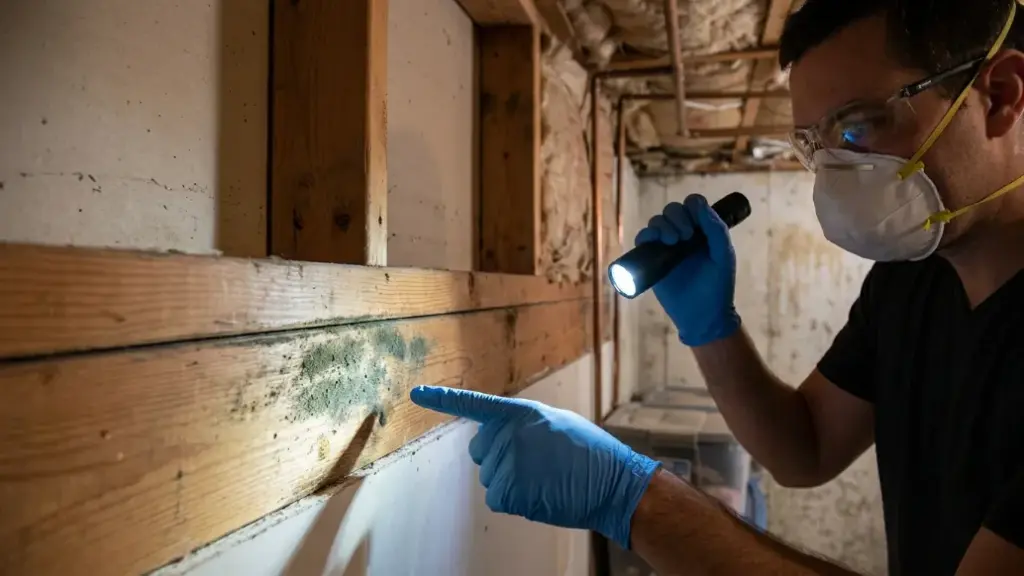
How Dangerous Is Trichoderma Compared to Black Mold?
There is a second kind of danger that has nothing to do with your lungs. Trichoderma is a moisture indicator, and it grows readily on wet cellulose, the material that makes up wood framing and paper-faced drywall. By the time you see it on a surface, the water problem behind it is usually well established, and that same water is doing structural work you cannot see. Wet framing softens. Subfloors weaken.
Left alone, a moisture problem that started as a green patch can progress toward wood rot and compromised support. Our article on mold on wood explains how surface growth and structural decay are linked. In other words, the mold is a symptom. The moisture is the disease, and ignoring it costs more the longer it runs.
The Safest Way to Handle Dangerous Trichoderma Mold Growth
Small, contained patches on hard surfaces can sometimes be cleaned by a homeowner using proper protection, but three situations call for a professional every time: the growth covers a large area, it is hidden inside walls or under floors, or someone in the home is immunocompromised, asthmatic, elderly, or otherwise vulnerable. Painting over it does nothing, since the mold survives under the coating and the moisture keeps feeding it. The only durable fix combines safe removal with permanent moisture control. Our step-by-step mold removal process and our guide to choosing the right remediation company walk through what safe, complete removal actually looks like.
Is Trichoderma Mold Dangerous: Final Thoughts
So, is trichoderma mold dangerous? For a healthy household it is a low-to-moderate health risk, closer to an allergy trigger than a medical emergency. For infants, older adults, and anyone who is immunocompromised or living with asthma or COPD, it deserves real caution, because certain species can move from irritant to genuine threat. And for every home, regardless of who lives there, trichoderma is a reliable messenger: it appears where water has lingered, and that water is quietly working on the wood and drywall around it.
The safe response is the same one the EPA recommends for all indoor mold, laid out in their brief guide to mold, moisture, and your home: remove the growth and fix the moisture that caused it. If you are unsure how deep the problem runs, a professional inspection removes the guesswork and tells you exactly how dangerous your trichoderma situation really is. Is trichoderma mold dangerous enough to act on?
For a vulnerable household, without question, and for every household it is a signal worth heeding, so when in doubt it is always safer to have it inspected than to wait and hope it clears on its own.
Frequently Asked Questions About Whether Trichoderma Mold Is Dangerous or Not:
Is Trichoderma Mold Dangerous to Healthy Adults?
Trichoderma mold is unlikely to cause a serious infection in a healthy adult, but exposure can still trigger nasal congestion, coughing, wheezing, eye irritation, skin irritation, or allergy symptoms. Any indoor Trichoderma growth should be addressed because it indicates excess moisture and may affect children, people with asthma, and immunocompromised household members more severely.
Can Trichoderma Mold Make You Sick?
Yes, Trichoderma mold exposure may cause respiratory irritation or allergic reactions in sensitive individuals. Symptoms can include coughing, sneezing, congestion, irritated eyes, wheezing, or worsening asthma. Serious Trichoderma infections are rare and are reported primarily in people with severely weakened immune systems.
How Do I Know If Trichoderma Mold Is Toxic?
You cannot determine whether Trichoderma mold is producing harmful substances based on its color, smell, or appearance. Laboratory analysis may identify the mold genus or species, but visible indoor mold should be removed regardless of the test result. The priority is finding and correcting the moisture source that allowed it to grow.
Should I Move Out During Trichoderma Mold Removal?
Most small, properly contained mold-remediation projects do not require occupants to leave the home. Temporary relocation may be advisable when contamination is extensive, major demolition is required, or someone in the household has severe asthma, chronic lung disease, or a weakened immune system. The remediation contractor should explain the containment plan before work begins.
Does Trichoderma Mold Always Come Back?
Trichoderma mold can return when the underlying moisture problem has not been corrected. Cleaning visible growth without repairing leaks, reducing humidity, drying wet materials, or improving ventilation leaves the conditions for regrowth in place. Lasting mold removal requires both remediation and moisture control.
What Causes Trichoderma Mold to Grow Indoors?
Trichoderma mold grows indoors when moisture reaches materials containing cellulose, such as wood, drywall paper, insulation backing, carpet, or other organic debris. Common causes include roof leaks, plumbing leaks, flooding, condensation, high humidity, wet basements, crawl-space moisture, and poorly ventilated bathrooms or attics.
What Does Trichoderma Mold Look Like?
Trichoderma mold commonly appears as white growth that may develop green patches as it produces spores. It can look powdery, fuzzy, woolly, or uneven depending on the surface and growing conditions. Because several molds can have a similar appearance, color alone cannot confirm that a substance is Trichoderma.
Can I Remove Trichoderma Mold Myself?
A small area of surface mold may be manageable when the moisture source has been fixed and the affected material can be cleaned safely. Larger growth, hidden contamination, sewage-related water damage, recurring mold, or mold inside porous building materials should be evaluated professionally. Disturbing widespread growth without containment can spread spores and contaminated dust.
How Is Trichoderma Mold Identified?
Trichoderma mold is identified most reliably through a sample analyzed by a qualified laboratory. However, testing is not always necessary when visible mold is already present because the cleanup decision usually remains the same. A professional inspection can be more valuable for locating hidden growth, measuring moisture, and determining how far the damage extends.
How Can I Prevent Trichoderma Mold From Returning?
Prevent Trichoderma mold by keeping indoor materials dry and controlling humidity. Repair water leaks promptly, vent bathrooms and dryers outdoors, use dehumidification where necessary, improve attic or crawl-space ventilation, and dry water-damaged materials within 24 to 48 hours. Areas that repeatedly become damp should be inspected for hidden leaks or condensation.