
If you are finding more hair in the shower drain, noticing extra shedding on your pillow, or seeing your part line widen, it is natural to start looking for hidden causes. One question many homeowners ask is: can mold exposure cause hair loss?
The honest answer is that mold exposure may contribute to hair shedding in some people, but it is rarely the only cause. Hair loss is more commonly linked to genetics, stress, thyroid problems, nutrition, hormones, medications, autoimmune conditions, illness, and aging. Mold becomes part of the conversation when exposure in a damp or moldy home creates ongoing physical stress, allergic irritation, poor sleep, skin irritation, inflammation, or other symptoms that may disrupt the normal hair growth cycle.
This does not mean every mold problem causes hair loss. It means mold may be one contributing trigger, especially when hair shedding appears alongside musty odors, water damage, allergy symptoms, fatigue, scalp irritation, or respiratory issues. In that situati
Can Mold Exposure Cause Hair Loss?
Yes, mold exposure may contribute to hair loss in some cases, but it should not be treated as a guaranteed direct cause. Hair growth is controlled by a delicate cycle, and that cycle can be disrupted by physical stress, illness, inflammation, hormonal changes, nutritional deficiencies, autoimmune activity, and other health factors.
Mold may become relevant when someone is chronically exposed to a damp indoor environment and starts experiencing symptoms that point back to the home. If congestion, coughing, fatigue, headaches, skin irritation, or scalp discomfort improve when you leave the house, mold exposure may be worth investigating.
The safest approach is a two-track plan. A doctor or dermatologist should evaluate the hair loss and rule out common medical causes. At the same time, a mold professional can inspect the home for hidden moisture, visible mold, musty odors, and water-damaged materials.
Quick Answer: Mold exposure can contribute to hair loss in some cases, especially when it causes ongoing inflammation, allergic reactions, skin irritation, stress, or illness-like symptoms. However, mold is rarely the only cause of hair loss. A doctor should rule out common medical causes while a mold professional checks the home for hidden moisture and mold growth.
How Mold Exposure May Contribute to Hair Shedding
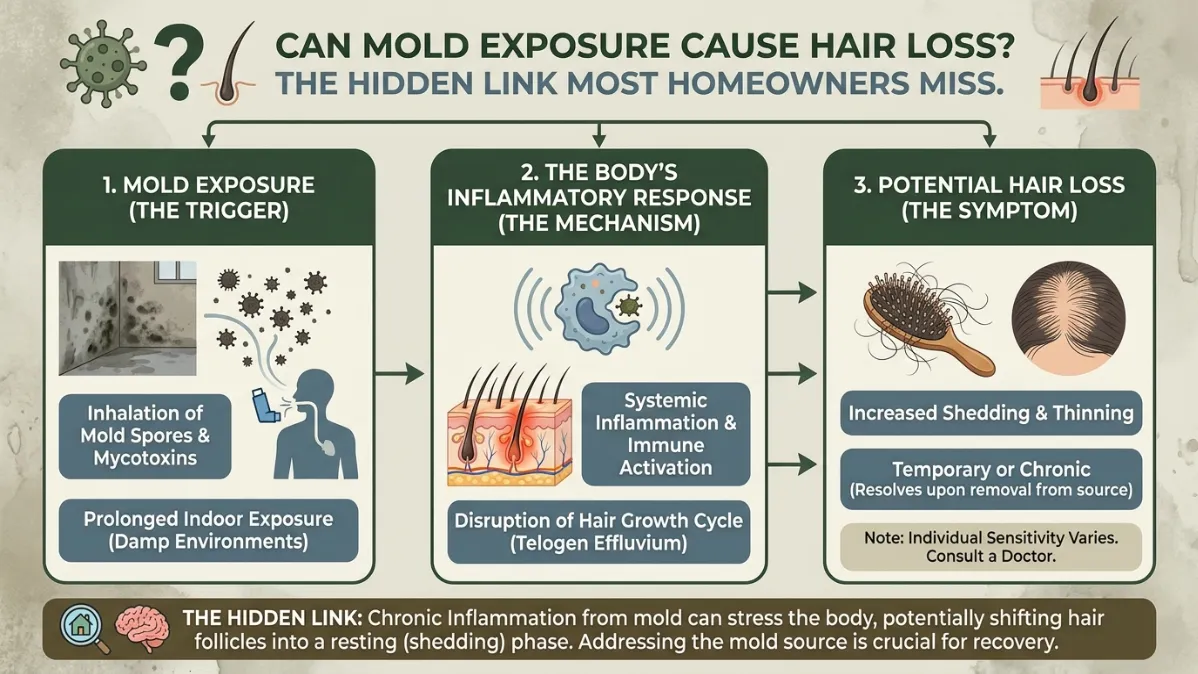
Mold does not usually attack hair follicles directly. The stronger connection is indirect. A damp, moldy home can put stress on the immune system, skin, sleep, breathing, and overall health. Those stressors may help push more hairs into the shedding phase, especially in people who are already sensitive or dealing with another underlying issue.
- 1. Physical Stress on the Body
Chronic exposure to a damp or moldy environment may act as an ongoing physical stressor. When the body is under stress, it may shift energy away from nonessential functions, including hair growth. This can contribute to a type of shedding known as telogen effluvium, where more hairs move from the active growth phase into the resting phase. The shedding often appears weeks or months after the trigger, which can make the connection hard to recognize right away.
- 2. Allergic and Immune Reactions
Mold can trigger allergic reactions in sensitive people. Symptoms may include sneezing, coughing, congestion, itchy eyes, throat irritation, headaches, or worsening asthma. When the immune system is constantly reacting to an indoor trigger, the body can stay in a heightened state of stress. That does not automatically cause hair loss, but it may worsen inflammation, fatigue, and other conditions that can contribute to shedding.
- 3. Scalp and Skin Irritation
Mold exposure can irritate the skin in some people, especially those with allergies, eczema, or sensitive skin. If the scalp becomes itchy, inflamed, dry, or irritated, scratching and inflammation may make shedding or breakage more noticeable. Scalp symptoms can also come from dandruff, psoriasis, fungal infections, hair products, medication, or skin conditions, so it is important not to assume mold is the only cause. A dermatologist can help determine whether the hair loss is coming from the scalp, the hair shaft, or the follicle cycle.
- 4. Sleep Disruption and Chronic Fatigue
A musty indoor environment can make it harder to sleep if it contributes to congestion, coughing, sinus pressure, or breathing irritation. Poor sleep increases stress on the body, and long-term sleep disruption may worsen shedding in people already prone to telogen effluvium. Fatigue is also commonly reported by people living in damp or moldy homes. While fatigue has many possible causes, it is another clue that the indoor environment may need a closer look when it appears with musty odors, visible growth, or past water damage.
- 5. Stress-Related Telogen Effluvium
Telogen effluvium is a temporary shedding condition that can happen after stress, illness, surgery, major weight loss, hormonal changes, high fever, nutritional deficiency, or other body shocks. Instead of staying in the growth phase, more hairs shift into the resting phase and shed later. Mold exposure may contribute to this process indirectly if it creates ongoing physical stress, poor sleep, allergic reactions, inflammation, or illness-like symptoms. This type of shedding is often diffuse, meaning hair comes out across the scalp rather than in one clean bald spot.
- 5. Stress-Related Telogen Effluvium
Mold may not create hair loss from scratch, but it can add stress to problems that are already present. For example, someone with thyroid imbalance, low iron, eczema, autoimmune activity, nutritional deficiency, severe allergies, or high stress may notice more shedding when their home environment is also irritating their body. That is why the best answer is not only “remove the mold” or only “see a doctor.” Both matter. The medical side identifies what is happening with the hair, while the home inspection side identifies whether mold, moisture, or water damage is adding to the problem.
How Mold Exposure May Contribute to Hair Shedding
Direct proof that household mold directly causes hair loss is limited. The stronger connection is indirect. Mold exposure is better known for triggering allergic reactions, respiratory irritation, skin irritation, asthma flare-ups, and other symptoms in sensitive people. Hair shedding, on the other hand, can be triggered by physical stress, illness, inflammation, hormonal changes, nutritional problems, medications, and other medical factors.
That means mold should be treated as a possible contributor, not a stand-alone diagnosis. If someone is losing hair while also living with visible mold, musty odors, water damage, or symptoms that improve away from home, the mold deserves attention. Still, the hair loss itself should be evaluated by a doctor or dermatologist so common causes like thyroid issues, iron deficiency, autoimmune disease, scalp conditions, hormonal shifts, and genetic pattern hair loss are not missed.
A homeowner does not need to prove mold is the only reason their hair is shedding to take it seriously. If there is visible mold, a musty smell, or past water damage, the home still needs inspection and correction. Mold is both a home problem and a potential health concern, even when it is not the only explanation for hair loss.
What Type of Hair Loss Could Mold Exposure Be Linked To?
Mold exposure is most likely to be discussed in connection with shedding conditions, not permanent genetic hair loss. The key question is whether mold is adding stress, irritation, or inflammation that could push more hair into the shedding phase.
Telogen Effluvium
Telogen effluvium is the most likely type of hair loss people connect to mold exposure. It causes diffuse shedding across the scalp rather than one clean bald patch. People often notice more hair in the shower, on the pillow, in the brush, around the part line, or along the hairline.
This type of shedding can happen after physical stress, illness, poor sleep, nutritional deficiency, hormonal shifts, or other disruptions to the body. If a moldy home is contributing to chronic congestion, fatigue, inflammation, stress, or poor sleep, it may be one factor that helps trigger or prolong the shedding.
Scalp Irritation or Breakage
Mold exposure can irritate the skin in some sensitive people. If the scalp becomes itchy, inflamed, dry, or uncomfortable, scratching may lead to breakage or make shedding look worse.
This does not mean every itchy scalp is caused by mold. Dandruff, eczema, psoriasis, fungal infections, hair products, hard water, and medications can all irritate the scalp. A dermatologist can help separate scalp disease from hair-cycle shedding.
Alopecia Areata or Autoimmune Hair Loss
Mold is not a confirmed cause of alopecia areata. Alopecia areata is an autoimmune condition where the immune system attacks hair follicles, often causing round or patchy hair loss.
That said, people dealing with autoimmune hair loss often investigate possible immune stressors with their doctor. If mold exposure is present in the home, it may be worth discussing as part of the larger health picture, but it should not be treated as the proven cause without medical evaluation.
Pattern Hair Loss
Mold does not cause genetic male or female pattern hair loss. Pattern hair loss is usually driven by genetics, hormones, age, and follicle sensitivity.
However, stress, illness, poor sleep, or inflammation may make existing thinning more noticeable. Someone with early pattern hair loss may suddenly see more shedding if another trigger, including a damp or moldy environment, adds stress to the body.
What Type of Hair Loss Could Mold Exposure Be Linked To?
Mold-related hair shedding rarely appears by itself. It is more suspicious when hair loss shows up alongside home warning signs and body symptoms that point back to the indoor environment.
Consider mold as a possible factor if hair shedding appears with:
- Musty odors that do not go away
- Visible mold on walls, ceilings, vents, carpet, furniture, or personal belongings
- Past leaks, flooding, roof damage, plumbing problems, or water intrusion
- Condensation on windows, walls, pipes, or other cold surfaces
- Sinus congestion, coughing, sneezing, wheezing, or throat irritation
- Red, itchy, or watery eyes
- Skin irritation, rashes, scalp itching, or unexplained dryness
- Headaches, fatigue, or brain fog that improve when you leave the house
- Symptoms that get worse in one room, basement, bathroom, crawl space, or office
- Multiple people in the home feeling sick or noticing allergy-like symptoms
In humid, coastal, or storm-prone areas, mold may hide behind drywall, under flooring, inside HVAC systems, in attics, crawl spaces, basements, cabinets, and poorly ventilated bathrooms. If your symptoms line up with visible growth, water damage, or a stubborn musty smell, the home should be inspected while your hair loss is evaluated medically.
Which Household Molds Are Most Concerning?
Several types of household mold can become a concern when they grow indoors, especially in damp, poorly ventilated, or water-damaged areas. Some are more associated with allergies and irritation, while others may point to deeper moisture damage inside walls, floors, or building materials.
| Mold Type | Where It Commonly Grows | Why It Matters |
|---|---|---|
| Stachybotrys | Wet drywall, insulation, paper-backed materials | Often associated with long-term water damage |
| Aspergillus | Dust, HVAC systems, damp materials | Common indoor mold that may affect sensitive people |
| Penicillium | Water-damaged materials, carpet, wallpaper | Common allergen in damp buildings |
| Chaetomium | Wet drywall, subflooring, cellulose materials | Often points to significant moisture damage |
| Cladosporium | Bathrooms, windows, painted surfaces, fabrics | Common allergen and indoor/outdoor mold |
Homeowners should not rely on color or appearance alone to decide whether mold is dangerous. A black patch on drywall, a green spot near a window, or a gray film in an HVAC vent cannot be accurately identified by sight. The moisture source, the size of the affected area, the material it is growing on, and the risk of hidden spread matter more than guessing the species.
If mold is visible, recurring, musty-smelling, or connected to past water damage, it should be inspected and corrected. Removing the mold without fixing the moisture source usually leads to the same problem returning.
Mold Exposure Symptoms That May Appear With Hair Loss
Hair loss linked to mold exposure is usually suspected because of the symptoms that appear with it, not because shedding happens alone. Mold can affect people differently, and symptoms vary based on sensitivity, exposure level, immune health, and the condition of the home.
These symptoms can have many causes, so they should not be treated as proof of mold illness. Mold is one possible environmental factor, not a diagnosis. If you are losing hair and also dealing with persistent symptoms, it is smart to speak with a doctor while also checking your home for moisture and mold.
Respiratory Symptoms
Respiratory symptoms are among the most common complaints in damp or moldy homes. Mold spores and fragments can irritate the nose, throat, lungs, and airways, especially in people with allergies or asthma.
Symptoms may include:
- Stuffy nose
- Sneezing
- Coughing
- Wheezing
- Throat irritation
- Asthma flare-ups
If these symptoms get worse in certain rooms or improve when you leave the house, the indoor environment may be part of the problem.
Skin and Scalp Symptoms
Mold exposure may also irritate the skin in sensitive people. When the scalp becomes itchy or inflamed, scratching can make hair shedding or breakage more noticeable.
Skin and scalp symptoms may include:
- Itchy skin
- Rash
- Scalp irritation
- Redness
- Dryness or flaking
These symptoms can also come from dandruff, eczema, psoriasis, allergies, hair products, medication, or infection. A dermatologist can help identify whether the issue is scalp-related, hair-cycle-related, or caused by another condition.
Whole-Body Symptoms People Often Report
Some people living in damp or moldy homes report symptoms that affect the whole body. These symptoms are not specific to mold, but they can be important clues when they appear with musty odors, visible growth, water damage, or repeated indoor flare-ups.
People may report:
- Fatigue
- Headaches
- Brain fog
- Poor sleep
- Feeling worse indoors
- Feeling better away from home
When hair shedding appears alongside these symptoms, mold may be worth investigating as one possible contributing factor. The goal is not to self-diagnose. The goal is to look at the full pattern between your health, your home, and your exposure.
How to Tell If Your Home Has a Mold Problem
A mold problem is not always obvious. Some homes have visible mold on walls or window sills, while others have hidden growth behind cabinets, under flooring, inside HVAC systems, or behind water-damaged drywall.
If you are losing hair and wondering whether mold exposure could be part of the picture, look for signs that your home has a moisture problem. Zavza Seal offers free mold inspections across Long Island, from the Hamptons to Manhattan, so homeowners can find out whether visible or hidden mold may be affecting their indoor environment.
Visible Mold Growth
Visible mold is the clearest warning sign. Look for black, green, gray, brown, white, or fuzzy patches on walls, ceilings, baseboards, vents, bathroom grout, under sinks, around windows, in basements, and inside crawl spaces.
Do not rely on color alone to identify the mold type. Many molds can look dark or black, and testing may be needed to identify the species. What matters most is that active indoor mold growth means moisture is present and should be corrected.
Persistent Musty Odor
A musty odor can point to hidden mold even when you cannot see growth. This smell often shows up in basements, bathrooms, kitchens, laundry areas, closets, crawl spaces, and rooms with poor ventilation.
If one room smells damp or musty every time you enter, there may be mold behind walls, under flooring, inside cabinets, or around HVAC components. Odor alone does not prove the extent of the problem, but it is a strong reason to schedule a closer inspection.
For homeowners in Nassau County, Suffolk County, Queens, Brooklyn, the Bronx, Manhattan, and the Hamptons, a free mold inspection can help identify whether the smell is coming from hidden moisture, active mold growth, or another indoor air issue.
Water Damage History
Past water damage is one of the biggest clues that mold may be present. Roof leaks, pipe leaks, flooding, sewage backups, appliance leaks, damp basements, HVAC condensation, and overflowing sinks or tubs can all create conditions for mold growth.
Even if the surface looks dry now, hidden materials may have stayed wet long enough for mold to grow. Staining, bubbling paint, warped flooring, swollen cabinets, soft drywall, or peeling trim can all point to moisture damage behind the surface.
High Indoor Humidity
High indoor humidity can support mold growth, especially when moisture collects on windows, walls, ceilings, or cold surfaces. Indoor humidity above 50 percent can make condensation and mold more likely, particularly in bathrooms, kitchens, basements, crawl spaces, and poorly ventilated rooms.
A simple hygrometer can help you monitor humidity levels. If the home often feels damp, smells musty, or has condensation on windows or walls, moisture control should be part of the solution.
Symptoms That Improve Away From Home
One of the most important clues is how you feel when you leave the house. If headaches, congestion, coughing, fatigue, skin irritation, or brain fog ease at work, outside, or on vacation, the home environment deserves a closer look.
This does not prove mold is the cause of hair loss or other symptoms. It does suggest that something indoors may be irritating your body, especially if the pattern repeats and the home has visible mold, musty odors, water damage, or high humidity.
Schedule a Free Mold Inspection on Long Island
If you see mold, smell a musty odor, or suspect hidden growth after water damage, do not wait for the problem to spread. Zavza Seal provides free mold inspections throughout Long Island and the greater NYC area, from the Hamptons to Manhattan.
Our team checks for visible growth, moisture conditions, water damage patterns, and areas where mold commonly hides. Whether you are in Nassau County, Suffolk County, Queens, Brooklyn, the Bronx, Manhattan, or the Hamptons, a free inspection can help you understand what is happening inside your home and what steps make sense next.
Do Not Ignore Mold When Hair Loss Comes With Home Warning Signs:Final Thoughts
Mold exposure is not usually the only reason someone loses hair, but it may be one factor when shedding appears alongside musty odors, visible mold, water damage, high humidity, allergy symptoms, scalp irritation, fatigue, or symptoms that improve away from home. The safest approach is to address both sides of the problem: have a doctor or dermatologist evaluate the hair loss, and have the home inspected for hidden moisture and mold growth.
If your Long Island or NYC home has visible mold, a persistent musty smell, past leaks, damp basement conditions, crawl space moisture, or recurring humidity problems, do not wait for the issue to spread. Zavza Seal offers free mold inspections across Long Island and the greater NYC area, from the Hamptons to Manhattan, including Nassau County, Suffolk County, Queens, Brooklyn, the Bronx, and Manhattan.
Schedule your free mold inspection today and get clear answers about what is happening inside your home, where the moisture is coming from, and what steps make sense next.
Do Not Ignore Mold When Hair Loss Comes With Home Warning Signs:Final Thoughts
Can mold exposure cause hair loss?
Mold exposure may contribute to hair shedding in some people, especially when it causes allergic symptoms, skin irritation, poor sleep, inflammation, or physical stress. However, mold is rarely the only cause of hair loss. A doctor or dermatologist should evaluate common medical causes while the home is checked for mold and moisture.
Can black mold cause hair loss?
Black mold may contribute to health stress in a damp or water-damaged home, but hair loss is not considered a guaranteed direct symptom. Black-looking mold should still be taken seriously because color alone does not identify the species. If you have musty odors, visible mold, water damage, and unexplained shedding, evaluate both your health and your home.
Is mold-related hair loss permanent?
Hair shedding related to stress, illness, or temporary body strain is often reversible once the trigger is corrected. Permanent hair loss is more likely when genetics, scarring alopecia, autoimmune disease, untreated scalp disease, or long-term medical issues are involved. A dermatologist can help determine whether regrowth is likely.
How long after mold exposure does hair loss start?
Stress-related shedding often appears two to three months after the trigger. That delay can make mold-related shedding difficult to recognize because hair may start falling out long after the exposure, illness, poor sleep, or physical stress began. Tracking symptoms and home conditions can help clarify the timeline.
How long does hair take to grow back after mold removal?
If mold-related stress contributed to telogen effluvium, shedding may slow within three to six months after the exposure and moisture problem are corrected. Visible regrowth can take longer because hair grows slowly. If shedding continues or thinning worsens, a dermatologist should check for other causes.
Can mold cause scalp itching?
Mold exposure can irritate the skin in some sensitive people, and scalp itching may appear with allergies, rashes, dryness, or inflammation. However, scalp itching can also come from dandruff, eczema, psoriasis, fungal infections, hair products, hard water, or medication. Diagnosis matters before blaming mold alone.
Can mold toxicity cause thinning hair?
Some people use the term mold toxicity to describe systemic symptoms after mold exposure, but the medical evidence around that term is debated. A safer answer is that mold exposure may contribute to body stress, allergic reactions, inflammation, poor sleep, or skin irritation, which may worsen shedding in susceptible people.
What doctor should I see for hair loss?
A board-certified dermatologist is the best specialist for hair loss. They can check for telogen effluvium, pattern hair loss, alopecia areata, scalp disease, thyroid problems, iron deficiency, vitamin deficiencies, medication effects, hormonal changes, and other causes. Primary care doctors can also start with bloodwork and referrals.
Should I clean mold myself if I am having symptoms?
Avoid disturbing large, hidden, recurring, or water-damage-related mold yourself, especially if you are having symptoms. Scrubbing, sanding, or tearing out moldy materials can release spores and spread contamination. Small surface spots may be manageable with protection, but professional inspection is safer when mold is widespread, hidden, or tied to health concerns.