
A sewage backup is one of the most serious problems a home can face, and it is widely underestimated. Many homeowners see the water and think of it as a plumbing inconvenience or a cleanup chore. It is neither. A sewage backup floods your home with contaminated water that carries bacteria, viruses, and parasites capable of causing real illness. The danger is not only the water you can see. It is the bacteria left behind on every surface it touched and the contaminants that go airborne as the area sits.
This guide explains the health risks in plain terms, walks through the immediate steps that protect your household, and shows why professional cleanup and mold prevention are not optional after contaminated water enters a home.
Get Emergency Cleanup Help Now! Free Assessments for Long Island, Queens, Brooklyn, and The Bronx
The Health Risks of a Sewage Backup
Contaminated water is classified as the most hazardous category of water intrusion for a reason. Here is what it actually carries.
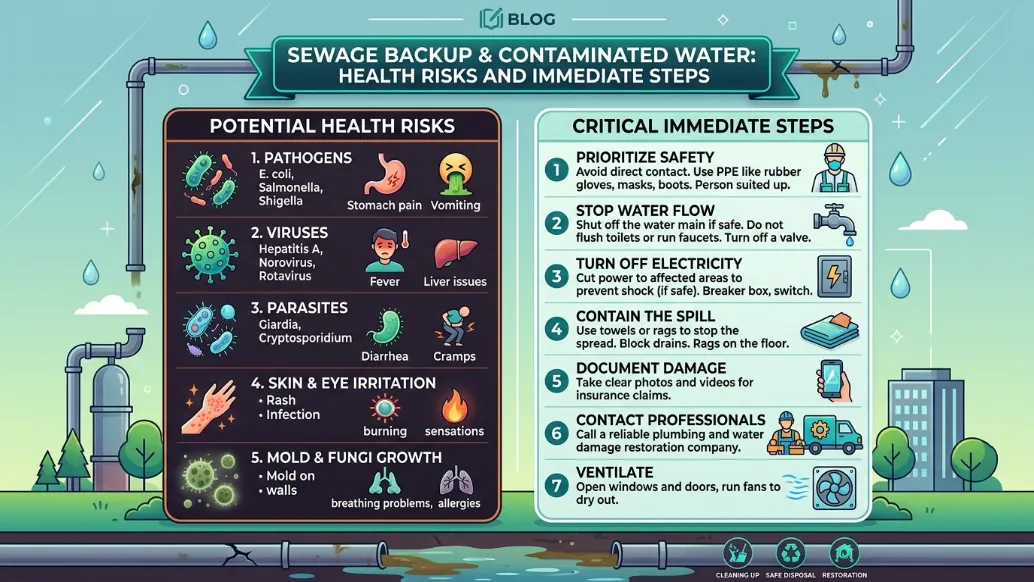
Bacterial Infection Sewage carries E. coli, Salmonella, Shigella, and others. Exposure can cause severe gastrointestinal illness, fever, and infections in any cut or broken skin.
Viral Illness Viruses including hepatitis A and rotavirus survive in contaminated water and spread through contact with surfaces and hands.
- Parasites Parasites such as Giardia and Cryptosporidium live in sewage and cause prolonged digestive illness that is hard to shake.
- Airborne Hazards As contaminated water sits, it releases bioaerosols and gases. Breathing the air in an affected home is itself a route of exposure, especially for anyone with asthma or a weakened immune system.
- Mold Growth Within 24 to 48 hours, the moisture left by the backup begins growing mold, adding a second health hazard on top of the first.
- Why the clock matters: The difference between a contained incident and a whole-home contamination problem is often measured in hours. Contaminated water spreads, soaks in, and grows mold fast. Speed is the single most protective factor you control.
Immediate Steps to Take After a Sewage Backup
A sewage backup is a health emergency, not just a plumbing problem. The first few minutes matter because contaminated water spreads quickly, so your priority is protecting people, limiting exposure, and preventing the damage from getting worse.
These immediate steps help reduce health risks, support a safer cleanup process, and improve the chances of a smoother insurance claim and recovery.


Get everyone out of the affected space. Children, elderly family members, pregnant women, and anyone immunocompromised should stay well clear. This is the step that matters most, and it is free.

If the breaker panel is dry and reachable without stepping in water, shut off power to the affected area. If you cannot reach it safely, leave it and tell the professionals when they arrive.

Stop all water use in the home. Running a faucet or flushing a toilet upstream of a backup makes the backup worse.

If outdoor conditions allow, open windows to move contaminated air out. Do not run your HVAC system, which can spread contaminants through the ductwork.

Before cleanup begins, photograph and video the damage for your insurance claim. Note the date and time the backup started.

Contaminated water cleanup requires protective equipment, extraction tools, industrial drying, and proper disinfection. This is not a mop-and-bucket situation. Professional crews also know which materials can be saved and which must be removed.
What Not to Do During a Sewage Backup
- Do not treat it as ordinary water: Contaminated water needs disinfection, not just drying.
- Do not use a household vacuum: Standard vacuums are not built for contaminated water and will spread the problem.
- Do not run the HVAC: It distributes contaminated air and spores through the whole house.
- Do not keep soaked porous items: Carpet, drywall, and upholstery that absorbed sewage usually cannot be safely salvaged.
- Do not delay: Every hour increases contamination spread and mold risk.
Why Sewage Backup Becomes a Mold Problem
The contaminated water is the emergency you can see. Mold is the slower emergency that follows it, and the two are directly linked. Once a backup soaks into drywall, subflooring, carpet padding, framing, and insulation, those materials hold moisture long after the visible water is gone. Mold begins colonizing damp organic material within 24 to 48 hours.
This is why surface cleanup alone is not enough. A space can look dry and still hold enough trapped moisture inside walls and under floors to support active mold growth for weeks. If the drying is incomplete or the contaminated porous materials are not removed, a household can finish a sewage cleanup believing the crisis is over while a mold problem quietly takes hold behind the walls.
Proper response to contaminated water includes professional moisture detection, complete removal of unsalvageable porous materials, industrial-grade drying verified with moisture meters, and disinfection of the surfaces that remain. The goal is not a floor that looks clean. It is a structure that is genuinely dry and decontaminated, so the emergency does not return in a different form a month later.
Why Professional Cleanup Is the Best Response to a Sewage Backup
Professional remediation is the best response to contaminated water because it addresses every layer of the problem at once. A qualified crew extracts the water, removes the materials that cannot be saved, disinfects what remains, dries the structure to a verified moisture level, and checks for the mold growth the incident set in motion. They also document the work for your insurance claim. Attempting this alone risks incomplete decontamination, lingering health hazards, and a hidden mold problem that costs far more to resolve later than the original cleanup would have.
Sewage Backup: Final Thoughts
A sewage backup is a genuine health emergency, and treating it like an ordinary cleanup is the costliest mistake a homeowner can make. The contaminated water carries real pathogens, the airborne exposure is real, and the mold growth that follows within a day or two turns one emergency into two. The households that come through this well are the ones that move fast: protect people first, stop adding water, document the damage, and bring in professionals who can extract, disinfect, and verify that the structure is truly dry. Surface-clean is not the goal. A decontaminated, fully dried home is. If contaminated water has entered your home, do not wait for the situation to settle on its own. Act now, and protect both your family’s health and the home itself from the slower damage that follows.
Get Emergency Sewage Cleanup & Mold Prevention
Frequently Asked Questions About Sewage Backups
Is A Sewage Backup Dangerous To Your Health?
Yes. Sewage backups expose you to bacteria, viruses, parasites, and airborne contaminants that can cause serious illness and respiratory problems.
How Quickly Does Mold Grow After A Sewage Backup?
Mold can begin growing within 24 to 48 hours on wet drywall, flooring, insulation, and other porous materials after a sewage backup.
Can You Clean Up A Sewage Backup Yourself?
Small contained spills may be manageable with proper protective equipment, but most sewage backups require professional cleanup, disinfection, and drying.
What Causes Sewage To Back Up Into A House?
Common causes include clogged sewer lines, tree root intrusion, collapsed pipes, municipal sewer overload, and aging plumbing systems.
Will Homeowners Insurance Cover A Sewage Backup?
Sometimes. Many insurance policies only cover sewage backups if you have a separate sewer backup endorsement or rider added to the policy.
What Should You Do Immediately After A Sewage Backup?
Stop using water in the home, avoid contact with contaminated areas, shut off electricity near standing water if safe, and contact a professional cleanup company immediately.
How Long Does Sewage Cleanup Take?
Most sewage cleanup projects take anywhere from one day to several days depending on the extent of the contamination and structural damage.
Does A Sewage Backup Require Mold Remediation?
Sometimes. If moisture remains trapped behind walls, under flooring, or inside insulation, mold remediation may be necessary after cleanup and drying.
What Materials Usually Need To Be Removed After A Sewage Backup?
Porous materials like carpet, padding, drywall, insulation, and some wood products are often removed because they absorb contaminated water and bacteria.
Can A Sewage Backup Cause Long-Term Damage To A Home?
Yes. Untreated sewage contamination can lead to mold growth, wood rot, structural deterioration, electrical hazards, and persistent indoor air quality problems.