
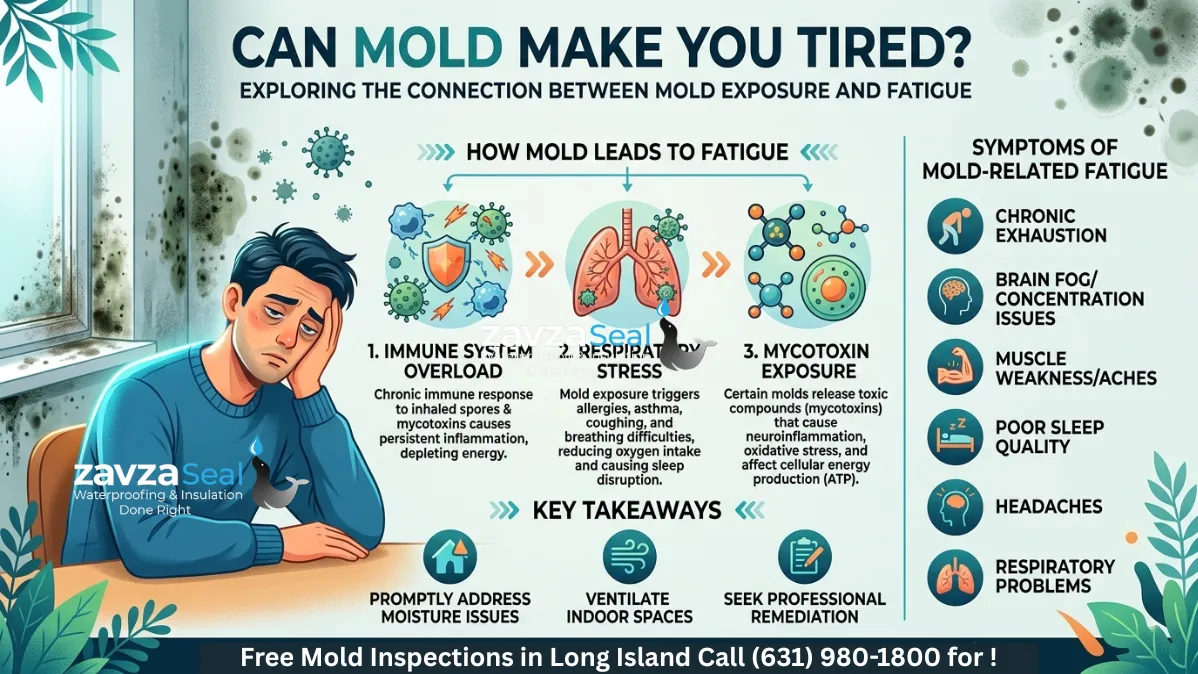
If you constantly feel exhausted at home, struggle with brain fog, or wake up feeling unrested no matter how much sleep you get, mold exposure could be part of the problem. Many homeowners dealing with hidden moisture issues experience ongoing fatigue, headaches, sinus irritation, and poor indoor air quality symptoms for months before they ever realize mold may be involved.
If you were wondering, “can mold make you tired?” you’re in the right place. Our supervisor, a certified mold remediation specialist, personally dealt with mold-related illness for over a year before discovering the real cause. Doctors repeatedly treated the symptoms like recurring flu or seasonal sickness, but the problem never truly went away. It was only after accessible mold was discovered and properly addressed that things finally started to improve.
That experience is one of the reasons we take these concerns so seriously. Below, we’ll cover everything you need to know about mold-related fatigue, including common symptoms, why mold can affect energy levels, what warning signs to watch for in your home, and when it may be time to schedule a professional inspection.
If you’re in Long Island, Brooklyn, Queens, or The Bronx, we offer advanced mold inspections and testing using professional moisture detection and diagnostic equipment that can identify hidden problems behind walls, beneath flooring, inside crawl spaces, and other areas not visible to the naked eye. If you suspect mold may be affecting your home or health, give us a call. We’d be glad to come out at your convenience and help you get answers.
Keep Your Home and Family Safe! Schedule a Free Advanced Mold Testing Now!
Can Mold Make You Tired?
Yes, mold exposure can make some people feel unusually tired, drained, or mentally foggy, especially when hidden moisture problems are affecting indoor air quality for long periods of time. Fatigue from mold is one of the most commonly reported symptoms in homes with significant mold growth, water damage, or elevated humidity.
That said, reactions to mold exposure vary widely from person to person. Some individuals may experience noticeable symptoms quickly, while others may live around mold for months without realizing it is affecting them at all. Factors like sensitivity, allergies, asthma, immune response, overall health, and the amount of exposure can all influence how the body reacts.
In some homes, the body may constantly respond to airborne mold spores, moisture-related contaminants, and poor indoor air quality with low-level inflammation and stress responses. Over time, that ongoing environmental stress can leave people feeling physically and mentally exhausted, even if they are technically getting enough sleep.
Many homeowners describe symptoms like:
It is important to keep this in perspective. Not everyone exposed to mold becomes tired, and fatigue alone does not automatically mean mold is present in the home. However, when exhaustion is combined with musty odors, visible water damage, allergy-like symptoms, or worsening symptoms indoors, mold exposure becomes a much more realistic concern worth investigating.
One encouraging sign many people report is that symptoms often improve after mold exposure is reduced and moisture problems are corrected. Cleaner indoor air and proper remediation can make a major difference in how comfortable and healthy a home feels again.
Why Mold Exposure Can Cause Fatigue
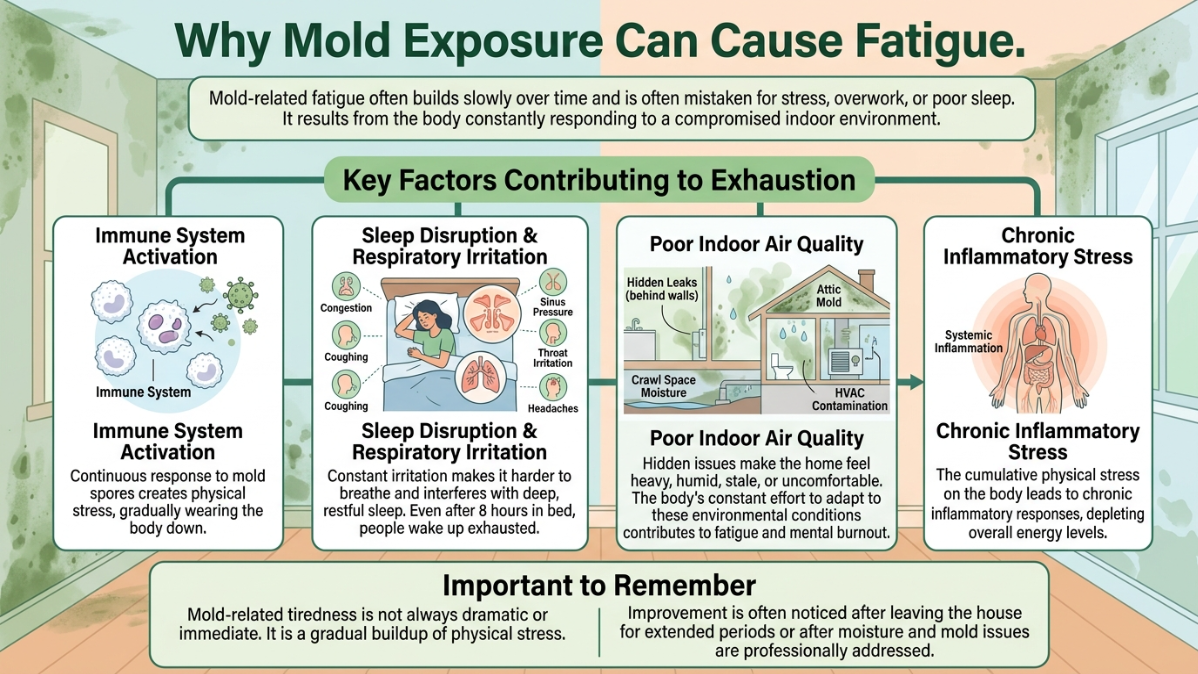
One of the biggest reasons mold-related fatigue feels so confusing is because it often builds slowly over time. Many homeowners simply assume they are stressed, overworked, sleeping poorly, or “run down,” without realizing their indoor environment may be contributing to the problem.
When mold spores and moisture-related irritants circulate through the air, the body may have to work harder to constantly respond to them. For sensitive individuals, that ongoing exposure can create physical stress that gradually wears the body down.
Several factors may contribute to feelings of exhaustion in mold-affected homes, including:
For example, congestion, coughing, sinus pressure, or throat irritation may make it harder to breathe comfortably at night. Some people also report headaches, sneezing, or constant irritation that interferes with deep, restful sleep. Even if they technically spend eight hours in bed, they may still wake up feeling exhausted.
Poor indoor air quality can also make the home feel heavy, humid, stale, or uncomfortable, especially in areas with hidden leaks, crawl space moisture, attic mold, or HVAC contamination. Over time, the body’s constant effort to adapt to those environmental conditions may contribute to fatigue and mental burnout.
The important thing to understand is that mold-related tiredness is not always dramatic or immediate. In many cases, people simply notice they feel better after leaving the house for extended periods or after moisture and mold issues are professionally addressed.
Common Symptoms That Often Appear Alongside Mold Fatigue
Fatigue related to mold exposure rarely happens by itself. In many homes with moisture problems or poor indoor air quality, exhaustion is often accompanied by a combination of physical, respiratory, and cognitive symptoms that gradually worsen over time. While these signs do not automatically confirm mold exposure, they can help identify patterns that suggest an indoor environmental issue may be contributing to ongoing fatigue and discomfort.
Below are some of the most commonly reported symptoms that may appear alongside mold-related fatigue.
Physical Symptoms
Many people exposed to mold or poor indoor air quality report ongoing physical symptoms that seem to linger without a clear explanation. These symptoms may feel worse inside certain rooms, after running the HVAC system, or during humid weather conditions.
Common physical symptoms include:
- Constant Tiredness
- Frequent Headaches
- Nasal Congestion
- Coughing
- Sneezing
- Watery Or Irritated Eyes
- Sinus Pressure
- Dizziness
- Scratchy Throat
- Increased Allergy Symptoms
Cognitive Symptoms
Mold-related fatigue does not always feel purely physical. Many homeowners also describe mental and cognitive symptoms that leave them feeling unfocused, emotionally drained, or unlike themselves.
Common cognitive symptoms may include:
- Brain Fog
- Difficulty Concentrating
- Memory Lapses
- Feeling Mentally Slow
- Trouble Staying Focused
- Irritability
- Mental Exhaustion
Who Is Most Likely To Feel Fatigue From Mold Exposure?
Not everyone reacts to mold exposure the same way. Some people may live in a damp or mold-affected environment and experience very few noticeable symptoms, while others develop fatigue, congestion, headaches, or respiratory irritation relatively quickly.
In many cases, people who are already sensitive to indoor environmental conditions are more likely to notice symptoms related to poor indoor air quality. Factors like age, allergies, asthma, immune health, and overall respiratory sensitivity can all influence how strongly the body reacts to mold exposure.
Below are some of the groups most commonly affected by indoor mold and moisture-related air quality problems.
- People With Allergies Or Asthma: Individuals with allergies or asthma are often more sensitive to mold spores, humidity, dust, and poor ventilation, which may worsen respiratory irritation, congestion, fatigue, and sleep quality over time.
- Children And Elderly Adults: Children and elderly adults may react more strongly to poor indoor air quality because developing or weakened immune and respiratory systems can make fatigue, congestion, coughing, headaches, and discomfort more noticeable.
- Immunocompromised Individuals: People with weakened immune systems may experience increased fatigue, respiratory irritation, congestion, and greater sensitivity to airborne contaminants, making professional evaluation especially important in homes with suspected mold problems.
How Long Does Mold Fatigue Last?
There is no universal timeline for how long mold-related fatigue may last because every situation is different. Recovery often depends on several factors, including how long the exposure has been happening, the severity of the indoor contamination, individual sensitivity, and whether the moisture problem is still ongoing.
Some people notice improvement fairly quickly after leaving the affected environment or correcting indoor air quality problems. Others may take longer to feel fully recovered, especially if exposure continued for an extended period of time before the issue was discovered.
Several factors may influence recovery time, including:
- Exposure Duration
- Severity Of Mold Contamination
- Indoor Air Quality Conditions
- Overall Health And Sensitivity
- Whether Moisture Problems Were Properly Corrected
- Sleep Quality And Respiratory Irritation
In some cases, homeowners report feeling noticeably better within days after exposure reduction. Others describe gradual improvement over weeks as the environment becomes cleaner, drier, and better ventilated.
The most important step is identifying and correcting the underlying moisture problem. As long as hidden mold growth or poor indoor air quality conditions continue, symptoms may persist or worsen over time.
Questions Homeowners Should Ask Themselves
Sometimes the clearest signs come from patterns you notice in everyday life. Asking yourself a few practical questions can help you determine whether your symptoms may be connected to your indoor environment.
Consider the following:
- Do I Feel Worse At Home Than I Do Outside?
- Does My Fatigue Improve When I Leave The House?
- Have I Noticed A Musty Smell Anywhere Indoors?
- Did Symptoms Begin After A Leak Or Water Damage Event?
- Are Multiple Family Members Experiencing Similar Symptoms?
- Do Certain Rooms Make Symptoms Feel Worse?
- Does The Air Feel Damp, Humid, Or Stale?
- Have Allergy Symptoms Become More Persistent Indoors?
While these signs do not automatically confirm mold exposure, they can help identify patterns that suggest an indoor environmental issue may be contributing to ongoing fatigue and discomfort.
What To Do If You Think Mold Is Making You Tired
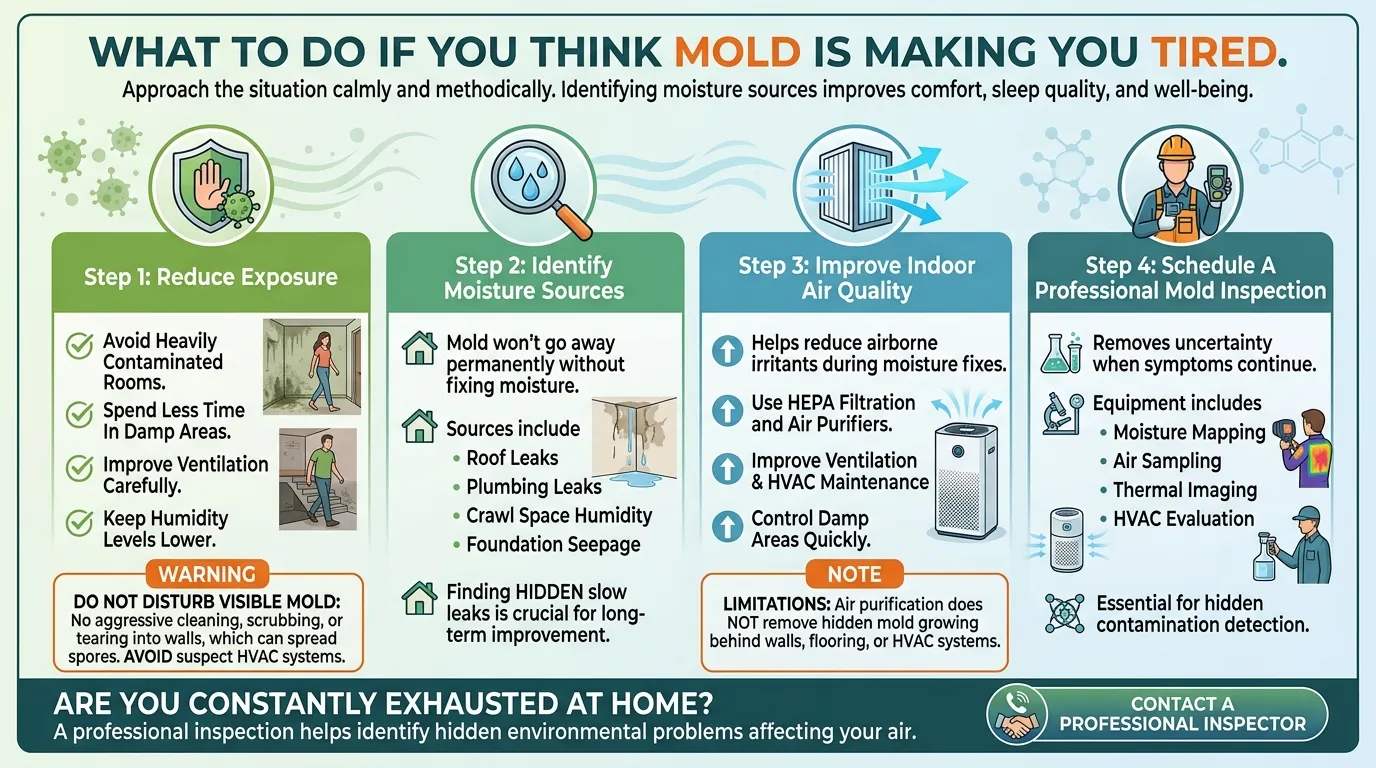
If you suspect mold exposure may be contributing to your fatigue, the most important thing to do is approach the situation calmly and methodically. Many homeowners spend months trying to treat symptoms without realizing the real issue may be hidden moisture or indoor air quality problems inside the home.
The good news is that once moisture sources are identified and indoor conditions improve, many people notice significant improvement in comfort, sleep quality, and overall well-being.
Here are the most important steps to take if you believe mold may be affecting your indoor environment.
Step 1: Reduce Exposure
If certain areas of the home seem to trigger symptoms more strongly, it is smart to reduce exposure while you investigate the problem further.
This may include:
- Avoiding Heavily Contaminated Rooms
- Spending Less Time In Damp Areas
- Improving Ventilation Carefully
- Keeping Humidity Levels Lower
- Avoiding Disturbing Visible Mold
It is important not to aggressively clean or disturb suspected mold growth without proper precautions. Scrubbing, tearing into walls, or using fans incorrectly can spread spores and worsen indoor air quality.
If you suspect HVAC contamination, avoid running potentially contaminated systems unnecessarily until the issue can be properly evaluated. Air movement may continue circulating airborne particles throughout the home.
Step 2: Identify Moisture Sources
Mold problems rarely go away permanently unless the underlying moisture issue is solved. Even if visible mold is cleaned, hidden growth can quickly return if water intrusion or humidity problems continue.
Some of the most common moisture sources include:
- Roof Leaks
- Plumbing Leaks
- Crawl Space Humidity
- Foundation Seepage
- Window Condensation
- Poor Ventilation
- HVAC Moisture And Condensation
In many homes, the moisture source is not obvious. Slow leaks behind walls, humid crawl spaces, attic ventilation problems, or hidden condensation buildup may continue feeding mold growth for long periods without being noticed.
Finding and correcting these issues is one of the most important parts of improving indoor air quality long-term.
Step 3: Improve Indoor Air Quality
Improving indoor air quality can help reduce airborne irritants and make the home feel cleaner, drier, and more comfortable while moisture problems are being addressed.
Helpful improvements may include:
- Reducing Indoor Humidity
- Using HEPA Filtration
- Improving Ventilation
- Installing Air Purifiers
- Controlling Damp Areas Quickly
- Improving HVAC Maintenance
Air purifiers may help reduce airborne particles and improve comfort in some environments, but it is important to understand their limitations. Air purification alone does not remove hidden mold growing behind walls, under flooring, inside insulation, or within HVAC systems.
That is why long-term improvement usually requires identifying and correcting the actual moisture source contributing to the problem.
Step 4: Schedule A Professional Mold Inspection
If symptoms continue and you cannot identify the cause, scheduling a professional mold inspection is often the smartest way to remove uncertainty and determine whether hidden environmental problems may be affecting your home.
Professional inspections may include:
- Moisture Mapping
- Hidden Mold Detection
- Air Sampling
- Humidity Analysis
- Thermal Imaging
- HVAC Evaluation
- Remediation Planning
Many serious mold problems are hidden behind finished materials or inside areas homeowners cannot easily inspect themselves. Professional equipment can often detect elevated moisture and hidden contamination long before it becomes visible.
If you’re constantly exhausted at home and can’t identify the cause, a professional mold inspection may help uncover hidden environmental problems affecting your indoor air.
Need Answers About Mold In Your Home?
Can Mold Make You Tired? Final Thoughts
Yes, mold exposure can contribute to fatigue in some people, particularly when hidden moisture problems are affecting indoor air quality over long periods of time. While reactions vary from person to person, many homeowners dealing with mold exposure report symptoms like exhaustion, brain fog, congestion, headaches, and poor sleep quality.
One of the biggest warning signs is when symptoms improve outside the home or worsen after returning indoors. That pattern may suggest an environmental trigger connected to hidden mold growth, elevated humidity, HVAC contamination, or ongoing moisture intrusion.
The most important thing to understand is that mold problems rarely improve permanently unless the underlying moisture issue is corrected. Simply masking odors or cleaning visible areas may not solve hidden contamination affecting the home’s air quality.
If your home constantly leaves you feeling drained, foggy, or congested, identifying hidden moisture and mold problems early may help protect both your health and your property.
Schedule A Professional Mold Inspection Today
Breathe Easy Again with Our Expert Crawl Space Mold Removal Services for New York Properties
Can Mold Really Cause Extreme Fatigue?
Some individuals report significant tiredness and exhaustion associated with ongoing mold exposure and poor indoor air quality. Fatigue is one of the more commonly reported symptoms in homes with serious moisture or mold problems.
Why Do I Feel More Tired At Home Than Anywhere Else?
Environmental factors inside the home, including mold, humidity, allergens, poor ventilation, and stale indoor air, may contribute to fatigue and discomfort in sensitive individuals.
Can Mold Cause Brain Fog?
Some people exposed to mold report difficulty concentrating, mental fatigue, memory issues, and brain fog-like symptoms, especially in homes with poor indoor air quality.
Does Mold Fatigue Go Away After Remediation?
Many homeowners report improvement after mold exposure is reduced and moisture problems are properly corrected. Recovery timelines vary depending on the individual and the severity of the environment.
Can Mold In A Bedroom Affect Sleep?
Yes. Congestion, coughing, sinus pressure, and poor indoor air quality may interfere with sleep quality and contribute to daytime exhaustion.
What Does Mold Fatigue Feel Like?
Mold-related fatigue is often described as heavy exhaustion, brain fog, lack of focus, mental sluggishness, and feeling drained even after getting rest.
Should I Get Tested For Mold Exposure?
Medical concerns should always be discussed with a qualified healthcare professional. A professional mold inspection can help identify possible environmental sources contributing to poor indoor air quality.
Can Air Purifiers Help With Mold Fatigue?
HEPA air purifiers may help reduce airborne particles and improve indoor comfort, but they cannot eliminate hidden mold growth or solve ongoing moisture problems.
Is Mold Fatigue Worse In Humid Homes?
High humidity encourages mold growth and often worsens indoor air quality conditions, especially in homes with poor ventilation or hidden moisture intrusion.
When Should I Call A Mold Professional?
You should consider calling a mold professional if:
- Symptoms Persist Indoors
- Musty Odors Are Present
- Water Damage Recently Occurred
- Mold Keeps Returning
- Multiple People In The Home Feel Sick
- Humidity Problems Continue
- You Suspect Hidden Mold Growth