
Is Mold in My Basement Dangerous?
Is mold in my basement dangerous? Good question! If you’re seeing, or even suspecting mold in your basement, you’re in the perfect place for that. We’re Mold Removal Experts, a professional mold remediation service offered by Zavza Seal, a licensed and certified contractor serving homeowners across Long Island, Brooklyn, Queens, and The Bronx. We’ve documented real cases where basement mold quietly spread and made people seriously ill.
Our own supervisor dealt with unexplained sickness for over a year before mold was identified as the cause.
“The scary part is the doctors couldn’t even tell it wasn’t a flu. I went from doctor to doctor and nothing ever changed except my antibiotics. Turns out it was a hidden mold.” -Jake
For this reason, we consider it an honor and a privilege to build you a page to make sure you don’t go through that. You deserve clear answers, fast, without guessing or digging through conflicting information.
That said, ahead, you’ll find out the answer to your question, “Is mold in my basement dangerous?”, plus exactly what to look for, where to look (including hidden mold most people miss), and how to recognize the 6–10 most common basement mold types using easy visual references. (we’ve got petri dish growth and real-world examples side by side below for each mold type.
Feel free to scan, compare, and quickly narrow down what you’re dealing with, and, if you’re in Long Island, Brooklyn, Queens, or The Bronx and need a mold inspection with advanced testing of have any questions, just reach out!
Is Mold in My Basement Dangerous? (Quick Answer)
Yes. Mold in your basement can be dangerous, especially when moisture allows it to grow, spread, and release spores into the air. It’s never a good thing, unless you are growing your own portabellas or something, we recommend to always take it dead seriously.
The level of danger depends on how long it’s been growing, how much moisture is present, and whether anyone in the home is sensitive to mold exposure. Small, dry patches may pose minimal risk. But active, damp, or hidden mold growth can lead to respiratory symptoms, structural damage, and worsening indoor air quality over time.
The key isn’t just if mold is present. It’s what kind it is, how long it’s been there, and what conditions are feeding it.
If You Live In The Long Island, Brooklyn, Queens, Or The Bronx Areas Of New York, Reach Out To Mold Removal Experts For A Free Mold Inspection Now!
Not all basement mold is immediately harmful. But some becomes dangerous faster than homeowners expect.
Below, we break down:
- What mold actually does to your health
- How quickly it spreads and damages materials
- And how to identify the exact type of mold growing in your basement (with pictures)
What Mold in a Basement Looks Like
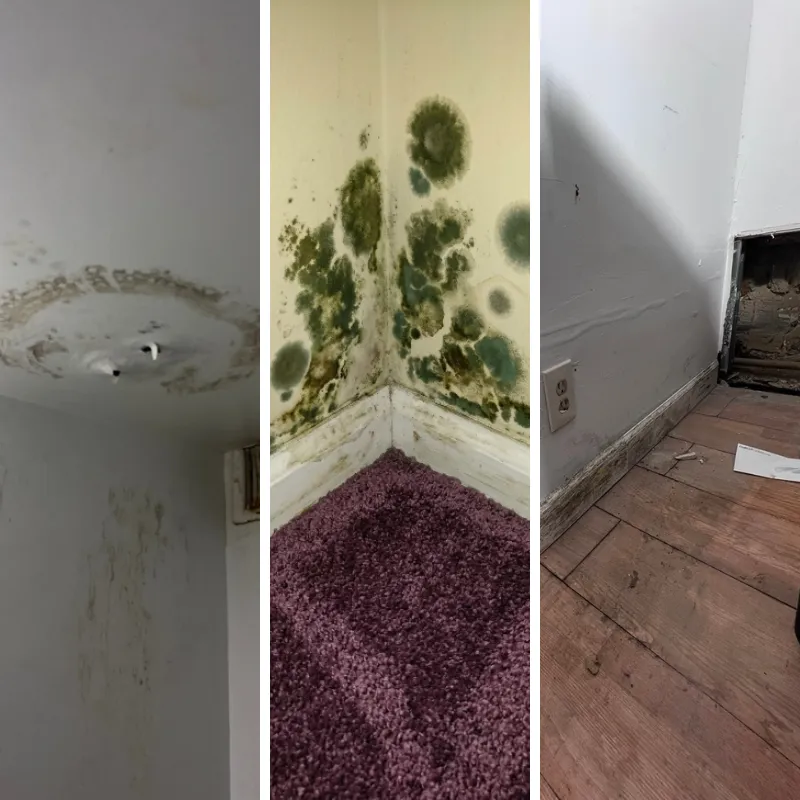
Mold in a basement doesn’t always look dramatic, but it’s usually easy to recognize once you know what to look for. It often starts as small discoloration and gradually spreads across damp surfaces where moisture lingers.
Common Visual Signs
- Black, Green, Or White Growth
- Fuzzy, Powdery, Or Slimy Textures
- Speckled Dots Or Expanding Patches
- Dark Stains That Seem To Spread Over Time
Important: Color alone does not determine how dangerous mold is. The environment it’s growing in, especially moisture and airflow matter far more.
The Dangers Of Leaving Mold In Your Basement
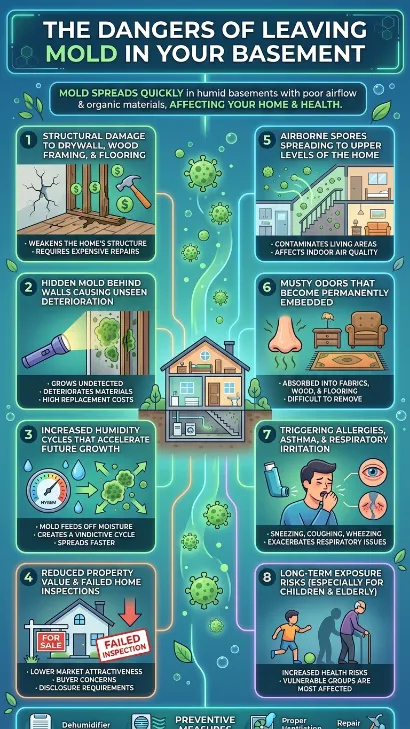
Mold doesn’t stay contained. In basement environments, where humidity, organic materials, and poor airflow are common, it spreads quickly and begins affecting both your home and your health.
Key Risks:
- Structural damage to drywall, wood framing, and flooring
- Airborne spores spreading to upper levels of the home
- Musty odors that become permanently embedded
- Increased humidity cycles that accelerate future growth
- Triggering allergies, asthma, and respiratory irritation
- Long-term exposure risks (especially for children and elderly)
- Hidden mold behind walls causing unseen deterioration
- Reduced property value and failed home inspections
Stop The Spread Before It Gets Worse! Schedule A Basement Mold Inspection Today
How Long Does Mold Take To Damage Basement Materials?
Mold can begin growing in as little as 24–48 hours after moisture exposure—but actual damage timelines vary based on the material it’s feeding on. Porous materials like drywall and carpet deteriorate quickly, while structural components like wood and concrete may take longer but still suffer serious long-term consequences if left untreated.
Material Damage Timeline
| Material | Timeline | Damage Progression |
|---|---|---|
| Drywall / Sheetrock | 24 hours – 2 weeks | 24–72 hours: Surface growth begins 3–7 days: Penetration and staining 1–2 weeks: Structural weakening |
| Carpet & Padding | 24 hours – 5 days | 24–48 hours: Mold colonization 3–5 days: Deep contamination (often unsalvageable) |
| Wood (Framing / Beams) | 3 days – several weeks | 3–7 days: Surface growth 2–4 weeks: Fiber breakdown begins Long-term: Rot and structural compromise |
| Insulation (Fiberglass / Cellulose) | 1–3 days | Rapid moisture retention Mold growth begins quickly Becomes ineffective and contaminated |
| Concrete / Foundation Walls | Several days – ongoing | Slower surface mold growth Retains moisture Feeds mold on adjacent materials |
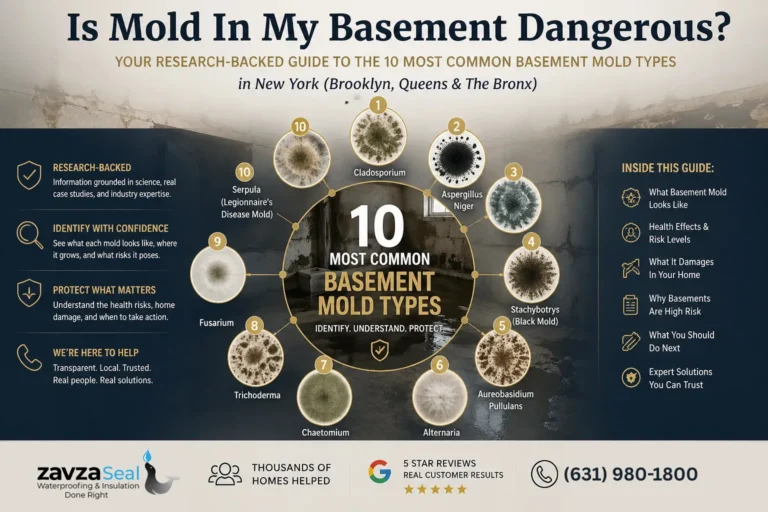
Most Common Basement Mold Types In Brooklyn, Queens, Long Island & The Bronx
Basement environments across New York create ideal conditions for mold growth—persistent humidity, organic building materials, and limited airflow. While many species can develop, a handful show up consistently in real inspections. Below are the top three most frequently found molds, followed by other common types you should still take seriously.
TOP 3 MOST COMMON BASEMENT MOLDS (WITH IDENTIFICATION)
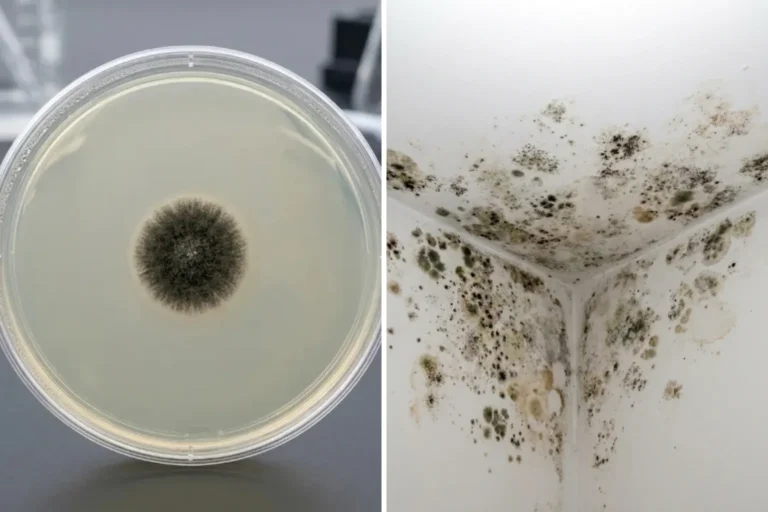
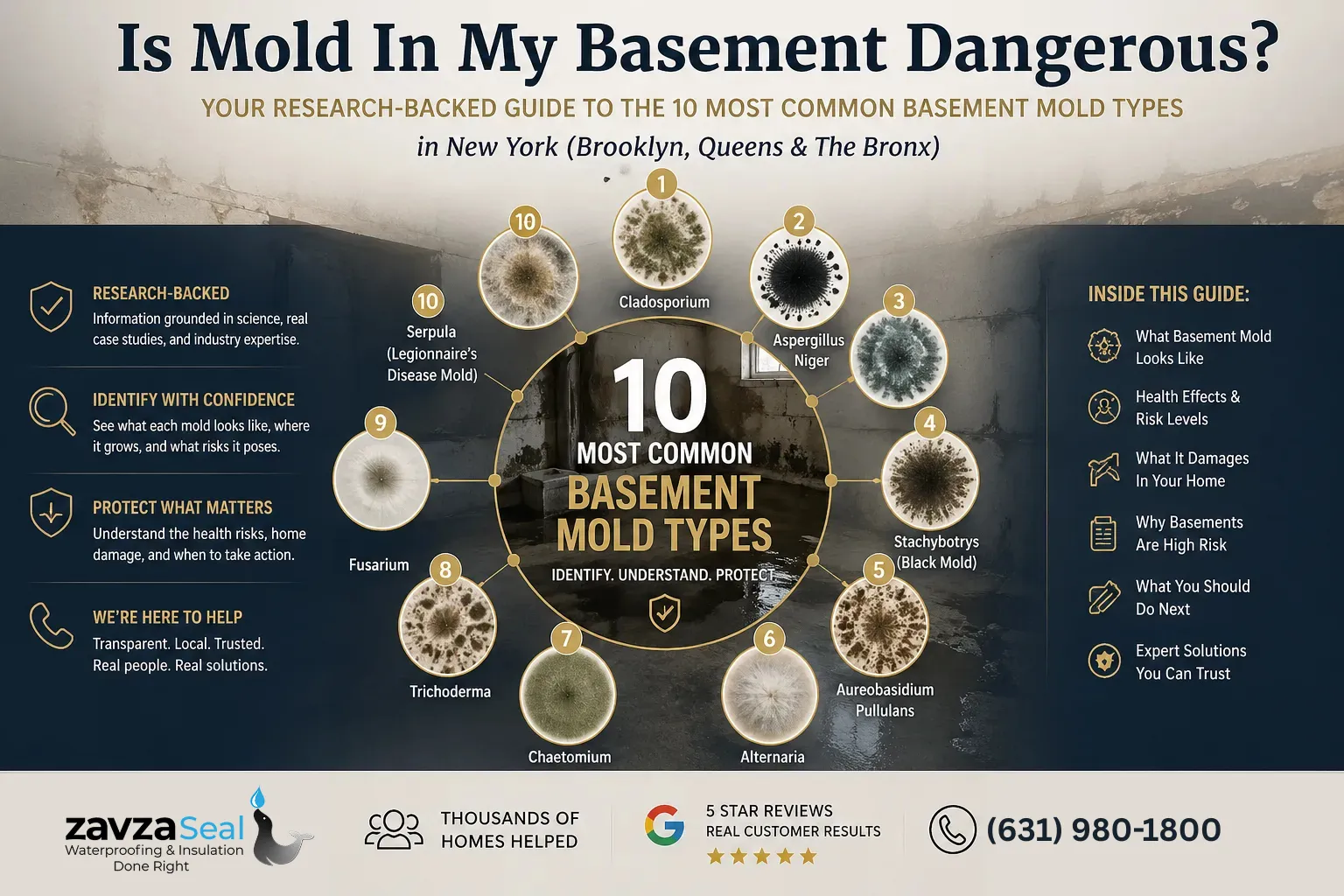
Stachybotrys Chartarum (Black Mold)
Stachybotrys chartarum is a toxigenic mold species that thrives on cellulose-rich materials such as drywall, wood, and insulation. It requires consistent, long-term moisture exposure, which makes it a strong indicator of ongoing water intrusion rather than a temporary spill.
It forms dense, dark green to black colonies and embeds deeply into porous materials as it feeds, making it difficult to remove without proper remediation.
Dangers & Material Impact Timeline:
- Produces mycotoxins under specific conditions
- 24–72 hours: Begins colonizing damp cellulose materials
- 3–7 days: Penetrates drywall and insulation layers
- 1–2 weeks: Weakens structural integrity of affected materials
- Linked to respiratory irritation, chronic coughing, and fatigue
- Worsens asthma and long-term air quality conditions
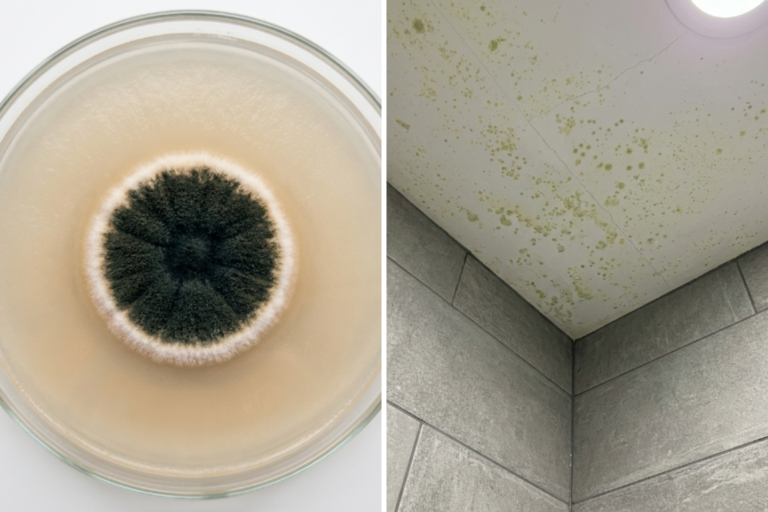
Penicillium
Penicillium is a fast-spreading mold genus commonly found in indoor environments. It thrives on materials like carpet, padding, insulation, and furniture after even short-term moisture exposure.
This mold reproduces rapidly through airborne spores, allowing it to spread across a basement within days if humidity is not controlled.
Dangers & Material Impact Timeline:
- 24–48 hours: Rapid colonization begins
- 3–5 days: Deep contamination of carpet and soft materials
- Produces large quantities of airborne spores
- Triggers allergic reactions and sinus irritation
- Can aggravate asthma and breathing issues
- Creates persistent musty odors
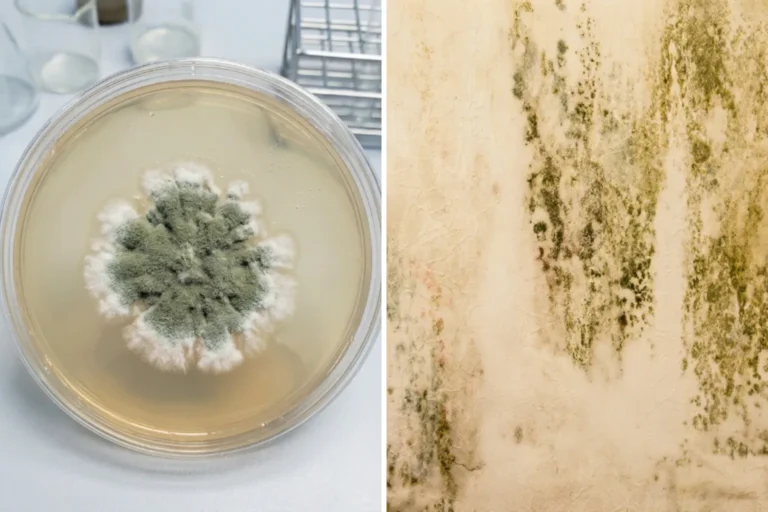
Aspergillus
Aspergillus is a highly adaptable mold genus capable of growing in a wide range of indoor conditions, including moderately damp basements. It commonly develops on walls, HVAC systems, insulation, and stored materials.
Unlike some molds, it does not require heavy saturation to grow, making it one of the most persistent indoor contaminants.
Dangers & Material Impact Timeline:
- 24–72 hours: Begins surface growth in humid conditions
- 3–7 days: Expands across porous materials
- Produces airborne spores that spread easily
- Linked to allergic reactions and lung irritation
- Can cause aspergillosis in sensitive individuals
- Contributes to long-term indoor air contamination
Other Common Basement Mold Types to Watch for
While the three molds above are the most frequently identified, the following species are also commonly found, and can be just as destructive. Whether they impact health or structure, all mold types break down organic materials and worsen over time if untreated.
Key Reminder:
Mold doesn’t need to be “toxic” to be dangerous. If it’s growing, it’s feeding, and that means damage.
- Cladosporium: Common on wood and fabrics; spreads through airborne spores; contributes to allergies and slowly degrades structural materials in fluctuating humidity conditions.
- Alternaria: Found near leaks and condensation points; a major allergy trigger; rapidly colonizes damp surfaces and contributes to both air quality issues and material breakdown.
- Chaetomium: Appears in heavily water-damaged drywall; strong indicator of prolonged moisture; associated with structural deterioration and long-term contamination.
- Fusarium: Thrives in very wet environments; spreads across carpets and fabrics; capable of both surface damage and deeper material contamination.
- Mucor: Fast-growing mold on organic debris; spreads aggressively in humid environments; contributes to air contamination and surface-level material decay.
- Rhizopus: Common in poorly ventilated basements; rapidly colonizes damp organic matter; contributes to structural weakening over time.
- Trichoderma: Found on wet wood and insulation; produces enzymes that break down building materials; spreads aggressively across porous surfaces.
WHY ALL BASEMENT MOLD SHOULD BE TAKEN SERIOUSLY
Mold feeds on organic materials like wood, drywall, and insulation
It does not stop growing as long as moisture is present
Structural damage can become severe before it’s visible
Health symptoms often improve only after the mold is removed
There is no “safe” long-term indoor mold growth
If it’s growing in your basement, it’s either damaging your structure, your air quality, or both.
What To Do If You Find Mold In Your Basement
If you have found mold, the goal is not just removing what you see. The real objective is to stop the source and prevent it from coming back. Acting quickly and correctly makes the difference between a manageable issue and a costly problem.
Start with these steps:
- Identify and stop the moisture source immediately. This could be a leak, condensation, or groundwater intrusion.
- Avoid disturbing large growth. Touching or scrubbing it can release spores into the air and spread the problem.
- Wear proper PPE, including gloves, a mask or respirator, and eye protection.
- Isolate affected areas if possible to limit airborne spread.
- Call for a professional inspection if the growth exceeds a small, contained area or keeps coming back.
Acting fast protects your air quality, your structure, and your long term costs.
Act fast. A professional mold inspection can prevent major damage. Call 631-980-1800.
Is Mold In My Basement Dangerous? Final Thoughts
Frequently Asked Questions About Basement Mold
Basement mold is rarely harmless when left untreated. Even small issues can evolve into structural damage, indoor air quality problems, and expensive repairs. If you have been asking yourself, is mold in my basement dangerous, the answer depends on how quickly you act.
The earlier you identify and address it, the more control you have over the outcome.
Protect your home with trusted local experts today! As trusted experts in basement mold remediation across Long Island, Brooklyn, Queens, and The Bronx, we’ve got the experience and values… Expect us to bring our best to the table any time you need us!
Call Mold Removal Experts, a service extension of the Zavza Seal family, for proven results and real case studies at 631-980-1800.
Is mold in a basement always dangerous?
Mold in a basement is not always immediately dangerous, but it becomes a risk when it spreads, stays damp, or begins affecting your indoor air quality.
How fast does mold spread in a basement?
Mold in a basement can begin growing within 24 to 48 hours and spreads quickly in humid, poorly ventilated conditions.
Can basement mold make you sick?
Basement mold can make you sick by causing respiratory irritation, allergy symptoms, headaches, and worsening asthma or other sensitivities.
What does dangerous basement mold look like?
Dangerous basement mold can appear black, green, white, or gray, but its risk depends more on moisture conditions and growth patterns than color alone.
Should I remove basement mold myself?
Small areas of basement mold can sometimes be handled carefully, but larger, spreading, or hidden mold should be evaluated and removed by professionals.
Does bleach kill basement mold permanently?
Bleach does not kill basement mold permanently because it does not penetrate porous materials like wood or drywall where mold roots grow.
How do I know if mold is behind my walls?
Signs of mold behind walls include musty odors, visible staining, peeling paint, and unexplained allergy or respiratory symptoms.
Is mold worse in basements than other areas?
Mold is often worse in basements because of higher humidity, limited airflow, and frequent moisture intrusion.
Will a dehumidifier stop mold growth?
A dehumidifier can help prevent mold growth by lowering humidity levels, but it will not eliminate existing mold.
How much does mold remediation cost in New York?
Mold remediation costs in New York vary depending on the size of the affected area, the severity of the damage, and the complexity of the moisture problem, but addressing it early is always more cost-effective.